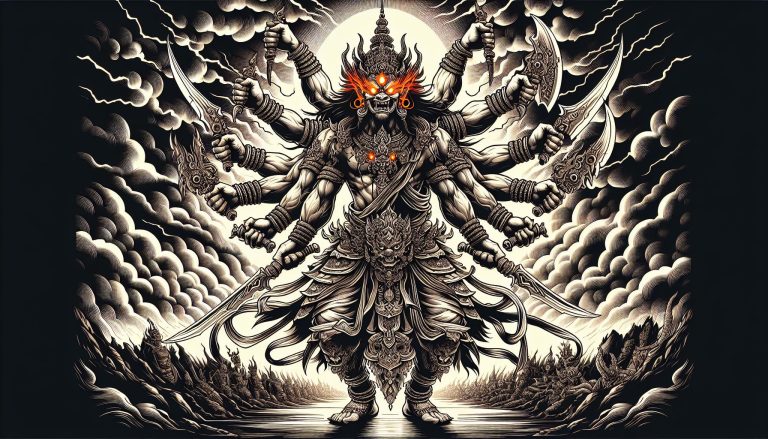
Asuras aren’t just mindless villains; they’re powerful, intelligent, and often driven by compelling motives. Their stories reveal a rich world of ambition, rivalry, and cosmic balance. Join me as we investigate into the enigmatic world of Demonic Asuras, exploring their origins, characteristics, and the timeless tales that continue to enthrall us.
Historical Origins Of Demonic Asuras
Demonic Asuras find their roots in ancient mythologies, serving as key figures in epic narratives. Their presence in early literature reflects deeper cultural and philosophical ideologies.
Early Mythologies
Asuras first appear in Vedic texts, where they are depicted as powerful entities opposing the Devas. In the Rigveda, Asuras, like Varuna and Mitra, exhibit god-like traits. Over time, Puranic texts evolve them into antagonistic forces battling gods. Hindu mythology often depicts them as rivals of Devas, symbolizing the cosmic struggle between good and evil.
In Buddhist traditions, Asuras also maintain a significant role. They occupy one of the six realms of existence, characterized by their anger and combativeness. Here, Asuras reflect on human conditions, mirroring the flaws and virtues within every individual.
Cultural Symbolism
The concept of Asuras extends beyond mere mythological adversaries; they embody complex cultural symbolism. In Hinduism, they represent ego, ambition, and material desire. Devas and Asuras’ endless battles symbolize the internal conflict between spiritual aspiration and earthly desires.
Buddhism uses Asuras to portray moral lessons on envy and aggression. The Asura area warns of the consequences of unchecked emotions, urging practitioners toward mindfulness and ethical living. Through these narratives, Asuras become more than mythical beings—they are moral and philosophical constructs teaching vital life lessons.
Major Demonic Asuras In Mythology
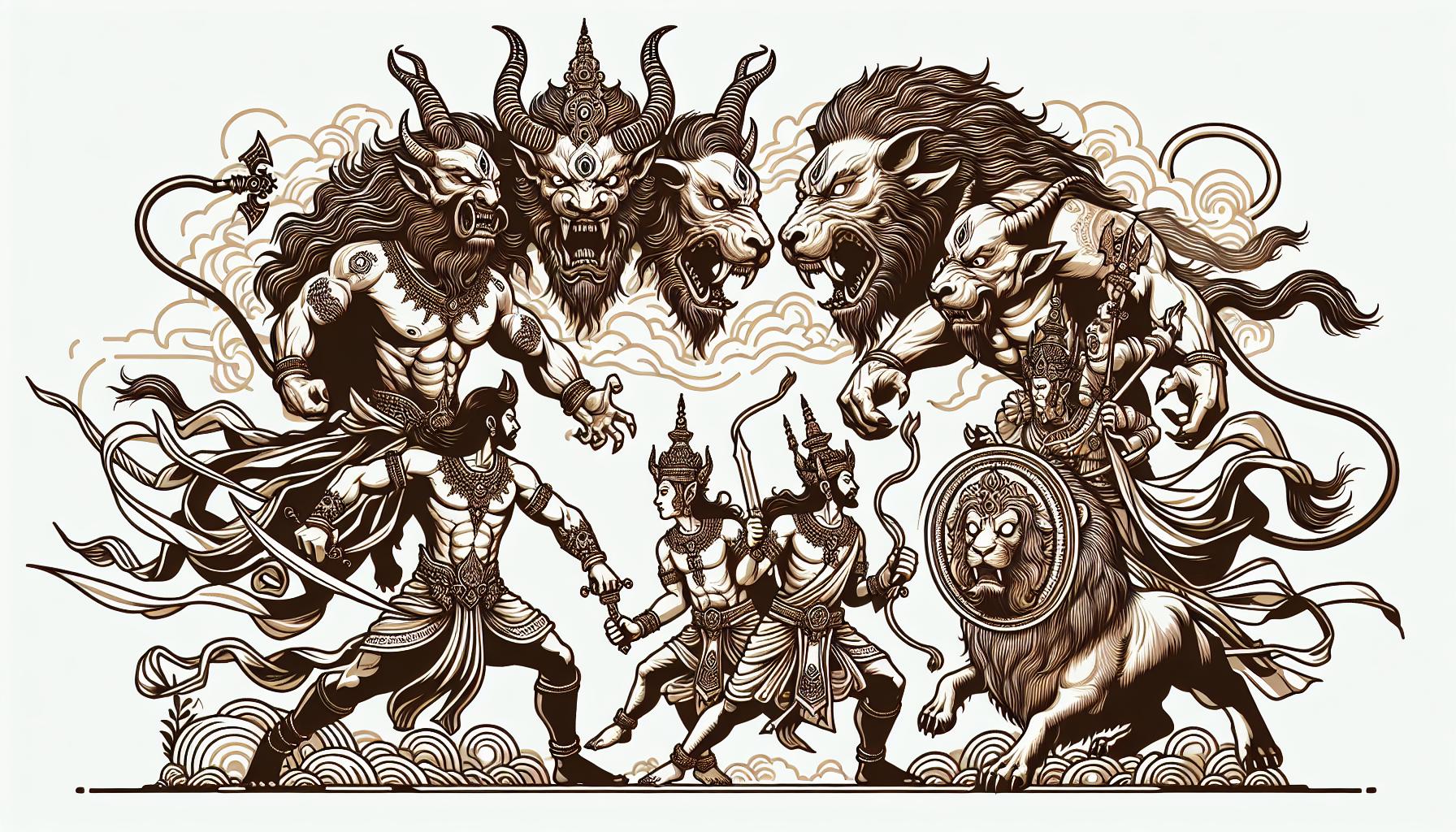
Demonic Asuras play crucial roles in many mythological narratives, embodying themes of power, ambition, and moral struggles. Several notable figures stand out in these traditions.
Ravana
Ravana, from the epic “Ramayana – Epic of Hinduism,” epitomizes ambition and power. Known for his ten heads and immense strength, Ravana ruled the kingdom of Lanka. Even though his scholarly attributes, he is best known for abducting Sita, leading to the epic battle with Lord Rama. Ravana’s character encapsulates the duality of wisdom and malevolence, showing how unchecked ambition can lead to one’s downfall.
Mahishasura – Buffalo Demon
Mahishasura, the buffalo demon, is central to the “Devi Mahatmya.” He symbolizes brute force and ignorance. Prophecies foretold that only a woman could defeat him, leading to the creation of Goddess Durga. After a fierce battle, Durga vanquished Mahishasura, emphasizing the triumph of divine power over demonic strength. Mahishasura’s tale underscores the inevitability of divine justice and the power of righteousness.
Hiranyakashipu
Hiranyakashipu, from the “Bhagavata Purana,” represents arrogance and defiance against divinity. As a powerful king, Hiranyakashipu sought immortality and demanded worship. His tyranny extended to his own son, Prahlada, a devotee of Vishnu. Eventually, Vishnu’s Narasimha avatar ended Hiranyakashipu’s reign through a paradoxical fulfillment of his boon. This narrative illustrates the impossibility of escaping divine retribution and the power of devotion.
Characteristics And Powers
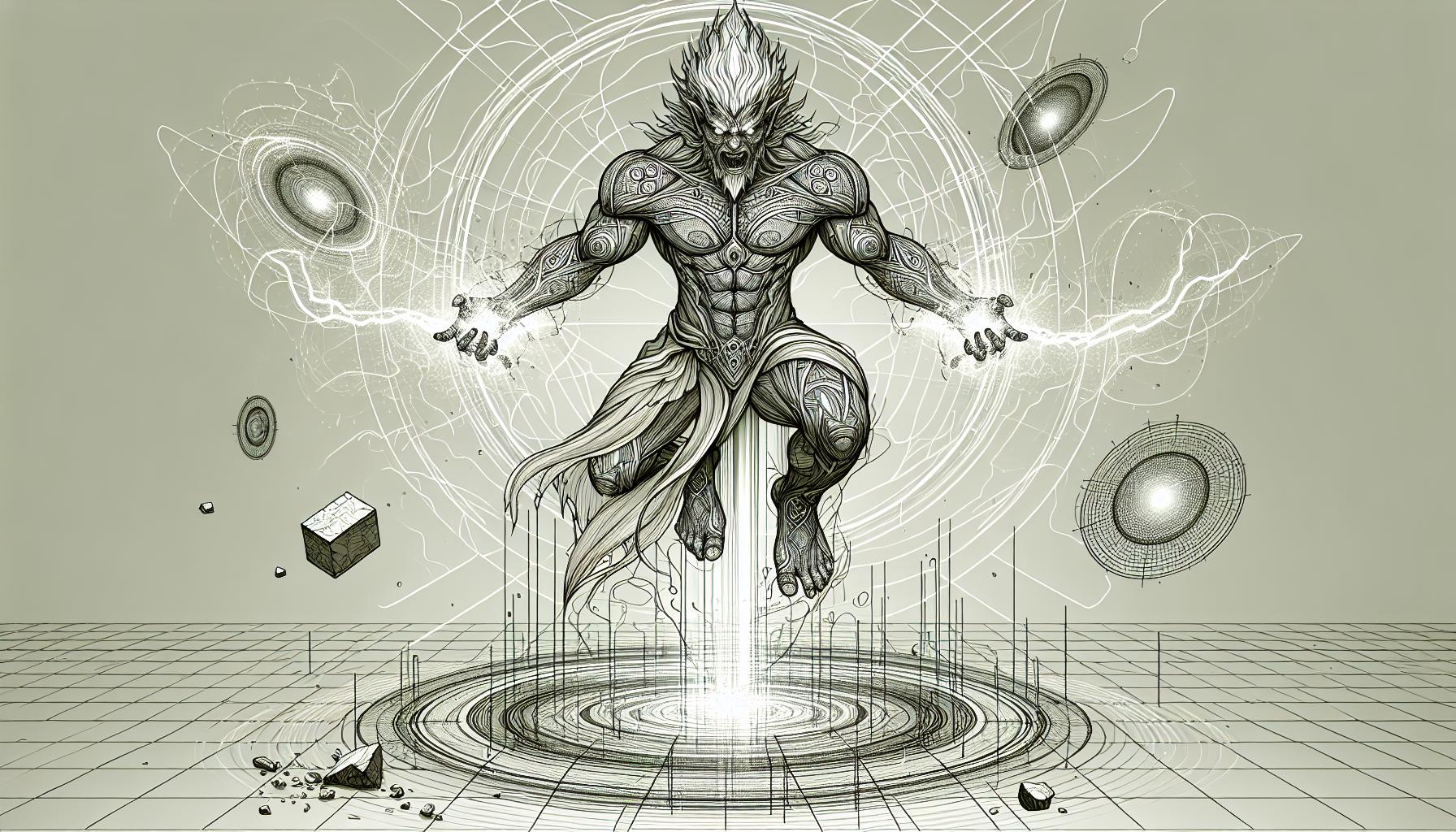
Demonic Asuras, present in Hindu and Buddhist mythologies, are powerful supernatural beings. Here I’ll discuss their common traits and unique abilities.
Common Traits
- Ageless and Immune to Disease: Asuras regenerate their bodies against normal attacks, making them ageless and disease-immune.
- Charismatic Presence: They possess a frightening yet unmistakable charisma.
- Violent Emotions: They indulge violent emotions and urges, rather than containing them.
- Masters of Combat: Skilled in both armed and unarmed combat, they excel individually and in groups, often maiming and destroying their foes.
- Supernatural Powers: Asuras exhibit a range of supernatural powers like telekinesis, animal command, energy projection, and teleportation.
Representation In Popular Culture
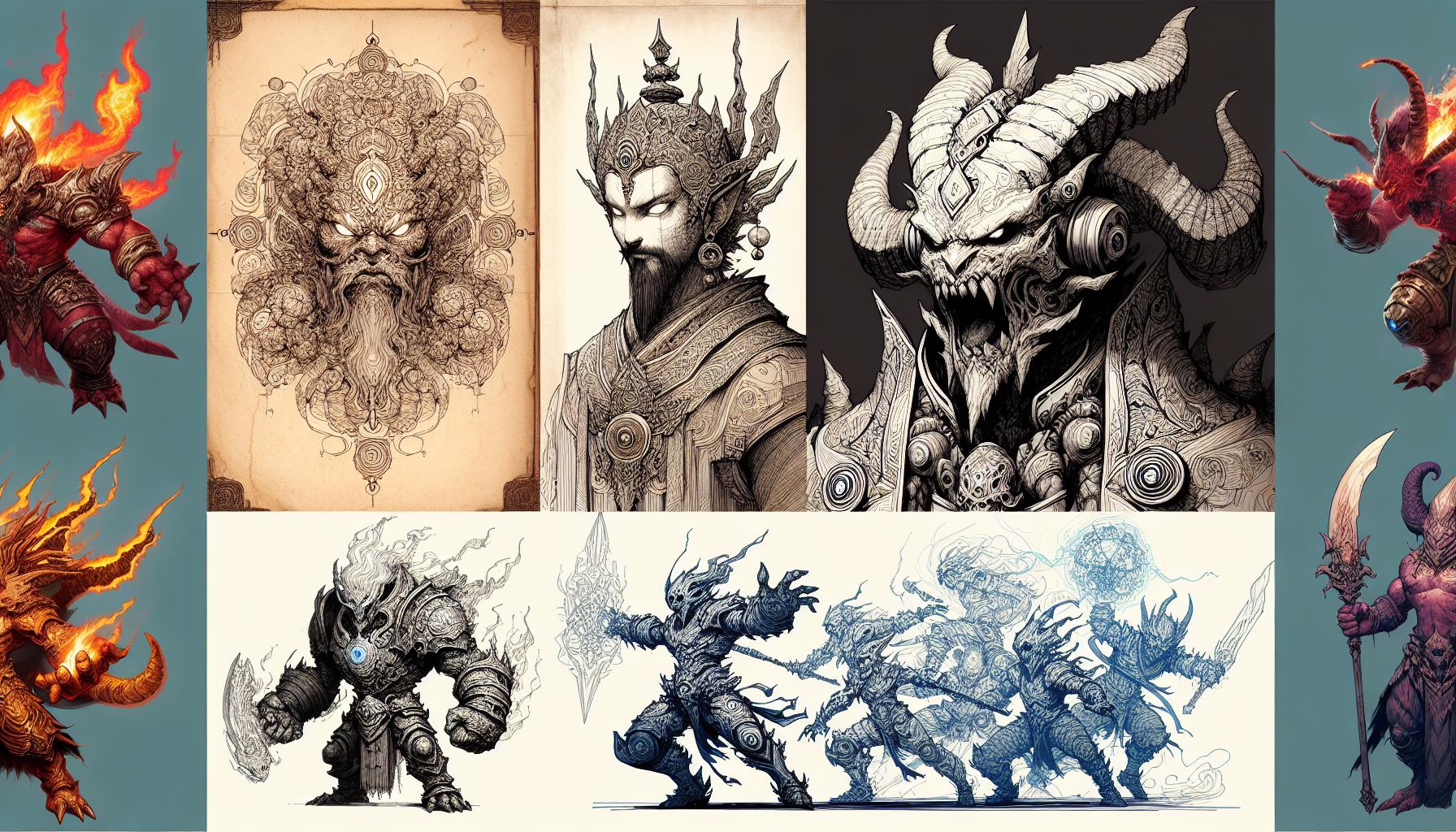
Demonic Asuras have transcended mythological texts to become popular symbols in various forms of media. Their presence in literature, films, television, and modern interpretations speaks to their enduring impact on culture and storytelling.
Literature
In literature, Demonic Asuras often appear in works that explore themes of good versus evil, power struggles, and moral dilemmas. Authors incorporate Asuras into fantasy novels to personify antagonistic forces that challenge heroes. Plus, Asuras are depicted in graphic novels and comic books as formidable opponents with complex backgrounds. A prominent example is the character Ravana, whose tale is revisited in numerous retellings of the Ramayana, emphasizing his intellect, might, and tragic flaws.
Films And Television
Demonic Asuras are prevalent in films and television series, especially in genres like fantasy, mythology, and supernatural dramas. Indian cinema frequently adapts mythological stories, featuring Asuras as central villains. Movies such as “Baahubali” and TV series like “Mahabharat” showcase Asuras’ martial prowess and ambition. Western media also draws inspiration from Asura archetypes, as seen in fantasy series where similar characters embody chaos and rebellion against divine order. Animated series and movies bring Asuras to younger audiences, portraying their battles with heroes in visually captivating forms.
Modern Interpretations
Modern interpretations of Asuras reflect contemporary values and existential questions. In video games, Asuras are designed as powerful foes, requiring strategic planning to defeat. They often symbolize internal and external conflicts players must overcome. Asuras in digital media, including virtual reality experiences and online stories, allow for immersive engagements with these mythical figures. Artists interpret Asuras through various media, blending traditional depictions with modern aesthetics to explore themes of duality, transformation, and resistance. Influencers and creators use Asura motifs to address personal and societal struggles, making them relevant to today’s audience through metaphor and allegory.
Conclusion
Exploring Demonic Asuras offers a fascinating glimpse into the complexities of human nature and our cultural narratives. These mythological figures aren’t just relics of ancient stories; they continue to influence and inspire modern media and art. By understanding their origins and evolving representations, we gain deeper insights into the timeless themes of ambition, moral struggle, and the battle between good and evil. Through literature, films, and even video games, Asuras challenge us to reflect on our own values and the societal issues we face. Their enduring presence underscores the power of myth in shaping our collective consciousness.
Sources & further reading
These themes are explored in greater depth across the following authoritative resources:
- Britannica, Asura
- Britannica, Naga
- Mythopedia, Hindu Mythology
- Internet Sacred Text Archive, Mahabharata
- Wendy Doniger, Hindu Myths (Penguin Classics, 1975)
External resources for further reading. Apam Napat is not affiliated with these publishers; citation does not imply endorsement.
Based on the classical texts of Hindu mythology, see our sources.