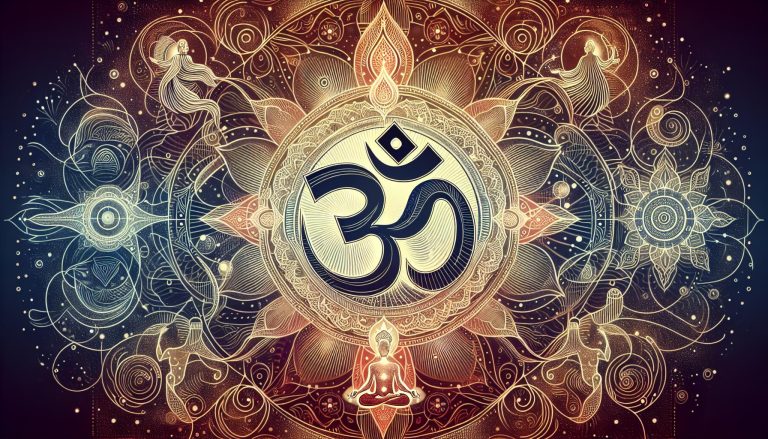
Understanding Brahman requires a shift in perspective. It’s not something you can easily define or categorize. Instead, it’s an experience, a realization that goes beyond the physical and the mental. In Hinduism, Brahman is both immanent and transcendent, present in every atom yet beyond comprehension. This intricate balance makes the study of Brahman a fascinating journey into the heart of Hindu spirituality.
Origins And Development
Brahmanism, which laid the groundwork for modern Hinduism, began in the Indus Valley Civilization around 2000-1500 BCE. This precursor incorporated the Vedas as its core texts.
Ancient Texts And Scriptures
The Vedas, ancient sacred texts, are central to the understanding of Brahman. Among these, the Upanishads hold particular importance. Compiled between 700 and 500 BCE, the Upanishads focus on the ultimate unity and interconnectedness of all phenomena.
Philosophical Schools
Over centuries, various schools of Hindu philosophy explored Brahman. The Advaita Vedanta school, led by Adi Shankara, teaches non-dualism, asserting Brahman as the singular reality. Meanwhile, the Vishishtadvaita school, founded by Ramanuja, emphasizes qualified non-dualism, recognizing Brahman with attributes. Finally, the Dvaita school, started by Madhva, advocates dualism, viewing Brahman as distinct from the individual soul.
Core Concepts
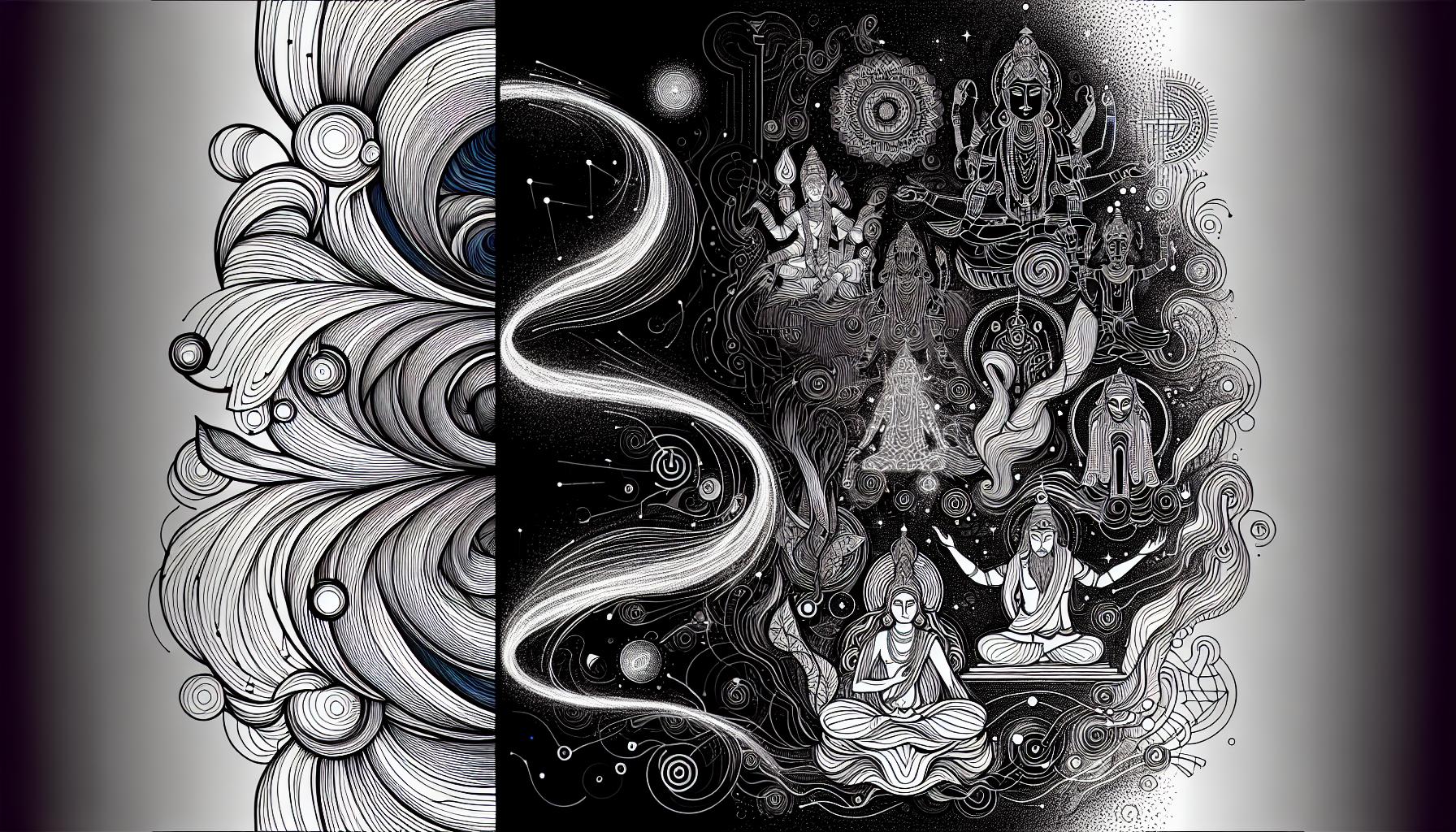
In Hindu philosophy, understanding Brahman involves grasping two fundamental concepts: Nirguna Brahman and Saguna Brahman.
Nirguna Brahman
Nirguna Brahman represents the idea that Brahman transcends both time and space. It’s devoid of form and exists within every living being and space. Being without attributes, Nirguna Brahman embodies a formless, eternal existence. This concept allows practitioners to focus on the eternal qualities of Brahman instead of being distracted by various names and forms.
Saguna Brahman
Saguna Brahman, on the other hand, conveys that Brahman possesses form, identity, and purpose. Unlike Nirguna Brahman, Saguna Brahman has discernible qualities and may manifest in different forms over time. This form-bound concept offers a more relatable understanding of Brahman, letting individuals connect with specific deities and their attributes.
Interpretations By Prominent Philosophers
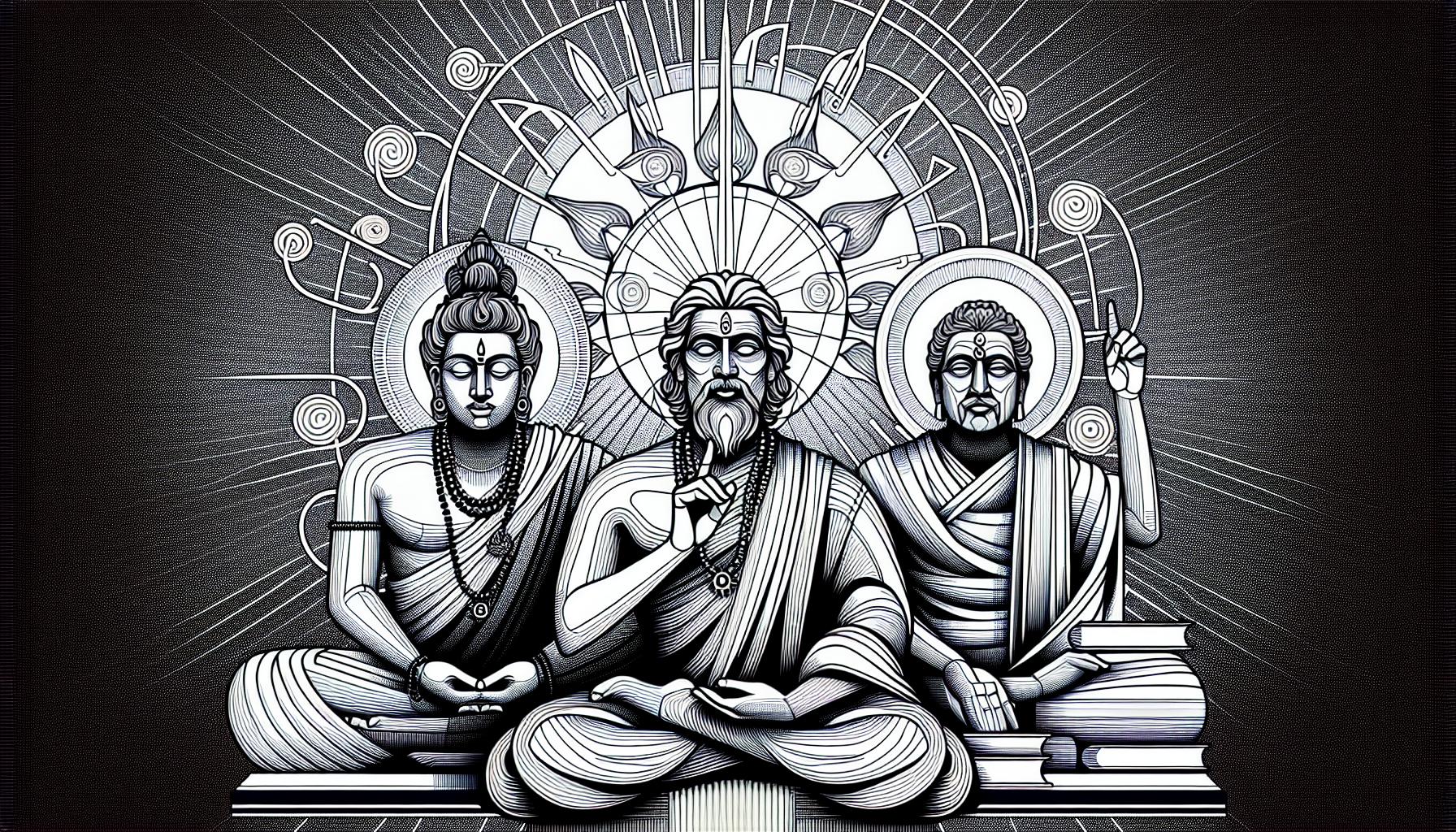
Prominent Hindu philosophers provide distinct interpretations of Brahman, shedding light on various aspects of this profound concept.
Adi Shankaracharya
Adi Shankaracharya, the founder of Advaita Vedanta, sees Brahman as the ultimate reality beyond human comprehension. According to him, Brahman is not a personal deity but a unified, all-encompassing consciousness. This consciousness underlies all existence. In his teachings, he asserts that the individual self (jivatman) is eventually identical with Brahman. This realization is key to achieving liberation (moksha). He emphasizes that understanding this unity can transcend the illusion (maya) of separateness.
Ramanuja
Ramanuja, the founder of Vishishtadvaita Vedanta, interprets Brahman as a personal deity, specifically Vishnu – The Protector. He argues that Brahman possesses qualities, making it accessible and worshipful. For Ramanuja, Brahman is a qualified, all-knowing, and all-powerful being who is the source of the universe. He maintains that while the universe and individual souls are distinct from Brahman, they are also inseparable from it. This dual nature underscores his philosophy of qualified non-dualism.
Madhva
Madhva, the proponent of Dvaita Vedanta, offers a distinct perspective by asserting that Brahman and the individual soul (jiva) are completely separate. Madhva’s interpretation of Brahman identifies it explicitly as Vishnu, emphasizing His personal nature. He argues that the soul can never become equal to Brahman. Instead, the soul remains a servant to Brahman throughout eternity. This view highlights a dualistic approach, focusing on the inherent difference between the divine and the individual soul.
These interpretations offer diverse perspectives on the nature and accessibility of Brahman in Hindu philosophy.
Symbolism And Representations
In Hinduism, symbols and representations play a crucial role in understanding Brahman. They provide tangible means to connect with the abstract concept of the ultimate reality.
Om Symbol
The Om symbol, also known as Aum, holds profound significance in Hinduism. It’s a sacred sound that represents the universe and Brahman, the ultimate reality. Composed of the three syllables A-U-M, it symbolizes essential trinities like the three main Hindu gods (Brahma – The Creator, Vishnu, Shiva), the three Vedas, and the three Gunas. The Om symbol encapsulates the entirety of the universe and its contents. Hindus often use it in prayers and meditation to invoke spiritual guidance, peace, and unity.
Deities And Avatars
Hinduism employs various deities and avatars to represent aspects of Brahman. Deities like Brahma (the creator), Vishnu (the preserver), and Shiva (the destroyer) embody different facets of the Supreme Being. These gods, part of innumerable Hindu temples and rituals, manifest Brahman’s diverse attributes, making it more accessible to devotees. Avatars, such as Krishna – An Incarnation of Vishnu and Rama, showcase divine intervention in human affairs, underscoring Brahman’s immanence and personal connection with the world.
Influence On Hindu Practices
The understanding of Brahman deeply influences various Hindu practices. Rituals, worship, meditation, and yoga reflect reverence for this ultimate reality.
Rituals And Worship
Hindu rituals and worship focus on acknowledging Brahman’s presence. During puja, devotees offer prayers, food, and items to deities, symbolizing different aspects of Brahman. Temples often serve as physical spaces where individuals connect with Brahman through ceremonies and communal worship. Major festivals like Diwali and Navratri further enable devotees to celebrate and revere Brahman’s manifestations.
Meditation And Yoga
Meditation and yoga in Hinduism aim to realize the oneness with Brahman. Practices like dhyana (meditation) and asanas (yoga postures) help individuals align their mind and body with this ultimate reality. By chanting mantras such as “Om,” practitioners seek to experience the divine essence of Brahman within themselves. Through consistent practice, they strive for moksha, the liberation of the soul and ultimate unity with Brahman.
Comparisons With Other Philosophies
Comparing Hindu understanding of Brahman with other philosophies reveals fascinating contrasts and intersections. This section explores how Vedanta and Sankhya philosophies conceptualize Brahman.
Vedanta
Vedanta portrays Brahman as the single underlying reality of everything. In Advaita Vedanta, Brahman is seen as non-dual and without attributes (Nirguna Brahman). This view posits that the apparent multiplicity of the world is an illusion (maya), with only Brahman being truly real. On the other hand, Vishishtadvaita by Ramanuja views Brahman as a personal deity with attributes (Saguna Brahman), specifically Vishnu, who is intimately connected with the world and souls. Madhva’s Dvaita school maintains a dualistic interpretation, asserting a complete distinction between Brahman and individual souls, where Brahman is a separate and supreme entity.
| Philosopher | Interpretation of Brahman |
|---|---|
| Adi Shankaracharya | Nirguna Brahman, non-dual consciousness |
| Ramanuja | Saguna Brahman, personal deity (Vishnu) |
| Madhva | Dualism, separation from individual soul |
Sankhya
Sankhya philosophy does not posit Brahman as the ultimate reality. Instead, it focuses on two fundamental realities: Purusha – The Primordial Man (consciousness) and Prakriti (matter). According to Sankhya, the interaction of Purusha and Prakriti gives rise to the universe. While it acknowledges consciousness, Sankhya separates it from material existence, contrasting with Vedanta’s all-encompassing Brahman. Sankhya’s dualistic nature provides an alternative lens through which to understand consciousness and reality, differing significantly from Vedanta’s monistic or dualistic views.
Comparing these philosophies shows how diverse schools within Hinduism offer unique metaphysical insights, shaping the understanding and worship of the supreme principle, Brahman.
Conclusion
Understanding Brahman in Hindu philosophy offers a profound journey into the nature of existence and reality. The diverse interpretations across various schools of thought, from Advaita Vedanta to Dvaita, enrich our comprehension of this supreme principle. Each perspective, whether viewing Brahman as formless or with form, adds layers of depth to our spiritual exploration.
Symbols, rituals, and practices in Hinduism serve as gateways to experiencing the essence of Brahman, making the abstract more tangible. By engaging with these teachings and practices, we can strive for a deeper connection with the ultimate reality that Brahman represents.
Sources & further reading
These themes are explored in greater depth across the following authoritative resources:
- Stanford Encyclopedia of Philosophy, Hindu Philosophy
- Britannica, Moksha
- Britannica, Brahman
- Internet Sacred Text Archive, Upanishads
- Sarvepalli Radhakrishnan, Indian Philosophy (2 vols., Oxford University Press, 1923)
External resources for further reading. Apam Napat is not affiliated with these publishers; citation does not imply endorsement.
Frequently asked questions
What is Brahman in Hindu philosophy?
Where did Brahmanism originate?
Are the Upanishads important for understanding Brahman?
What is Advaita Vedanta?
Based on the classical texts of Hindu mythology, see our sources.