As I delve into these sacred writings, I uncover not just religious doctrines but also historical narratives, philosophical debates, and poetic expressions. These texts are more than just religious guides; they’re a window into the soul of India, reflecting its diverse beliefs and timeless wisdom.
Historical Context of Religious Texts in India
The origin of India’s religious texts dates back to ancient civilizations. The Vedas, among the oldest, appeared circa 1500 BCE and form the cornerstone of Hinduism. Authored in Sanskrit, they comprise four primary texts: Rigveda, Samaveda, Yajurveda, and Atharvaveda. Each offers hymns, rituals, and philosophical insights.
The Upanishads emerged later, around 800-200 BCE. They shifted focus from ritualistic practices to metaphysical questions. Often called Vedanta or end of the Vedas, Upanishads explore the nature of reality, the self, and the universe.
Buddhism’s Tripitaka, or “Three Baskets,” originates from oral traditions and was first written down around the 1st century BCE. Comprising the Sutra Pitaka, Vinaya Pitaka, and Abhidhamma Pitaka, these texts cover Buddha’s teachings, monastic rules, and doctrinal analyses.
The Guru Granth Sahib holds a unique place in Sikhism, compiled between 1469-1708 CE. This scripture includes hymns by Sikh Gurus and revered saints from different faiths, reflecting a message of universal brotherhood and spirituality.
Each of these texts not only shaped India’s spiritual practices but also influenced its social and cultural framework. Their evolution over millennia underscores a rich history of theological, philosophical, and ethical discourse.
Vedas: Foundation of Hinduism
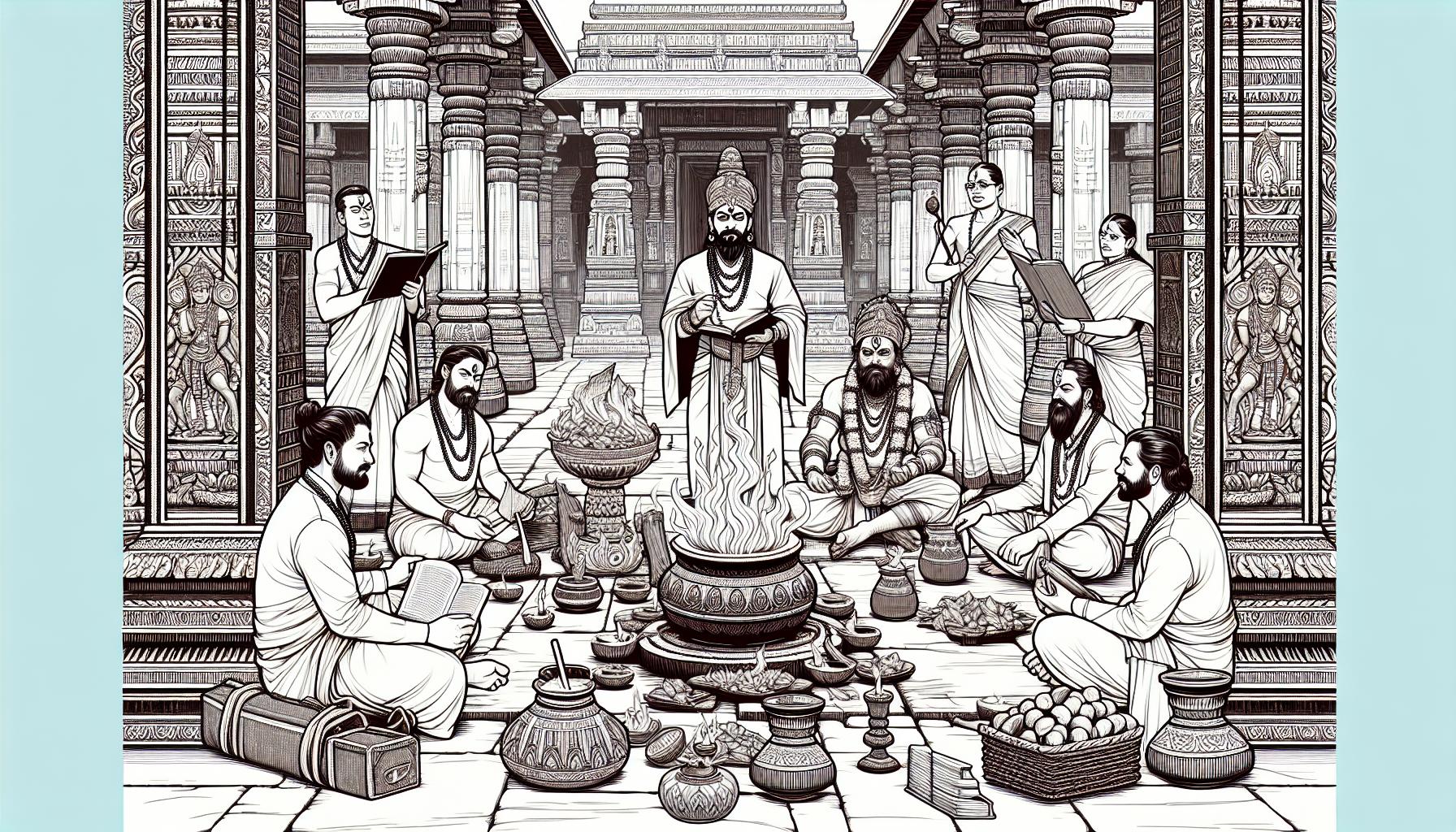
The Vedas, composed around 1500 BCE, are the oldest and most authoritative scriptures of Hinduism. These texts play a crucial role in shaping the religion’s philosophies and practices.
Structure and Content
The Vedas consist of four main texts: Rigveda, Samaveda, Yajurveda, and Atharvaveda. Each Veda is divided into four segments:
- Samhitas: Collections of hymns, mantras, and prayers embodying Vedic rituals. Example: Rigveda Samhita contains 1,028 hymns dedicated to deities like Agni and Indra.
- Brahmanas: Prose texts detailing the rituals described in the Samhitas. Example: The Shatapatha Brahmana explains the procedures of various sacrifices.
- Aranyakas: “Forest books” providing spiritual interpretations and meditations, often considered a bridge between rituals and philosophy. Example: The Aitareya Aranyaka discusses the symbolic meaning of rituals.
- Upanishads: Philosophical texts exploring meditative practices and concepts like the nature of the self and the universe. Example: The Isha Upanishad delves into the idea of universal oneness.
Cultural Significance
The Vedas hold immense cultural significance in Hindu society:
- Religious Practice: Vedic chants and rituals form the backbone of Hindu ceremonies. Example: The recitation of Gayatri Mantra from Rigveda during daily prayers.
- Philosophical Foundation: Vedic teachings influence Hindu philosophy, emphasizing concepts like Dharma (duty) and Karma (action). Example: The idea of living in harmony with cosmic laws.
- Education and Tradition: The oral tradition of Vedic recitation has preserved these texts for millennia. Example: Gurukulas, traditional Hindu schools, focus on teaching Vedic knowledge.
- Festivals and Celebrations: Vedic hymns are integral to festivals like Diwali and Holi. Example: Rituals invoking Lakshmi during Diwali celebrations.
The synthesis of these elements cements the Vedas as the cornerstone of Hinduism, influencing various aspects of life and thought in India.
Upanishads: Spiritual Philosophies
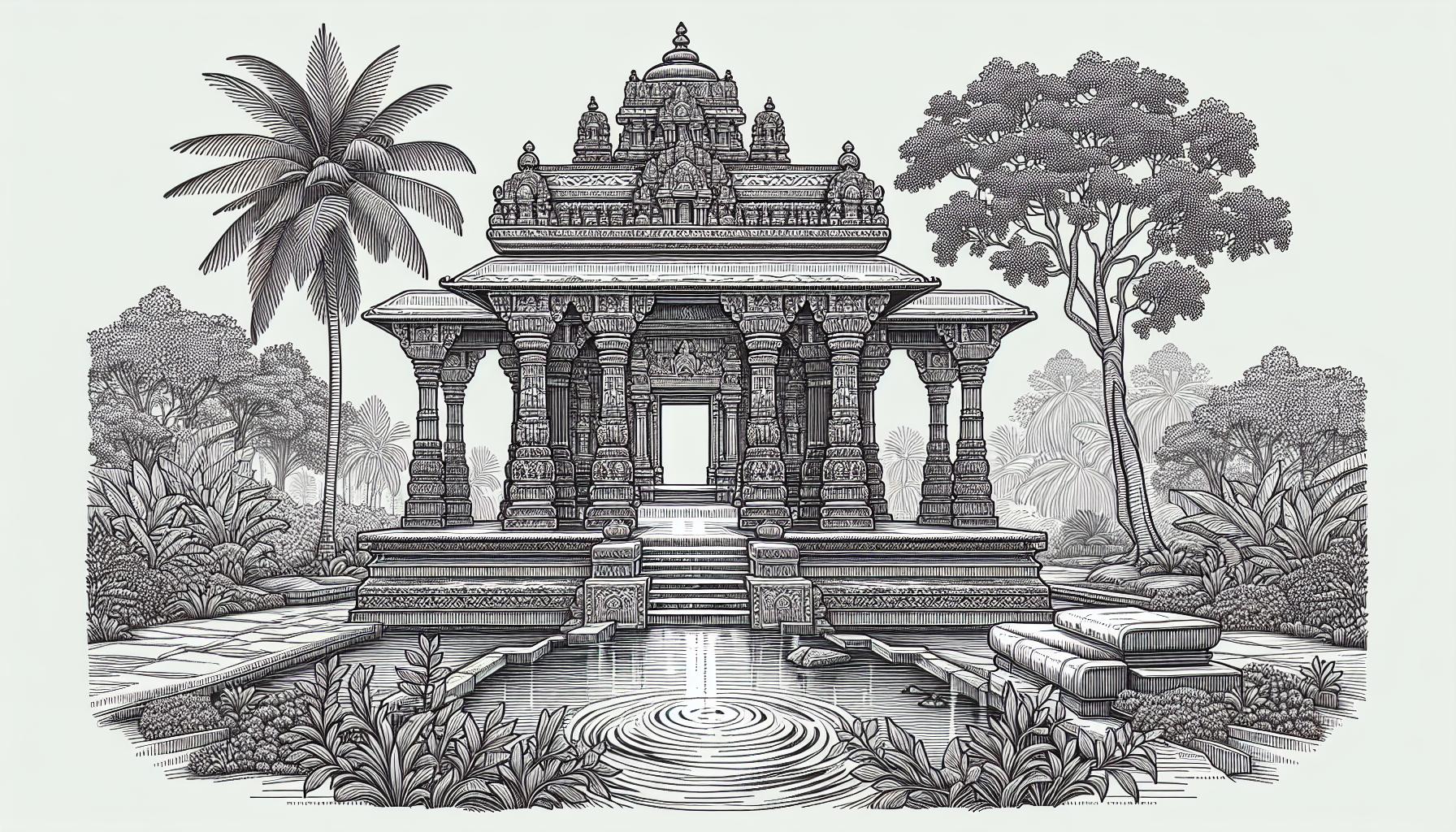
The Upanishads, forming the concluding part of the Vedas, encapsulate the spiritual philosophies of Hinduism. They delve into profound metaphysical questions, emphasizing inner vision and knowledge.
Major Upanishads
Several Upanishads are highly revered in Hindu philosophy. The Isha Upanishad teaches the unity of God and the world. The Kena Upanishad explores the nature of Brahman, the Supreme Reality. The Katha Upanishad contains the dialogue between Nachiketa and Yama on the afterlife and the nature of the self.
Other notable texts include the Mundaka Upanishad, emphasizing the difference between higher and lower knowledge, and the Mandukya Upanishad, which analyzes the significance of the syllable AUM. The Taittiriya Upanishad offers insights on ethics and moral duties while the Aitareya Upanishad addresses creation and the purpose of life.
Key Teachings
The Upanishads focus on several core teachings. The concept of Brahman represents the ultimate, unchanging reality, transcending the physical world. Another key teaching, Atman, refers to the inner self or soul, which is eternal and identical with Brahman.
The principle of Moksha highlights liberation from the cycle of birth and death, attainable through self-realization and knowledge. The law of Karma intertwines actions with future consequences, influencing one’s journey to liberation. Finally, the practice of meditation and self-inquiry is emphasized for attaining higher knowledge and connecting with one’s inner self.
Epics: Mahabharata – The Great Epic and Ramayana
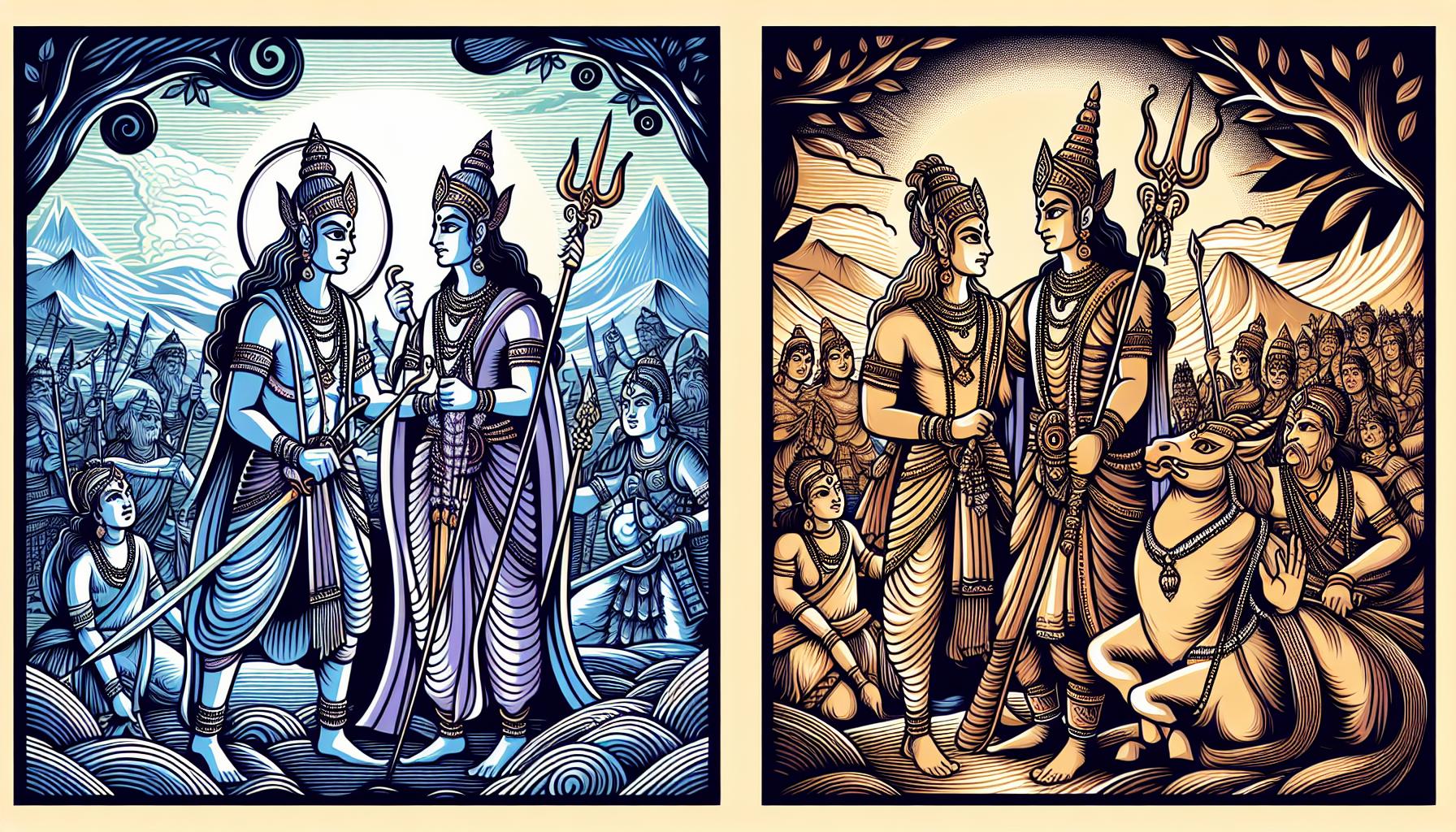
The Mahabharata and Ramayana, two of India’s most important epics, serve as both timeless spiritual guides and rich cultural narratives. These texts, deeply integrated into Indian culture, offer insights into dharma, devotion, and the complexities of human nature.
Mahabharata Overview
The Mahabharata, composed around 400 BCE to 400 CE, is among the longest epics in world literature, with over 100,000 shlokas (verses) across 18 parvas (books). It narrates the story of the Kuru dynasty, focusing on the conflict between the Pandavas and the Kauravas. Central to the Mahabharata is the Bhagavad Gita, a 700-verse text where Lord Krishna imparts spiritual wisdom to the warrior Arjuna.
Key themes in the Mahabharata include duty, righteousness, and the struggles of life. Characters like Bhishma, Karna, and Draupadi highlight the complex interplay of dharma (duty) and adharma (unrighteousness). The Mahabharata also addresses governance, leadership, and ethics, making it a multifaceted guide to personal and societal conduct.
Ramayana Overview
The Ramayana, attributed to the sage Valmiki, dates back to around 500 BCE to 100 BCE. Consisting of 24,000 shlokas (verses) distributed across seven kandas (books), it narrates the life of Lord Rama, his exile, the abduction of his wife Sita by the demon king Ravana, and his eventual return to Ayodhya.
The Ramayana emphasizes ideals such as loyalty, duty, and righteousness. Characters like Rama, Sita, Lakshmana, and Hanuman illustrate virtues like self-sacrifice, devotion, and courage. Themes of good versus evil, the importance of family, and the pursuit of dharma resonate throughout the epic, providing moral and cultural guidance to millions.
By exploring these epics, I gain a deeper understanding of India’s spiritual and cultural heritage, noting how they continue to influence modern Indian society and thought.
Puranas and Their Influence
The Puranas occupy a significant place in India’s religious history, offering rich narratives that interweave mythological lore, cosmology, and moral teachings. These texts, composed between 300 and 1500 CE, continue to shape Hindu practices and philosophy.
Popular Puranas
There are 18 major Puranas, each dedicated to various deities, creation myths, and historical legends.
- The Bhagavata Purana centers around Lord Krishna and emphasizes devotion (bhakti) through stories of his life and teachings. It has profoundly influenced Indian arts and culture.
- The Vishnu Purana focuses on Lord Vishnu and his incarnations, detailing creation and the cosmological order. It serves as a reference for Vishnu worship and temple rituals.
- The Shiva Purana glorifies Lord Shiva through various legends, exploring his roles as creator, preserver, and destroyer of the universe. This text guides Shiva-centric traditions.
- The Devi Bhagavata Purana celebrates the Divine Feminine, portraying Goddess Devi’s exploits and her manifestations. It boosts the Shakti worship tradition.
Mythological Narratives
The Puranas are treasure troves of mythological narratives, each weaving a tapestry of divine and heroic exploits.
- Legends of Creation recount the origins of the cosmos and the gods, reflecting Hindu cosmological views.
- Heroic Tales, such as those of King Harishchandra and Savitri, illustrate ideal virtues like truth and devotion.
- Battle Stories often depict clashes between gods and demons, symbolizing the struggle between good and evil.
These narratives not only entertain but also offer moral guidance, underpin Hindu rituals, and foster a sense of collective identity among devotees.
The extensive influence of the Puranas reaches all facets of Hindu life, from daily rituals to festive celebrations, underscoring their enduring impact on Indian religious and cultural landscapes.
Jain Texts: Agamas and Kalpasutra
Jainism, an ancient religion originating in India, has foundational texts that guide its philosophy and practices. The Agamas and Kalpasutra are central to Jain canonical literature.
Core Principles
Core principles of Jainism include non-violence, truthfulness, and asceticism. The Agamas outline these principles, stressing non-violence (Ahimsa) in thought, word, and action. Truthfulness (Satya) requires speech to align with the inner truth. Non-stealing (Asteya) emphasizes not taking what isn’t willingly offered. Celibacy (Brahmacharya) promotes detachment from sensual pleasures. Non-possession (Aparigraha) teaches renunciation of material goods.
Textual Analysis
The Agamas are Jain canonical scriptures containing Mahavira’s teachings, the 24th Tirthankara. These texts address conduct, philosophy, and knowledge. The Svetambara sect primarily follows 45 Agamas, while the Digambara sect believes original scripts were lost.
The Kalpasutra, another vital text, compiled by Bhadrabahu, details Mahavira’s life, lineage of Tirthankaras, and monastic code. This scripture is read during Paryushana, an important Jain festival, to reaffirm faith and adherence to Jain principles.
Buddhist Scriptures: Tripitaka
The Tripitaka, also known as the Pali Canon, forms the foundation of Buddhist literature. It consists of three “baskets,” containing comprehensive teachings of Buddha.
Structure and Content
The Tripitaka embodies three primary categories: the Vinaya Pitaka, the Sutta Pitaka, and the Abhidhamma Pitaka. The Vinaya Pitaka includes texts on monastic discipline, containing rules (Patimokkha) that govern the Sangha (monastic community). The Sutta Pitaka holds discourses and sermons attributed to Buddha, divided into five Nikayas: Digha, Majjhima, Samyutta, Anguttara, and Khuddaka. The Abhidhamma Pitaka discusses philosophical and psychological analyses of Dharma (law and order).
Influence on Indian Culture
The Tripitaka has significantly influenced Indian culture and religious practices, particularly in regions with strong historical Buddhist presence like Bihar and Uttar Pradesh. It guides ethical and moral conduct, shaping social structures and individual behaviors. The teachings provide a path towards enlightenment and emphasize values such as mindfulness, compassion, and wisdom. Ancient universities like Nalanda and Vikramashila incorporated Tripitaka studies, spreading Buddhist philosophy throughout Asia.
Conclusion
Exploring India’s religious texts reveals a rich tapestry of spiritual wisdom and ethical guidance that has shaped the country’s cultural and historical landscape. From the profound philosophies of the Vedas and Upanishads to the epic narratives of the Mahabharata and Ramayana these texts offer timeless insights into human nature and morality.
Jainism and Buddhism further enrich this spiritual heritage with their unique scriptures emphasizing non-violence compassion and wisdom. These teachings continue to influence Indian society fostering a deep sense of ethical conduct and spiritual awareness.
Understanding these texts not only provides a window into India’s diverse religious traditions but also highlights their enduring relevance in today’s world.
Sources & further reading
These themes are explored in greater depth across the following authoritative resources:
- Stanford Encyclopedia of Philosophy, Hindu Philosophy
- Mythopedia, Hindu Mythology
- Britannica, Hindu Mythology
- Sheldon Pollock, The Language of the Gods in the World of Men (University of California Press, 2006)
- A. K. Ramanujan, The Collected Essays (Oxford University Press, 1999)
External resources for further reading. Apam Napat is not affiliated with these publishers; citation does not imply endorsement.
Frequently asked questions
What are the main religious texts of India?
What are the four Vedas?
What is the Tripitaka in Buddhism?
When was the Guru Granth Sahib compiled?
What are the Jain Agamas?
Based on the classical texts of Hindu mythology, see our sources.