

Embarking on an Upanishadic inner journey isn’t just about reading texts; it’s about experiencing a transformative process that challenges our perceptions and expands our consciousness. As we navigate this path, we uncover layers of understanding that reveal the interconnectedness of all life and the divine spark within each of us. Join me as we explore the essence of this spiritual voyage and discover how it can enrich our lives.
Understanding the Upanishads
The Upanishads, part of the Vedic literature, offer profound philosophical insights. Written in Sanskrit, these texts date from around 800 to 500 BCE. There are four Vedas, and the Upanishads form the concluding part of these sacred texts, often referred to as Vedanta, meaning “the end of the Veda.”
Core Themes
The Upanishads focus on several core themes:
- Brahman – The Supreme Truth: The ultimate, unchanging reality, comprising pure being and consciousness.
- Atman – The Soul: The individual soul or self, considered identical with Brahman in its true nature.
- Maya: The illusion or ignorance that veils true understanding.
- Moksha: Liberation from the cycle of birth and rebirth, achieved through the realization of Atman-Brahman unity.
Major Upanishads
Among the 108 Upanishads, some are particularly significant:
- Isha Upanishad: Discusses the concept of the ‘Lord of the Universe’ and the inner self.
- Kena Upanishad: Explores the nature of knowledge and the knower.
- Katha Upanishad: Narrates the dialogue between a young boy, Nachiketa – The Boy Who Obtained the Secrets of Death, and Yama, the god of death.
- Mundaka Upanishad: Delves into the nature of Brahman and the way to know it.
- Mandukya Upanishad: Examines the states of consciousness and the syllable “Om.”
Philosophical Concepts
The Upanishads explore several philosophical concepts:
- Tat Tvam Asi: “Thou art that,” indicating the unity of Atman and Brahman.
- Aham Brahmasmi: “I am Brahman,” a realization of one’s true identity.
- Neti Neti: “Not this, not that,” a method of understanding Brahman by negation.
- Satyam Jnanam Anantam Brahma – The Creator: Brahman is truth, knowledge, and infinity.
Practices Derived from Upanishads
Many spiritual practices stem from Upanishadic teachings:
- Meditation: Aimed at realizing the oneness of Atman and Brahman.
- Self-Inquiry: Questioning one’s nature to understand the self.
- Yoga: Used as a method to control the mind and senses to achieve enlightenment.
The Upanishads serve as a guide to transcending ordinary experience to realize deeper aspects of existence, emphasizing the inner journey of self-discovery and spiritual awakening.
The Concept of Inner Journey
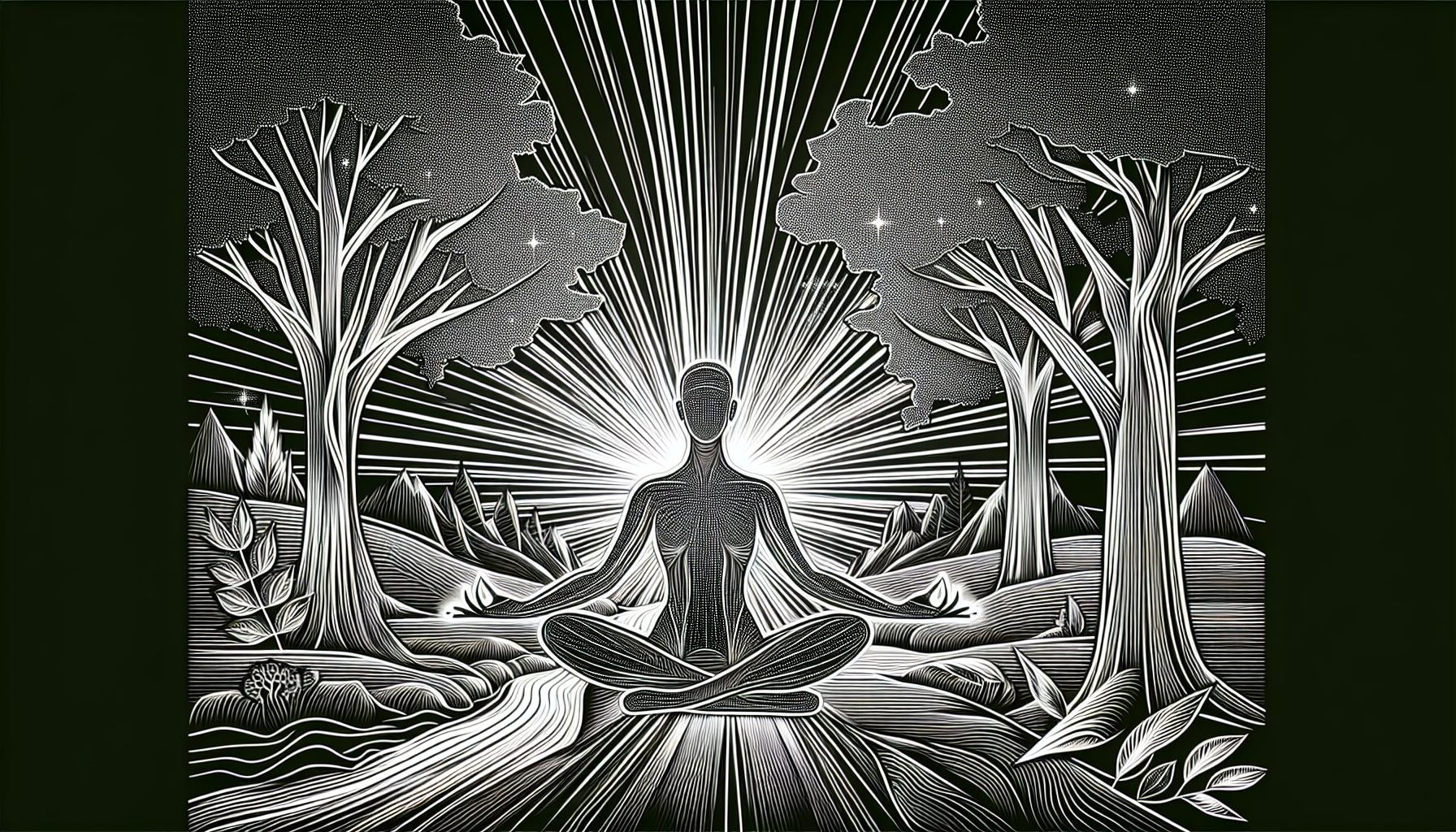
The Upanishadic inner journey revolves around attaining a deeper understanding of oneself and the universe. It’s an intricate path of self-discovery and spiritual growth.
Spiritual Exploration
Spiritual exploration in the Upanishads involves delving into the essence of reality and existence. The texts encourage individuals to go beyond the material world and seek the ultimate truth, Brahman. For example, the Isha Upanishad starts with the prayer to see the truth hidden behind the cosmic veil, urging seekers to perceive the divine in everything. This journey often includes meditative practices, contemplation, and rituals that help a connection with one’s higher self.
Self-Realization
Self-realization is a core goal in the Upanishadic inner journey. It centers on understanding the true nature of oneself, Atman, and recognizing its unity with Brahman. Take, for instance, the philosophy of “Tat Tvam Asi” from the Chandogya Upanishad, meaning “Thou art that,” which signifies the non-duality of individual soul and the universal spirit. Through self-inquiry and disciplined spiritual practices, individuals realize their divine essence, achieving liberation or Moksha from the cycles of birth and death.
Key Teachings of the Upanishads
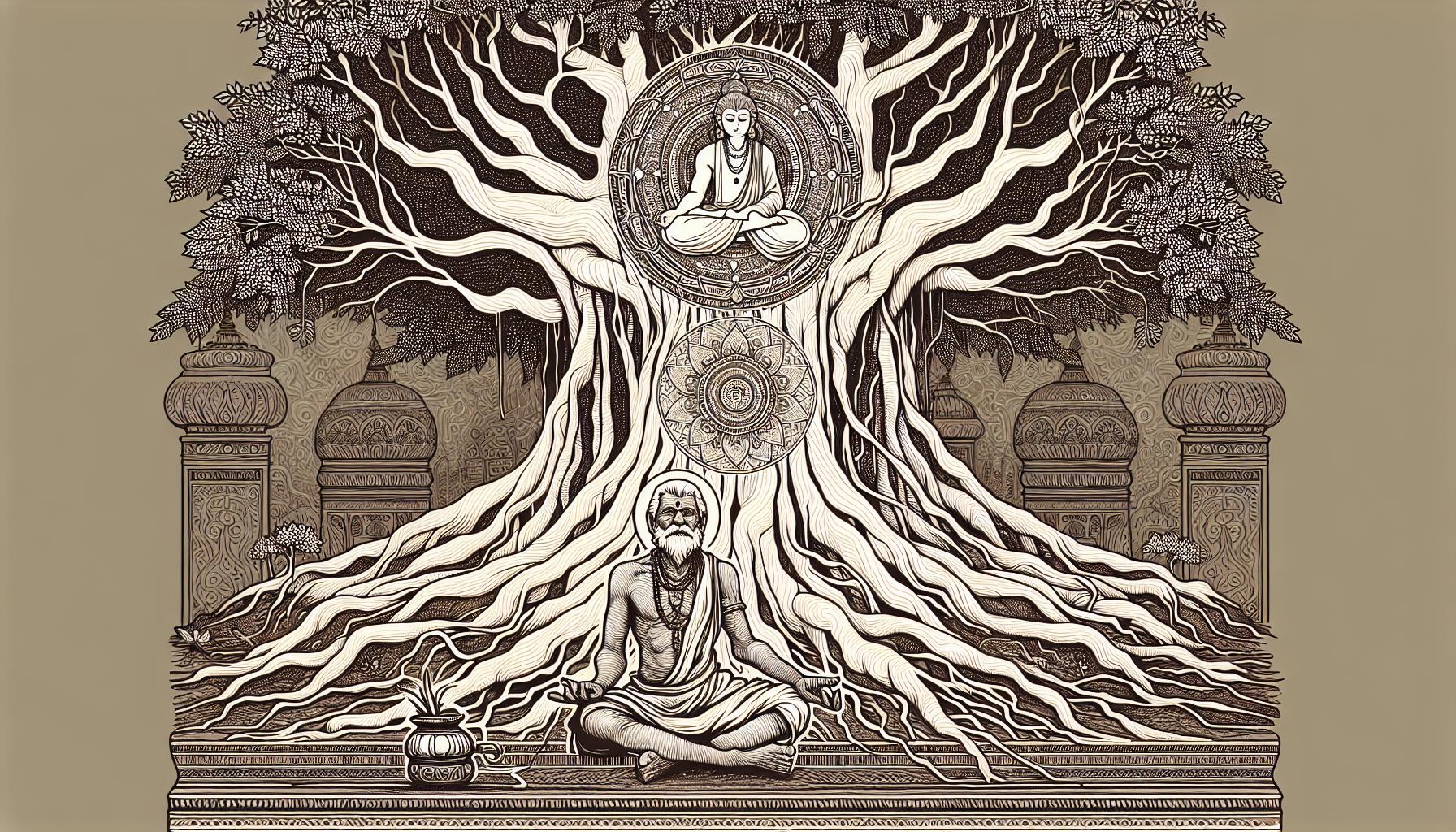
The Upanishads, as ancient Indian scriptures, offer profound spiritual insights and guidance. Their key teachings revolve around the concepts of Brahman, Atman, Karma, and Dharma. These core ideas form the foundation for understanding the inner journey toward self-realization.
Brahman and Atman
Brahman represents the ultimate reality, the unchanging cosmic principle underlying all existence. It’s described as infinite, eternal, and beyond sensory perception. Atman refers to the innermost self or soul, the true essence of an individual that remains constant amidst life’s changes. The Upanishads teach that Brahman and Atman are one and the same, signifying the unity of the individual soul with the cosmic reality. For instance, the Chandogya Upanishad regularly emphasizes this unity through the phrase “Tat Tvam Asi” (Thou Art That).
Karma and Dharma
Karma involves actions and their outcomes, encapsulating the law of cause and effect. Every action generates karma, which influences one’s future experiences, ensuring that deeds align with spiritual goals. Dharma signifies the moral order, duties, and righteous path one must follow. It’s unalterable, guiding ethical behavior in harmony with cosmic principles. The Bhagavad Gita often elaborates on these concepts, explaining one’s duty sans attachment to outcomes.
The teachings of Brahman and Atman offer insights into the essence of existence, while Karma and Dharma provide a framework for ethical living. This knowledge assists in exploring the spiritual path towards Moksha, liberation from the cycles of birth and death.
Stages of the Inner Journey
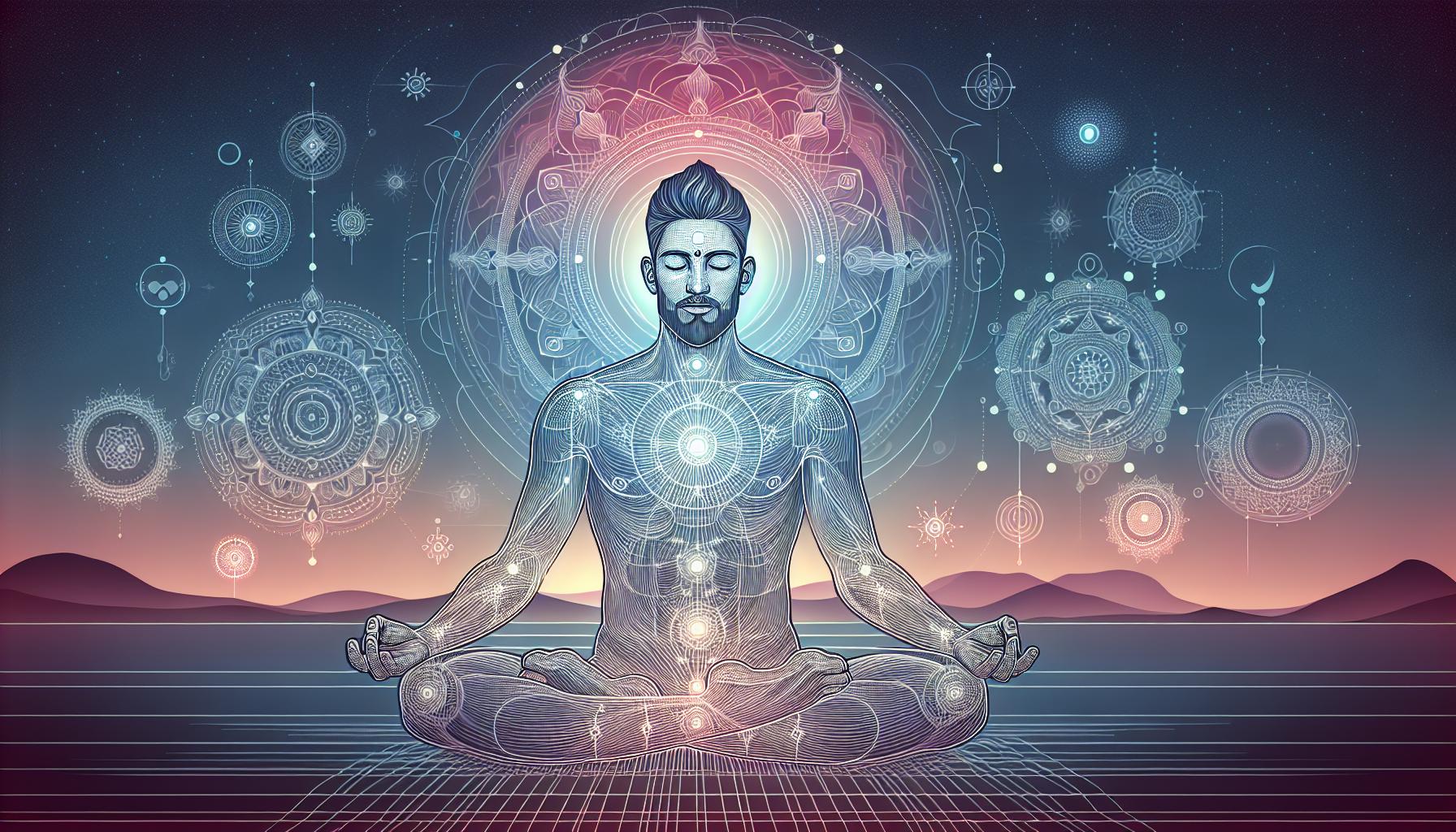
The Upanishads describe an inner journey through three main stages. These stages guide individuals from initial contact with sacred teachings to profound self-realization.
Sravana (Hearing)
In Sravana, one listens to the teachings of the Upanishads. Ancient sages emphasized hearing scriptures from a qualified guru. For example, listening to verses about Brahman and Atman lays the foundation. Sravana facilitates firsthand understanding, establishing the groundwork for further contemplation.
Manana (Reflection)
In Manana, one reflects on the teachings received during Sravana. This involves deep contemplation to internalize the concepts. For instance, reflecting on “Tat Tvam Asi” helps resolve doubts. Manana turns knowledge into wisdom by fostering intellectual clarity and conviction about the truths heard.
Nididhyasana (Meditation)
In Nididhyasana, one meditates on the truths internalized during Manana. Meditation deepens realization and eliminates residual ignorance. Practicing Nididhyasana on teachings like “Aham Brahmasmi” leads to direct experience of oneness with Brahman. This stage is essential for achieving self-realization and spiritual awakening.
Impact on Modern Spirituality
Upanishadic teachings profoundly influence modern spirituality. These ancient texts offer timeless wisdom that resonates with contemporary seekers.
Influence on Contemporary Thinkers
Prominent contemporary thinkers draw inspiration from the Upanishads. Philosophers like Aldous Huxley and Carl Jung incorporate Upanishadic concepts into their works. Huxley’s “The Perennial Philosophy” references Brahman and Atman, highlighting the universal spiritual truths. Jung’s exploration of the collective unconscious parallels Upanishadic ideas of universal consciousness. These thinkers appreciate the wisdom of self-realization and spiritual awakening.
Integration into Western Practices
Western practices seamlessly integrate Upanishadic teachings. Yoga schools incorporate concepts like Atman and Brahman into their teachings. Meditation practices emphasize self-inquiry inspired by Neti Neti (not this, not that). Spiritual retreats often include readings from Upanishads, guiding participants towards moksha (liberation). These integrations demonstrate the Upanishads’ relevance and adaptability in modern Western spirituality.
Upanishadic wisdom continues to guide contemporary spirituality, offering insights into self-discovery and enlightenment.
Personal Reflections and Experiences
Exploring the Upanishadic inner journey has deeply transformed my understanding of self and the universe. The teachings of the Upanishads have offered a profound shift in perception, moving from seeking external achievements to valuing inner wisdom and spiritual growth.
Embracing introspection, I found that delving into self-reflection, as prescribed in these texts, led me to confront layers of identity and ego. This process of seeking the true self, or Atman, detached me from materialistic pursuits and emphasized the importance of renunciation and mental discipline.
With guidance from spiritual teachers, my path became more structured and meaningful. These mentors, well-versed in Upanishadic teachings, highlighted the subtleties in the scriptures, helping me navigate the complexities of renunciation and self-control.
Engaging in practices like meditation and self-inquiry has been essential. These practices bolstered my journey, enabling me to differentiate between the transient and the eternal, a core aspect of Upanishadic philosophy. The disciplined control of the senses, another key teaching, has brought clarity and peace in my daily life.
The Upanishads emphasize experiential wisdom, not just theoretical knowledge. My personal reflections and experiences have consistently shown that true understanding comes from living these teachings, integrating their principles into everyday actions and thoughts. This alignment with the deeper truths of existence has been a pivotal part of my spiritual journey.
Conclusion
Exploring the Upanishads has profoundly transformed my understanding of self and the universe. Shifting my focus from external achievements to inner wisdom has been a journey of immense growth. Embracing introspection and self-reflection, as prescribed in these ancient texts, led me to confront layers of identity and ego.
Guided by spiritual teachers well-versed in Upanishadic teachings, I found structure and meaning in my path. Practices like meditation and self-inquiry have been essential, helping me differentiate between the transient and the eternal. The emphasis on experiential wisdom over theoretical knowledge has aligned me with the deeper truths of existence.
The Upanishadic inner journey is a transformative path that offers profound insights and lasting spiritual growth. It’s a journey worth embarking on for anyone seeking deeper understanding and unity with the ultimate reality.
Sources & further reading
These themes are explored in greater depth across the following authoritative resources:
- Internet Sacred Text Archive, Rig Veda (Griffith translation)
- Internet Sacred Text Archive, Upanishads
- Britannica, Veda
- Britannica, Upanishad
- Patrick Olivelle, The Early Upanishads (Oxford University Press, 1998)
External resources for further reading. Apam Napat is not affiliated with these publishers; citation does not imply endorsement.
Based on the classical texts of Hindu mythology, see our sources.