

When I first delved into the Upanishads, I discovered a treasure trove of wisdom that transcends time and culture. The teachings emphasize inner exploration and self-realization, urging us to look beyond the material world and connect with our true essence. This journey of spiritual awakening isn’t just enlightening—it’s life-changing.
Understanding Upanishadic Spiritual Awakening
Upanishadic spiritual awakening revolves around the exploration of deep-seated truths within ancient Hindu texts, the Upanishads. These texts provide a roadmap for understanding the core principles that define human existence and the universe.
Key Concepts
Brahman – The Supreme Truth and Atman – The Soul
The Upanishads place significant emphasis on Brahman and Atman. Brahman represents the ultimate reality, the cosmic spirit or universal truth. Atman refers to the individual soul, the innermost essence of a person. The core objective is to realize the unity between Brahman and Atman, understanding that the individual soul is fundamentally connected to the universal spirit.
Dharma, Karma, Samsara, and Moksha
The principles of Dharma, Karma, Samsara, and Moksha are central in the Upanishads:
- Dharma: Pertains to personal responsibilities aligned with one’s social role, age, and gender.
- Karma: States that every action has consequences, impacting one’s future experiences.
- Samsara: Describes the continuous cycle of birth, death, and rebirth.
- Moksha: Represents liberation from Samsara, achieving enlightenment and freedom from the cycle of rebirth.
Self-Realization
The Upanishads advocate for self-realization through introspection and contemplation. By turning inward and examining the true nature of the self and the universe, individuals can attain self-awareness. This elevated state of consciousness is essential for spiritual growth and eventually leads to a transformative experience, guiding one towards enlightenment.
Upanishadic spiritual awakening, intertwined with these key concepts, serves as a profound journey. It not only offers insights into the essence of existence but also fosters an inner awakening that resonates deeply with the pursuit of universal truths.
Historical Context of the Upanishads

The Upanishads are ancient Indian texts forming the concluding part of the Vedas. Written between 800 BCE and 500 BCE, they culminate Vedic thought, focusing on reality, the self, and ultimate reality.
Origins and Development
The Upanishads emerged during the Vedic period. They represent a shift from ritualistic practices to spiritual contemplation. Initially passed down orally, these texts were later written in Sanskrit. They contain numerous terms, concepts, and methods that influenced India’s philosophical schools.
- Atman and Brahman: Emphasizes the connection between the individual soul (atman) and the ultimate reality (Brahman).
Major Themes in the Upanishads
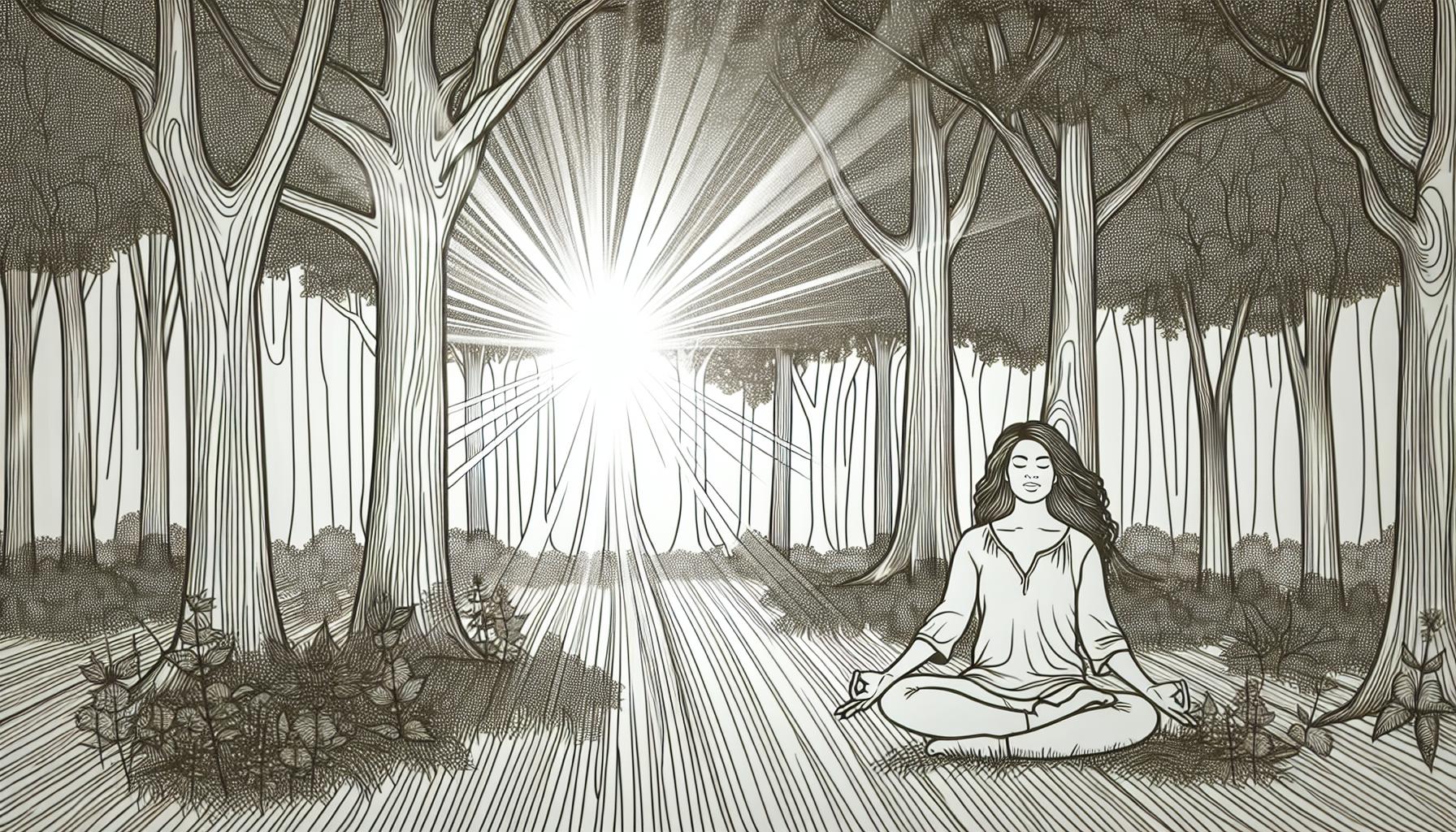
The Upanishads encompass several major themes central to Hindu philosophy and spiritual inquiry. These themes guide seekers towards understanding cosmic and personal realities.
Transition from Ritualism to Spiritual Inquiry
The Upanishads highlight a pivotal transition from ritualism to spiritual inquiry. They shift focus from performing Vedic rituals to seeking deeper insights into reality and consciousness. Unlike earlier texts, these works prioritize introspection over external ceremonies.
Cosmic Realities and the Human Body
Explorations of cosmic realities and the human body dominate the Upanishadic texts. They propose the interconnectedness of the individual soul (Ātman) with the universal spirit (Brahman). For instance, the Chandogya Upanishad discusses the synergy between cosmic functions and individuals’ existence.
Meditation, Philosophy, and Consciousness
Meditation, philosophy, and consciousness form core themes in the Upanishads. These texts investigate into the nature of the self and the universe, advocating meditation as a means to transcend worldly illusions. The Mandukya Upanishad, for example, elaborates on the states of consciousness and their relation to ultimate reality.
The Concept of Brahman
Brahman, the ultimate reality or world spirit, is a principal concept in the Upanishads. It’s described as infinite, eternal, and the source of all that exists. The Isha Upanishad refers to Brahman as encompassing everything yet remaining beyond sensory perception. Understanding Brahman involves recognizing its presence within and beyond the individual self.
The Atman and Its Significance
Atman, the inner self or soul, holds great significance in Upanishadic teachings. These texts teach that realizing Atman’s true nature leads to liberation (moksha). The Brihadaranyaka Upanishad emphasizes that knowing the Atman is key to understanding the universe. Recognizing Atman within oneself and others fosters a sense of unity with Brahman.
The Role of Meditation and Yoga
Meditation and yoga are vital practices in the Upanishads. They’re means to achieve self-realization and spiritual awakening. The Katha Upanishad details how disciplined meditation can unite the mind with the soul, leading to a deeper understanding of Brahman. Yoga, in these contexts, isn’t merely physical exercise but a disciplined approach to controlling the mind and senses.
Personal Experiences of Awakening
Personal experiences of Upanishadic spiritual awakening often involve profound transformations in an individual’s perception and understanding of themselves and the universe.
Historical Accounts
Historical accounts of Upanishadic spiritual awakening can be found in ancient Indian texts like the Upanishads and the Bhagavad Gita. These texts describe the process of self-realization and attaining higher states of consciousness. For example, the Bhagavad Gita discusses the concept of “Atman” or the individual self and its relationship with the ultimate reality, “Brahman.”
Modern Interpretations
Modern interpretations of Upanishadic spiritual awakening reflect the diverse ways individuals today experience these profound shifts. Practices like meditation, mindfulness, and yoga have gained widespread popularity as tools to achieve this awakening. Traumatic events, major life changes, and existential crises can also act as catalysts. Personal narratives often share themes of newfound clarity, a sense of unity with the universe, and a deeper understanding of one’s purpose in life.
The Relevance of Upanishadic Teachings Today
Upanishadic teachings remain profoundly relevant in modern society, addressing core human concerns and enhancing spiritual well-being. These teachings, rooted in the pursuit of self-realization, offer invaluable insights applicable today.
Application in Modern Life
Freedom from fear stands out as a significant teaching of the Upanishads. In a world grappling with anxiety, stress, and uncertainty, the emphasis on overcoming fear resonates deeply. By fostering a mindset focused on spiritual growth rather than external circumstances, these ancient texts provide a pathway to inner peace.
Non-attachment is another crucial concept. This principle encourages individuals to enjoy and appreciate life without becoming overly attached to outcomes or possessions. In a consumer-driven society, non-attachment teaches restraint, reduces suffering from loss or change, and promotes a balanced lifestyle.
Influence on Contemporary Spiritual Practices
Many contemporary spiritual practices find their roots in Upanishadic teachings. Practices like meditation, mindfulness, and yoga draw heavily from these ancient texts. These methods foster self-awareness, inner peace, and a deeper connection with the universal spirit, reflecting the upward trajectory of individuals pursuing spiritual enlightenment today.
Meditation, inspired by Upanishadic introspection, helps individuals achieve mental clarity and emotional stability. Mindfulness, a practice of living in the present moment, aligns with the Upanishadic focus on self-awareness and detachment. Yoga, incorporating physical postures and breath control, seeks to harmonize the body and mind, embodying the Upanishadic pursuit of holistic well-being.
Upanishadic teachings so continue to shape modern spirituality, guiding individuals toward a more enlightened and balanced existence.
Conclusion
Embracing the wisdom of the Upanishads can truly transform our lives. Their timeless teachings encourage us to seek deeper self-awareness and inner peace through practices like meditation and mindfulness. By integrating these principles into our daily routines we can overcome fear and cultivate a sense of non-attachment. This journey towards self-realization not only enriches our spiritual lives but also helps us navigate the complexities of modern existence with greater clarity and balance. The Upanishads remind us that the path to enlightenment is within reach urging us to look inward and connect with the universal spirit.
Sources & further reading
These themes are explored in greater depth across the following authoritative resources:
- Internet Sacred Text Archive, Rig Veda (Griffith translation)
- Internet Sacred Text Archive, Upanishads
- Britannica, Veda
- Britannica, Upanishad
- Patrick Olivelle, The Early Upanishads (Oxford University Press, 1998)
External resources for further reading. Apam Napat is not affiliated with these publishers; citation does not imply endorsement.
Based on the classical texts of Hindu mythology, see our sources.