
What makes these adaptations so compelling is their ability to blend tradition with innovation. Whether it’s a modern dance performance or a digital illustration, each rendition captures the essence of the Ramayana while adding a fresh perspective. Join me as I explore the myriad ways this timeless epic has been reimagined across different mediums and cultures.
Historical Context
The Ramayana, an ancient Indian epic poem, offers a rich historical tapestry that spans centuries and regions. Composed by the sage Valmiki – Composer of Ramayana in Sanskrit around 200 B.C.E., its oldest version lays the foundation for numerous adaptations. The Ramayana’s reach has extended across South and Southeast Asia, reflecting diverse cultures and artistic forms.
Ancient Texts and Oral Traditions
The original Sanskrit version of the Ramayana by Valmiki is the most authoritative. Over time, it has been transmitted through written texts and oral traditions. Numerous regional adaptations have emerged, including the 12th-century Tamil Ramavataram, the 12th-century Kannada Ramachandra Charitapurana, and the 16th-century Awadhi Ramcharitmanas. These works highlight the cultural and linguistic diversity in the interpretation of this epic.
Significance in Hindu Culture
The Ramayana holds immense significance in Hindu culture. It’s not just a story; it’s a moral and spiritual guide. The characters—Rama, Sita, Lakshmana, and Hanuman—embody virtues such as duty, honor, and devotion. Festivals like Diwali celebrate events from the Ramayana, and its principles permeate various aspects of daily life and religious practices.
Visual Arts Adaptations
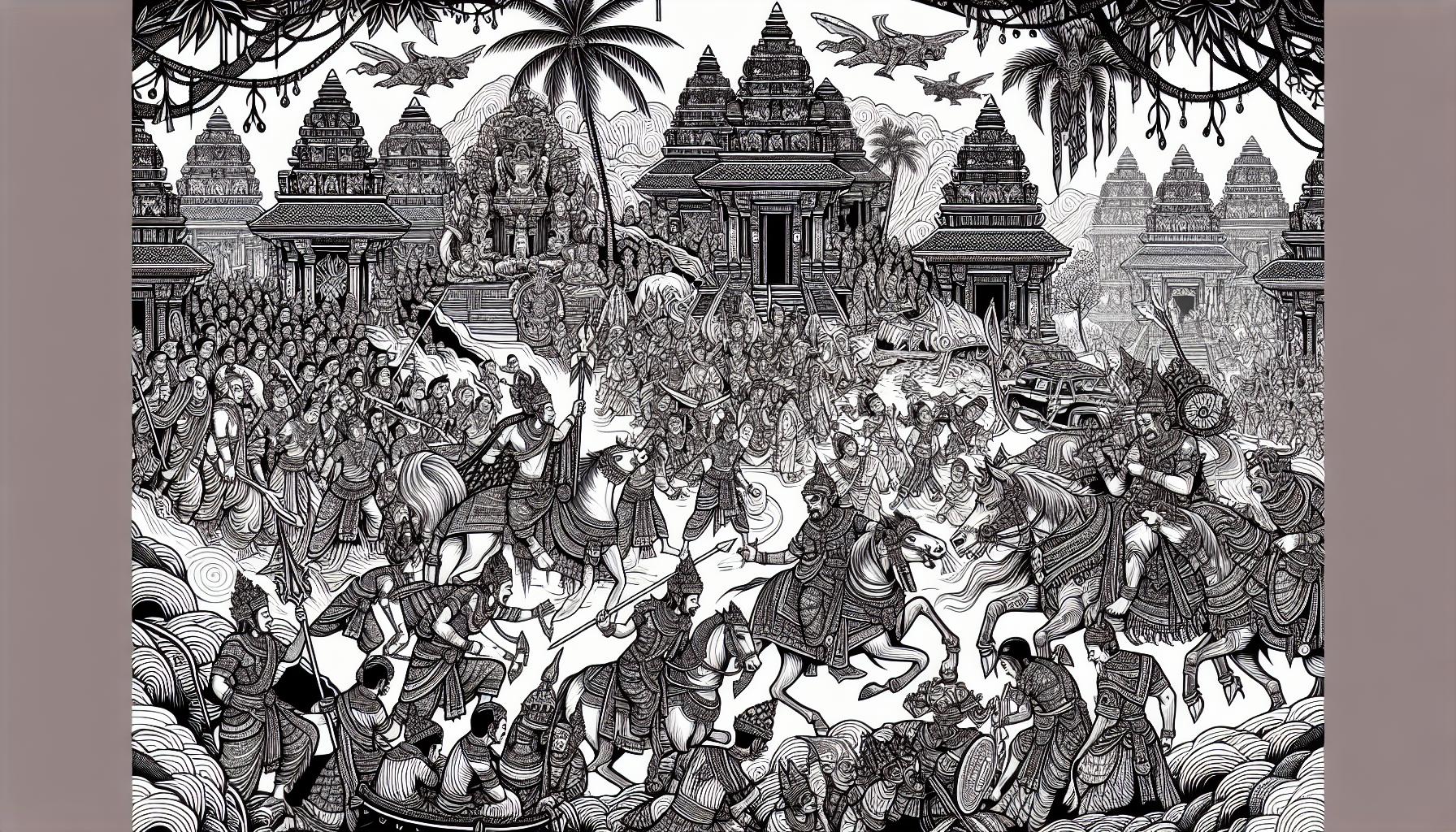
Ramayana has found its way into various visual art forms, reflecting its enduring cultural and artistic significance. Let’s explore the different adaptations that have emerged over time.
Traditional Paintings
Traditional paintings vividly capture the essence of the Ramayana. Indian and Indonesian (Balinese) artists have created numerous masterpieces depicting episodes from the epic. Renowned for their detailed and expressive style, these paintings feature key moments like the exile of Rama, the abduction of Sita, and the battle against Ravana – The Demon King.
The Salar Jung Museum boasts an extensive collection of these artworks. It includes paintings, textiles, terracotta, metal, wood, ivory, and miniature paintings from different Indian schools. Notably, a 19th-century Kalamkari panel from Srikalahasti, Andhra Pradesh, features beautifully crafted figures and Telugu script, adding a regional touch to the epic’s portrayal.
Modern Illustrations
Modern illustrations of the Ramayana continue to evolve, blending contemporary styles with traditional narratives. Graphic novels and comic books have gained popularity, making the story accessible to younger generations. Artists frequently employ digital techniques to create vivid and dynamic visuals that resonate with today’s audience.
Renowned illustrators have also adapted the Ramayana into various formats, including children’s books and educational materials. These modern illustrations ensure that the epic remains relevant by incorporating diverse artistic perspectives while staying true to its roots.
Performing Arts Adaptations
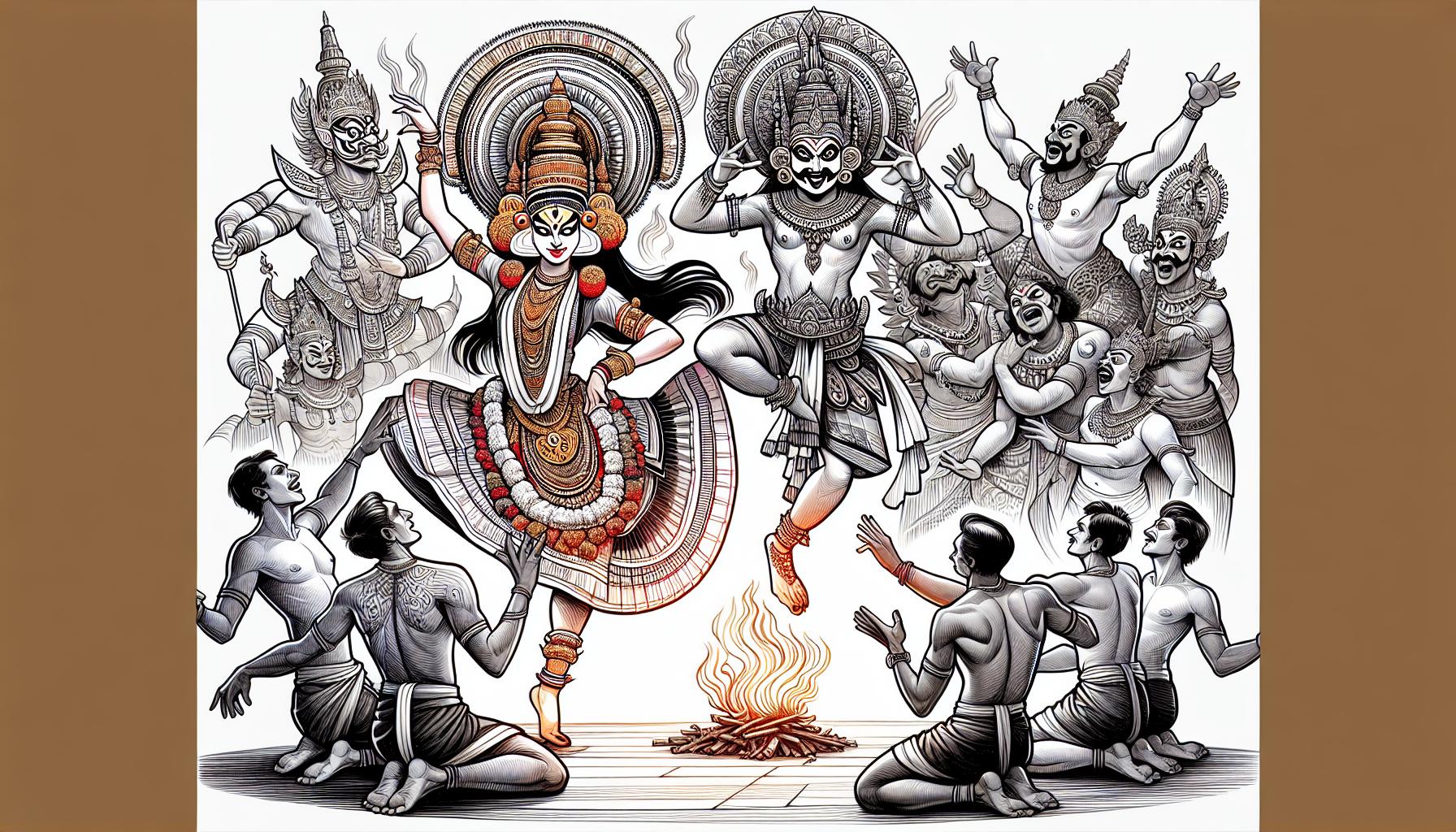
The Ramayana has inspired various performing arts adaptations, showcasing the epic’s timeless appeal. Here, I’ll discuss some classical dance forms and theater productions that bring the Ramayana to life.
Classical Dance Forms
- Kathakali: Originating from Kerala, Kathakali uses elaborate costumes and expressive gestures to narrate stories from the Ramayana. Performers train extensively to master this traditional dance-drama, combining acting, dance, and music in a vibrant display.
- Wayang Wong: In Indonesia, Wayang Wong is a Javanese dance that retells the Ramayana. Performed in cultural hubs like Yogyakarta, this dance integrates intricate movements and detailed costumes to depict key scenes from the epic.
- Kecak Dance: The Balinese Kecak Dance is well-known for its unique presentation of the Ramayana. This performance features a chorus of bare-chested men chanting “cak” and incorporates a dramatic fire show, especially during the burning of Lanka scene.
- Ramlila: In North India, Ramlila is an annual theatrical pageant that enacts the Ramayana’s events. It’s traditionally performed during the Dussehra festival, with local communities participating in a series of plays over several days, culminating in the defeat of Ravana.
Cinematic Adaptations
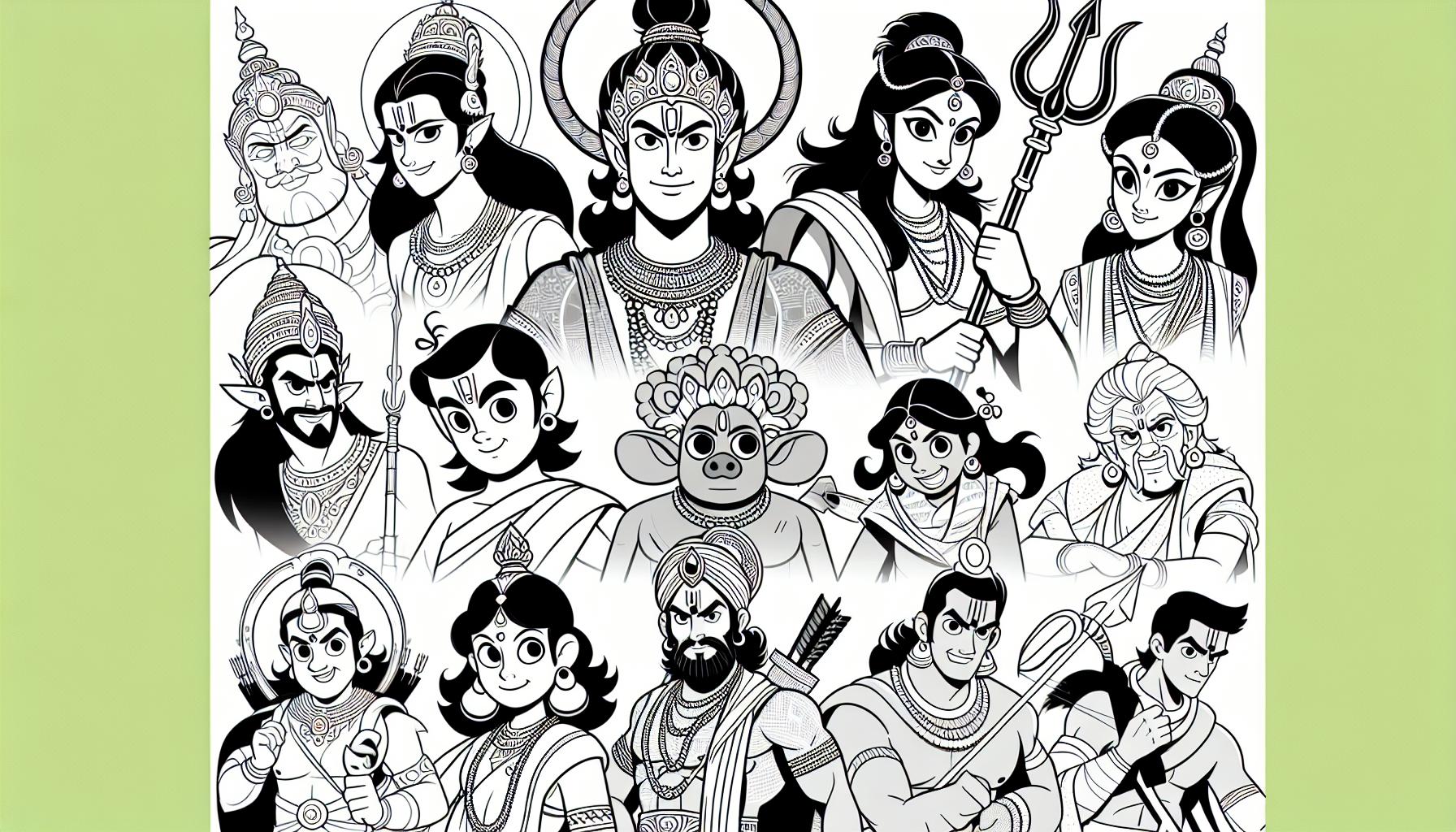
Cinematic adaptations of the Ramayana have taken many forms over the years, from animated films to popular television series. Each adaptation strives to bring a unique perspective to this timeless epic.
Early Films
A couple of noteworthy films helped shape the early landscape of Ramayana adaptations.
- Ramayana: The Legend of Prince Rama (1992): This Japanese animated film offers a retelling of Rama’s story. It captures the essence of the epic with impressive animation and storytelling.
- Sita Sings the Blues (2008): Nina Paley’s animated musical film presents the Ramayana from Sita’s perspective, set to 1920s jazz vocals. This creative approach brings a fresh and modern angle to the ancient tale.
Contemporary Movies and Series
Recent years have seen several adaptations of the Ramayana in movies and television series.
- Ramayan (1987-1988): Directed by Ramanand Sagar, this television series draws from the Ramcharitmanas and Valmiki’s Ramayana. It’s one of the most popular series in Indian TV history, captivating audiences with its faithful storytelling and compelling performances.
- Jai Hanuman (late 1990s): Directed by Sanjay Khan, this TV series recounts the tales of Hanuman and related characters from the Ramayana. It offered viewers a deeper look into Hanuman’s life and exploits.
- Ramayana: The Epic (2010): An Indian animated film that revisits the story of Rama and Sita. This adaptation aims to bring the epic to a younger audience with modern animation techniques.
- Siya Ke Ram (2015): This television series presents the Ramayana from Sita’s perspective, offering a more nuanced view of her character and experiences. It provides a refreshing retelling by focusing on Sita’s journey and her role in the epic.
Literary Adaptations
Ramayana has influenced a wealth of literary works across generations and cultures. These adaptations reflect the epic’s timeless appeal and its capacity to inspire diverse creative expressions.
Novels and Short Stories
Many authors have reimagined the Ramayana in novels and short stories, offering fresh perspectives. R. K. Narayan’s “The Ramayana” retells the epic with a straightforward narrative, making it accessible to modern readers. In “Sita’s Ramayana,” Samhita Arni and Moyna Chitrakar present the story from Sita’s viewpoint, blending prose and traditional Patua art. Ashok K. Banker’s “Ramayana Series” spans seven volumes, incorporating intricate details and deep character exploration to captivate readers.
Children’s Books
Children’s books on the Ramayana simplify the epic, making it engaging for young readers. “The Story of Rama” by India Descant introduces the characters and plot through vibrant illustrations and simple language. “Ramayana: An Illustrated Retelling” by Arshia Sattar pairs concise storytelling with beautiful pictures to hold children’s interest. “Rama and the Monkeys” by Siddharth Mehta uses an exciting, adventurous tone to capture the essence of the story while keeping it fun and educational.
Digital and Interactive Media
Ramayana’s story continues to captivate audiences through digital and interactive media. These modern adaptations offer immersive experiences by leveraging the latest technology.
Video Games
Developers have created video games that bring Ramayana’s tales to life. Games like “Hanuman: Boy Warrior” and “Ramayana 3D: Challenge of Lord Rama” let players embody characters, engaging in epic battles and quests. These games often include elements of Indian mythology and folklore, enriching the player’s cultural understanding. By incorporating action and adventure, these adaptations appeal to both younger and older audiences.
Virtual Reality Experiences
Virtual reality (VR) experiences provide a unique way to explore Ramayana’s world. Using VR headsets, users can immerse themselves in iconic scenes like the battle between Rama and Ravana or the building of the bridge to Lanka. Companies have developed VR apps that recreate the epic’s settings, allowing users to interact with characters and environments in 360 degrees. These experiences not only entertain but also educate, conveying the story’s depth and cultural significance interactively.
Conclusion
The Ramayana’s artistic adaptations continue to evolve, reflecting the timeless appeal of this ancient epic. From traditional performances to cutting-edge digital experiences, each adaptation offers unique insights and keeps the story alive for new generations. As I explore these diverse forms, I’m reminded of the Ramayana’s enduring power to inspire and educate. Whether through literature, cinema, or interactive media, the epic’s rich tapestry of characters and morals remains relevant and captivating. Embracing these adaptations, we not only preserve a cultural treasure but also ensure its resonance in our modern world.
Sources & further reading
These themes are explored in greater depth across the following authoritative resources:
- Internet Sacred Text Archive, Mahabharata (Ganguli translation)
- Internet Sacred Text Archive, Ramayana of Valmiki
- Britannica, Mahabharata
- Britannica, Ramayana
- Bibek Debroy, The Mahabharata (10 vols., Penguin, 2010 to 2014)
External resources for further reading. Apam Napat is not affiliated with these publishers; citation does not imply endorsement.
Based on the classical texts of Hindu mythology, see our sources.