
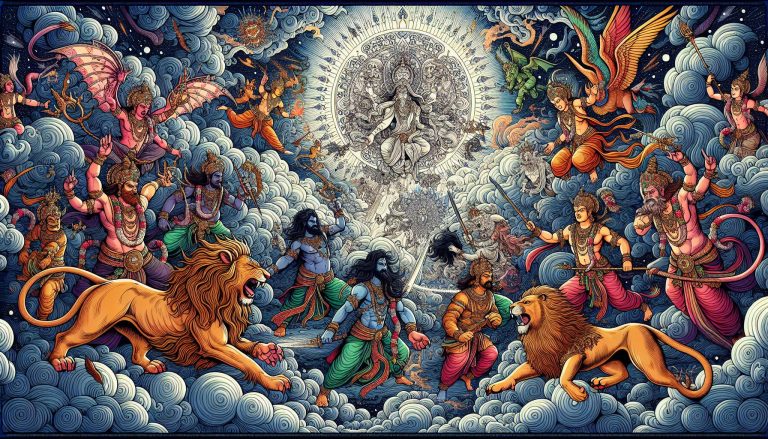
I’ve always been fascinated by how these myths use vivid imagery and intricate narratives to convey deeper truths. Whether it’s the epic battle of the Mahabharata – The Great Epic or the enchanting tales of the Puranas, each story serves as a mirror reflecting our own struggles, virtues, and flaws. Join me as we investigate into the captivating world of Hindu myth allegories and discover the lessons they hold for us.
Understanding Hindu Myth Allegories
Hindu myth allegories use symbolic storytelling to convey deeper meanings. These stories often feature gods, demons, animals, and humans in intricate scenarios. For example, the tale of the churning of the ocean, or Samudra Manthan, symbolizes the eternal struggle between good and evil forces, showcasing the pursuit of nectar (wisdom) amid chaos.
Allegorical characters embody various human traits. Gods like Vishnu and Shiva represent preservation and destruction, respectively, showing the balance of life cycles. Demons often represent negative attributes like greed and jealousy. For instance, the demon king Ravana, who abducted Sita in the Ramayana – Epic of Hinduism, exemplifies unchecked ambition and arrogance.
Allegories also employ natural elements. Mountains, rivers, and forests often play significant roles. The River Ganga, descending from Shiva’s matted hair, signifies purity and spiritual cleansing. Sacred mountains like Mount Meru symbolize the cosmic axis and the ascent towards liberation.
Stories convey moral and philosophical teachings. The Mahabharata and the Bhagavad Gita, for example, discuss duty, righteousness, and the nature of reality. Arjuna’s hesitation on the battlefield and Krishna – An Incarnation of Vishnu’s counsel highlight the conflict between personal desires and larger responsibilities.
Hindu myth allegories are rich with layers. These narratives encourage reflection and self-awareness. By delving into these stories, readers can uncover timeless wisdom and relate them to contemporary life challenges.
Prominent Hindu Myths And Their Allegories
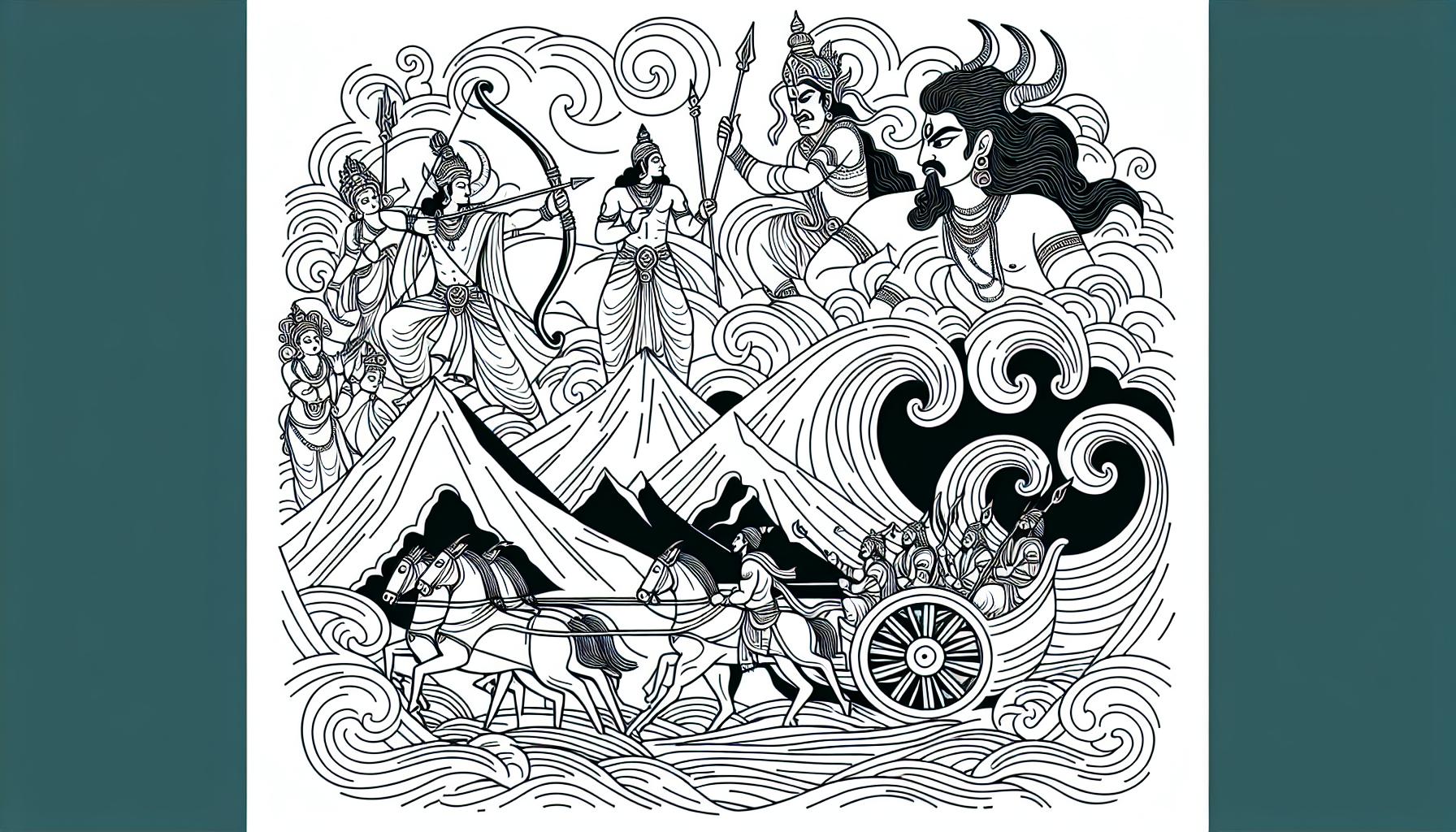
Hindu mythology contains a treasure trove of allegorical stories that offer profound lessons. Three of the most prominent myths are the Churning of the Ocean, the Ramayana, and the Mahabharata.
The Churning of the Ocean
The Churning of the Ocean, also known as Samudra Manthan, signifies the eternal struggle between good and evil. In this myth, gods (Devas) and demons (Asuras) churn the cosmic ocean using Mount Mandara as a churning rod and Vasuki, the serpent, as the rope. The churning process, which brings forth a pot of nectar (Amrita), represents the pursuit of immortality and enlightenment. Vishnu’s role as mediator illustrates the necessity of balance and cooperation, while the appearance of toxins during the churning highlights the challenges encountered on the path to spiritual growth.
The Ramayana
The Ramayana, one of the two major Sanskrit epics, primarily narrates the life of Rama, the seventh avatar of Vishnu. This epic explores the themes of duty, loyalty, and the triumph of good over evil. Rama’s journey to rescue his wife Sita from the demon king Ravana symbolizes the battle between righteousness and malevolence. Various characters, like Hanuman’s unwavering devotion and Lakshmana’s loyalty, underscore virtues such as selflessness and duty. The bridges built and the battles fought reflect internal and external struggles faced by individuals striving to uphold dharma.
The Mahabharata
The Mahabharata, the longest epic poem, offers a comprehensive exploration of human nature, duty, and the complexities of life. Central to the narrative is the Kurukshetra war between the Pandavas and the Kauravas. The Bhagavad Gita, a significant part of this epic, highlights moral dilemmas and the essence of performing one’s duty without attachment to outcomes. Krishna, as Arjuna’s charioteer and guide, delivers timeless wisdom on dharma, karma, and the pursuit of spiritual knowledge. The diverse characters and intricate subplots encapsulate various human attributes, from ambition and envy to courage and sacrifice, providing an allegorical representation of life’s trials.
Symbolism Behind Popular Hindu Allegories
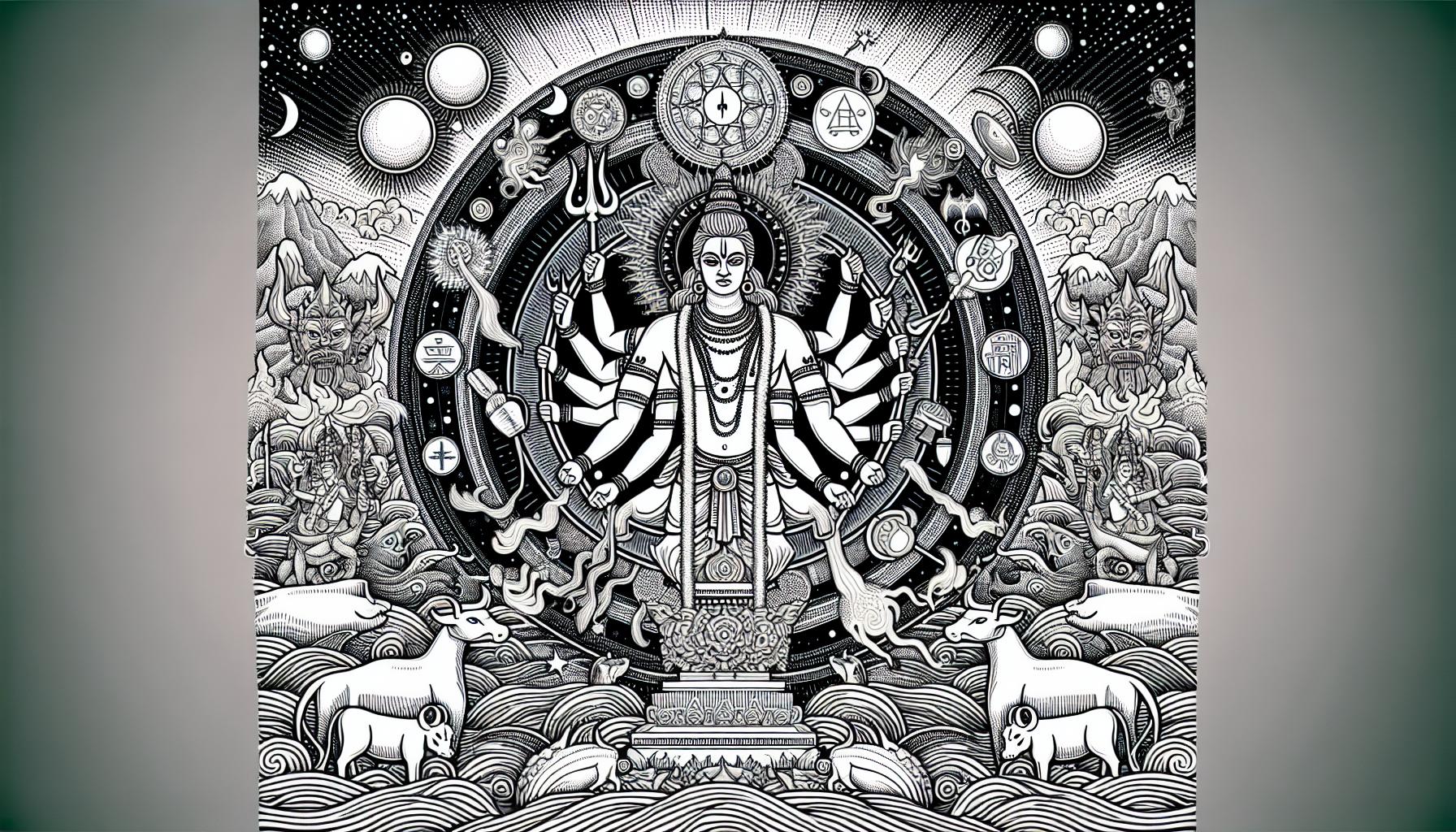
In Hindu myths, symbolism weaves through stories, providing deeper layers of meaning and insight. This section delves into how gods, demons, sacred animals, and cosmic functions carry symbolic messages.
Gods And Demons
Hindu gods and demons personify various human traits and cosmic principles. Vishnu symbolizes preservation; he maintains the universe’s balance. Shiva represents destruction and transformation, reminding us of life’s cyclical nature. Demons like Ravana embody ego, lust, and unchecked ambition. Their clashes with gods illustrate the perennial battle between virtue and vice.
Sacred Animals
Sacred animals in Hindu allegories encompass diverse attributes. Cows symbolize abundance and non-violence, reflecting cultural veneration. Hanuman, the monkey god, signifies strength, devotion, and loyalty. Serpents like Shesha represent infinity and continuity, coiled around Vishnu to embody the universe’s endless cycles. Animals in myths often transcend mere creatures, embodying principles essential to human existence.
Cosmic Functions
Cosmic functions in Hindu myths elucidate universal operations. The Churning of the Ocean, or Samudra Manthan, symbolizes the effort to achieve balance and the extraction of both good and evil from existence. The cycle of creation, preservation, and destruction—represented by Brahma, Vishnu, and Shiva—illustrates the universe’s dynamic nature. These cosmic functions teach lessons about harmony, change, and the pursuit of equilibrium in life.
Symbolic layers in these allegories offer profound insights, resonating through centuries and across cultures.
Influence Of Hindu Allegories On Culture
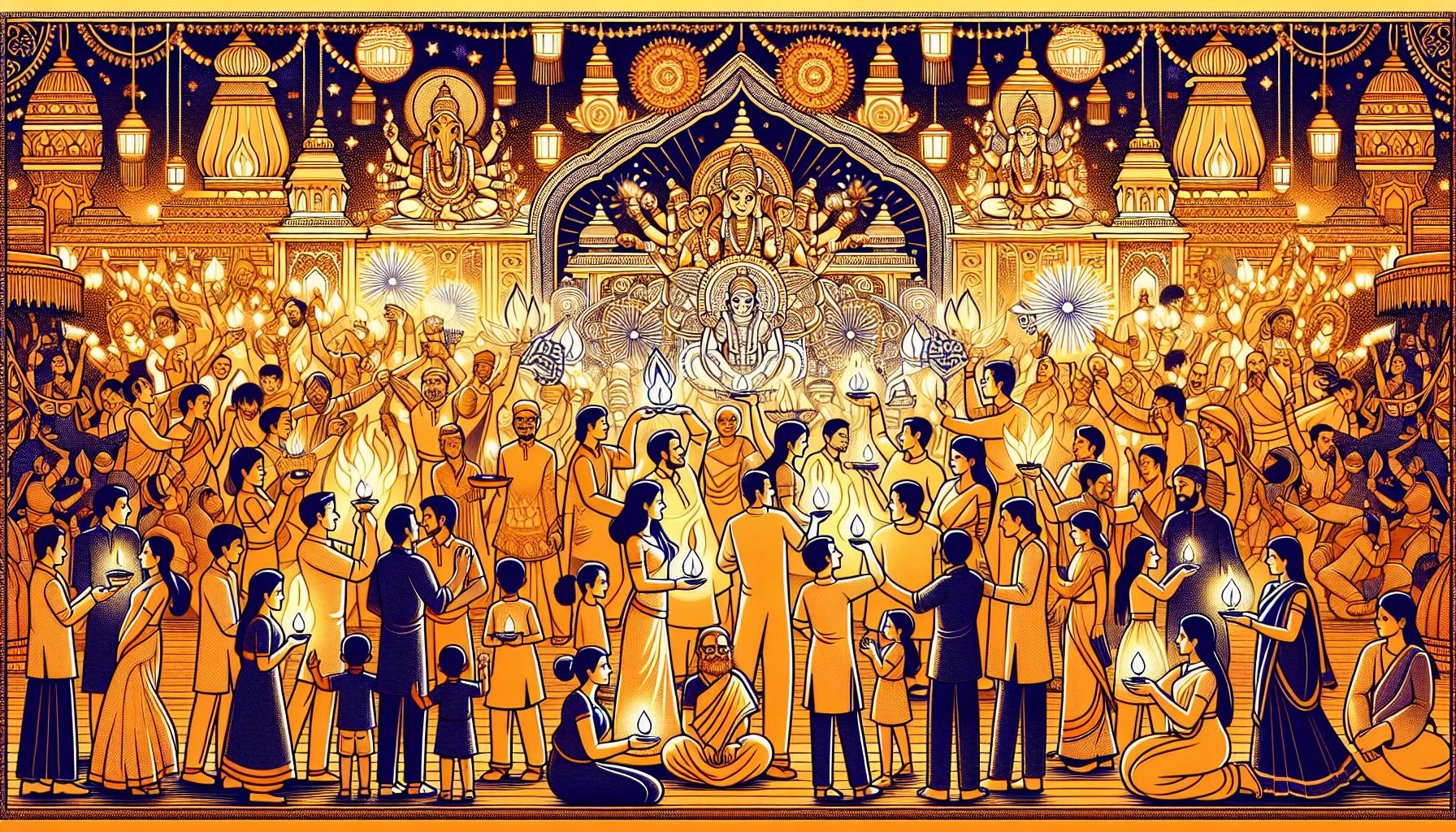
Hindu allegories have deeply influenced various aspects of culture, permeating art, literature, and religious practices. These allegories enrich the cultural heritage and offer valuable insights into human nature and cosmic principles.
Art And Literature
Artists and writers have drawn inspiration from Hindu myth allegories for centuries. Ancient texts like the Mahabharata and Ramayana provide timeless stories that inspire visual and literary arts. Painters depict scenes from these epics, embedding layers of meaning into their works. Writers create narratives that explore the moral and philosophical themes inherent in these allegories.
Famous examples include the Kalighat paintings, which illustrate scenes from Hindu myths, and poets like Kalidasa, whose works often reflect epic tales. In contemporary literature, authors like Salman Rushdie incorporate Hindu allegorical motifs, merging traditional narratives with modern storytelling. This blending of styles enhances the richness of cultural expression.
Religious Practices
Hindu allegories significantly shape religious rituals and practices. Rituals often re-enact mythological events, allowing practitioners to connect with divine narratives. Festivals like Diwali and Holi celebrate episodes from the Ramayana and Puranas, reinforcing these stories’ significance.
Customs such as storytelling sessions during Navaratri also play a vital role. Families gather to recount allegories, passing down moral lessons and spiritual teachings. Temples feature sculptures and inscriptions based on Hindu myths, providing worshippers with visual representations of these tales. This integration of allegorical content into worship highlights its importance in spiritual life.
Hindu myth allegories serve as foundational elements in various cultural practices, enhancing understanding and connection to ancient wisdom.
Critique And Contemporary Interpretations
Hindu myth allegories continuously inspire and evoke diverse opinions in modern society. In-depth analysis reveals varying perspectives and challenges in understanding these ancient narratives.
Modern-Day Relevance
Hindu myth allegories persist in their influence on contemporary life. Storylines from texts like the Mahabharata and Ramayana offer rich narratives that resonate with present-day ethical dilemmas. For example, the conflict between duty and morality, as seen in Arjuna’s hesitation on the battlefield in the Bhagavad Gita, mirrors modern-day career and personal conflicts people face. Media adaptations (films, TV series, literature) further embed these allegories into popular culture, ensuring their ongoing impact and relevance.
Interpretative Challenges
Interpreting Hindu myth allegories involves exploring complex layers of meaning. These myths, entrenched in historical and cultural contexts, sometimes clash with modern values. For example, some stories reflect patriarchal norms that don’t align with contemporary gender equality movements. Also, the symbolic language and metaphors can be obscure without a background in traditional Hindu philosophy. Scholars and enthusiasts often debate the correct interpretations, highlighting the dynamic and evolving nature of these ancient narratives.
Conclusion
Hindu myth allegories offer a wealth of wisdom that transcends time and culture. Their symbolic narratives provide deep insights into human nature and the universe, enriching our understanding of virtues, vices, and moral dilemmas. These stories continue to influence art, literature, and religious practices, embedding themselves into the fabric of society.
As we navigate modern ethical challenges, the timeless lessons from Hindu allegories remain relevant and thought-provoking. They inspire contemporary adaptations and provoke meaningful debates, highlighting their enduring significance. Through these rich narratives, we gain a deeper appreciation of the spiritual and cultural heritage that shapes our world today.
Sources & further reading
These themes are explored in greater depth across the following authoritative resources:
- Stanford Encyclopedia of Philosophy, Hindu Philosophy
- Mythopedia, Hindu Mythology
- Britannica, Hindu Mythology
- Sheldon Pollock, The Language of the Gods in the World of Men (University of California Press, 2006)
- A. K. Ramanujan, The Collected Essays (Oxford University Press, 1999)
External resources for further reading. Apam Napat is not affiliated with these publishers; citation does not imply endorsement.
Frequently asked questions
What is the Samudra Manthan allegory?
What do Vishnu and Shiva allegorically represent?
What do demons symbolize in Hindu allegory?
How do Hindu myth allegories convey wisdom?
Based on the classical texts of Hindu mythology, see our sources.