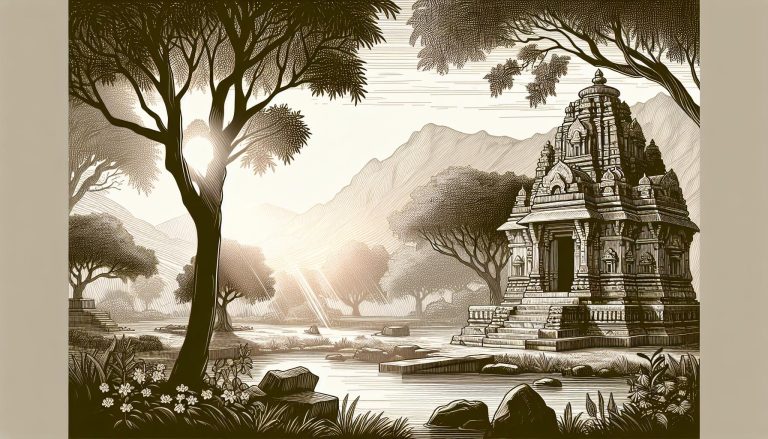
In today’s rapid world, the teachings of the Upanishads hold even greater relevance. They invite us to slow down, reflect, and connect with our true essence. By exploring concepts like Brahman – The Supreme Truth (the ultimate reality) and Atman – The Soul (the inner self), we can begin on a journey that transcends the material and touches the divine.
Understanding the Upanishadic Spiritual Path
The Upanishadic spiritual path emphasizes a journey inward, where seekers explore their own consciousness. These ancient texts guide individuals by detailing methodologies to understand the self (Atman) and the ultimate reality (Brahman). Knowledge equates to liberation, leading to inner peace and transcendence.
The Upanishads describe meditation and self-inquiry as crucial practices. Through meditation, practitioners detach from sensory experiences and focus inward. Self-inquiry involves questioning one’s true nature, moving beyond ego and material distractions.
Several significant teachings from the Upanishads help this path. The Mahavakyas, or “Great Sayings,” encapsulate the essence of the texts. Phrases like “Tat Tvam Asi” (You are That) assert the unity of Atman and Brahman. Reflecting on these sayings helps seekers align with their higher selves.
Another critical component is the Guru-Shishya (teacher-student) tradition. Disciples gain wisdom through direct transmission from a knowledgeable teacher. This relationship ensures that teachings are not merely theoretical but integrally experienced.
In culmination, the Upanishadic spiritual path is both a philosophical and experiential approach. By understanding and applying these teachings, seekers can attain a deeper connection with the universal consciousness, experiencing spiritual liberation.
Historical Context of the Upanishads
The Upanishads serve as a cornerstone of Indian spiritual literature, encapsulating profound philosophical ideas. Emerging in ancient times, they explore the nature of reality and the self.
Origins and Authors
Emerging between 800 BCE and 500 BCE, the Upanishads form the latter part of the Vedic texts. These were composed during the late Vedic period when philosophical inquiry within the Indian subcontinent began to flourish. Scholars and sages, known as Rishis, primarily authored these texts. Significant Rishis include Yajnavalkya, who emphasized inner knowledge, and Uddalaka – Grandfather of Ashtavakra Aruni, known for his teachings on Brahman.
Key Texts
The Upanishads encompass various texts, each contributing unique philosophical insights. Key texts include:
- Chandogya Upanishad: Features the dialogue between Uddalaka Aruni and his son Svetaketu, highlighting the concept of Tat Tvam Asi (“That Thou Art”).
- Brihadaranyaka Upanishad: Contains teachings of Yajnavalkya, focusing on concepts of Atman (self) and Brahman (ultimate reality).
- Taittiriya Upanishad: Explores different layers of human existence known as Panchakosha (five sheaths).
- Mundaka Upanishad: Introduces the notion of two kinds of knowledge, the higher (para) and the lower (apara).
These texts collectively investigate into spiritual truths that inspire profound contemplation and self-realization. They remain pivotal for understanding the Upanishadic spiritual path.
Core Concepts and Teachings
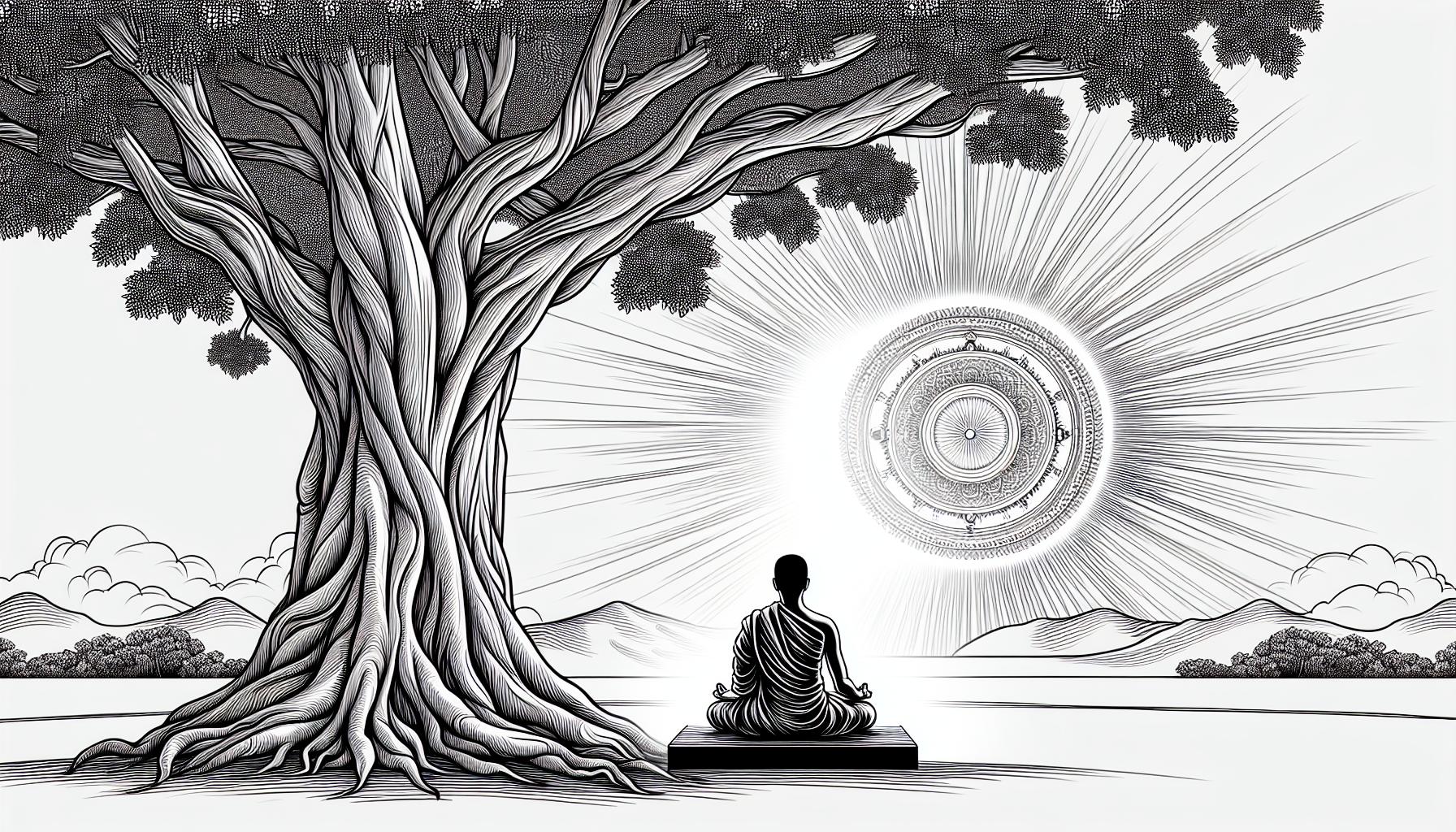
The Upanishadic spiritual path centers on achieving self-realization and understanding the ultimate reality. By grasping these core concepts, individuals begin on a profound journey towards liberation.
Brahman and Atman
Brahman, the eternal essence of reality, forms the foundation of the universe. It’s beyond human perception and thought, representing the ultimate source of all existence. The Upanishads describe Brahman as infinite and unchanging.
Atman, the eternal self, is one’s spiritual essence. It’s considered a part of Brahman. By realizing the Atman within, individuals recognize their connection to the infinite reality. This realization leads to a deeper understanding of existence and transcends the limitations of the physical world.
Karma and Dharma
Karma, the principle of action and consequence, dictates that a person’s actions influence their future. Actions driven by desire bind one’s spirit to an endless cycle of births and deaths. The Upanishads emphasize performing actions without attachment to their outcomes to break free from this cycle.
Dharma, the moral force ordering the universe, encompasses universal and personal duties. It guides individuals to act righteously. The story of the Bhagavad Gita, where a ruler is advised to kill for the greater good, exemplifies dharma’s complexity.
Moksha: Liberation
Moksha, the ultimate goal, signifies liberation from the cycle of birth and death. Achieving Moksha frees the soul from worldly attachments and illusions. The Upanishads teach that liberation is attained through self-knowledge and realization of one’s unity with Brahman. Practices like meditation and self-inquiry help the journey towards Moksha.
Practices on the Upanishadic Path
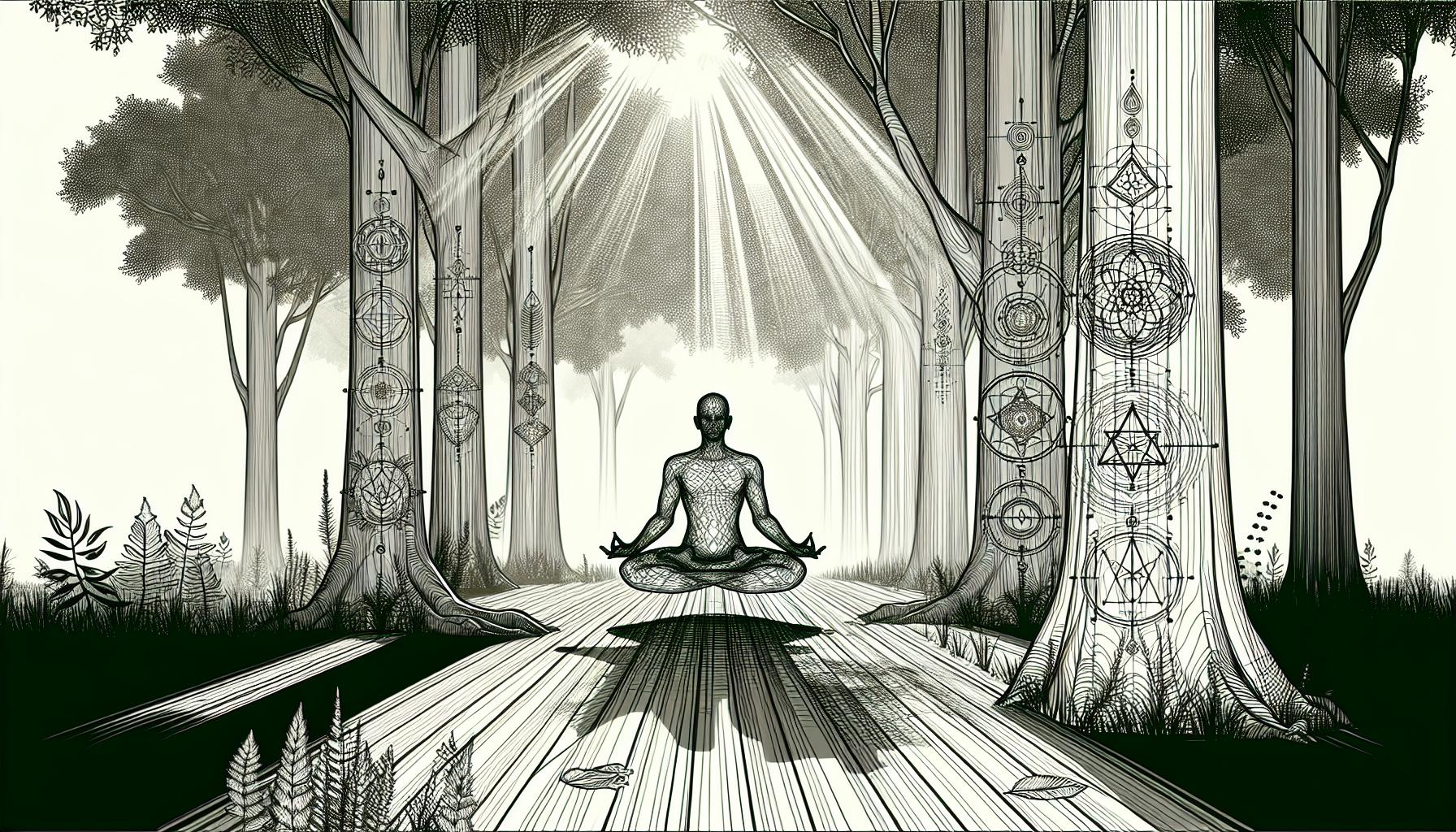
The Upanishadic spiritual path comprises various practices aimed at deepening one’s connection with the self and the ultimate reality. These practices include meditation, contemplation, and adherence to ethical guidelines.
Meditation and Contemplation
Meditation forms a core practice on the Upanishadic path. It involves focused attention and deep mental absorption, helping individuals connect with their inner self or Atman. The Upanishads prescribe different forms of meditation:
- Mantra Meditation: Reciting specific sounds or syllables like ‘Om’ repeatedly to focus the mind and transcend ordinary mental states.
- Japa: Continuous repetition of a divine name or phrase, aiding concentration and fostering spiritual devotion.
- Yantra Meditation: Focusing on geometric symbols or images to meditate on higher realities and abstract concepts.
Contemplation complements meditation by encouraging reflective thinking on the teachings and concepts within the Upanishads. Practitioners engage in self-inquiry or “Atma Vichara” to discern the nature of the self and the universe. Through such practices, individuals aim to experience Brahman directly.
Ethical Guidelines
Following ethical guidelines, known as Yamas and Niyamas, is vital on the Upanishadic path. These principles ensure moral integrity and spiritual purity.
- Yamas (Restraints):
- Ahimsa: Non-violence in thought, word, and action.
- Satya: Truthfulness in all aspects of life.
- Asteya: Non-stealing, respecting others’ possessions.
- Brahmacharya: Self-control, particularly in sensual pleasures.
- Aparigraha: Non-attachment to material possessions.
- Niyamas (Observances):
- Saucha: Cleanliness of body and mind.
- Santosha: Contentment with what one has.
- Tapas: Disciplined practice and endurance.
- Svadhyaya: Study of sacred texts and self-reflection.
- Ishvara Pranidhana: Surrender to the divine will or higher power.
By integrating meditation, contemplation, and ethical living, the Upanishadic path fosters holistic spiritual growth and paves the way toward self-realization and inner peace.
Comparison with Other Spiritual Paths
The Upanishadic spiritual path offers unique insights into self-realization through introspection and understanding of the self. By comparing it with other spiritual traditions, distinct differences and similarities emerge that highlight the path’s unique approach to spiritual growth.
Vedanta Philosophy
Vedanta, derived from the Upanishads, explores the nature of reality and consciousness. It upholds the concept of non-duality or Advaita, positing that Brahman (ultimate reality) and Atman (individual self) are one. The teachings prioritize knowledge (Jnana) over ritual practices, emphasizing the removal of ignorance (Avidya) to achieve liberation (Moksha). This contrasts with dualistic traditions that might segregate the divine and the individual self.
Differences from Buddhist Practices
The Upanishadic path and Buddhism both seek liberation but differ fundamentally in their approaches. The Upanishads emphasize the realization of Atman as Brahman. In contrast, Buddhism focuses on the impermanence of self (Anatman) and the elimination of desires to reach Nirvana. Also, Upanishadic teachings incorporate the concepts of Karma and Dharma, whereas Buddhism introduces the Four Noble Truths and the Eightfold Path as guiding principles.
Modern Relevance and Applications
The Upanishadic spiritual path holds significant relevance in today’s world. I see its principles influencing contemporary spirituality and being applied in daily practices.
Influence on Contemporary Spirituality
The Upanishads impact various modern spiritual movements. Many contemporary spiritual leaders reference Upanishadic teachings to underscore the importance of self-realization and inner peace. Concepts like meditation and mindfulness, prevalent in modern spirituality, have roots in Upanishadic practices. For example, the practice of Vipassana meditation emphasizes self-awareness, mirroring Upanishadic goals.
Practical Applications in Daily Life
Incorporating Upanishadic teachings into daily life transforms routines and mindsets. I practice mindfulness by focusing on the present moment, a concept derived from the Upanishadic idea of self-awareness. Ethical guidelines such as Satya (truthfulness) and Ahimsa (non-violence) become practical actions, influencing how I interact with others. Simple meditation techniques like Mantra or Japa Meditation can easily fit into a busy schedule, providing moments of peace and introspection.
| Upanishadic Concept | Modern Application |
|---|---|
| Self-realization | Mindfulness, self-awareness practices |
| Ethical Guidelines | Truthfulness, non-violence in daily interactions |
| Meditation | Mantra, Japa meditation techniques |
Conclusion
The Upanishadic spiritual path offers timeless wisdom for achieving self-realization and inner peace. By embracing concepts like Brahman and Atman and practicing meditation and ethical living we can navigate the complexities of modern life with a deeper sense of purpose and tranquility. These teachings encourage us to slow down reflect and connect with our true essence fostering a journey towards liberation and ultimate reality. The Upanishads remain a valuable guide for anyone seeking to understand themselves and their place in the universe.
Sources & further reading
These themes are explored in greater depth across the following authoritative resources:
- Internet Sacred Text Archive, Rig Veda (Griffith translation)
- Internet Sacred Text Archive, Upanishads
- Britannica, Veda
- Britannica, Upanishad
- Patrick Olivelle, The Early Upanishads (Oxford University Press, 1998)
External resources for further reading. Apam Napat is not affiliated with these publishers; citation does not imply endorsement.
Based on the classical texts of Hindu mythology, see our sources.