
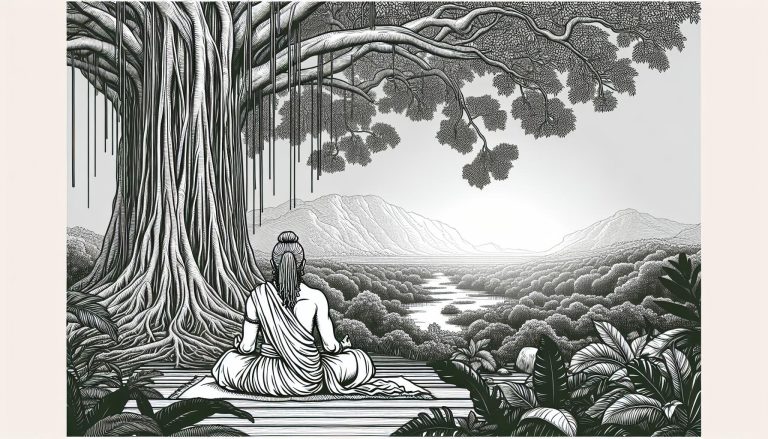
In the Upanishads, the divine essence is described as both immanent and transcendent, weaving through every aspect of life while existing beyond it. This duality challenges us to rethink our perceptions of self and universe, urging a deeper connection with the infinite. As we explore the Upanishadic teachings, we’ll uncover how this divine essence shapes our understanding of spirituality and existence itself.
Understanding Upanishads
The Upanishads hold profound wisdom central to Hindu philosophy. They explore both divine essence and the nature of self.
Historical Context
The Upanishads, composed between 700 and 500 BCE, mark a shift from the ritualistic focus of the Vedas to a philosophical and mystical exploration of reality. These texts represent the culmination of the Vedic period, serving as the concluding part of the Vedas and forming the basis of Hinduism.
Core Teachings
The Upanishads explore Brahman, the divine essence underlying all existence. Brahman is seen as an all-encompassing force that embodies ultimate truth, consciousness, and bliss. It’s considered the source of everything in existence.
They also emphasize Atman – The Soul, the individual self or soul. The texts teach that Atman is eternal and unchanging, reflecting the true nature of an individual. The relationship between Brahman and Atman forms a central theme, urging a deeper understanding of self and the universe.
Concept of Divine Essence in Upanishads
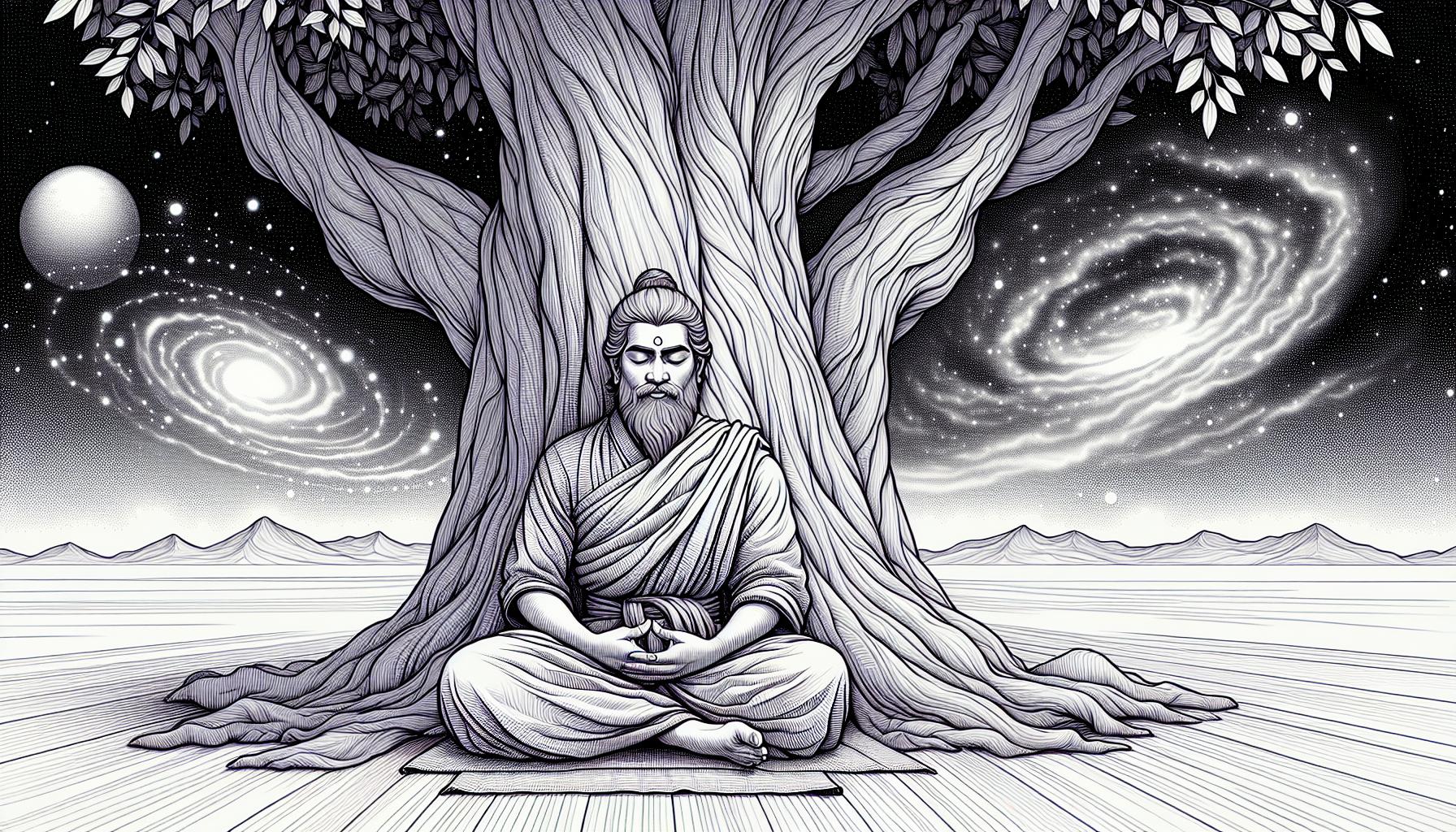
The Upanishads emphasize the concept of divine essence, which consists of Brahman and Atman. These elements form the foundation of understanding reality and self in Hindu philosophy.
Brahman: The Ultimate Reality
Brahman is the supreme essence of the universe, unchanging and infinite. It represents the ultimate truth and consciousness, serving as the source of all existence. Described as ineffable and eternal, it unifies and supports the cosmos. The Upanishads teach that to comprehend the ultimate reality, one must understand Brahman.
Atman: The Inner Self
Atman refers to the individual soul, unchanging and eternal. According to the Upanishads, Atman is part of or identical to Brahman. This connection highlights the importance of self-knowledge and spiritual liberation. By realizing Atman’s true nature, one grasps the ultimate reality, leading to profound insights into both the self and the universe.
Key Upanishads and Their Teachings
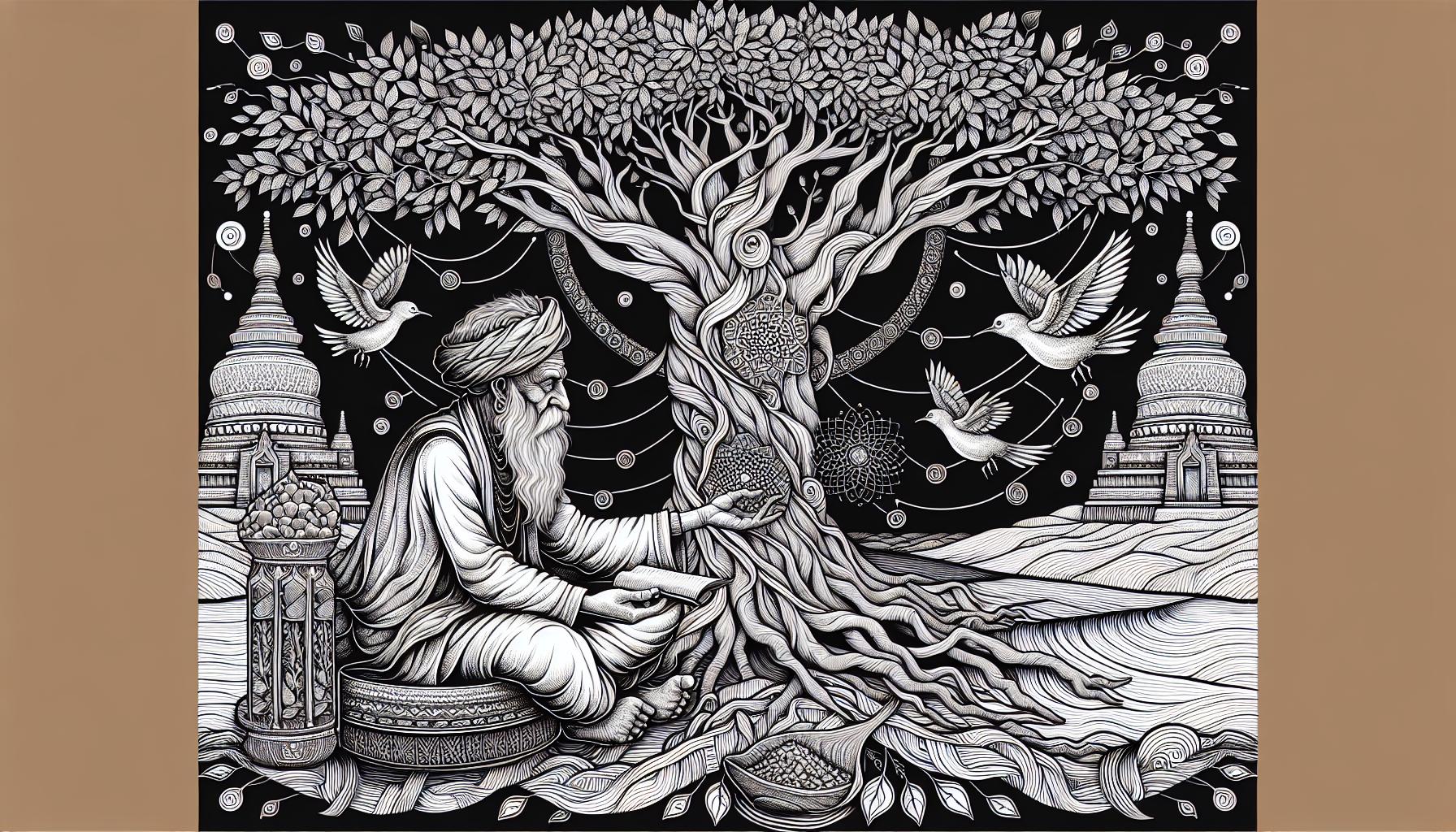
The Upanishads emphasize spiritual insights and mystical experiences, providing profound teachings on the divine essence of Brahman and Atman.
Chandogya Upanishad
The Chandogya Upanishad underscores the unity of all existence. It states that everything in the world shares the same essence, whether it be clay, gold, or iron. This unity is encapsulated in the phrase “thou art That” (Tat Tvam Asi), signifying that the individual self (Atman) and the divine essence (Brahman) are one.
The Upanishad also presents a progressive meditation sequence. Starting with outer worldly knowledge, individuals move through levels of speech, mind, will, thought, meditation, and finally understanding. Each step deepens their connection with Brahman and brings them closer to spiritual enlightenment.
Katha Upanishad
The Katha Upanishad explores the dialogue between Nachiketa – The Boy Who Obtained the Secrets of Death, a seeker, and Yama, the god of death. This text highlights the impermanence of the material world and the everlasting nature of the soul. It emphasizes self-knowledge, stating “When the five senses, are stilled… even the mind itself is at rest, then begins the highest path.”
This Upanishad emphasizes the importance of understanding oneself to realize the immortal essence (Atman). Key teachings focus on the journey toward spiritual liberation, urging individuals to look beyond transient desires and seek eternal truths.
Mundaka Upanishad
The Mundaka Upanishad provides a thematic discussion on higher knowledge. It differentiates between higher (para) and lower (apara) knowledge. The Upanishad asserts that higher knowledge leads to the realization of Brahman, while lower knowledge pertains to the understanding of rituals and worldly affairs.
It uses metaphors like the “two birds” on a tree to illustrate the relationship between the individual soul (Atman) and the universal spirit (Brahman). The Upanishad encourages individuals to strive for higher knowledge through devotion and meditation, aiming to transcend the physical area and grasp the ultimate truth.
These upanishadic teachings form the core principles for understanding the divine essence in Hindu philosophy.
The Relationship Between Brahman and Atman
In Hindu philosophy, the Upanishads encapsulate the essence of the relationship between Brahman and Atman.
Unity of Brahman and Atman
The Upanishads emphasize the unity of Brahman and Atman, presenting them as interdependent. Brahman, the ultimate reality, embodies the cosmos and all its diversity, while Atman, the individual soul, resides within each entity. Even though apparent distinctions, the texts assert that Atman and Brahman are fundamentally the same. For instance, the Chandogya Upanishad states, “Tat Tvam Asi,” meaning “That Thou Art,” highlighting the inherent divinity in all beings. This unity suggests a deeper, interconnected essence shared across existence, guiding individuals towards realizing their oneness with the universe.
Practical Implications
Recognizing the unity of Brahman and Atman transforms one’s approach to life. It encourages self-exploration and meditation as paths to spiritual enlightenment. Practices such as yoga and meditation serve to transcend the ego, revealing the divine within. These practices also foster a sense of connectedness with the natural world and others, leading to a holistic understanding of life. This insight aligns one’s actions with the pursuit of spiritual growth, promoting inner peace and a harmonious existence.
Modern Interpretations
Modern interpretations of the Upanishadic divine essence highlight the spiritual and practical relevance of these ancient teachings. They serve as tools for self-discovery and understanding the intrinsic connection between oneself and the universe.
Scholarly Perspectives
Scholars provide various insights into the modern relevance of the Upanishadic teachings. Paul Deussen, for instance, underscores the importance of Brahman-Atman in Hinduism. He analyzes how these texts articulate the timeless and unchanging nature of the self, which remains constant amidst the transient physical world. Contemporary scholars emphasize the Upanishads’ role in fostering self-awareness and inner peace, viewing them as a guide to exploring one’s true nature and achieving spiritual fulfillment.
Spiritual Practices
Modern spiritual practices draw heavily from Upanishadic principles. Meditation, a core component, helps individuals connect deeply with their inner self and the divine essence. Practices like yoga and mindfulness are rooted in these ancient teachings, promoting mental clarity and emotional stability. By integrating these practices, individuals can experience the unity of Atman and Brahman, achieving a holistic understanding of life and a sense of inner tranquility.
Conclusion
Exploring the Upanishadic divine essence has been a profound journey for me. These ancient texts offer timeless wisdom that resonates deeply with our quest for spiritual enlightenment. The teachings of Brahman and Atman highlight the intrinsic connection between the individual and the universe, guiding us towards a deeper understanding of our true nature.
By embracing practices like meditation and yoga, we can transcend the ego and foster a holistic understanding of life. The Upanishads not only provide spiritual insights but also offer practical tools for achieving inner peace and harmony. Their relevance in modern times underscores the enduring quest for self-discovery and the realization of ultimate truth.
In my experience, integrating Upanishadic principles into daily life has been transformative. It’s a path that promotes mental clarity, emotional stability, and a profound sense of inner tranquility. I encourage everyone to investigate into these sacred texts and begin on their own journey of self-awareness and spiritual fulfillment.
Sources & further reading
These themes are explored in greater depth across the following authoritative resources:
- Internet Sacred Text Archive, Rig Veda (Griffith translation)
- Internet Sacred Text Archive, Upanishads
- Britannica, Veda
- Britannica, Upanishad
- Patrick Olivelle, The Early Upanishads (Oxford University Press, 1998)
External resources for further reading. Apam Napat is not affiliated with these publishers; citation does not imply endorsement.
Frequently asked questions
What is the divine essence in the Upanishads?
What is Atman according to the Upanishads?
What does Tat Tvam Asi mean in the Chandogya Upanishad?
What does the Katha Upanishad teach about the soul?
Based on the classical texts of Hindu mythology, see our sources.