
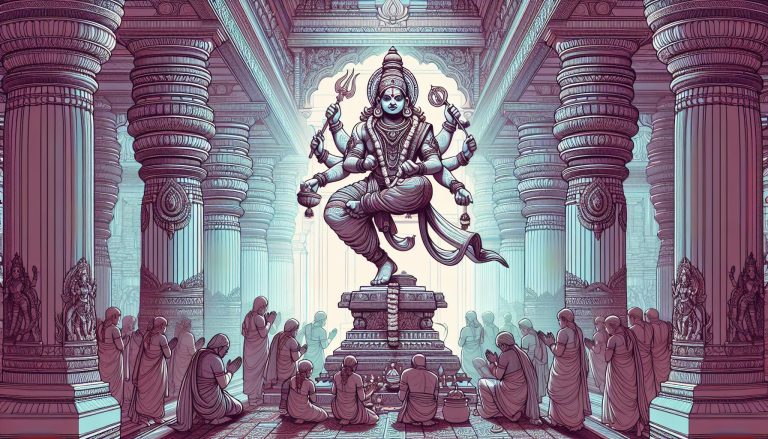
Hanuman’s impact isn’t limited to ancient texts; his qualities resonate in contemporary spiritual practices and personal growth philosophies. By embodying virtues like humility and courage, Hanuman teaches us how to navigate life’s challenges with grace and resilience. His presence in Hindu philosophy serves as a reminder that true strength lies in selfless devotion and unwavering faith.
Overview Of Hanuman In Hinduism
Hanuman holds a central place in Hindu mythology. Renowned for his boundless devotion to Lord Rama, he’s celebrated as an epitome of bhakti (devotion). His unwavering loyalty, demonstrated in his exploits throughout the Ramayana, shapes the philosophical tenets of Hindu devotion.
Hanuman’s extraordinary abilities symbolize strength and courage. His feats, like leaping across the ocean and setting Lanka ablaze, mark him as an icon of resilience and physical prowess. These tales inspire devotees to face their challenges with similar bravery.
Hanuman embodies an ideal blend of shakti (strength) and bhakti (devotion). This unique combination is pivotal in Hindu philosophy, highlighting that true power arises from dedicated service to the divine. His life and actions provide a model for balancing physical strength with spiritual devotion.
Hanuman In The Ramayana

Hanuman plays a central role in the Hindu epic Ramayana, exemplifying the ideals of devotion, strength, and selfless service. His actions and character convey several principles and values integral to Hindu philosophy.
Key Episodes
Dedication and Devotion: Hanuman’s unwavering dedication to Lord Rama and Sita embodies bhakti (devotion) in its purest form. His selfless service, even in adversity, highlights the power and virtue of devotion. For example, Hanuman’s quest to find Sita in Lanka demonstrates his commitment and loyalty.
Overcoming Adversity: Hanuman’s resourcefulness, as seen in his daring leap across the ocean to reach Lanka, showcases his determination and problem-solving skills. His ability to adapt and innovate under pressure aligns with the Hindu ideal of perseverance. By overcoming obstacles, Hanuman teaches the importance of resilience.
Humility and Modesty: Despite his extraordinary abilities, Hanuman remains humble and respectful. Often depicted kneeling before Rama and Sita, he exemplifies humility and modesty. This humility, even with immense power, reinforces the value of modesty in Hindu thought.
Symbolism And Lessons
Symbol of Strength: Hanuman represents both physical and spiritual strength. His extraordinary feats, such as lifting a mountain, demonstrate physical power. Yet, his unwavering devotion to Rama reveals his spiritual strength, stressing the balance between the two in Hindu philosophy.
Lessons in Service: Hanuman’s actions consistently highlight the importance of selfless service. His missions to aid Lord Rama, without seeking personal gain, reinforce the Hindu principle of seva (service). This teaches devotees to serve the divine and others altruistically.
Embodiment of Faith: Hanuman’s faith in Lord Rama remains unshakeable. His life illustrates that true strength arises from unwavering faith and devotion. Devotees learn that through dedicated faith, they can overcome any challenges.
Hanuman’s role in the Ramayana embodies core principles of Hindu philosophy, imparting timeless lessons on devotion, humility, and strength.
Philosophical Teachings Of Hanuman

Hanuman’s impact on Hindu philosophy extends to several profound teachings encompassing devotion, strength, and humility. His life and actions embed deep spiritual lessons, guiding devotees on their spiritual journey.
Devotion And Bhakti
Hanuman exemplifies pure devotion, or Bhakti, through his unwavering dedication to Lord Rama and Sita. He places their well-being above his own, demonstrating that true devotion involves complete surrender and selflessness. Hanuman’s actions in the Ramayana, such as his tireless search for Sita and his readiness to serve Rama at any cost, underline the essence of Bhakti. His devotion isn’t just emotional but also action-oriented, showcasing Bhakti as a dynamic and active engagement with the divine.
Strength And Courage
Hanuman embodies both physical and spiritual strength. His ability to expand his size, leap across oceans, and combat powerful foes illustrates immense physical prowess. However, his true strength lies in his courage and unfaltering faith in righteousness. In numerous instances, such as when he enters Lanka to find Sita or when he brings the Sanjeevani herb to save Lakshmana, Hanuman’s actions show that inner strength and courage often surpass physical might. These qualities teach that true strength comes from a firm resolve and a commitment to one’s righteous duties.
Humility And Service
Despite his extraordinary abilities, Hanuman remains humble and devoted to serving others. He considers himself a mere servant of Lord Rama, never seeking glory for his own deeds. His humility is evident in his refusal to take credit for his achievements, always attributing his successes to Rama’s blessings. Hanuman’s humility coupled with his dedication to service, as seen when he helps rebuild the bridge to Lanka or cares for Rama’s allies, highlights that true greatness lies in serving others selflessly. This principle of humility and service is central to the teachings of Hindu philosophy.
Hanuman In Modern Hindu Practice
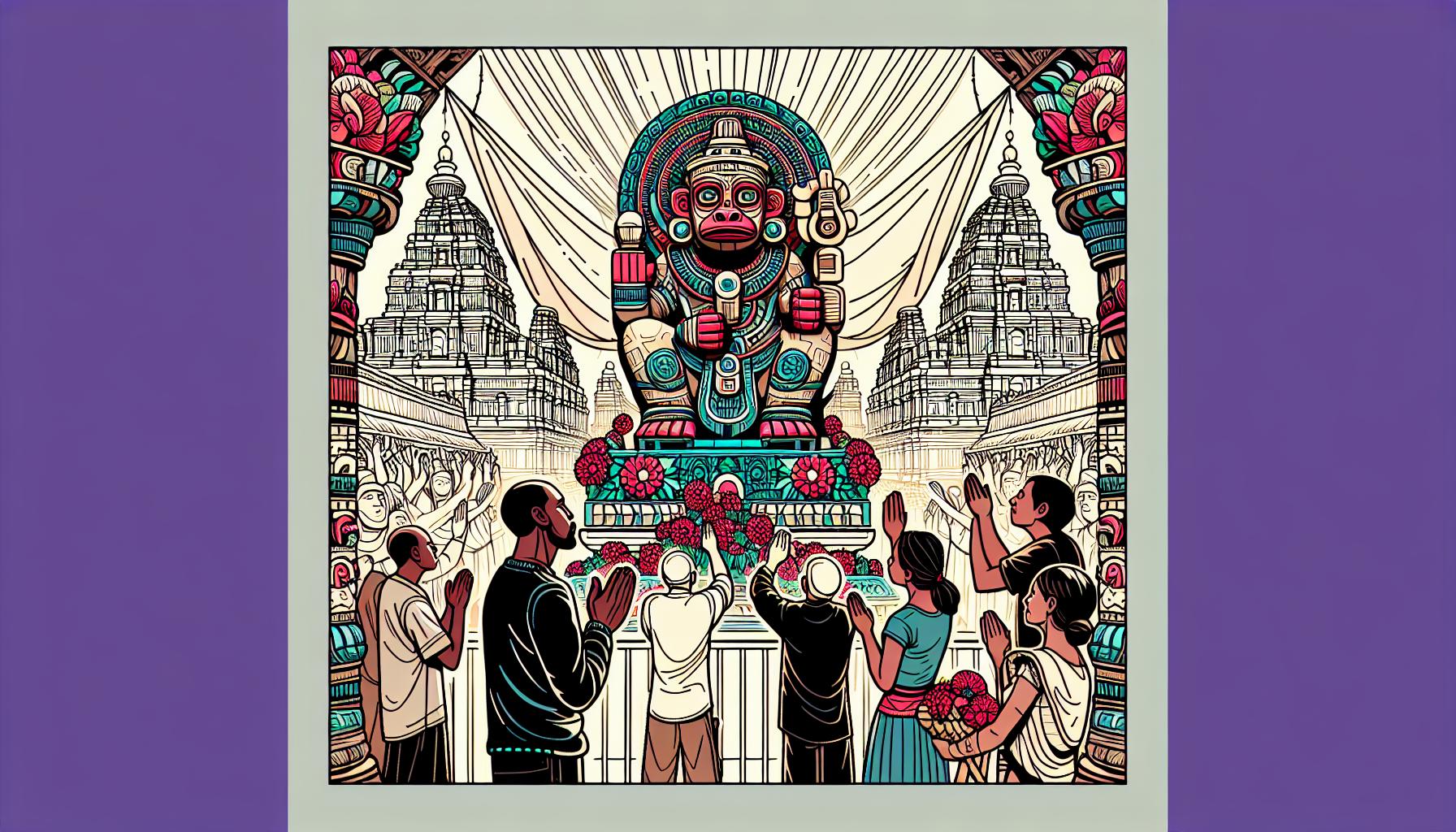
Hanuman remains a key figure in contemporary Hinduism, influencing both worship and cultural expressions.
Worship And Rituals
- Devotion and Bhakti: Hanuman’s role in the Ramayana as Rama’s devotee continues to inspire bhakti practices today. People see his selfless service and unwavering love for Rama as the highest form of devotion. Temples often showcase images and statues of Hanuman, honoring his commitment to the divine.
- Temple Worship: Devotees worship Hanuman in various temples across India, both in those dedicated specifically to him and in temples dedicated to Rama. His depictions—usually a monkey with a red face, symbolizing courage and steadfastness—are prominent. Worshippers often visit these temples to seek strength and blessings.
- Hanuman Chalisa: The Hanuman Chalisa, a popular hymn composed in the 16th century by Tulsidas, is recited by millions. This 40-verse prayer is central to many rituals, especially during Hanuman’s Jayanti (birthday), highlighting his virtues and invoking his support.
- Nationalism and Resistance: Hanuman’s image has transcended religious boundaries, becoming a symbol of strength and resistance. In the 17th century, he was seen as a figure of unity against foreign rule. His persona embodies endurance and resilience, resonating with cultural movements and forging a link between spirituality and patriotism.
- Arts and Literature: Modern art, literature, and media continue to draw inspiration from Hanuman. His stories are depicted in various art forms, from traditional paintings to contemporary films, perpetuating his teachings and ideals. Children’s books and animated series also introduce younger generations to his heroic deeds.
- Popular Culture: Hanuman’s influence extends to festivals, theatrical performances, and songs. Ritual dramas like Ramlila often feature episodes of Hanuman’s heroism, ensuring his narrative remains alive. Devotional songs dedicated to him are staples in Hindu households, and his character features prominently in cultural celebrations.
Hanuman’s Lasting Influence
Hanuman’s essence permeates modern Hinduism. Temples dedicated to Hanuman receive millions of devotees annually, demonstrating his continued relevance. For instance, the Hanuman Temple in Delhi attracts thousands daily. Devotees recite the Hanuman Chalisa, a 40-verse hymn, in reverence.
In popular culture, Hanuman’s impact remains strong. Television series like “Ramayan” and animated films depict his heroic deeds, influencing viewers. Comics and graphic novels also immortalize his adventures, reaching younger audiences.
Festivals celebrating Hanuman underscore his significance. Hanuman Jayanti, marking his birth, sees widespread observance with processions and special rituals. Devotional songs and dances during these festivals reflect his inspirational journey.
Hanuman’s teachings still guide many. His lessons on devotion, courage, and humility resonate. Spiritual seekers meditate on his qualities, finding strength in his stories. Hanuman continues to symbolize unwavering faith and selfless service.
Authorities like Swami Vivekananda have extolled Hanuman’s virtues. Swami Vivekananda emphasized Hanuman’s ideal devotion. Many spiritual leaders echo similar sentiments, reinforcing his influence.
Hanuman’s reverence extends beyond India. Communities in Nepal, Indonesia, and Trinidad and Tobago honor him. These global practices illustrate his widespread spiritual reach.
In Hindu rituals, Hanuman holds a central role. Many begin their day with prayers to him, seeking his blessings. His presence in yajnas (sacrificial rites) signifies his eternal guardianship.
Hanuman’s influence extends to the martial arts. Practitioners of Kalaripayattu, an ancient Indian martial art, invoke his strength before training. This highlights the enduring relevance of his qualities in physical and mental discipline.
Conclusion
Hanuman’s timeless influence on Hindu philosophy is undeniable. His virtues of devotion, strength, and humility continue to inspire millions around the world. From the grand temples dedicated to him to the recitation of the Hanuman Chalisa, his presence is felt deeply in both traditional and modern practices.
His teachings transcend religious boundaries, offering valuable lessons on courage and selfless service. Whether through ancient scriptures or popular culture, Hanuman’s legacy endures, guiding and uplifting spiritual seekers everywhere.
Sources & further reading
These themes are explored in greater depth across the following authoritative resources:
- Encyclopaedia Britannica, Hindu Mythology
- Internet Sacred Text Archive, Hinduism
- Mythopedia, Hindu Mythology
- Harvard Pluralism Project, Hindu Tradition
- Wendy Doniger, The Hindus: An Alternative History (Penguin, 2009), ISBN 978-0143116691
External resources for further reading. Apam Napat is not affiliated with these publishers; citation does not imply endorsement.
Based on the classical texts of Hindu mythology, see our sources.