
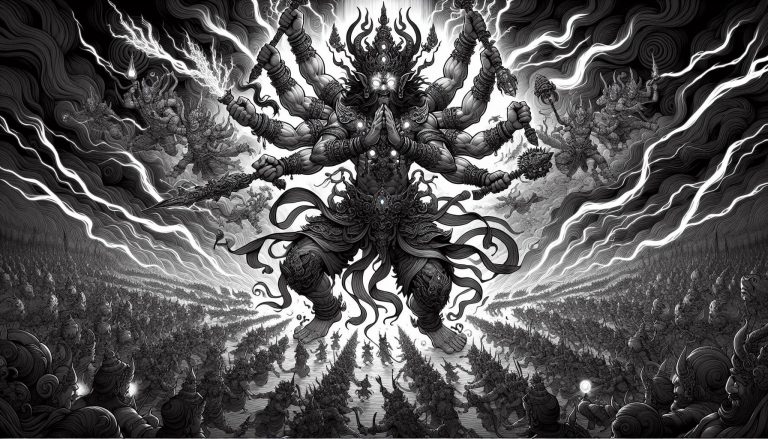
I’ve always been captivated by their dual nature—on one hand, they’re depicted as demonic and destructive, while on the other, they possess wisdom and a relentless drive for power. This duality makes them more than mere villains; it adds depth to their stories and offers a nuanced look at the struggle between good and evil. Let’s explore what makes Asuras such compelling figures in mythological narratives.
Origins of Asura Characteristics
Asuras, emerging from ancient Hindu and Buddhist texts, exhibit characteristics inspired by complex myths. Vedic scriptures first introduce Asuras as divine beings with later texts emphasizing their opposition to the Devas. Exploring these early mentions provides insight into the Asura identity.
Initially, the term “Asura” didn’t carry negative connotations. In Vedic literature, both Devas and Asuras belonged to a shared divine lineage. But, shifts in narrative portray Asuras as adversaries. This transition highlights evolving theological perspectives.
Key texts such as the Rigveda and Mahabharata – The Great Epic depict Asuras with intelligence and power. While the Rigveda presents them as competing deities, the Mahabharata elaborates on their ambitions and internal conflicts. Asura characters like Vritra – Demon-son of Tvashta and Bali exemplify this complex nature.
Buddhist traditions also shape Asura traits. In Buddhism, Asuras symbolize persistent desire and aggression. The Samyutta Nikaya describes them as beings who perpetually battle the Devas, reflecting human struggles with negative emotions.
Understanding the origins of Asura characteristics involves examining these layered narratives. Their portrayal as wise yet conflicting beings provides a nuanced view of mythological themes in religious texts.
Physical Traits
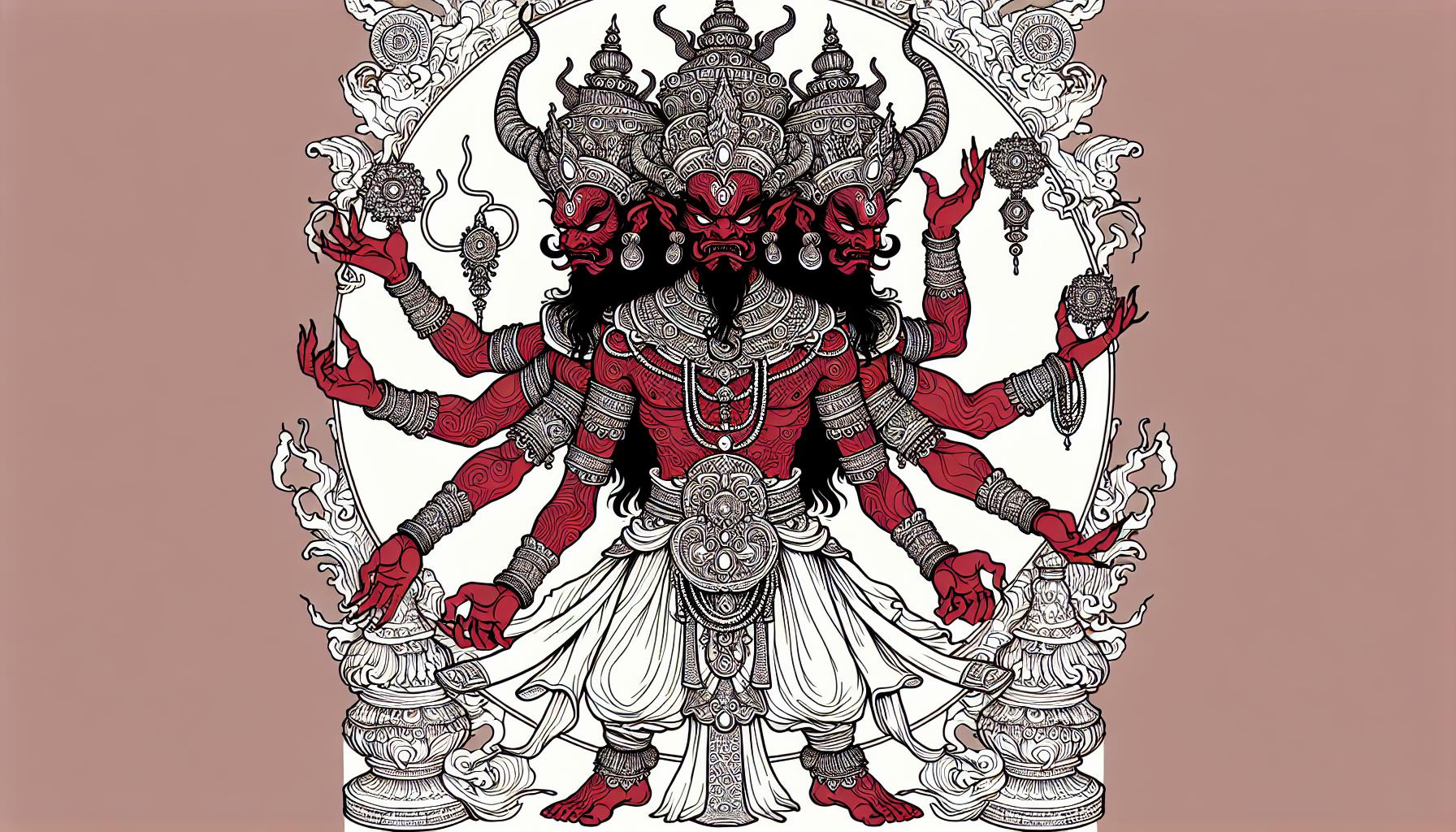
Asuras in Hindu and Buddhist mythology possess distinct features and extraordinary abilities. These traits contribute to their formidable presence and influence in various mythological narratives.
Appearance
Asuras are noted for their striking physical appearance. Their skin is often depicted as deep red or blue-green. They have inky black hair, adding to their otherworldly look. Typically, Asuras possess four to six arms and three heads pointing in different directions. Their attire consists of fine clothing, including silk skirts with golden sashes and fringes. They also wear gold bands around their arms, bejeweled collars, and elaborate helmets.
Physical Strength
Asuras are incredibly strong, often rivaling gods in their might. This immense physical power makes them formidable adversaries in mythological battles. They can fly and shapeshift into various forms, demonstrating their versatility and strategic prowess. Also, they are skilled in casting spells and charms, adding a mystical element to their physical capabilities.
Mental Traits

In mythological texts, Asuras are known for their unique mental characteristics, which include attributes such as high intelligence and distinct temperaments.
Intelligence
Asuras often display remarkable intelligence, allowing them to devise complex strategies and plans. In epic tales, they create intricate plots to challenge the Devas. This intellectual prowess also enables them to master various forms of knowledge, including spiritual wisdom and advanced technologies. In the Mahabharata, for instance, Asura characters like Shukracharya exhibit profound understanding of the cosmos and possess abilities to perform complex spells. Their intelligence sets them apart as formidable adversaries in mythological conflicts.
Temperament
Asuras are frequently depicted with volatile and intense temperaments. They exhibit both fierce aggression and deep emotions. This dual nature often drives their actions and conflicts with the Devas. In Buddhist texts, Asuras personify constant strife and persistent desire, leading to eternal battles. Their emotions can range from profound anger to passionate desire for power and dominance. These temperamental extremes make Asuras complex characters with motivations that add depth to their mythological narratives.
Powers and Abilities
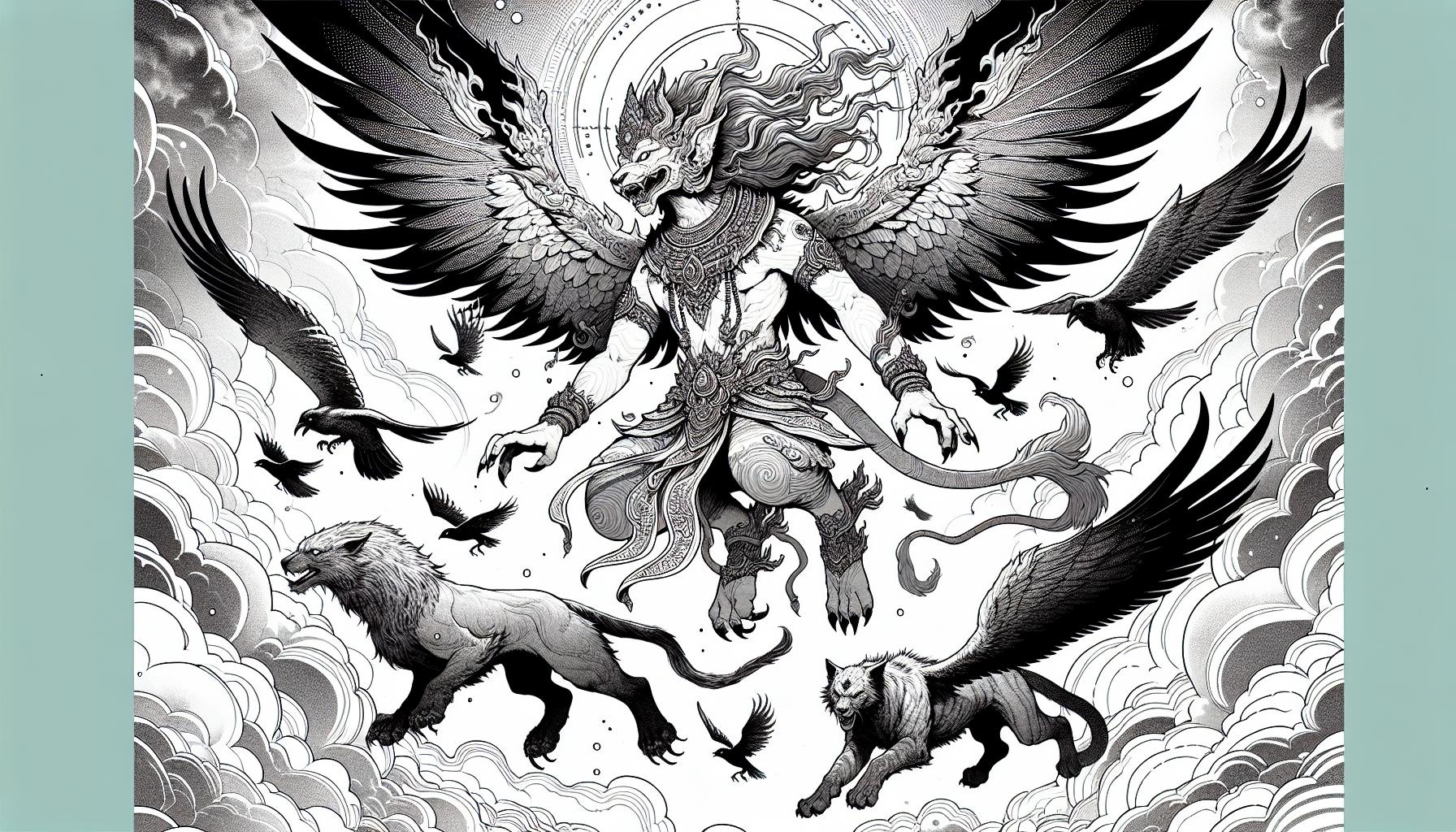
Asuras possess a diverse array of abilities that set them apart in mythological accounts. These powers underscore their formidable presence and complexity.
Magical Powers
Asuras wield powerful magical abilities. They can shape-shift, altering their form to deceive others. Casting spells is second nature to them, enabling a variety of mystical effects. Flight allows them to traverse realms with ease, while their ability to transform animals into slaves showcases their dominion over living beings. These magical powers make Asuras both feared and respected in their mythologies.
Combat Skills
Asuras excel in combat, both armed and unarmed. Mastery of various martial arts styles enhances their fighting prowess. Whether wielding weapons or engaging in hand-to-hand combat, they demonstrate skills that few can rival. Their expertise in battle tactics and physical combat makes them formidable opponents on the battlefield.
Ageless and Immune to Disease
Asuras are ageless and immune to disease, granting them longevity that mortals can only aspire to. This resilience allows them to recover from injuries and regenerate their material bodies, ensuring they remain powerful through the ages. Their ageless nature contributes to their enduring presence in mythological narratives.
Teleportation and Energy Projection
Asuras have the remarkable ability to teleport, moving instantaneously across vast distances. Energy projection further augments their capabilities, enabling them to harness and release potent forces. These powers offer them unparalleled mobility and offensive strength, establishing their dominance in both physical and astral realms.
Animal Command
Commanding animals is another distinctive ability of Asuras. They can control creatures like ravens, panthers, and mastiffs, using them for various purposes. This control over animals underscores their connection with the natural world and amplifies their influence over both human and animal domains.
Symbolism and Cultural Impact
Asura in Mythology
Asuras, in Hindu mythology, symbolize the eternal struggle between good and evil. They’re often depicted as powerful beings opposing the Devas, representing chaos and destruction. Texts like the Rigveda and Mahabharata showcase their intelligence and ambitions, often highlighting epic battles against the Devas. The dualistic nature of Asuras, who can possess both good and evil traits, reflects the complex moral narratives within Hindu mythology.
Asura in Modern Culture
In modern culture, Asuras have influenced various forms of media and storytelling. They’re often portrayed in literature, movies, and television as formidable antagonists with complex backstories. For instance, in contemporary Indian cinema, Asura characters often embody themes of struggle and redemption. Their depiction in comic books and video games also introduces them to a global audience, reflecting their enduring impact on cultural and mythological narratives.
Conclusion
Exploring the characteristics of Asuras reveals their complex and multifaceted nature. Their evolution from divine beings to formidable adversaries in Hindu and Buddhist mythology showcases deep theological shifts. Asuras embody high intelligence and volatile temperaments, driving their eternal conflicts with the Devas. Their portrayal in modern media continues to captivate audiences, highlighting their enduring cultural impact. Understanding Asuras provides valuable insights into the intricate moral narratives and rich mythological traditions they inhabit.
Sources & further reading
These themes are explored in greater depth across the following authoritative resources:
- Britannica, Asura
- Britannica, Naga
- Mythopedia, Hindu Mythology
- Internet Sacred Text Archive, Mahabharata
- Wendy Doniger, Hindu Myths (Penguin Classics, 1975)
External resources for further reading. Apam Napat is not affiliated with these publishers; citation does not imply endorsement.
Frequently asked questions
Who are the Asuras in Hindu and Buddhist mythology?
Did the term Asura always have negative connotations?
Which texts depict the Asuras?
How does Buddhism portray Asuras?
Who are notable Asura characters?
Based on the classical texts of Hindu mythology, see our sources.