
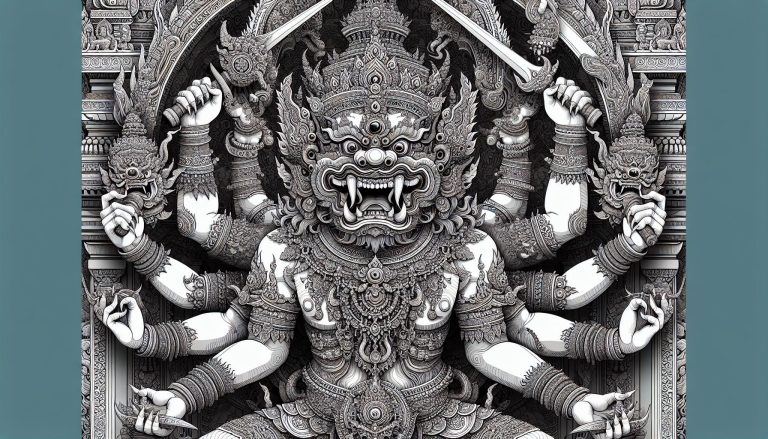
Asuras aren’t just villains; they’re complex characters with their own virtues and flaws. Their stories reveal deep philosophical insights and moral dilemmas, making them more than mere antagonists. By exploring the tales of these enigmatic beings, we gain a richer understanding of ancient beliefs and the timeless battle between light and darkness.
Origins Of Asura Deities
Asura deities, rooted in ancient Indo-Iranian traditions, appear prominently in Hindu and Buddhist texts. In Hindu myths, they originate as part of the cosmic order, primarily from the earliest creation narratives found in Vedic scriptures. Asuras and Devas come from the same primordial source—the primeval being known as Prajapati – The Creators. This shared origin illustrates their interconnected existence and eternal struggle.
In Buddhism, Asura origins link to cosmology’s area of the same name, one of the six realms of samsara. Buddhist tradition outlines how beings enter the Asura area due to actions fueled by aggression and jealousy. This narrative aligns with Asuras’ character traits, adding depth to their combative nature.
Ancient texts depict Asuras initially as powerful divine beings. Over time, cultural evolution transformed them into more antagonistic forces. For instance, in Rigveda, Asuras possess beneficial qualities, but later Puranic scriptures emphasize their opposition to Devas. This transformation highlights the dynamic nature of religious narratives.
Historical and cultural contexts heavily influence Asura deities’ portrayal. Scholars see parallels between Asuras and the Iranian Aesirs, a deity group in Zoroastrianism, hinting at shared cultural roots. This connection reinforces their significance in regional mythologies and their complex roles in spiritual literature.
By examining the origins of Asura deities, we gain insights into the evolving nature of divine archetypes. Understanding their beginnings provides a richer context for their enduring presence in mythological traditions.
Mythological Significance
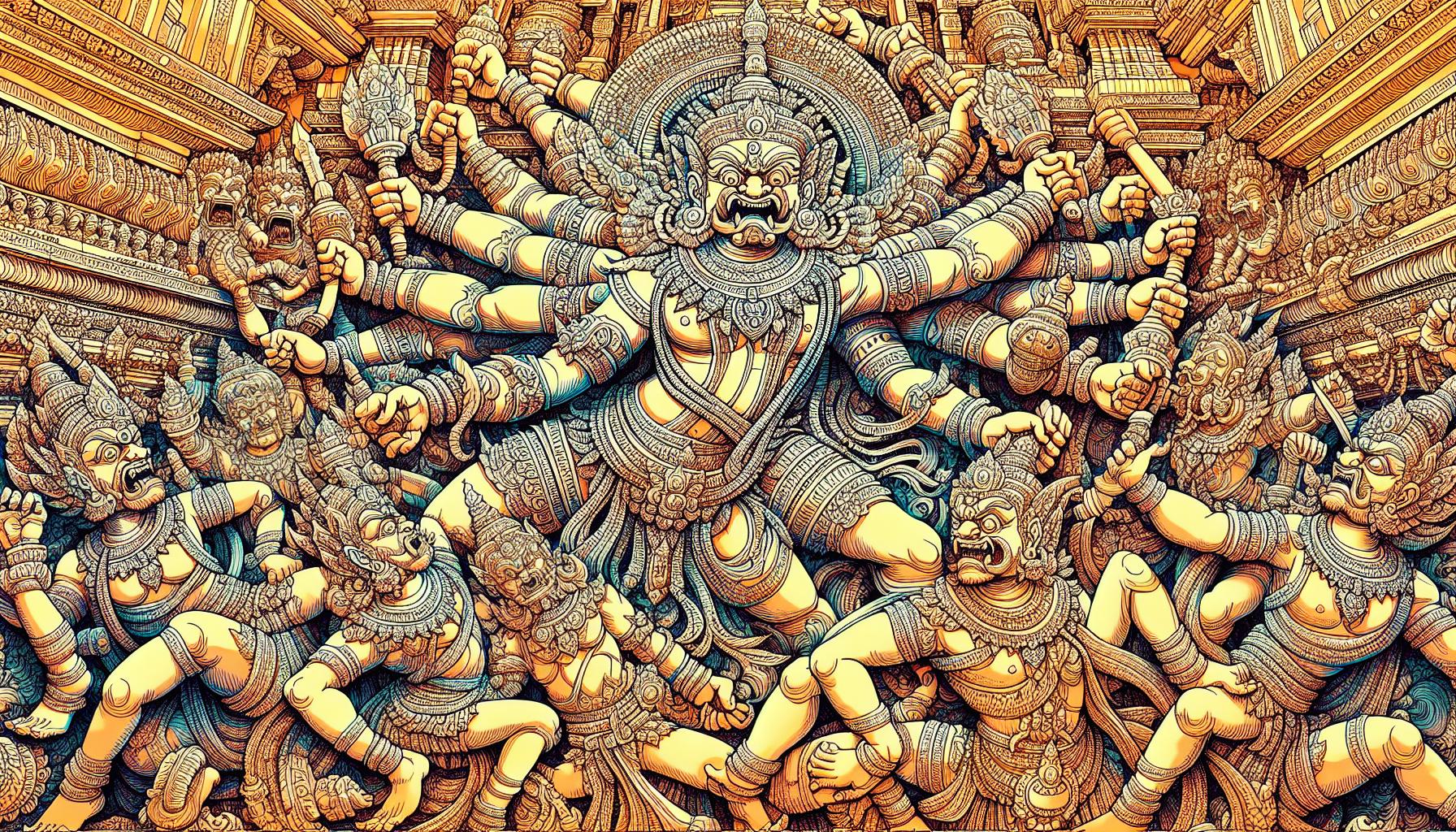
The mythological significance of Asura deities spans both Hindu and Buddhist traditions, highlighting their vital roles and symbolic meanings. Understanding their representation offers insights into ancient cultural narratives and the duality of existence.
Role In Hinduism
Asura deities occupy an essential place in Hindu mythology, primarily characterized by their opposition to Devas. They embody traits like ambition and strength but also greed, pride, and jealousy. Sacred texts such as the Vedas and Puranas depict Asuras participating in cosmic battles against Devas, symbolizing the constant struggle between good and evil forces. For example, in the Rigveda, Asuras are powerful entities initially considered noble but later transition into adversaries of the gods. Their narratives, including their quest for Amrita, the elixir of immortality, underscore their perpetual quest for power. This metamorphosis reflects the fluid moral spectrum within Hindu beliefs.
Depictions In Art And Literature
Asuras feature prominently in ancient and medieval Indian art and literature, represented with distinct iconography. Sacred texts like the Mahabharata – The Great Epic and Ramayana – Epic of Hinduism include elaborate descriptions and stories involving Asuras. In sculptures and paintings, they often appear as formidable beings with multiple heads and arms, symbolizing their immense power and destructive capabilities. For instance, temple carvings in Ellora and Ajanta depict fierce battles between Asuras and Devas, illustrating their dramatic mythological significance. In literature, their tales serve as moral lessons, exploring themes of hubris, retribution, and redemption. These depictions emphasize the Asuras’ central role in conveying messages about the duality of human nature.
Famous Asura Deities
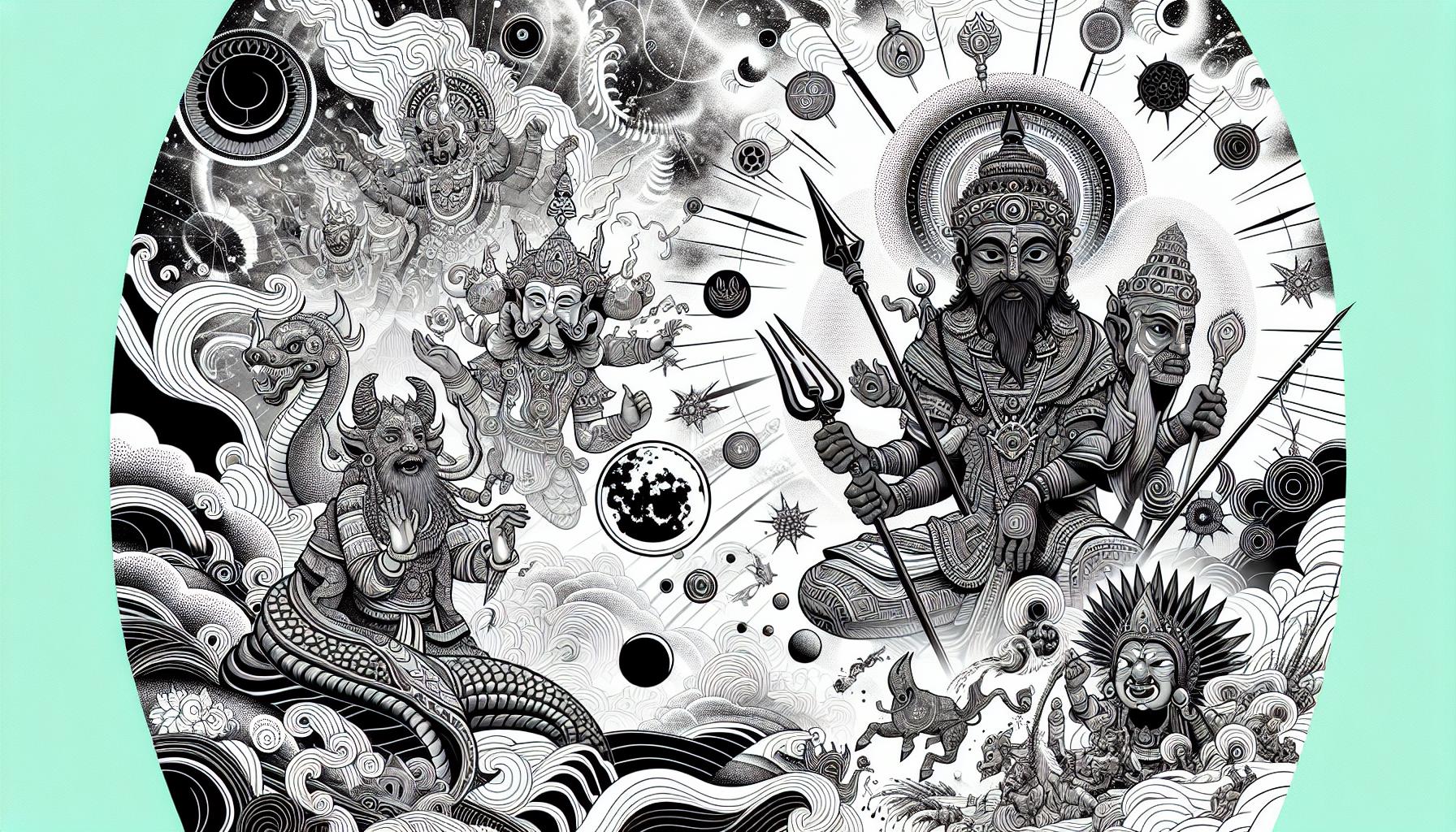
Many Asura deities play significant roles in mythological narratives. Here, I’ll discuss three notable ones: Vritra, Mahishasura – Buffalo Demon, and Ravana.
Vritra
Vritra stands out as a prominent Asura deity in Hindu mythology. Known as the serpent or dragon, Vritra symbolizes drought and represents the obstructive power of chaos against divine order. In the Rigveda, Vritra’s defeat by the god Indra symbolizes the triumph of cosmic order over chaos. When Indra slays Vritra with his thunderbolt, it marks the release of waters, essential for life. Vritra’s narrative emphasizes the destructive and obstructive nature of Asuras, contrasting with the life-sustaining forces represented by Devas.
Mahishasura
Mahishasura, the buffalo demon, embodies tyranny and oppression in Hindu mythology. According to the Devi Mahatmya, Mahishasura gains immense power through penance and challenges the Devas. His reign of terror ends when the goddess Durga, created from the combined energies of the gods, vanquishes him in a fierce battle. Mahishasura’s story symbolizes the defeat of evil by divine feminine power and highlights the bravery and strength of goddesses. Art and literature often depict Mahishasura with a buffalo head, symbolizing his raw, untamed nature and immense strength.
Ravana
Ravana, the ten-headed king of Lanka, plays a central role in the Hindu epic Ramayana. An embodiment of scholarly wisdom and immense strength, Ravana’s ambition and ethical lapses set him against the virtuous prince Rama. Ravana’s abduction of Sita leads to an epic war, culminating in his defeat by Rama. Ravana’s ten heads symbolize his vast knowledge and multifaceted personality, but also his arrogance and tyranny. His complex character explores themes of virtue, hubris, and redemption, rendering him a multifaceted figure in Hindu mythology.
Asura Deities In Other Cultures
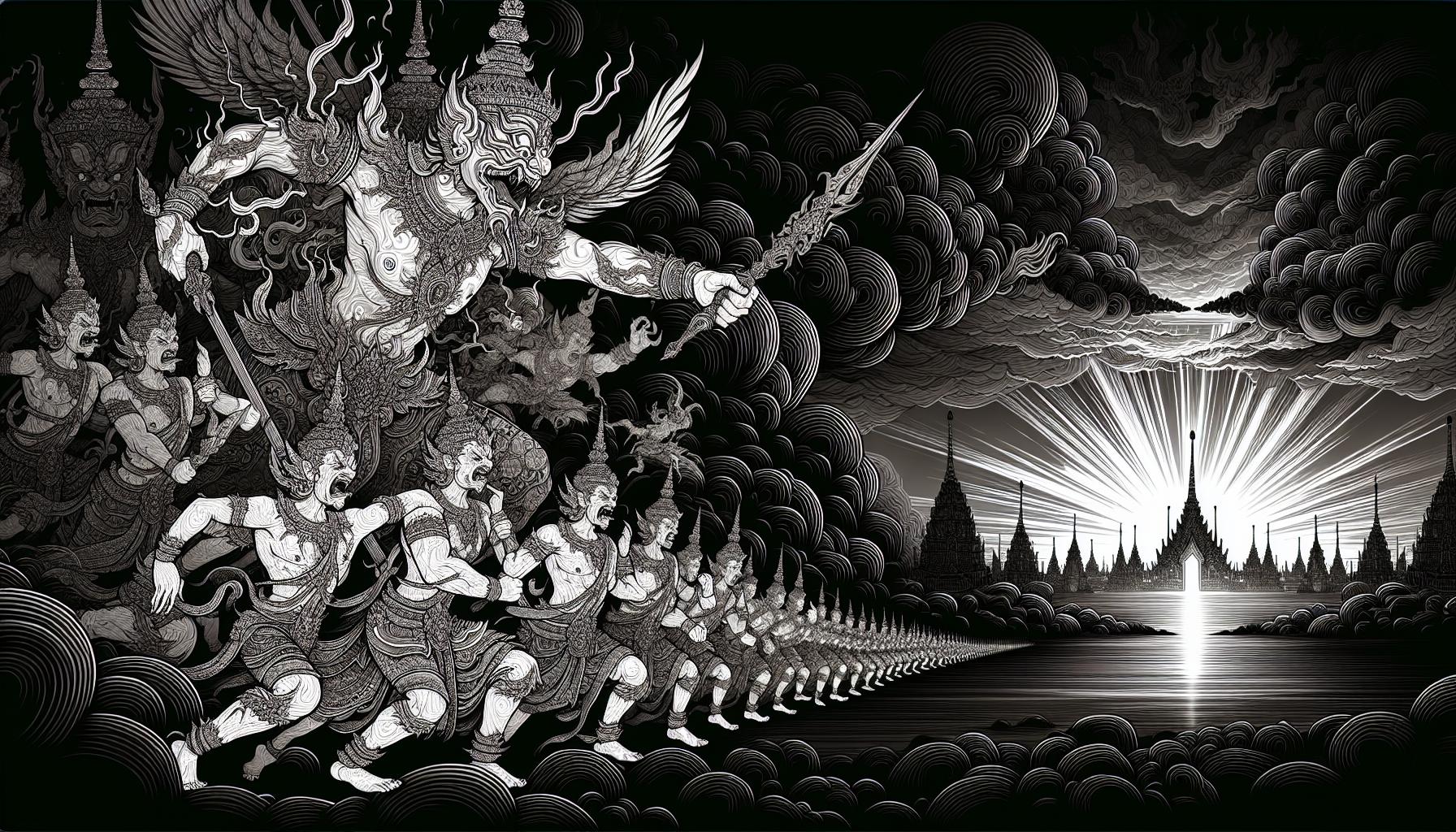
Asura deities hold significance in several cultural and religious traditions beyond Hinduism. Their characteristics and roles vary, reflecting the unique philosophies of these cultures.
Buddhism
In Buddhism, Asuras are typically portrayed as demigods who embody aggression and constant conflict. They reside in the lower heavenly realms and often challenge the Devas. Asuras in this tradition represent the perils of envy and strife, often illustrated in stories where they engage in battles with Devas for control and power. For instance, the Sutra of Golden Light depicts Asuras fighting the gods over celestial palaces. The fundamental teachings focus on overcoming such negative traits to achieve enlightenment.
Jainism
Jain texts also refer to Asuras, though in a slightly different context. Rather than demigods, Asuras manifest as beings driven by intense but misplaced passions and desires. Jain cosmology describes Asuras living in lower realms, categorized among the Naraka or hellish beings. They symbolize the consequences of excessive indulgence in negative emotions and actions. According to the Tattvartha Sutra, a fundamental Jain text, Asuras are bound by their karmic actions, and the path to liberation involves transcending such destructive traits.
- Buddhism: “Dīgha Nikāya (Long Discourses)”
- Jainism: “Karma Granthas”
Modern Interpretations Of Asura Deities
Modern interpretations of Asura deities highlight their lasting relevance in contemporary cultures. In Western pop culture, Asuras frequently appear as powerful antagonists in movies, comics, and video games. These portrayals often focus on their immense strength and cunning nature, reflecting their original mythological characteristics.
In psychology, Asura symbolism is examined to understand human behavior. Psychologists explore traits like ambition and aggression, drawing parallels between these and the traditional portrayals of Asuras. This approach offers insights into managing these traits in modern society.
In literature, contemporary authors reimagine Asuras to explore complex themes. Novels and graphic novels frequently depict Asuras in multidimensional roles, using them to challenge notions of good and evil. These narratives often emphasize the inner conflicts and moral ambiguity of Asura characters, providing deeper psychological and ethical insights.
In spiritual practices, Asuras represent the internal battles individuals face. Modern spiritual teachings incorporate Asura motifs to illustrate the struggle against negative emotions like anger and envy. This adaptation emphasizes the ongoing relevance of overcoming personal demons for inner peace.
In academic research, scholars analyze Asura myths to understand ancient cultural contexts. Researchers study the evolution of Asura narratives to trace societal changes and intercultural exchanges. This academic exploration enriches our comprehension of how Asura deities influenced various traditions.
Conclusion
Exploring the Asura deities has been a fascinating journey through ancient texts and modern interpretations. Their evolution from divine beings to symbols of ambition and greed offers deep insights into human nature. Asuras’ presence in various cultures and their portrayal in contemporary media highlight their enduring relevance.
These deities challenge us to reflect on our internal battles and the complexities of good and evil. By understanding Asura myths, we gain a richer perspective on spiritual and psychological dimensions, making them an integral part of our cultural and intellectual heritage.
Frequently asked questions
Who is Vritra in Hindu mythology?
Who was Mahishasura?
Who is Ravana in Hindu mythology?
How are Asuras viewed in Jainism?
Sources & further reading
These themes are explored in greater depth across the following authoritative resources:
- Britannica, Asura
- Britannica, Naga
- Mythopedia, Hindu Mythology
- Internet Sacred Text Archive, Mahabharata
- Wendy Doniger, Hindu Myths (Penguin Classics, 1975)
External resources for further reading. Apam Napat is not affiliated with these publishers; citation does not imply endorsement.
Based on the classical texts of Hindu mythology, see our sources.