
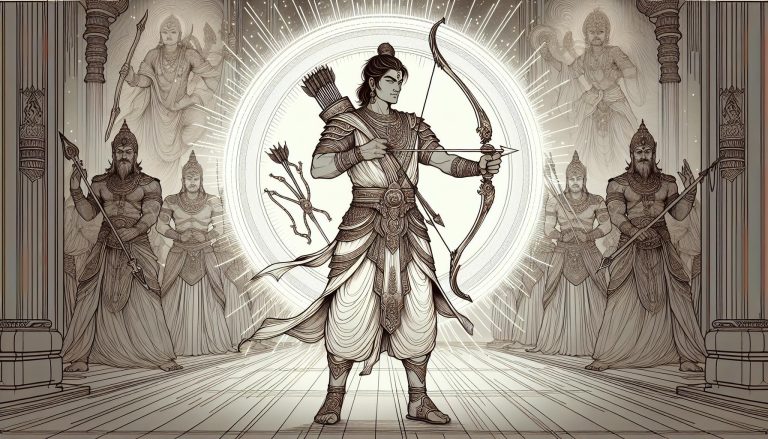
I’ve always been fascinated by how these divine gifts shaped Arjuna’s destiny. From the powerful Pashupatastra to the invincible Gandiva bow, these weapons weren’t just tools of war; they were symbols of divine favor and cosmic balance. Let’s delve into the mystical world of Arjuna’s divine weapons and uncover their significance in this timeless epic.
Arjuna’s Divine Weapons: An Overview
Arjuna’s divine arsenal, granted by various gods and sages, included weapons with distinct abilities and immense power. These weapons played crucial roles in the Mahabharata, shaping his destiny and demonstrating divine favor.
Bhargavastra
Bhargavastra, obtained from Parashurama – Rama of the Axe, had the unique ability to create millions of arrows. It was notably used by Karna to counter the Indrastra. This weapon showcased the overwhelming power bestowed upon its wielder.
Varunapasha
Arjuna also wielded Varunapasha, the noose of Varuna. Capable of torturing sinners with no escape, this weapon was a testament to the divine authority and was shared by figures like Rama and Indrajit – Valorous Son of Ravana.
Nagastra
The Nagastra, associated with the naga race, could take on the form of a deadly snake. Known for its unerring aim, Arjuna used this weapon effectively against Susharma. Karna also possessed the Nagastra, highlighting its significant role in the epic.
Arjuna’s collection of celestial weapons solidified his position as one of the greatest warriors in Indian mythology. These divine tools, each with specific powers, were central to his triumphs and the unfolding of the Mahabharata’s grand narrative.
The Origins of Arjuna’s Divine Weapons
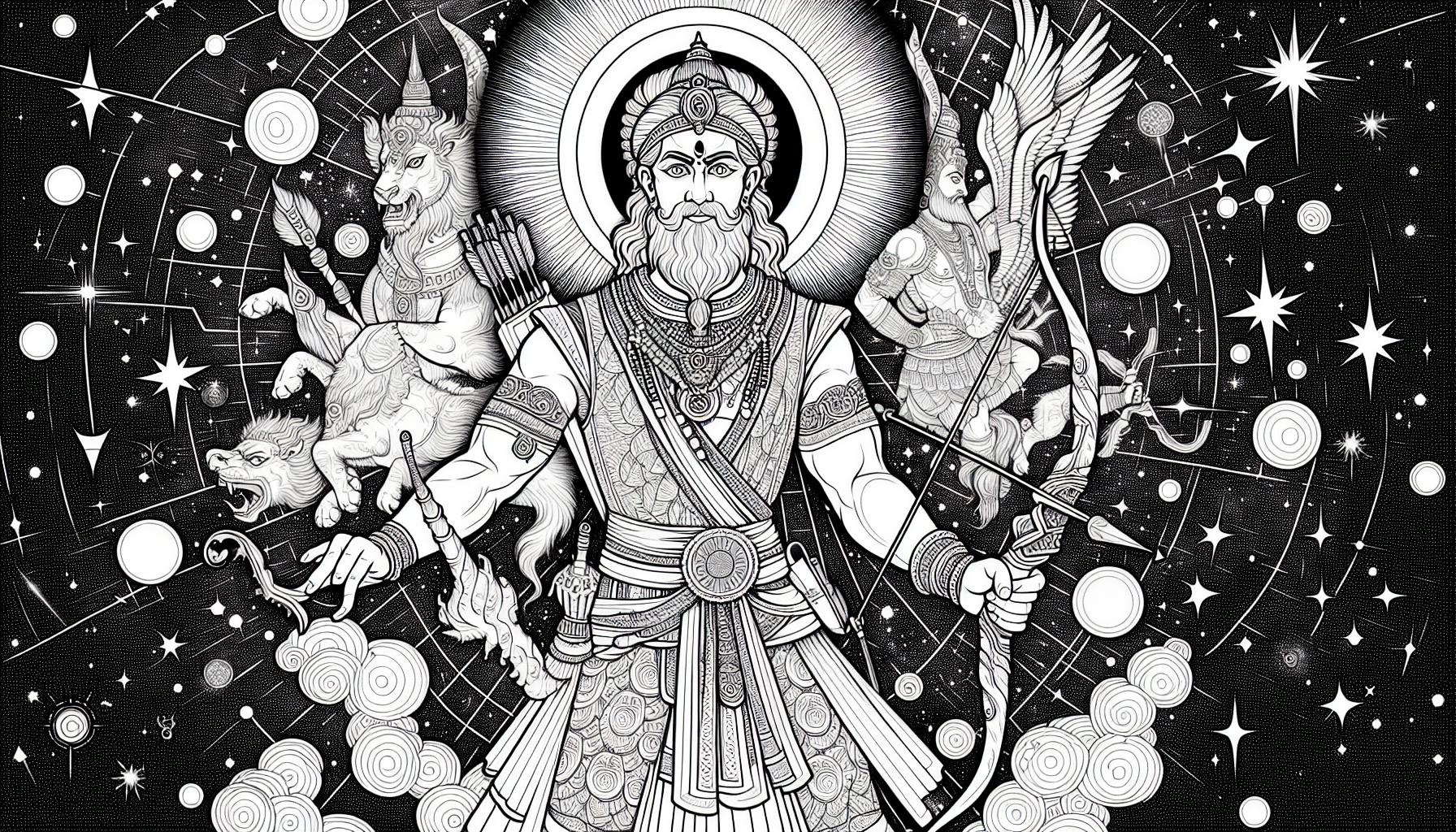
Arjuna obtained his divine weapons from different sources, significantly impacting his role in the Mahabharata. Two main ways how he acquired these weapons include gifts from gods and penances he performed.
Gifted by Gods
Several gods directly gifted Arjuna powerful weapons. Lord Shiva, disguised as a hunter, granted him the formidable Pasupata. This weapon, known for its immense destructive power, became crucial in his battles.
Celestial beings also provided Arjuna with other powerful weapons. These weapons, which had capabilities to shoot arrows with incredible precision and deadly force, played a significant role in numerous battles, shaping Arjuna’s reputation as an exceptional warrior.
Earned Through Penance
Arjuna spent extensive periods performing penances to earn divine weapons. He devoted five years with his father, Indra, mastering various celestial weapons. This period of penance and learning enabled him to wield these divine tools with unmatched skill and precision.
Arjuna’s divine arsenal, acquired through gifts and penance, contributed vastly to his prowess on the battlefield, cementing his place as one of the greatest warriors in Indian mythology.
Key Divine Weapons of Arjuna
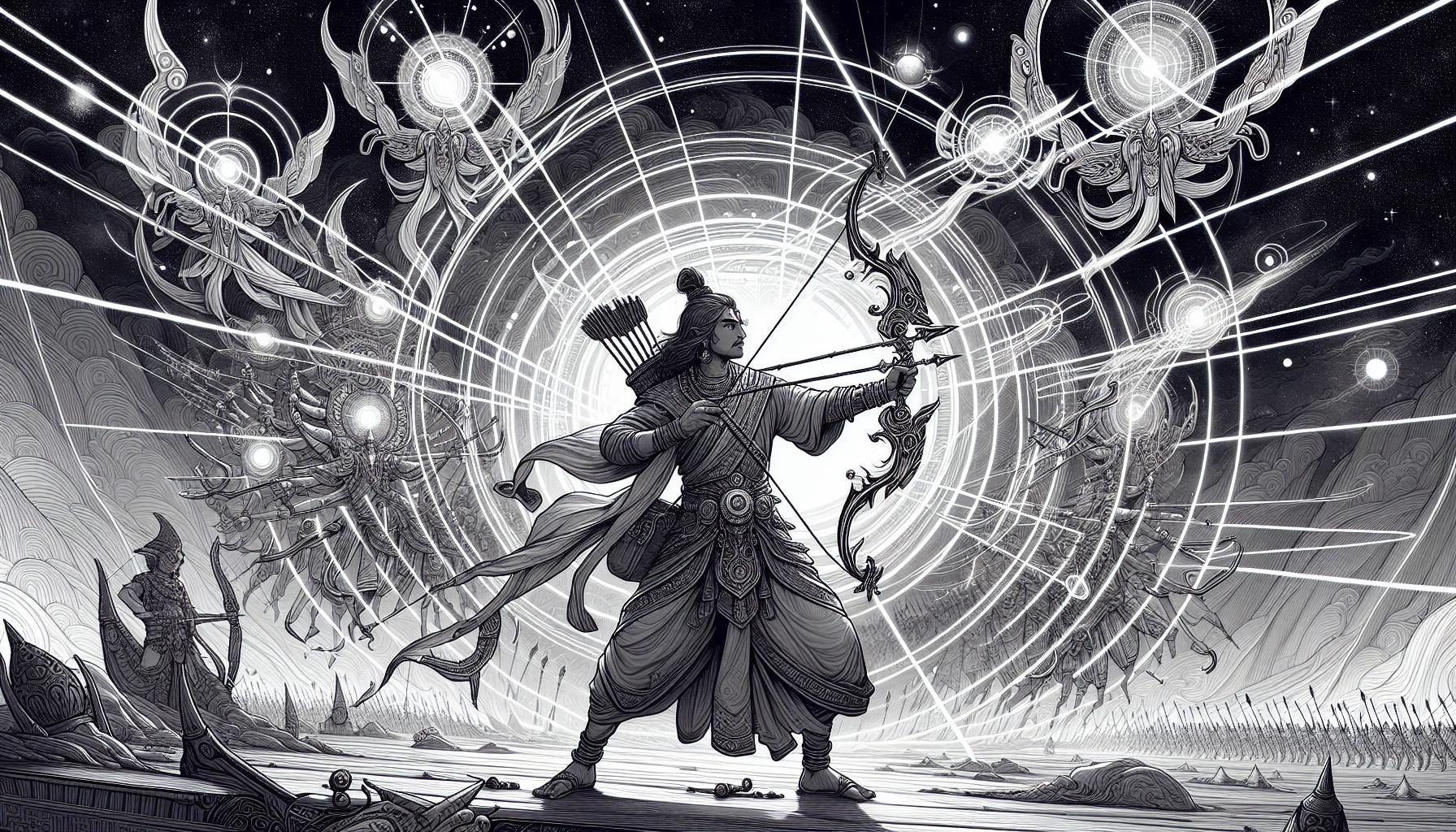
Arjuna’s legendary status in the Mahabharata is closely tied to his divine weapons. Granted by gods and obtained through intense penance, these weapons highlight Arjuna’s unparalleled prowess on the battlefield.
Gandiva Bow
The Gandiva bow, created by Brahma, the universe’s creator, stands out for its incredible features. Originating from Brahma, it passed through several gods before Agni, the fire god, bestowed it upon Arjuna during the Khandava forest episode. This indestructible bow, boasting the strength of 100,000 bows, had 108 celestial strings. The Gandiva bow, revered by celestials and Gandharvas, instilled self-confidence and self-belief in its wielder.
Pashupatastra
Among the powerful weapons in Arjuna’s arsenal, the Pashupatastra holds a special place. Lord Shiva granted this weapon to Arjuna after he proved his worth through intense penance. The Pashupatastra, capable of baffling other divine weapons, exemplifies Arjuna’s unparalleled devotion and strength.
Brahmastra
The Brahmastra, often referred to as the weapon of Brahma, encapsulates devastating power. This divine weapon, capable of annihilating entire armies, requires great responsibility and knowledge to wield. Arjuna’s possession of the Brahmastra underscores his mastery and the trust placed in him by celestial beings.
Symbolic Significance of Each Weapon
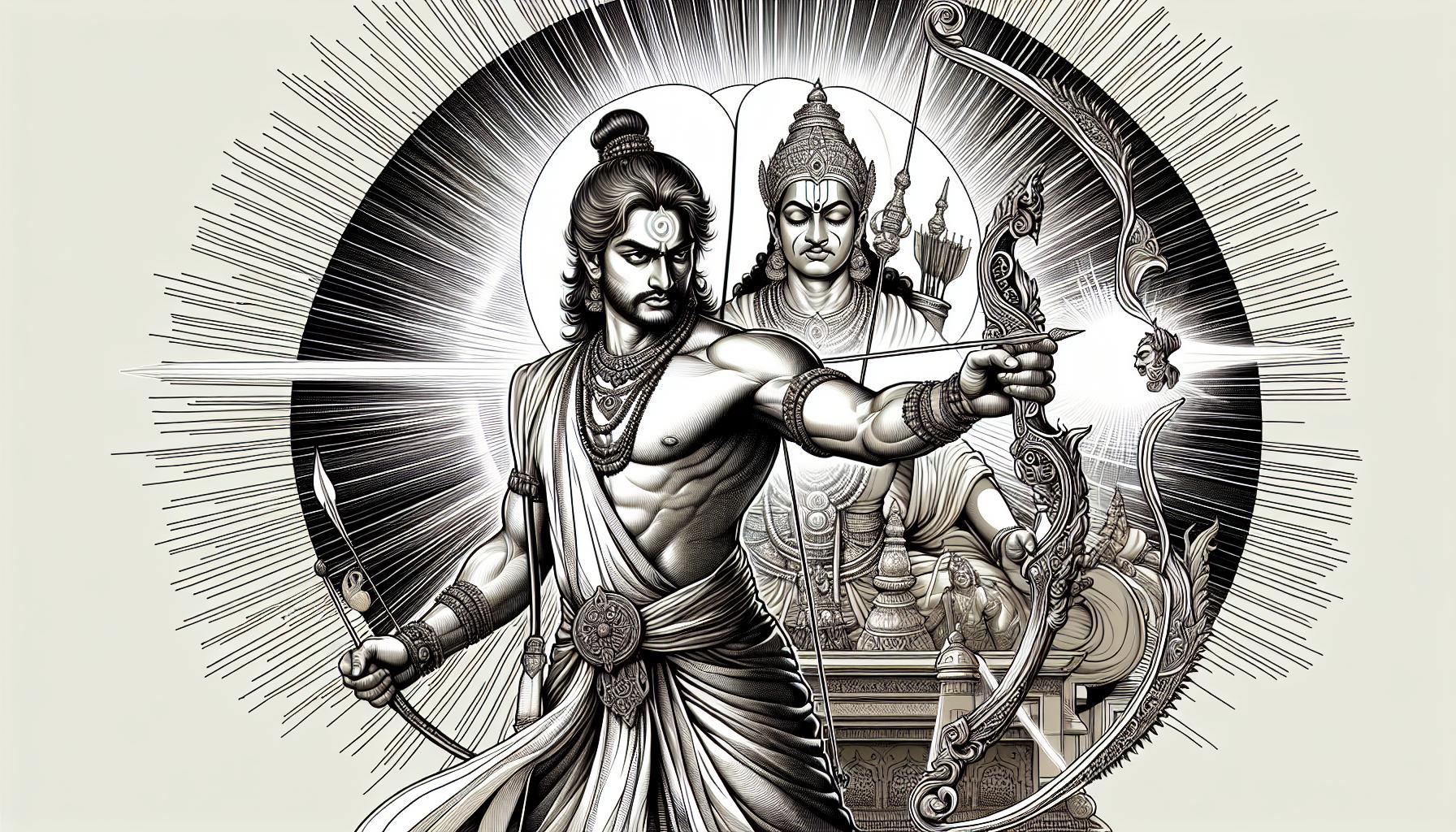
Arjuna’s divine weapons, given by deities, carry deep symbolic meanings. They illustrate key virtues that guided his path.
Pashupatastra
- Symbolic Significance: The Pashupatastra, given by Lord Shiva, represents the power to overcome internal and external enemies. It symbolizes the destruction of ego and negative tendencies.
- Spiritual Representation: This weapon signifies the triumph of good over evil and the purification of the soul.
- Moral Lesson: The Pashupatastra teaches the importance of self-control and the need to vanquish one’s own negative impulses to achieve spiritual growth.
- Symbolic Significance: The Gandiva, a celestial bow, represents the power of wisdom and the ability to discern right from wrong. It symbolizes the strength of one’s convictions and the courage to stand by them.
Role in Mahabharata
Arjuna, central to the Pandavas’ strategy, exemplified unparalleled courage throughout the Mahabharata war. His moments of doubt led to Krishna’s teachings in the Bhagavad Gita, elucidating dharma and a warrior’s duty.
Iconic Battles
In the battle of Kurukshetra, Arjuna’s Gandiva bow and divine weapons were pivotal. On the tenth day, he faced Bhishma, the Kaurava commander, neutralizing him with Shikhandi’s help. The fourteenth day saw Arjuna unleash a torrent of divine arrows to decimate the Kaurava ranks, using Pashupatastra against Jayadratha – Brother-in-law of the Kauravas to avenge Abhimanyu – The Brave Young Warrior’s death. His encounter with Karna on the seventeenth day remains legendary, showcasing his mastery over celestial weapons.
Strategy and Tactics
Arjuna’s strategy hinged on precision and exploiting enemy weaknesses. He led the Chakravyuha formation despite its complexities on the thirteenth day. His tactics balanced offense and defense, wielding divine weapons to counter enemies’ celestial arms. Notable for his adaptive combat style, Arjuna adjusted his approach based on battlefield dynamics and opponent strengths, consistently securing advantages for the Pandavas.
Conclusion
Arjuna’s divine weapons aren’t just tools of war; they’re symbols of his spiritual journey and moral fortitude. Each weapon, from the Pashupatastra to the Gandiva bow, carries profound significance that transcends the battlefield. Arjuna’s mastery over these celestial arms showcases his unparalleled prowess and strategic genius during the Mahabharata. His story reminds us of the virtues of wisdom, courage, and the eternal struggle between right and wrong. Through Arjuna’s journey, we gain insights into the timeless themes of spiritual growth and moral lessons that continue to resonate today.
Sources & further reading
These themes are explored in greater depth across the following authoritative resources:
- Internet Sacred Text Archive, Mahabharata (Ganguli translation)
- Internet Sacred Text Archive, Ramayana of Valmiki
- Britannica, Mahabharata
- Britannica, Ramayana
- Bibek Debroy, The Mahabharata (10 vols., Penguin, 2010 to 2014)
External resources for further reading. Apam Napat is not affiliated with these publishers; citation does not imply endorsement.
Based on the classical texts of Hindu mythology, see our sources.