

I’ve always been fascinated by how these emblems encapsulate vast philosophies in such simple forms. They offer a visual language that transcends words, connecting the earthly with the divine. Join me as we explore the rich world of Hindu god emblems and uncover the wisdom they embody.
Brief History Of Hindu God Emblems
Hindu god emblems trace their origins to ancient civilizations. These emblems appeared in the Indus Valley Civilization (circa 3300–1300 BCE). Archaeologists discovered seals with symbols resembling Hindu deities, suggesting an early use of divine emblems for ritualistic purposes.
Vedic texts (1500–500 BCE) reference various god emblems. For instance, Indra – The King of Heaven’s Vajra (thunderbolt) and Agni’s fire convey specific divine attributes. These ancient texts highlight how symbols played crucial roles in religious rituals and practices.
During the Gupta period (circa 320–550 CE), emblems gained prominence in art and architecture. Temples from this era feature detailed iconography, with each god depicted with unique symbols. For example, Vishnu – The Protector’s Chakra (disc) symbolizes the cyclical nature of time, while Shiva’s Trishula (trident) represents creation, preservation, and destruction.
In medieval periods, Bhakti movements (circa 7th–15th centuries CE) further amplified the significance of god emblems. Devotees carried small emblems during their pilgrimages, and commoners used these symbols to express devotion. Saints and poets from this era often referenced emblems in their devotional verses, emphasizing their spiritual importance.
The use of emblems continues today in various forms like temple art, religious ceremonies, and personal adornments. Modern practitioners often wear god emblems as jewelry, maintaining a tangible connection to ancient traditions.
Symbolism In Hindu God Emblems
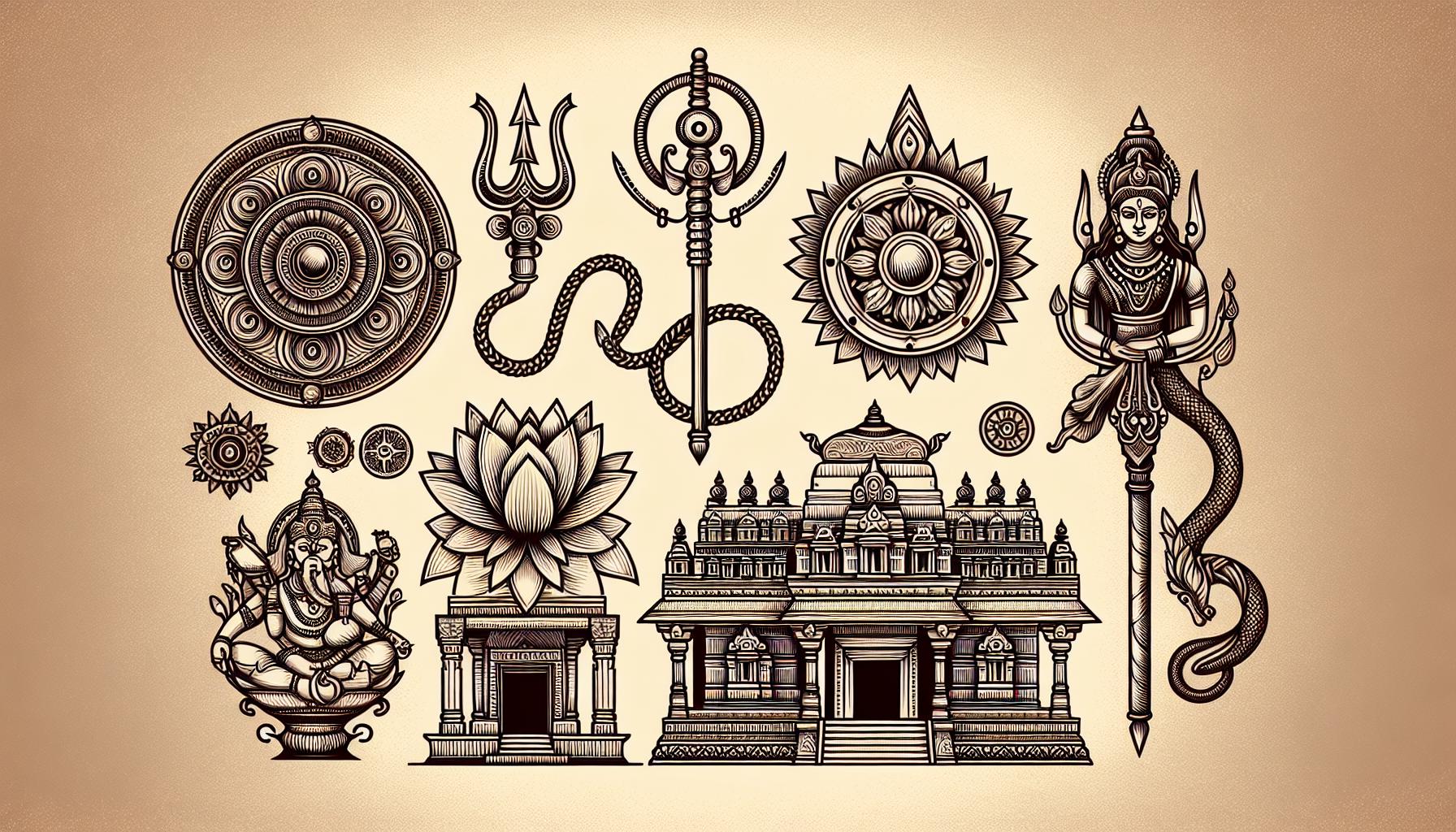
Hindu god emblems symbolize intricate concepts in theology and culture. They serve both as religious and cultural artifacts.
Religious Significance
Hindu god emblems hold profound religious importance, representing divine attributes and cosmic principles. For instance, Vishnu’s Chakra symbolizes the mind’s creative power, while Shiva’s Trishula signifies transcendence over the physical, mental, and spiritual realms. These symbols assist devotees in focusing their prayers and meditations, serving as visual aids to connect with the divine. Emblems also carry mythological significance, like Saraswati – The Goddess of Learning and Wisdom’s Veena, which signifies knowledge and arts, embodying her role as the goddess of learning and wisdom.
Cultural Importance
Culturally, Hindu god emblems intertwine deeply with art, literature, and societal practices. In Indian temples, decorative motifs like Lakshmi’s lotus and Durga’s lion depict stories and lessons from scriptures. During festivals, these emblems are prominent in rituals—such as Ganesha’s mouse symbolizing humility and connection to the earth. Emblems influence cultural expressions, seen in traditional crafts, music, and dance, where they embody spiritual narratives. Artisans and performers replicate these symbols, preserving and perpetuating cultural heritage through various forms of artistic expression.
Popular Hindu God Emblems
Hindu god emblems serve as powerful symbols connecting the divine to the devotees. Each emblem carries unique connotations and theological depth.
Om
Om, the primordial sound, represents the universe’s essence. It’s the root mantra in Hinduism, often chanted during meditation and prayer. Om’s written form is also a revered emblem, symbolizing the Trinity – Shiva, Vishnu and Brahma of Brahma – The Creator, Vishnu, and Shiva.
Swastika
The Swastika, an ancient symbol, signifies auspiciousness and good fortune. Used in rituals and temple decorations, it represents the eternal cycle of life, death, and rebirth. This emblem encapsulates both spiritual and socio-cultural connotations.
Trishula
The Trishula, Shiva’s trident, embodies creation, preservation, and destruction. As an emblem, it highlights Shiva’s role in maintaining cosmic balance. Trishula is also carried by ascetics and devotees, particularly during religious festivals like Mahashivaratri.
Lotus
The Lotus signifies purity and spiritual enlightenment, often associated with gods like Vishnu and Lakshmi. Even though growing in muddy waters, it remains untainted, symbolizing divine birth and spiritual transcendence. This emblem is frequently seen in Hindu art and architecture.
Conch Shell
The Conch Shell, or Shankha, is a symbol of Vishnu. Blowing the conch purifies the surroundings and marks the beginning of auspicious rituals. Its spiral form represents infinity and the universe’s cyclic nature, making it a central emblem in Hindu worship and celebrations.
Contemporary Usage And Representation
Hindu god emblems have found their way into modern culture in various forms. Today, they’re incorporated into daily life, fashion, and digital media. For instance, the Om symbol appears on jewelry, clothing, and home decor, signifying inner peace and spiritual awareness. The Trishula, often seen in tattoos and artwork, continues to represent divine power and protection.
In corporate branding, Hindu emblems serve as logos and thematic elements. Yoga studios and wellness centers frequently use the Lotus and Om symbols to convey tranquility and holistic well-being. These emblems communicate a connection to ancient wisdom and spiritual practices, enhancing the brand’s appeal.
Social media platforms display Hindu god emblems as emojis, stickers, and avatars. The digital representation makes them accessible to a broader audience, enabling the younger generation to engage with these symbols in innovative ways. This modern adoption helps maintain the relevance of Hindu cultural heritage.
In architecture and interior design, Hindu god emblems decorate temples, homes, and public spaces. Murals, sculptures, and intricate carvings feature symbols like the Swastika and Conch Shell, blending aesthetics with spirituality. This fusion creates spaces that evoke a sense of peace and devotion.
Education and academic discussions also feature Hindu god emblems. Scholars analyze their historical, cultural, and philosophical significance, presenting papers and books that highlight their evolving roles. This academic interest ensures that these emblems remain subjects of intellectual discourse.
Overall, Hindu god emblems retain their sacred meanings while adapting to contemporary settings. Their presence in daily life and their integration into modern platforms demonstrate their enduring influence on culture and spirituality.
Conclusion
Hindu god emblems have journeyed through time from ancient civilizations to our modern world. Their enduring presence in various facets of life underscores their powerful symbolism and cultural significance. Whether seen in daily life or integrated into contemporary fashion and digital media these emblems continue to bridge the past with the present. They serve as a testament to the timeless wisdom they represent and their ability to adapt and thrive in new contexts. As we move forward these symbols will undoubtedly remain a vital part of our cultural and spiritual world.
Sources & further reading
These themes are explored in greater depth across the following authoritative resources:
- Britannica, Hindu Temple Architecture
- Met Museum, Hinduism in the Arts
- Britannica, Iconography
- Stella Kramrisch, The Hindu Temple (Motilal Banarsidass, 1946)
- Heinrich Zimmer, Myths and Symbols in Indian Art and Civilization (Princeton University Press, 1946)
External resources for further reading. Apam Napat is not affiliated with these publishers; citation does not imply endorsement.
Frequently asked questions
What are Hindu god emblems?
What is Shiva's emblem in Hinduism?
What is Krishna's emblem in Hindu mythology?
Why are emblems important in Hindu worship?
Based on the classical texts of Hindu mythology, see our sources.