
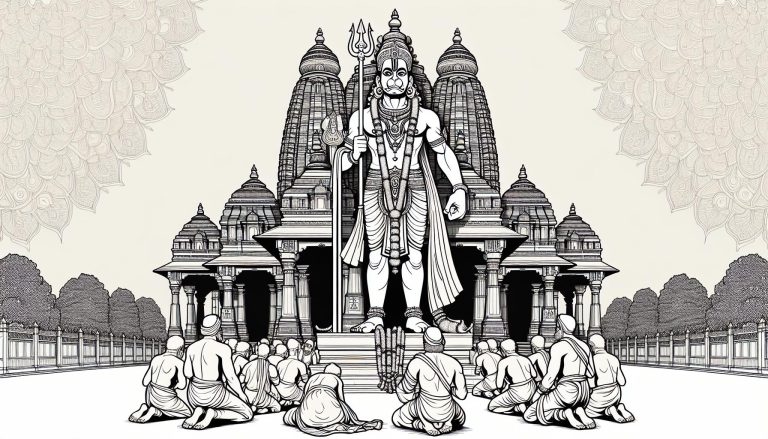
I’ve always been fascinated by how Hanuman’s tales from the Ramayana – Epic of Hinduism translate into everyday practices. From chanting the Hanuman Chalisa to performing specific pujas, his influence permeates various aspects of worship. It’s incredible how these rituals not only honor Hanuman but also aim to imbue his virtues into our lives.
Historical Background of Hanuman
Hanuman, also known as Anjaneya, holds a significant place in Hindu mythology. Ancient texts like the Ramayana and Mahabharata – The Great Epic offer detailed accounts of his valor, strength, and unwavering devotion. As the son of Vayu, the wind god, and Anjana, a celestial nymph, Hanuman’s origin story is fascinating. His role as a crucial ally to Lord Rama during the quest to rescue Sita from Ravana – The Demon King is well-documented.
In the Ramayana, Hanuman’s deeds stand out. He crossed the ocean in one leap, discovered Sita in Lanka, and burned down the city with his fiery tail. These acts not only showcased his physical strength but his strategic acumen and deep loyalty. His selfless dedication to Lord Rama made him a symbol of devotion and courage, qualities revered in Hindu rituals.
Over centuries, Hanuman’s legends expanded beyond the Ramayana. Early medieval texts like the Puranas and later commentaries by scholars like Tulsidas, who authored the Hanuman Chalisa, cemented his status in Hindu worship. These writings highlighted various aspects of his character, making him an integral part of rituals aimed at invoking strength and protection.
Historical records indicate that Hanuman worship gained prominence in Indian temples by the 10th century. From the ancient city of Hampi to modern-day temple cities like Varanasi, idols and temples dedicated to Hanuman emerged, reflecting his growing popularity. This widespread reverence underlines his importance in Hindu rituals and the enduring appeal of his story.
Hanuman’s presence in rituals today stems from this rich historical context. Devotees seek his blessings to overcome obstacles, gain courage, and strengthen their devotion to the divine. Whether through reciting the Hanuman Chalisa, performing Sankat Mochan Hanuman Ashtak, or celebrating Hanuman Jayanti, his historical legacy continues to inspire and guide millions.
Hanuman in Hindu Scriptures

Hanuman holds a prominent position in Hindu scriptures, particularly the Ramayana and Mahabharata. His portrayal in these texts cements his status as a powerful and revered deity.
References in Ramayana
In the Ramayana, Hanuman serves as a central character. He is the monkey commander of the monkey army, working to help Rama, an avatar of Vishnu – The Protector. One of his notable feats includes recovering Rama’s wife, Sita, from the demon king Ravana of Lanka. Hanuman’s bravery and devotion play a crucial role in this ancient epic, highlighting his strength and strategic intelligence. His actions, such as leaping across the ocean and setting Lanka ablaze with his fiery tail, showcase his unparalleled capabilities.
Mentions in Mahabharata
Although less prominent in the Mahabharata, Hanuman’s presence remains significant. He appears in the guise of an old monkey, meeting Bhima, his spiritual brother, in the forest. This encounter serves to underscore the themes of strength, humility, and divine assistance. Hanuman blesses Bhima, imparting knowledge and further linking the past glories of the Ramayana with the ongoing narrative of the Mahabharata.
Significance of Hanuman in Hindu Rituals
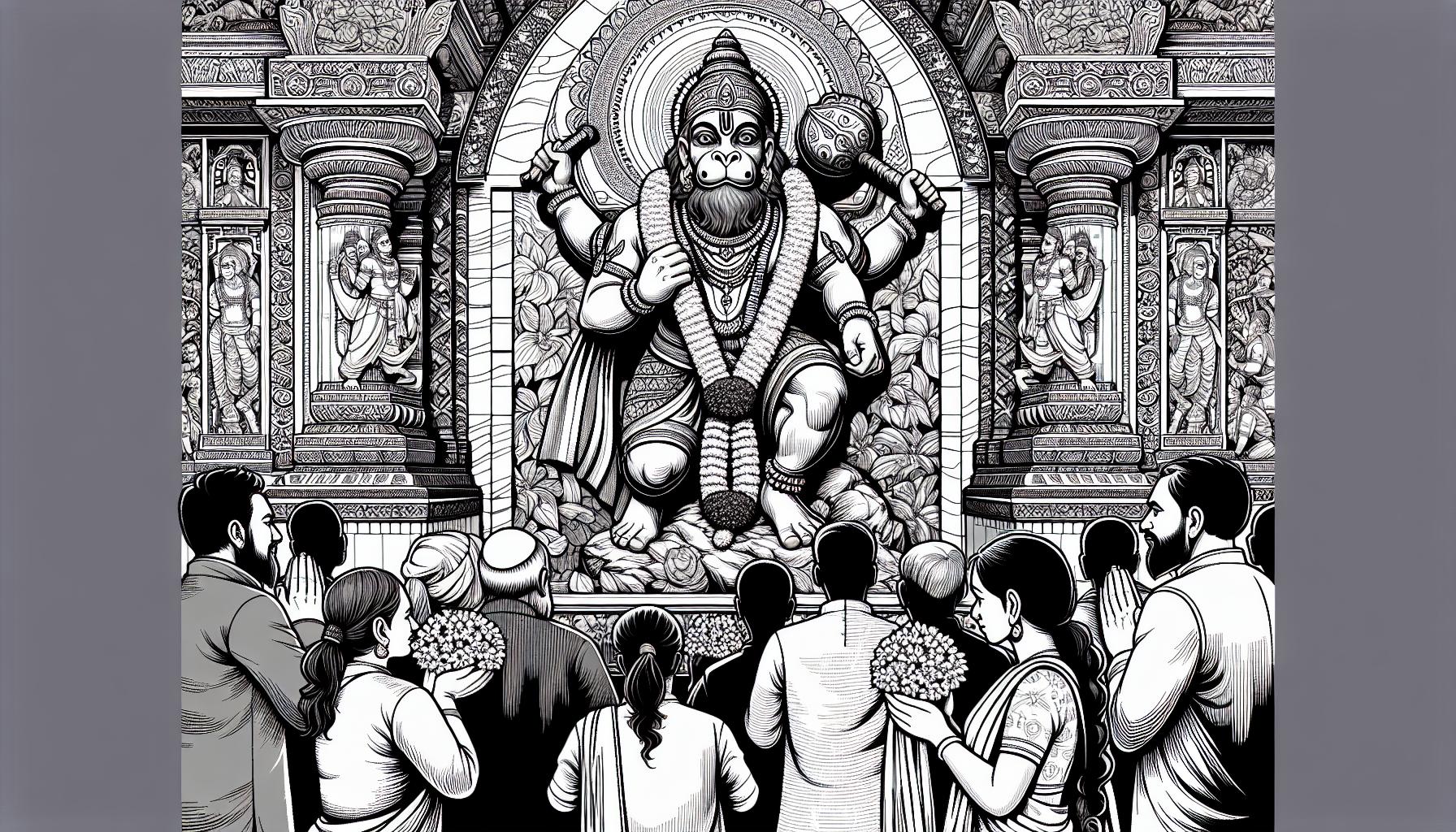
Hanuman’s role in Hindu rituals is deeply rooted in both mythology and devotional practices. His influence permeates various religious ceremonies and personal worship routines.
Symbolism and Attributes
Hanuman embodies strength, devotion, and loyalty. These attributes make him a pivotal figure in Hindu rituals. Devotees invoke him for courage and protection, often reciting the Hanuman Chalisa—a 40-verse hymn praising his virtues. His unyielding devotion to Lord Rama symbolizes the ideal servant-master relationship.
In rituals, priests and laypeople alike chant Hanuman’s names and recount his exploits to inspire determination. His image, usually depicted with a mace and mountain, represents his roles as a warrior and healer. During times of distress, followers turn to him believing his intervention can bring relief and peace.
Representation in Temples
Temples dedicated to Hanuman are widespread, reflecting his popularity in Hinduism. Each temple portrays his different aspects, from a mighty warrior to a humble devotee. Devotees often flock to these temples on Tuesdays and Saturdays, days traditionally associated with his worship.
In these temples, rituals include offering sindoor (vermilion) to Hanuman idols, symbolizing his fiery, red complexion. Many temples feature murals and sculptures that narrate significant episodes of his life, including his feats in the Ramayana. These artistic representations serve not only as visual worship aids but as didactic tools, teaching visitors about his attributes and adventures.
Hanuman’s representation in temples underscores his dual nature as both a divine protector and an exemplar of dharma (righteous duty).
Rituals Dedicated to Hanuman
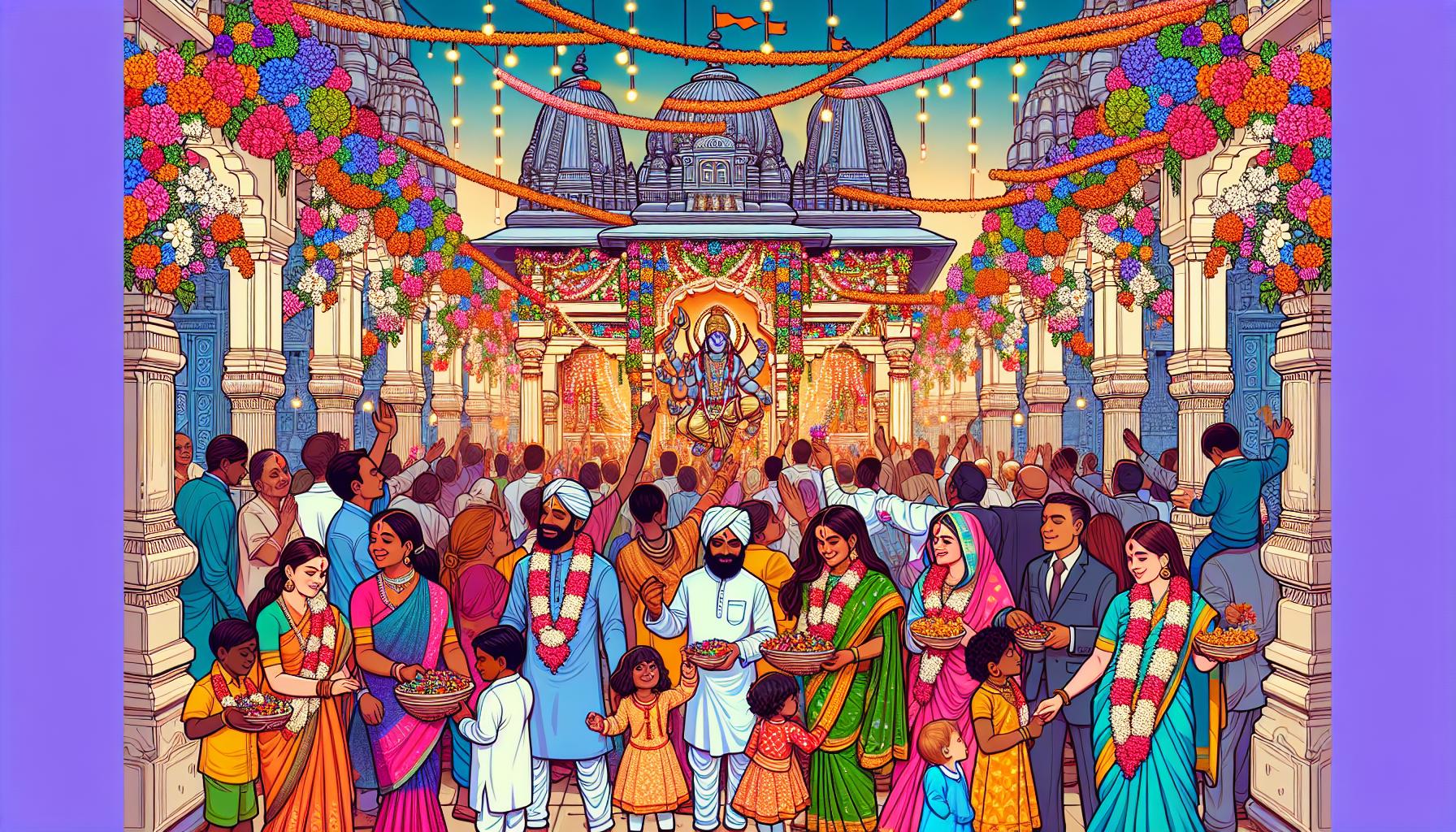
Many Hindu rituals dedicated to Hanuman revolve around his virtues of strength and devotion. These rituals, practiced fervently by devotees, aim to invoke his blessings and protection.
Hanuman Jayanti Celebrations
Hanuman Jayanti marks the birth of Hanuman. Held on the 15th day of the Shukla Paksha in the month of Chaitra (March-April), this festival draws large gatherings in temples. Devotees perform special pujas and offer sweets like laddoos and fruits. Temples often organize reading sessions of the Hanuman Chalisa, a 40-verse hymn dedicated to Hanuman. Streets and homes are adorned with decorations, and processions celebrate his birth and deeds.
Weekly Worship Rituals
Many devotees worship Hanuman on Tuesdays and Saturdays. On these days, they visit temples, offer sindoor (vermillion), and recite passages from the Ramayana and the Hanuman Chalisa. Fasting is common, often accompanied by communal prayers. Some devotees perform a ritual called “Hanuman Pradakshina,” where they circumambulate the idol or temple, expressing their devotion and seeking blessings for strength and perseverance.
Hanuman’s Influence in Temples
Hanuman’s influence is felt deeply in Hindu temples across India, where his presence invites devotion and reverence. Devotees visit these temples regularly to offer prayers and seek blessings.
Notable Hanuman Temples
Several temples dedicated to Hanuman stand out for their historical and spiritual significance:
- Hanuman Garhi, Ayodhya: Located in Ayodhya, this temple is one of the most revered. It features a massive idol of Hanuman and is frequented by pilgrims, especially those visiting the birthplace of Lord Rama.
- Sankat Mochan Hanuman Temple, Varanasi: Established by the poet-saint Tulsidas, this temple is known for its power to relieve devotees from hardships. It’s a prominent site during festivals like Hanuman Jayanti.
- Hanuman Temple, Connaught Place, Delhi: This ancient temple in the heart of India’s capital is famous for its unique architectural style and the continuous chanting of Hanuman Chalisa.
- Mahavir Mandir, Patna: Believed to fulfill devotees’ wishes, this temple attracts lakhs of visitors annually, particularly during Ram Navami and Hanuman Jayanti.
- Namakkal Anjaneyar Temple, Tamil Nadu: Known for its 18-feet-tall idol, this temple is a significant pilgrimage site, especially during Hanuman Jayanti.
Regional Variations in Worship
Worship practices for Hanuman vary regionally, reflecting local customs and traditions:
- North India: In regions like Uttar Pradesh and Bihar, Hanuman Chalisa recitations and large processions mark Hanuman Jayanti. Sindoor is offered to Hanuman idols.
- South India: Devotees in Tamil Nadu and Karnataka often venerate Hanuman through special offerings and elaborate “Abhishekams” (ritualistic bathing of idols). Tuesdays and Saturdays see increased temple visits.
- West India: States like Maharashtra emphasize Hanuman’s warrior aspect. Pilgrims often engage in rigorous physical offerings like “Hanuman Pradakshina” (circumambulation of temples).
- East India: In places like West Bengal, Hanuman is celebrated with folk traditions and localized legends. Devotees light lamps and recite the Hanuman Chalisa in groups.
Hanuman’s role in Hindu temples illustrates his influence, reaching far across different regions and practices. Devotees continue to seek his blessings and protection, embodying his attributes of strength and devotion.
Contemporary Practices Involving Hanuman
Hanuman continues to play a pivotal role in Hindu rituals today. Devotees engage in various practices to honor him and seek his blessings.
Modern Adaptations of Rituals
Hanuman Puja Vidhi involves offering specific items believed to attract divine consciousness. Devotees use oil, sindur (vermilion) and rui leaves. These offerings aim to alleviate suffering due to negative energies and channel pleasant energy for spiritual progress. Hanuman Jayanti, celebrated on the full moon day of the Hindu lunar month of Chaitra, holds unique regional significance. While Maharashtra observes it on Saturdays, other parts of India celebrate it on both Tuesdays and Saturdays.
Hanuman in Popular Culture
Hanuman has transcended traditional religious boundaries and integrated into popular culture. His stories are portrayed in movies, TV shows, and comics, capturing the imagination of diverse audiences. This adaptation reinforces his role as a symbol of strength, devotion, and resilience. Hanuman’s depiction in animation and digital media offers a modern twist, making his stories accessible to younger generations.
Conclusion
Hanuman’s role in Hindu rituals is profound and multifaceted. His presence in temples and regional worship practices across India underscores his significance in the spiritual lives of millions. Whether through the recitation of the Hanuman Chalisa or the celebration of Hanuman Jayanti, devotees continually seek his blessings for strength and protection.
Hanuman’s legacy transcends time, remaining a powerful symbol of devotion and resilience. His influence extends beyond traditional rituals, permeating modern culture through various media. Embracing Hanuman’s attributes, we find inspiration to face life’s challenges with courage and unwavering faith.
Sources & further reading
These themes are explored in greater depth across the following authoritative resources:
- Encyclopaedia Britannica, Hindu Mythology
- Internet Sacred Text Archive, Hinduism
- Mythopedia, Hindu Mythology
- Harvard Pluralism Project, Hindu Tradition
- Wendy Doniger, The Hindus: An Alternative History (Penguin, 2009), ISBN 978-0143116691
External resources for further reading. Apam Napat is not affiliated with these publishers; citation does not imply endorsement.
Based on the classical texts of Hindu mythology, see our sources.