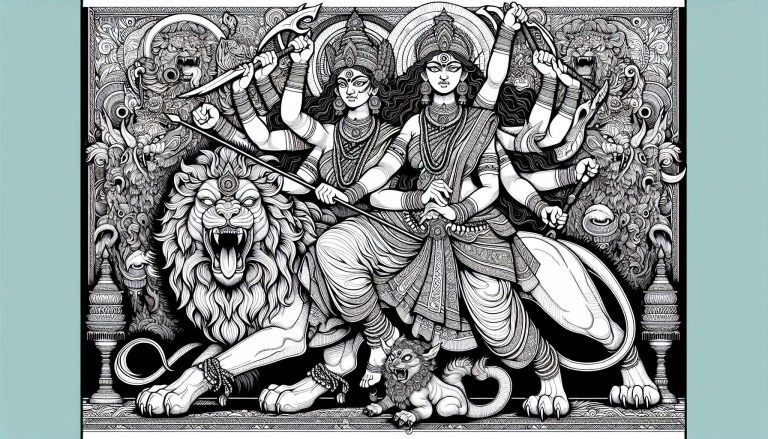
I find it captivating how each consort’s iconography serves a specific purpose in the broader context of Hindu worship. From Parvati’s nurturing presence to Kali’s fierce protectiveness, these images aren’t just artistic expressions; they’re vital links to understanding the multifaceted nature of the divine feminine. Let’s explore how these powerful goddesses are portrayed and what their images tell us about their roles in both mythology and daily devotion.
Overview Of Shiva’s Consorts
Shiva’s consorts hold significant places in Hindu mythology, embodying diverse aspects of feminine power. The primary consort, Parvati, represents beauty and fertility. In iconography, she often appears in harmonious settings with Shiva. Sometimes, she’s depicted with sons, Skanda – Commander of the Army of Devas and Ganesha, highlighting her role as a nurturing mother.
Parvati And Her Forms
Parvati encompasses several forms, each highlighting different facets of the feminine principle. Uma, another name for Parvati, emphasizes her maternal aspect as the mother of the universe. In contrast, Sati is a more intense form, often linked to Durga, showcasing strength and determination.
Uma And Sati
Uma, as Parvati, exudes benevolence and motherhood. Sati’s iconography emphasizes intense devotion and power. Linked with Durga, she represents the transformative aspect of the feminine, combining nurturing and fierce protection.
Durga And Kali
Durga and Kali, fierce forms of Parvati, primarily embody warrior-like qualities. Durga’s depictions as a warrior goddess fighting evil signify her protective nature. Kali, often more intense, signifies destruction of evil and rebirth, her iconography steeped in themes of time and change.
Parvati: The Fertility Goddess

Parvati, Shiva’s consort, embodies various facets of femininity and power. As a fertility goddess, she personifies beauty, marriage, and the arts with a benevolent and loving nature.
Symbolism And Attributes
Parvati’s symbolism ties closely to her role as a fertility goddess and her relationship with Shiva. Her key symbols include:
- Lotus Flowers: Represent balance, harmony, and growth. These flowers, often held by Parvati, signify her connection to fertility and beauty.
- Tridents: Reflect creation, preservation, and destruction. Tridents, common with Parvati, symbolize her role in the cosmic cycle.
- Tigers: Represent control over her environment and her fierce aspect. Tigers, often depicted alongside Parvati, underscore her power.
Iconographic Depictions
In Hindu iconography, Parvati’s depiction often includes specific symbols that highlight her various roles. She is usually shown with two or four arms, holding her key symbols like lotus flowers and a trident. Parvati stands or sits on a tiger or lion, symbolizing her dominion over nature. Her expression embodies gentleness yet strength, encapsulating her nurturing and fierce attributes. Parvati’s presence in art and sculpture emphasizes themes of fertility, beauty, and maternal care.
Durga: The Warrior Goddess
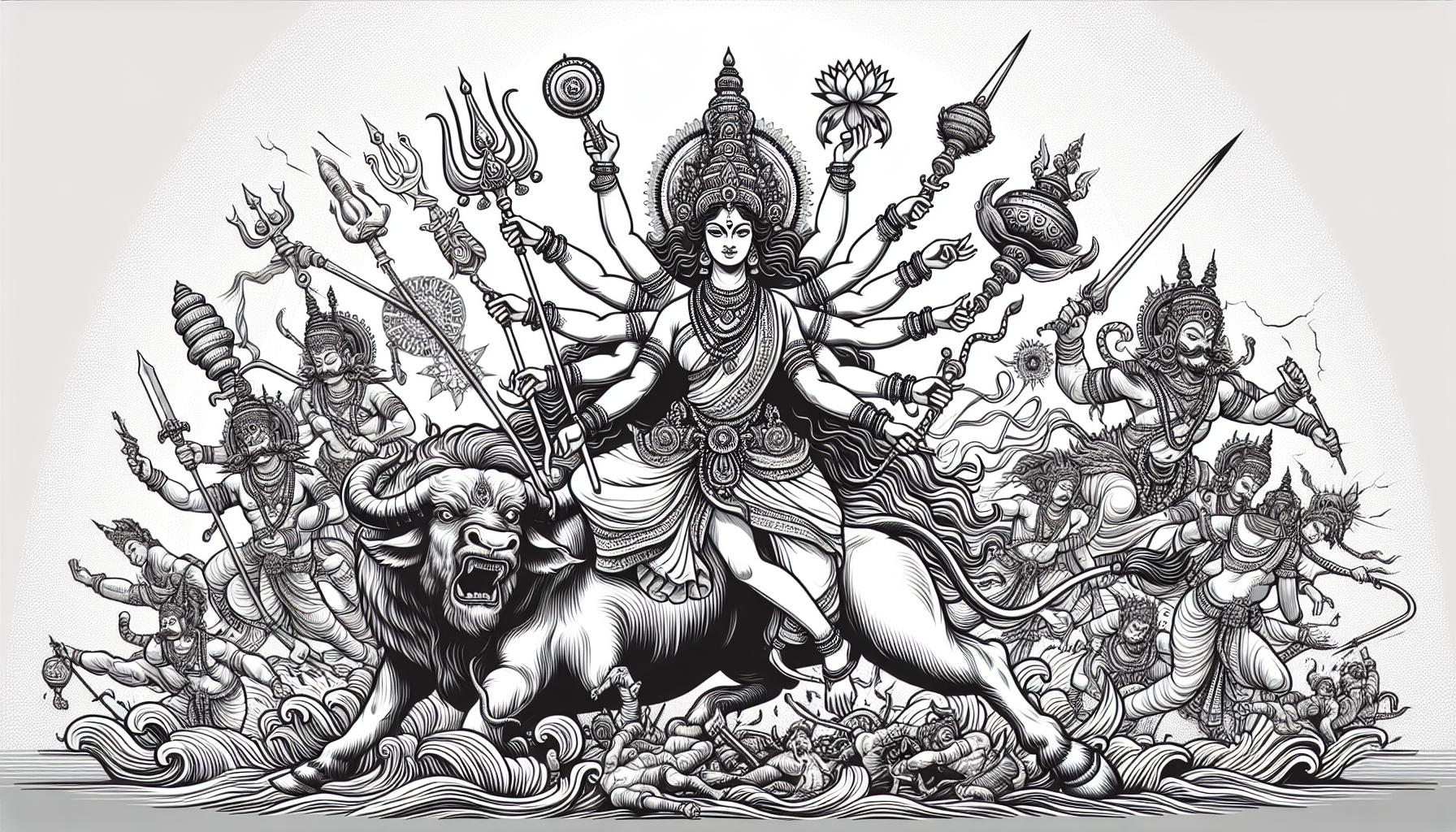
In Hindu mythology, Durga stands as a symbol of feminine strength and power. Her iconography reflects her role as a warrior goddess who combats evil and defends righteousness.
Symbolism And Attributes
Durga’s attributes carry deep symbolic significance, highlighting her divine powers and spiritual roles:
- Trishul (Trident): Durga holds a trishul given by Shiva. It symbolizes the destruction of ignorance, ego, and desire. The three prongs of the trishul represent the qualities humans possess: Tamas (laziness), Rajas (hyperactivity), and Sattva (purity).
- Chakra (Discus): Given by Vishnu – The Protector, the chakra signifies the mind’s power and the ability to destroy evil.
- Conch Shell (Shankha): Symbolizes the primordial sound and the universe’s origin, representing purity and the dissemination of knowledge.
- Lotus Flower: Represents purity, enlightenment, and self-regeneration, showing Durga’s connection to the divine.
- Sword: Emblematic of discrimination and wisdom, enabling Durga to eliminate evil and uphold truth.
Iconographic Depictions
Durga is typically depicted with multiple arms, each holding a different weapon. These weapons denote her capacity for protection and devastation:
- Multiple Arms: Durga’s numerous arms signify her boundless ability and strength to perform different tasks simultaneously.
- Lion Mount: Her lion mount stands for courage and strength. It is said to be her power source, reflecting her dominant and fearless nature.
- Battle Scene: Often shown in combat with Mahishasura – Buffalo Demon, the buffalo demon, Durga’s depiction in this scene emphasizes her role as the unstoppable force against evil. Her victory over Mahishasura is celebrated annually during the festival of Navratri.
Durga’s depictions and symbols illustrate her as a complex figure embodying both nurturing and fierce attributes essential to her worship and reverence in Hindu culture.
Kali: The Fierce Protector
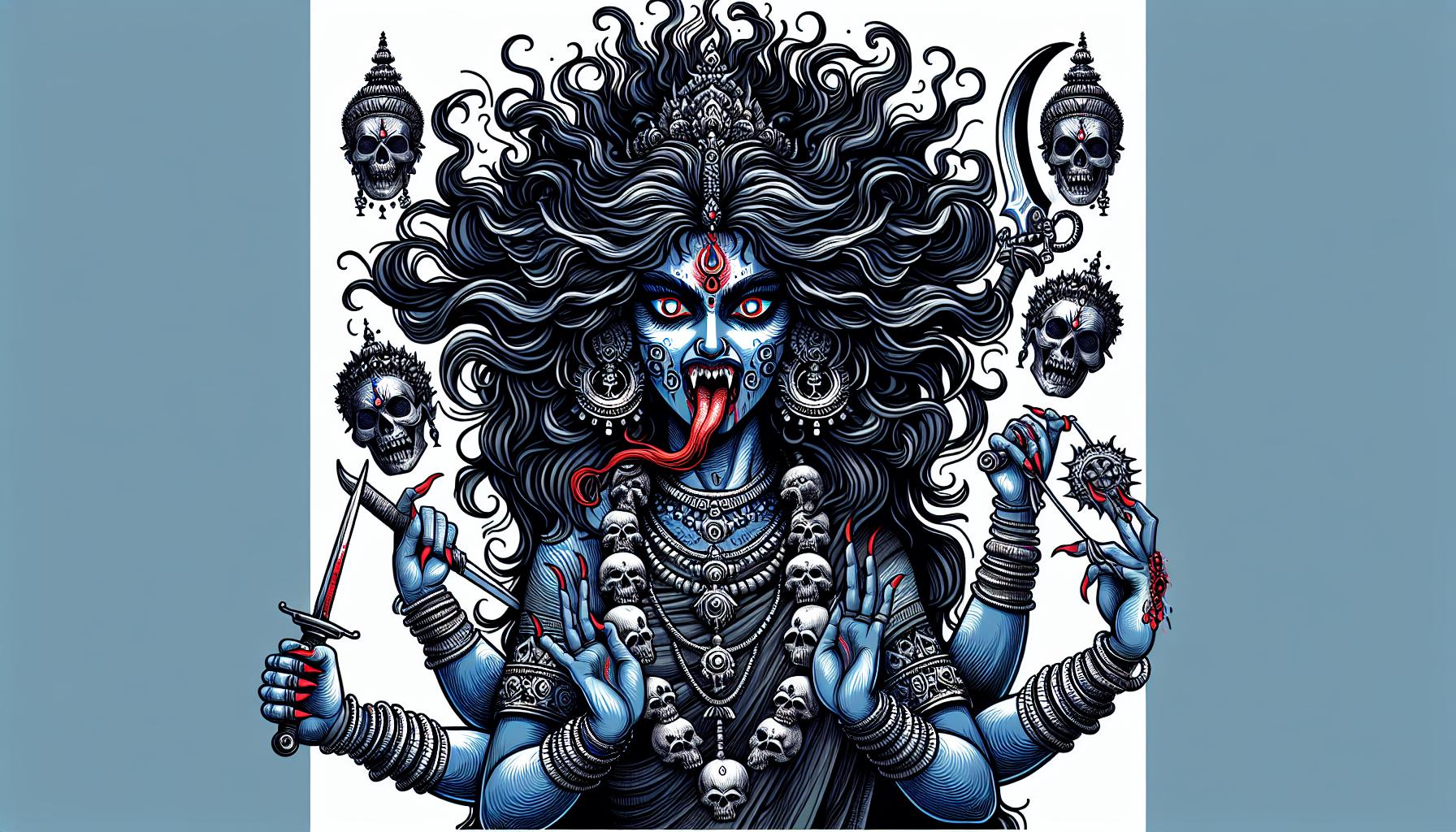
In Hindu mythology, Kali represents a powerful aspect of motherhood. Her fierce image embodies protection and strength.
Symbolism And Attributes
Kali’s iconography is rich in symbolism. Her four-armed form often holds significant items. The sword signifies divine knowledge, while the severed head symbolizes the destruction of ego. Her other hands display gestures of blessing and reassurance, conveying her role as both protector and liberator.
In her ten-armed form, Mahakali, she is even more formidable. Each arm holds a weapon or symbolic object, emphasizing her multiple powers. Mahakali’s ten faces and three eyes on each face represent her ability to perceive all things. Despite her ferocity, she adorns herself with elaborate ornaments, contrasting with her fearsome persona.
Her color, typically black or sometimes blue, reflects her all-encompassing nature, absorbing all evil and impurities. The disheveled hair symbolizes her wild energy, unconstrained by social norms or constraints. Her red eyes indicate her intense rage and the intoxication from consuming evil forces. The lolling tongue can be seen as a symbol of modesty after defeating her enemies, though it also implies a bloodthirsty aspect. These attributes together depict Kali as a multifaceted deity capable of destruction and protection.
Iconographic Depictions
Kali is vividly portrayed in various forms. The four-armed form is most common, showing her with a sword, a severed head, and two hands in blessing gestures. These elements illustrate her dual nature as a destroyer of evil and a nurturer.
Mahakali’s ten-armed form is more elaborate. With ten faces and three eyes on each, she sees everything in the universe. This form often shows her fully adorned, unlike the simpler four-armed depiction where she stands unclothed but covered in a garland of skulls. Each ornament in her Mahakali form carries symbolic meaning, like the garland representing the cycle of life and death.
Her typically black or blue complexion contrasts strikingly with the bright red tongue. Her wild hair flows freely, indicating her untamed nature. Her red eyes and fierce expression complete her formidable appearance. This depiction establishes Kali as a complex deity who embodies both destruction and maternal care.
Common Themes And Elements
Shiva’s consorts embody essential qualities and play significant roles in Hindu iconography. Their depictions highlight various aspects of femininity and divine power.
Symbolic Objects
Consorts are often linked to specific objects that carry deep symbolic meanings. The yoni, a spouted dish, stands out prominently. It’s especially associated with Parvati, representing feminine power and fertility. These objects enrich the narrative of each deity, providing insight into their roles and significance.
Color Symbolism
Colors play a crucial role in the iconography of Shiva’s consorts. Uma and Parvati are typically shown with fair or greenish skin tones, enhancing their serene and nurturing aspects. In contrast, Durga and Kali sport darker hues. Durga’s golden or red skin signifies power and protection, while Kali’s black or blue complexion evokes her fierce, transformative energy. The use of distinct colors underscores the diverse attributes and powers each consort brings to the divine narrative.
This section aims to merge specific elements and symbols to depict the rich and varied iconography of Shiva’s consorts, presenting a cohesive and detailed view.
Conclusion
Exploring the iconography of Shiva’s consorts reveals a tapestry of feminine power and divine attributes. Durga and Kali, with their distinct yet complementary roles, embody the multifaceted nature of strength and nurturing. The symbolic objects and color symbolism enrich our understanding of these deities, highlighting their importance in Hindu mythology. Each element, from the yoni to the hues of their depictions, contributes to a deeper appreciation of their significance. This exploration underscores the profound and diverse qualities these goddesses bring to the spiritual landscape.
Sources & further reading
These themes are explored in greater depth across the following authoritative resources:
- Encyclopaedia Britannica, Hindu Mythology
- Internet Sacred Text Archive, Hinduism
- Mythopedia, Hindu Mythology
- Harvard Pluralism Project, Hindu Tradition
- Wendy Doniger, The Hindus: An Alternative History (Penguin, 2009), ISBN 978-0143116691
External resources for further reading. Apam Napat is not affiliated with these publishers; citation does not imply endorsement.
Based on the classical texts of Hindu mythology, see our sources.