
Exploring these mythological beings isn’t just about revisiting ancient tales; it’s about understanding the timeless themes and values they represent. Whether it’s Zeus wielding his thunderbolt or Shiva performing his cosmic dance, each deity embodies unique aspects of power, wisdom, and virtue. Let’s jump into the enchanting world of mythological divine personalities and uncover the lessons they still teach us today.
Overview Of Mythological Divine Personalities
Mythological divine personalities, spanning various cultures, reflect humanity’s attempt to understand the universe. These figures often embody natural forces, human virtues, and vices. From Greek gods like Zeus, the ruler of Olympus, to Hindu deities like Shiva, the destroyer, each character offers unique insights.
Greek Mythology
Greek mythology presents a pantheon of gods and goddesses. Zeus, known for wielding thunderbolts, rules Olympus. Athena, the goddess of wisdom, symbolizes strategic warfare and intellect. Poseidon, god of the sea, commands his area with a trident. These figures illustrate power structures and societal values in ancient Greece.
Hindu Mythology
Hindu mythology is rich with deities embodying complex traits. Shiva, part of the Trimurti, represents destruction and regeneration. Vishnu, the preserver, sustains the universe. Lakshmi, goddess of wealth, epitomizes prosperity and fortune. These deities depict various aspects of life and cosmic functions.
Norse Mythology
Norse mythology features gods and heroes reflecting the harsh climate of Scandinavia. Odin, the Allfather, seeks wisdom through sacrifice. Thor, wielding his hammer Mjölnir, embodies strength and protection. Freya, goddess of love and fertility, combines beauty and fierce independence. These characters highlight the values of bravery and resilience.
Egyptian Mythology
Egyptian mythology centers around gods who maintain Ma’at, cosmic order. Ra, the sun god, travels through the sky daily. Isis, goddess of magic, showcases loyalty and maternal care. Anubis, god of mummification, guards the dead. These deities emphasize the importance of balance and the afterlife.
Roman Mythology
Roman mythology borrows heavily from Greek traditions but offers unique twists. Jupiter, equivalent to Zeus, reigns supreme. Mars, god of war, represents military prowess. Venus, goddess of love, showcases beauty and desire. These figures emphasize the might and cultural values of ancient Rome.
Conclusion
These mythological divine personalities relay timeless lessons. They reveal cultures’ worldviews, moral structures, and intrinsic values, making their stories invaluable cultural artifacts.
Greek Mythological Figures
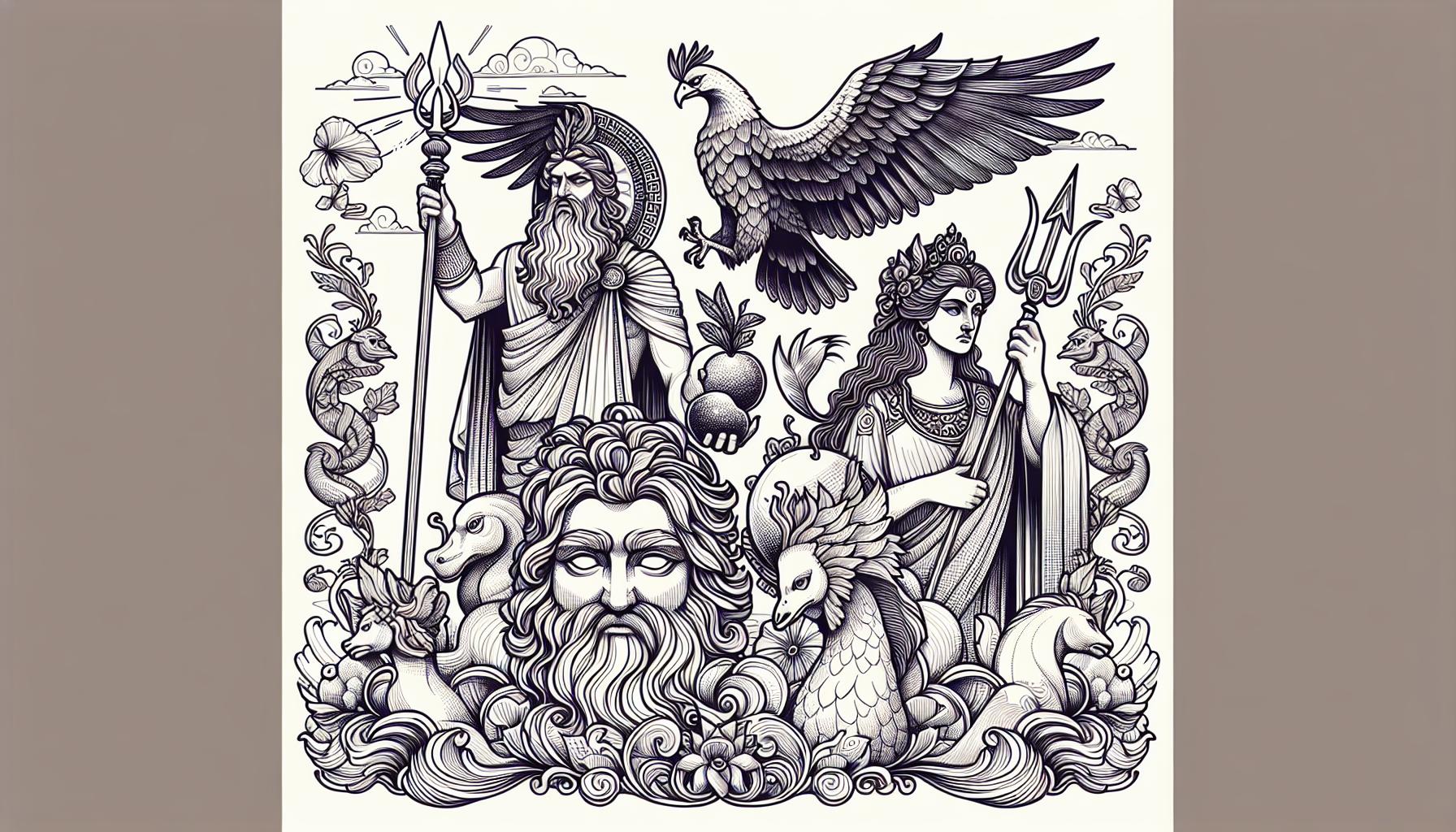
Greek mythology offers a rich world of divine personalities, each with distinct attributes and stories. These figures reflect the values and beliefs of ancient Greek society, providing profound insights into their world.
Zeus
Zeus, the king of the gods, rules over the sky and thunder. Representing power and authority, Zeus commands respect and fear among gods and mortals alike. Known for his numerous affairs, he fathered many other gods, including Athena, Apollo, and Hermes. His symbols include the thunderbolt, eagle, and oak tree.
Hera
Hera, Zeus’s wife and sister, stands as the goddess of marriage and family. Protecting women and presiding over weddings, Hera embodies the sanctity of marital union. Although often depicted as jealous and vengeful due to Zeus’s infidelities, she also represents loyalty and commitment. Her symbols are the peacock, cow, and pomegranate.
Poseidon
Poseidon, the god of the sea, controls oceans, storms, and earthquakes. As one of the most powerful Olympian gods, he wields a trident and rides chariots pulled by sea horses. Ships and sailors often sought his favor for safe passage. Known for his volatile temper, Poseidon could create massive storms or calm the seas at will.
Norse Mythological Figures
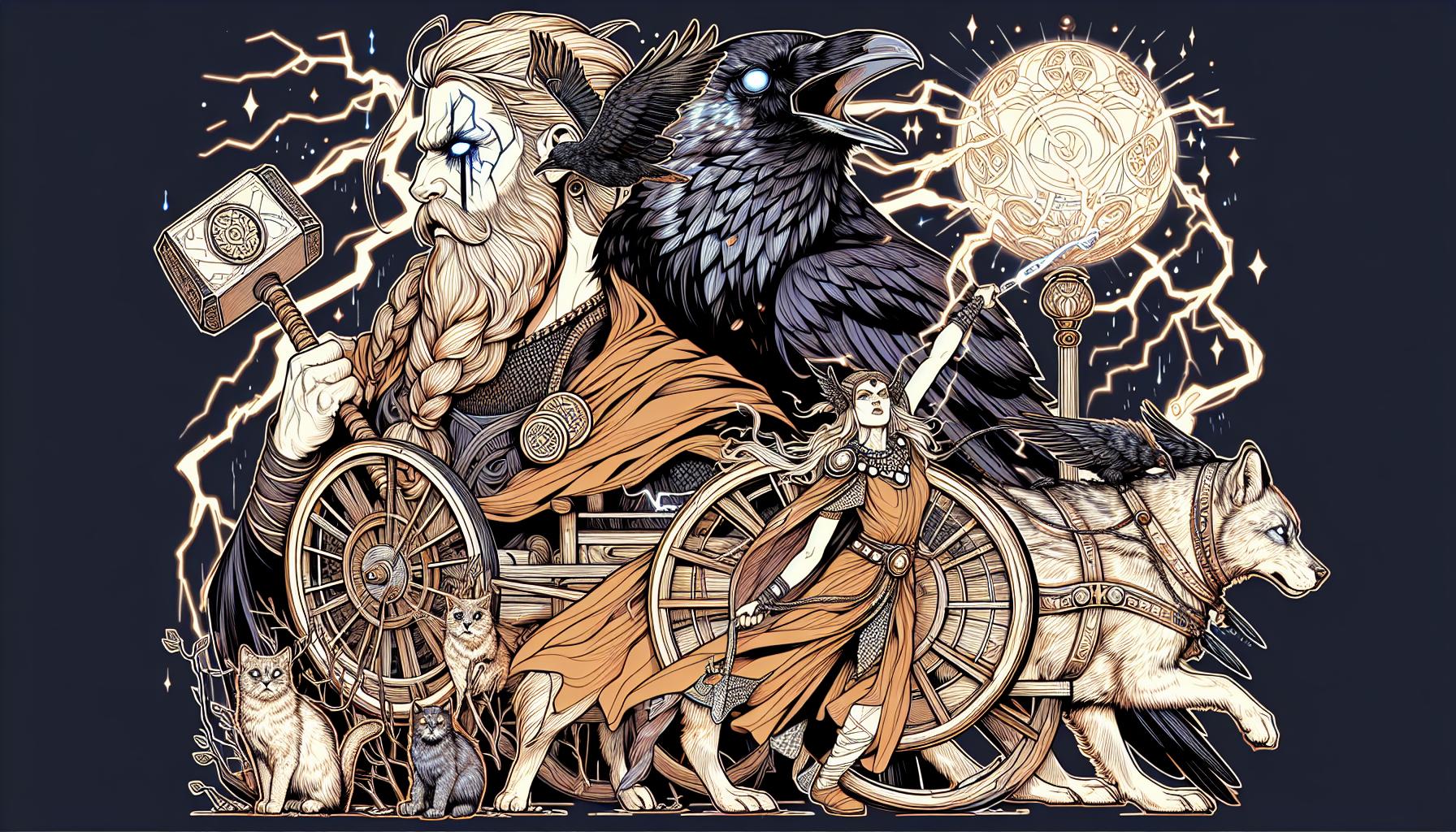
Norse mythology, rich in tales of gods and goddesses, reflects the values and beliefs of ancient Norse society. These mythological figures represent various aspects of existence and human experience.
Odin
Odin, chief of the Æsir, symbolizes wisdom, war, and death. Known as the All-Father, he seeks knowledge, often venturing into dangerous realms. Odin sacrifices his eye for wisdom at Mímir’s well, showcasing his relentless pursuit of understanding. His association with ravens Huginn and Muninn reflects his omniscience.
Thor
Thor, Odin’s son, embodies strength and protection. Wielding the mighty hammer Mjölnir, he defends Asgard from giants and monsters. As the god of thunder and lightning, Thor controls weather and crops. His adventures, like defeating the serpent Jörmungandr, emphasize courage and heroism.
Freyja
Freyja, a Vanir goddess, personifies love, fertility, and war. She rides a chariot pulled by cats and possesses the Brísingamen necklace. Freyja’s beauty and magic influence human lives. Her tears of gold symbolize both sorrow and preciousness, highlighting the duality of existence.
In essence, these Norse figures offer profound insights into ancient Norse culture, linking cosmic functions and moral beliefs through their captivating stories.
Hindu Mythological Figures
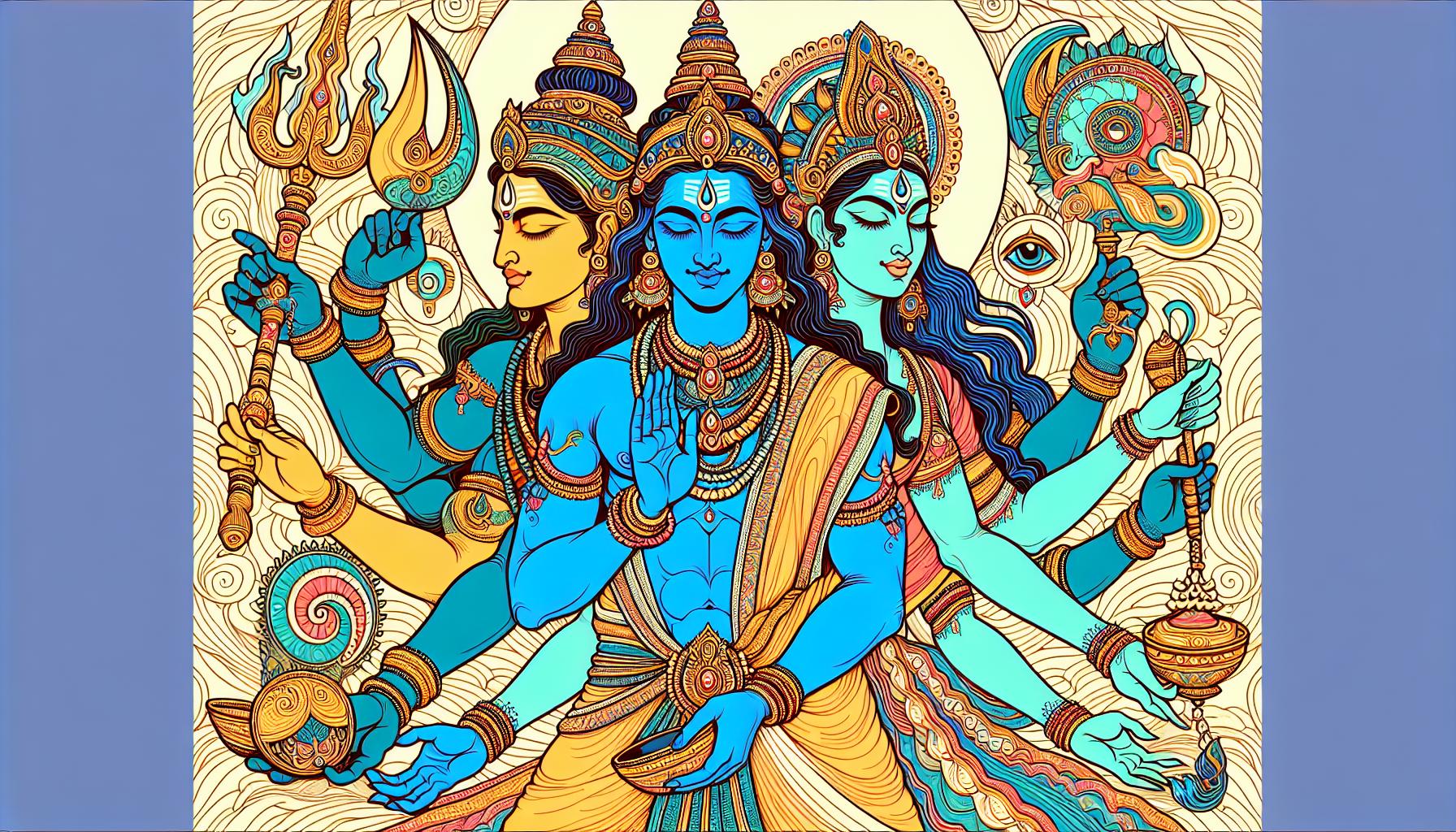
Hindu mythology features a rich world of divine personalities, each embodying various aspects of existence, spirituality, and morality. Let’s explore three prominent figures.
Vishnu
Vishnu, known as the Preserver, is a member of the Trimurti in Hinduism. He sustains the cosmos, which is his primary role. Vishnu’s ten avatars, including Rama and Krishna – An Incarnation of Vishnu, descend to restore balance between good and evil. The Bhagavad Gita and the Ramayana – Epic of Hinduism narrate his exploits and teachings.
Shiva
Shiva, nicknamed the Destroyer, is another member of the Trimurti. He destroys the universe to pave the way for renewal and regeneration. Depicted with a third eye and a crescent moon, Shiva’s dance, the Tandava, represents cosmic cycles of creation and destruction. Puranic texts like the Shiva Purana investigate deep into his mythology.
Parvati – The Consort of Shiva
Parvati, the goddess of love, fertility, and devotion, is Shiva’s consort. Mother of Ganesha and Kartikeya, Parvati undertook severe penance to marry Shiva. She embodies Shakti, the feminine energy, and her narratives, found in texts like the Devi Bhagavata Purana, highlight themes of devotion and spiritual strength.
Egyptian Mythological Figures
Egyptian mythology is rich with divine personalities who shaped the ancient Egyptian worldview. These figures include gods and goddesses who influenced daily life and cosmic order.
Ra
Ra, the sun god, holds a central position in Egyptian mythology. Represented with a hawk head and a sun disk, he travels through the sky during the day and the underworld at night. Ra’s journey symbolizes the cycle of life, death, and rebirth. The Pyramid Texts, dating back to the Old Kingdom, detail his adventures and battles against Apophis, the chaos serpent.
Isis
Isis, the goddess of magic and motherhood, showcases Egyptian divine femininity. Depicted with a throne-shaped headdress, she is renowned for her protective and nurturing nature. Her role in resurrecting Osiris and conceiving Horus highlights her powers. Texts like the “Hymn to Isis” celebrate her intelligence and prowess in the use of magical spells to overcome adversity.
Osiris
Osiris, the god of the afterlife, represents death and resurrection. Often shown with green skin and wearing the Atef crown, he presides over the Duat, the Egyptian underworld. As detailed in the “Pyramid Texts” and “Book of the Dead,” Osiris’s death and rebirth provide a narrative of transformation and eternal life, influencing funerary practices and beliefs in the afterlife.
These figures, with their intricate stories and depictions, reflect the profound spiritual and cultural beliefs of ancient Egypt, offering a window into their understanding of life, death, and the divine.
Common Themes And Differences
Mythological divine personalities from different cultures exhibit common themes, yet also display notable differences. Hindu and Egyptian myths, for example, both include gods and goddesses responsible for creation, destruction, and the afterlife.
Creation And Destruction
Among Hindu deities, Vishnu and Shiva represent creation and destruction, respectively. Vishnu sustains the universe, while Shiva’s role is to dissolve it, paving the way for renewal. In Egyptian mythology, Ra, the sun god, carries the creation theme. Ra’s cycle of life, death, and rebirth signifies the eternal nature of existence.
Afterlife And Resurrection
The afterlife holds significant importance in both mythologies. Osiris in Egyptian mythology governs the afterlife, symbolizing resurrection and eternal life. Texts like the “Book of the Dead” detail the journey after death. In Hindu beliefs, the concept of reincarnation is central. Figures like Yama, the god of death, ensure the soul’s transition through various life cycles.
Attributes And Symbolism
Divine attributes and symbolism vary between cultures. Isis, the Egyptian goddess of motherhood and magic, symbolizes nurturing and protection. Her imagery often includes the ankh and throne. In Hinduism, Parvati represents fertility and devotion. Iconography shows her with a lotus, highlighting purity and divine beauty.
Cultural Impact
Both mythologies influence their respective cultures deeply. Hindu rituals and festivals often center around deities like Vishnu and Parvati. Egyptian practices, documented in texts, show extensive rituals dedicated to gods like Osiris. These practices reinforce cultural values and spiritual beliefs.
Gender Roles
Gender roles in divine personalities also show intriguing differences. Hindu mythology frequently features powerful goddesses like Parvati and Durga, emphasizing female strength. Egyptian mythology highlights the importance of goddesses like Isis, who embodies both maternal and magical qualities. These roles reflect the socio-religious context of each culture.
Conclusion
Exploring mythological divine personalities reveals the rich world of beliefs and values that shape cultures. These deities embody cosmic principles and human aspirations, offering insight into the ancient world’s understanding of life, death, and the universe. By examining figures like Vishnu, Shiva, Ra, and Isis, we see how mythology serves as a bridge connecting the spiritual and material realms.
The parallels and contrasts between Hindu and Egyptian mythologies highlight universal themes and unique cultural expressions. These stories continue to inspire and influence modern practices, reflecting their enduring significance. Understanding these divine personalities enriches our appreciation of the diverse ways humanity seeks to comprehend the mysteries of existence.
Sources & further reading
These themes are explored in greater depth across the following authoritative resources:
- Britannica, Asura
- Britannica, Naga
- Mythopedia, Hindu Mythology
- Internet Sacred Text Archive, Mahabharata
- Wendy Doniger, Hindu Myths (Penguin Classics, 1975)
External resources for further reading. Apam Napat is not affiliated with these publishers; citation does not imply endorsement.
Frequently asked questions
What are mythological divine personalities?
Who is Zeus in Greek mythology?
Who is Shiva in Hindu mythology?
Who is Athena in Greek mythology?
Who is Poseidon?
Based on the classical texts of Hindu mythology, see our sources.