

The Upanishads teach that understanding this interconnectedness can lead to a more balanced and fulfilling life. By recognizing that our actions ripple through the universe, we can cultivate a sense of responsibility and compassion. This ancient wisdom feels incredibly relevant in today’s rapid world, where the quest for balance and harmony often gets overshadowed by daily chaos.
Understanding Upanishadic Universal Harmony
The Upanishads highlight the profound concept of universal harmony, a principle intertwined with the essence of existence itself. This section delves deeper into the historical background and core philosophies of these ancient texts.
Historical Background of the Upanishads
The Upanishads, written around 700-400 BCE, bridge the transition from Vedic ritualism to new religious ideas and institutions. Positioned as the final part of the Vedas, they are revered as “Vedanta” or “the conclusion of the Vedas”. These Sanskrit texts mark a significant evolution from the early Vedic hymns, which focused primarily on rituals, to a more profound exploration of meditation, philosophy, and consciousness. This shift underscores the human try to comprehend deeper ontological knowledge, reflecting a timeless quest for understanding beyond the material world.
Core Philosophies of the Upanishads
The Upanishads center on the interconnectedness of all life and the universe, encapsulated in the concept of universal harmony. This harmony is rooted in the idea of Brahman – The Supreme Truth, the single, unifying principle underlying all diversity. Brahman resides in the Atman – The Soul, the unchanging core of the individual. By recognizing this fundamental unity, the Upanishads teach that one can cultivate a sense of responsibility and compassion, leading to a balanced and fulfilling life. This alignment with universal principles provides a framework for harmony, transcending individual pursuits and embracing a collective, cosmic vision.
Key Concepts of Universal Harmony
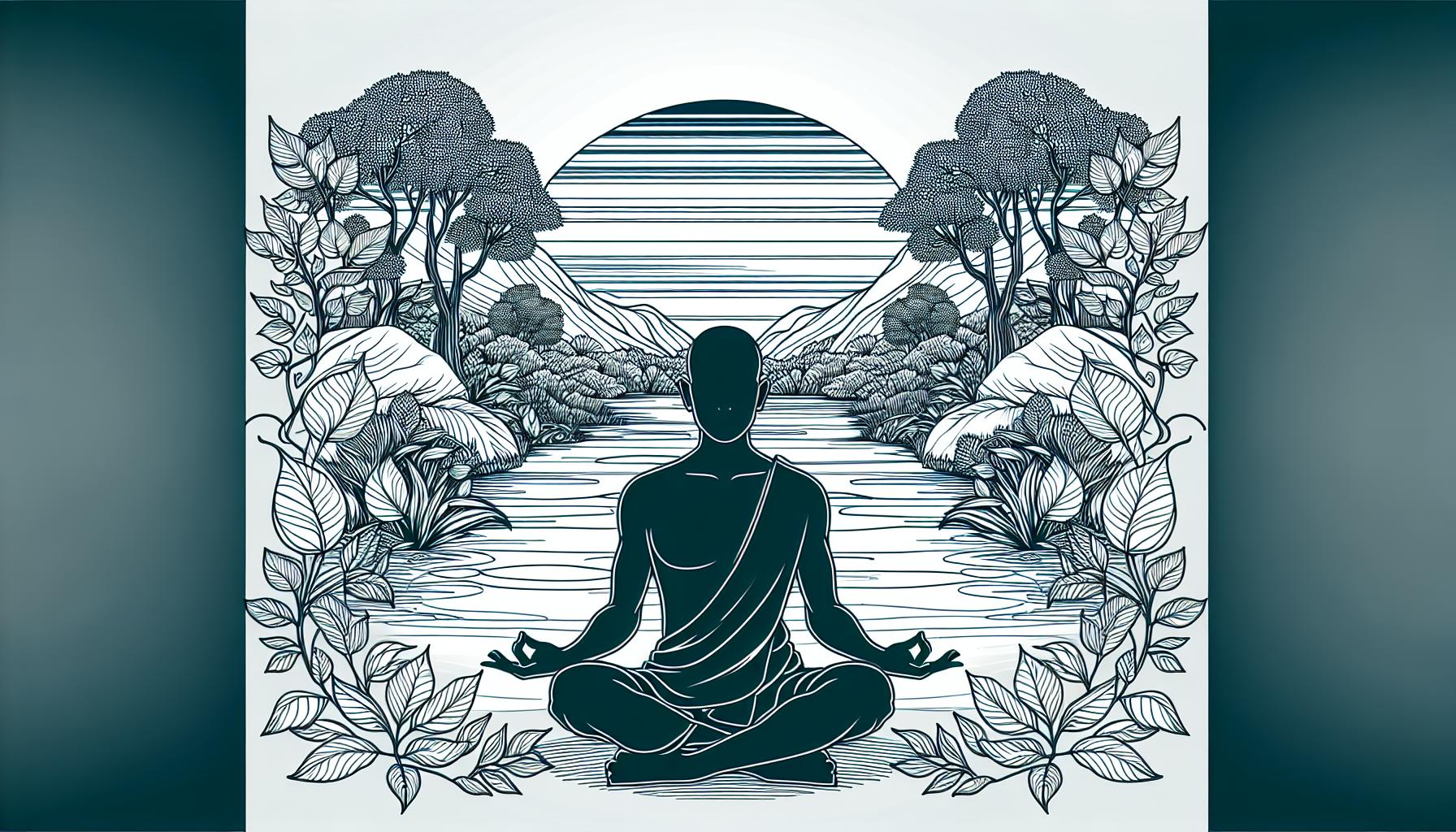
In Upanishadic philosophy, several fundamental concepts underline the theme of universal harmony. These are Brahman, Atman, and Karma.
The Concept of Brahman
Brahman is the ultimate reality and the supreme, unchanging force behind all existence. It’s seen as the source of all creation and embodies the totality of the universe. As a central metaphysical concept in Hindu philosophy, Brahman addresses questions of what is eventually real. It’s present in all beings, both living and non-living, and forms the essence of the cosmos and human life. This idea fosters a sense of unity and interconnectedness, reinforcing the notion that all things are manifestations of the same divine reality.
The Atman and Its Connection to Harmony
In Upanishadic thought, Atman represents the universal self, the eternal core within each individual. This self is identical with Brahman, signifying that every being shares in this ultimate reality. Through the realization of Atman, individuals can attain moksha, or liberation from the cycle of birth and death. Recognizing the Atman within oneself cultivates a deeper sense of inner peace and connection with others, emphasizing the unity that pervades all existence.
Karma and Its Role in Harmony
Karma represents the law of cause and effect governing all actions. Each action has consequences, and these consequences shape the future, contributing to harmonious or disharmonious outcomes. The principle of Karma encourages ethical behavior and mindfulness, ensuring that actions sustain balance and harmony within the universe. By understanding and embracing Karma, individuals align their actions with universal principles, promoting a balanced and harmonious existence.
Practical Implications of Upanishadic Harmony
The Upanishads not only provide philosophical insights but also offer practical implications for modern life. Adopting these teachings can profoundly impact personal, societal, and environmental realms.
Personal Development and Inner Peace
Upanishadic teachings emphasize self-realization and mindfulness. Self-reflection and introspection are crucial for understanding one’s true nature. This leads to inner peace, contentment, and a deeper connection with oneself and others.
The Upanishads also highlight overcoming attachments. True happiness doesn’t lie in material possessions but in finding contentment within. Letting go of attachments results in lasting peace and freedom from suffering.
Societal Impacts and Communal Living
Upanishadic principles encourage compassion and ethical behavior, which can significantly affect societal well-being. When individuals act compassionately, communities thrive as mutual respect and understanding foster social harmony.
The emphasis on Karma, the law of cause and effect, promotes responsibility in actions. This mindfulness not only benefits individuals but also improves communal interactions and communal living standards.
Environmental Harmony
The Upanishads teach a holistic view of the universe, where every element is interconnected. Recognizing this fundamental unity can foster a greater respect for nature. By understanding the impact of our actions on the environment, we become more mindful of sustainable practices.
Adopting an eco-conscious mindset rooted in Upanishadic teachings can lead to more harmonious interactions with our environment. This perspective encourages the protection and preservation of natural resources, contributing to overall environmental harmony.
Comparative Analysis with Other Philosophies
Examining Upanishadic universal harmony through comparative analysis demonstrates its deep resonance with various philosophical traditions. Both Eastern and Western philosophies share interesting commonalities and differences when juxtaposed with the Upanishadic vision of interconnectedness.
Similarities with Eastern Philosophies
Buddhism: Upanishadic harmony parallels key Buddhist teachings. Both philosophies stress interconnectedness; Upanishadic texts advocate unity between Atman and Brahman, while Buddhism emphasizes dependent co-arising (pratityasamutpada). For instance, the Buddhist doctrine suggests all phenomena arise interdependently, mirroring the Upanishadic idea of universal unity.
Taoism: Taoist philosophy, particularly in the Tao Te Ching, aligns closely with Upanishadic ideals. Both traditions see harmony with a greater force as essential. Taoism encourages alignment with the Tao’s natural order, akin to the Upanishadic pursuit of unity with Brahman. Each philosophy advocates living in sync with the cyclical nature of existence to achieve balance and peace.
Comparisons with Western Philosophies
Greek Philosophy: The Upanishadic emphasis on ultimate reality (Brahman) shares similarities with Platonic ideas. Plato’s concept of the “Forms” suggests an ultimate truth behind visible reality, resembling the Upanishadic quest for understanding Brahman as the ultimate unifying principle of the universe.
Christian Mysticism: Upanishadic universal harmony also finds echoes in Christian mysticism. Mystics like Meister Eckhart speak of unity with God, a theme paralleling the Upanishadic unity between Atman and Brahman. The pursuit of inner peace and ethical behavior advocated in both philosophies highlights a shared commitment to spiritual elevation and moral integrity.
Recognizing these connections underscores the universal appeal and enduring relevance of Upanishadic teachings across diverse philosophical traditions.
Modern Relevance of Upanishadic Harmony
The principles of the Upanishads, with their focus on universal harmony, hold significant relevance in today’s rapid world.
Application in Contemporary Life
The Upanishads offer practical wisdom for contemporary life. They emphasize the unity of self and the Absolute, encouraging individuals to seek harmony within and with their surroundings. By incorporating these teachings, people can foster inner peace and balance amidst daily challenges.
- Mindfulness Practices: Mindfulness techniques inspired by Upanishadic teachings help individuals stay present, reducing stress and enhancing mental well-being. Practices like meditation and reflection cultivate awareness and harmony.
- Ethical Behavior: Moral principles derived from the Upanishads encourage ethical living. Actions aligned with dharma promote societal well-being and individual integrity.
- Self-Realization: The pursuit of self-realization as advocated by the Upanishads empowers personal growth. By understanding the deeper connection between oneself and the cosmos, individuals attain a more meaningful life.
Influence on Modern Spiritual Movements
The teachings of the Upanishads significantly influence contemporary spiritual movements. Many spiritual practices and philosophies integrate Upanishadic concepts, emphasizing unity, universal love and inner transformation.
- New Age Spirituality: New Age movements often draw on Upanishadic ideas of interconnectedness and universal love. These movements advocate holistic well-being and spiritual awakening using principles from ancient texts.
- Yoga and Meditation: The global spread of yoga and meditation practices largely stems from Upanishadic philosophy. These practices promote physical health, mental clarity and spiritual depth.
- Eco-Spirituality: Upanishadic teachings foster an eco-conscious mindset. Recognizing the interconnectedness of all life forms inspires environmental stewardship and sustainable living practices.
By integrating Upanishadic wisdom, today’s spiritual movements retain a profound connection to ancient principles, enriching modern life with timeless truths.
Conclusion
Exploring the Upanishads reveals timeless wisdom that continues to resonate today. Their teachings on universal harmony offer profound insights into interconnectedness and spiritual growth. By integrating these principles into our daily lives, we can cultivate mindfulness, ethical behavior, and a deeper sense of self-realization. The enduring impact of Upanishadic thought on modern spiritual practices underscores its relevance and transformative potential. As we navigate the complexities of contemporary life, embracing these ancient teachings can guide us toward a more harmonious and fulfilling existence.
Sources & further reading
These themes are explored in greater depth across the following authoritative resources:
- Internet Sacred Text Archive, Rig Veda (Griffith translation)
- Internet Sacred Text Archive, Upanishads
- Britannica, Veda
- Britannica, Upanishad
- Patrick Olivelle, The Early Upanishads (Oxford University Press, 1998)
External resources for further reading. Apam Napat is not affiliated with these publishers; citation does not imply endorsement.
Frequently asked questions
What is universal harmony in the Upanishads?
When were the Upanishads composed?
What is Brahman in Upanishadic philosophy?
What is Atman and how does it relate to Brahman?
How do the Upanishads describe karma's role in harmony?
Based on the classical texts of Hindu mythology, see our sources.