
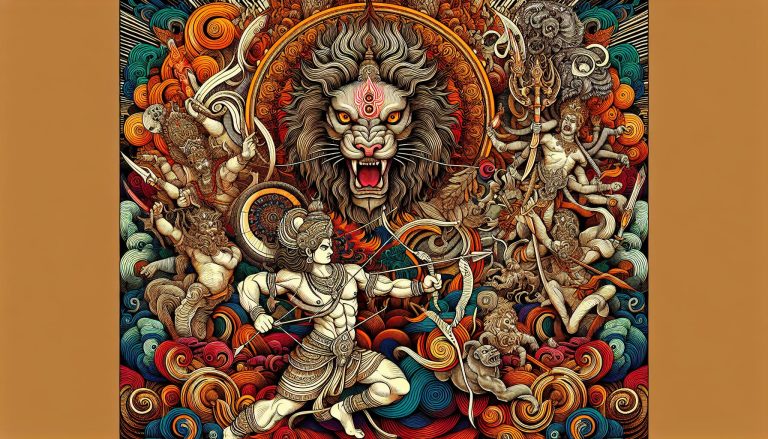
I’ve always been intrigued by how these avatars, from the fish Matsya to the warrior Kalki, reflect different aspects of human and cosmic evolution. Each incarnation not only addresses specific crises but also offers profound moral and philosophical lessons. Let’s explore the captivating stories and significance behind Vishnu’s avatars and understand why they continue to resonate deeply within Hindu culture and beyond.
Overview Of Vishnu’s Avatars
In Hindu mythology, Vishnu’s avatars are central to Vaishnavism, a major tradition within Hinduism. The Bhagavad Gita states that Vishnu appears in various forms to protect the good, destroy evil, and maintain Dharma. These incarnations are known as the Dashavatara, the ten principal avatars that descend to earth during critical times to restore cosmic order.
Matsya (Fish)
Matsya, the first avatar, saved sacred scriptures, known as the Vedas, from demons. By assuming the form of a fish, Vishnu ensured the preservation of crucial religious texts, maintaining knowledge and wisdom.
Kurma (Tortoise)
Kurma, the second avatar, supported Mount Mandara during the churning of the ocean of milk, a significant mythological event that produced the nectar of immortality. This avatar demonstrates Vishnu’s role as a stabilizer and supporter of cosmic endeavors.
Varaha (Boar)
Varaha, the third avatar, vanquished the giant demon Hiranyaksha. In this form, Vishnu raised the Earth from the cosmic ocean, symbolizing the rescue and preservation of the world from chaos.
Narasimha (Man-Lion)
Narasimha, the fourth avatar, protected his devotee Prahlad by killing the demon Hiranyakashipu. This incarnation depicts the balance of Vishnu’s fierce and protective nature, ensuring the triumph of devotion and righteousness.
The Dasavatara: Ten Primary Avatars
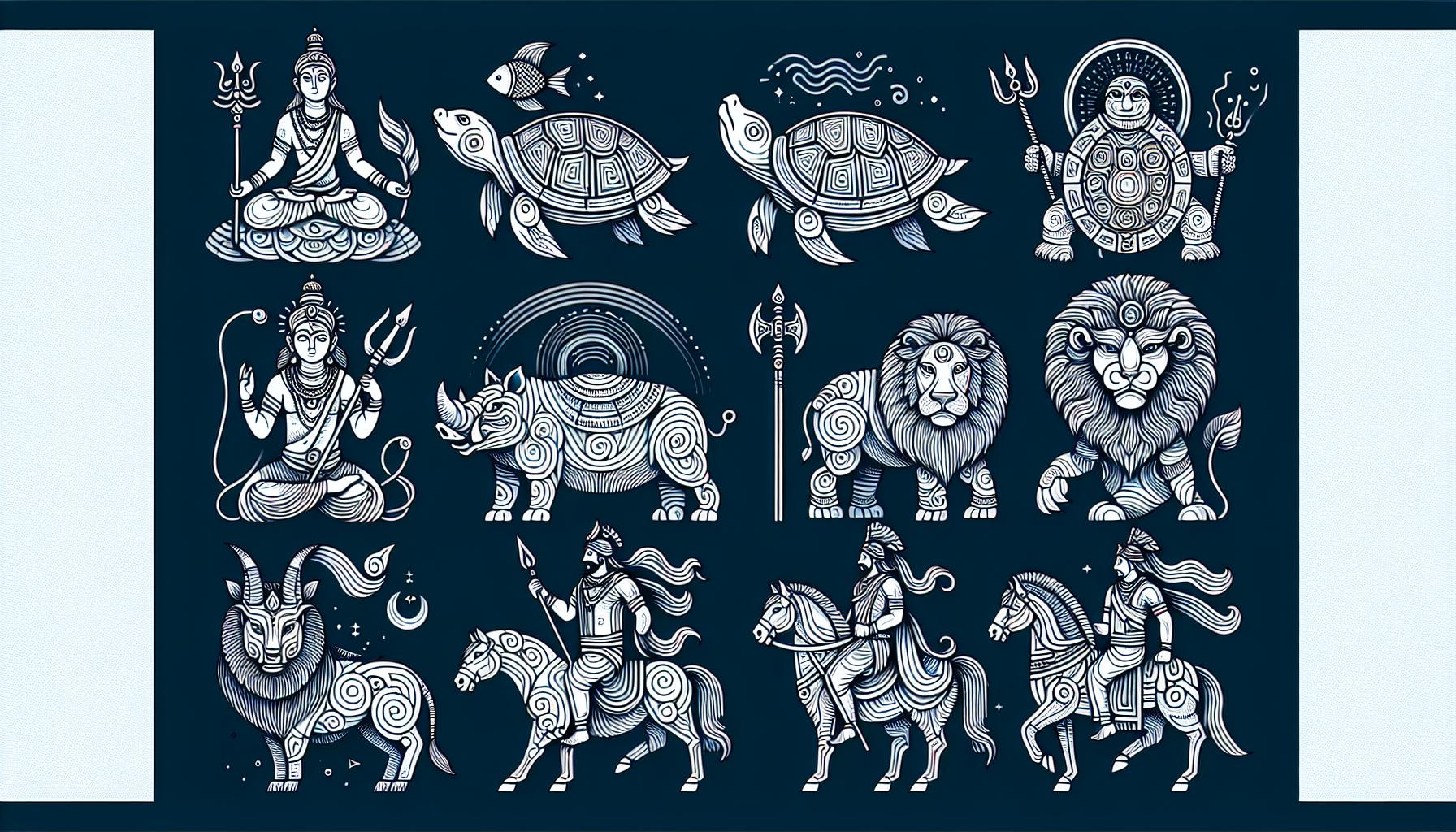
The Dasavatara represents Vishnu’s ten primary incarnations in Hindu mythology, each aimed at restoring cosmic order.
Matsya: The Fish
As Matsya, Vishnu appears to King Vaivasvata Manu, rescuing all life forms and sacred texts from a great flood. This avatar leads Manu to safety, preserving life’s continuity.
Kurma: The Tortoise
In the Kurma avatar, Vishnu takes the form of a tortoise to support the churning of the Ocean of Milk. By bearing Mount Mandara on his back, he helps gods and demons obtain Amrita, the nectar of immortality.
Varaha: The Boar
Vishnu’s Varaha avatar involves taking the form of a boar to rescue Earth, personified as the goddess Bhudevi, from the demon Hiranyaksha. The boar lifts Earth from the cosmic ocean, re-establishing order.
Narasimha: The Man-Lion
As Narasimha, Vishnu incarnates as a half-man, half-lion creature to defeat the demon Hiranyakashipu. This avatar is significant for protecting Prahlada, a devout follower, circumventing a boon that seemed impossible to overcome.
Vamana: The Dwarf
In the Vamana avatar, Vishnu appears as a dwarf Brahmin to subdue the demon king Bali. By asking for just three paces of land, Vamana grows to cosmic proportions, reclaiming the heavens and restoring celestial order.
Parashurama – Rama of the Axe: The Warrior
Vishnu’s Parashurama incarnation embodies a Brahmin warrior carrying an axe. Known for ridding the world of corrupt Kshatriya rulers, Parashurama’s actions highlight the importance of dharma and justice.
Rama: The Prince
The Rama avatar, central to the Ramayana, showcases Vishnu as a noble prince. Upholding righteousness, he rescues his wife, Sita, from the demon king Ravana, serving as an exemplar of virtue and duty.
Krishna: The Divine Statesman
Krishna’s avatar plays a crucial role in the Mahabharata – The Great Epic, where he serves as a charioteer and guide for Arjuna. His teachings, enshrined in the Bhagavad Gita, offer profound spiritual and philosophical insights.
Buddha: The Enlightened One
As Buddha, Vishnu emphasizes compassion and non-violence. This avatar highlights the need for ethical living and spiritual awakening, countering animal sacrifices and promoting inner peace.
Kalki: The Future Warrior
Kalki, the prophesied future avatar, is expected to appear at the end of the current age, Kali Yuga. As a warrior on a white horse, he will eradicate evil and restore righteousness, heralding a new era.
Other Prominent Avatars
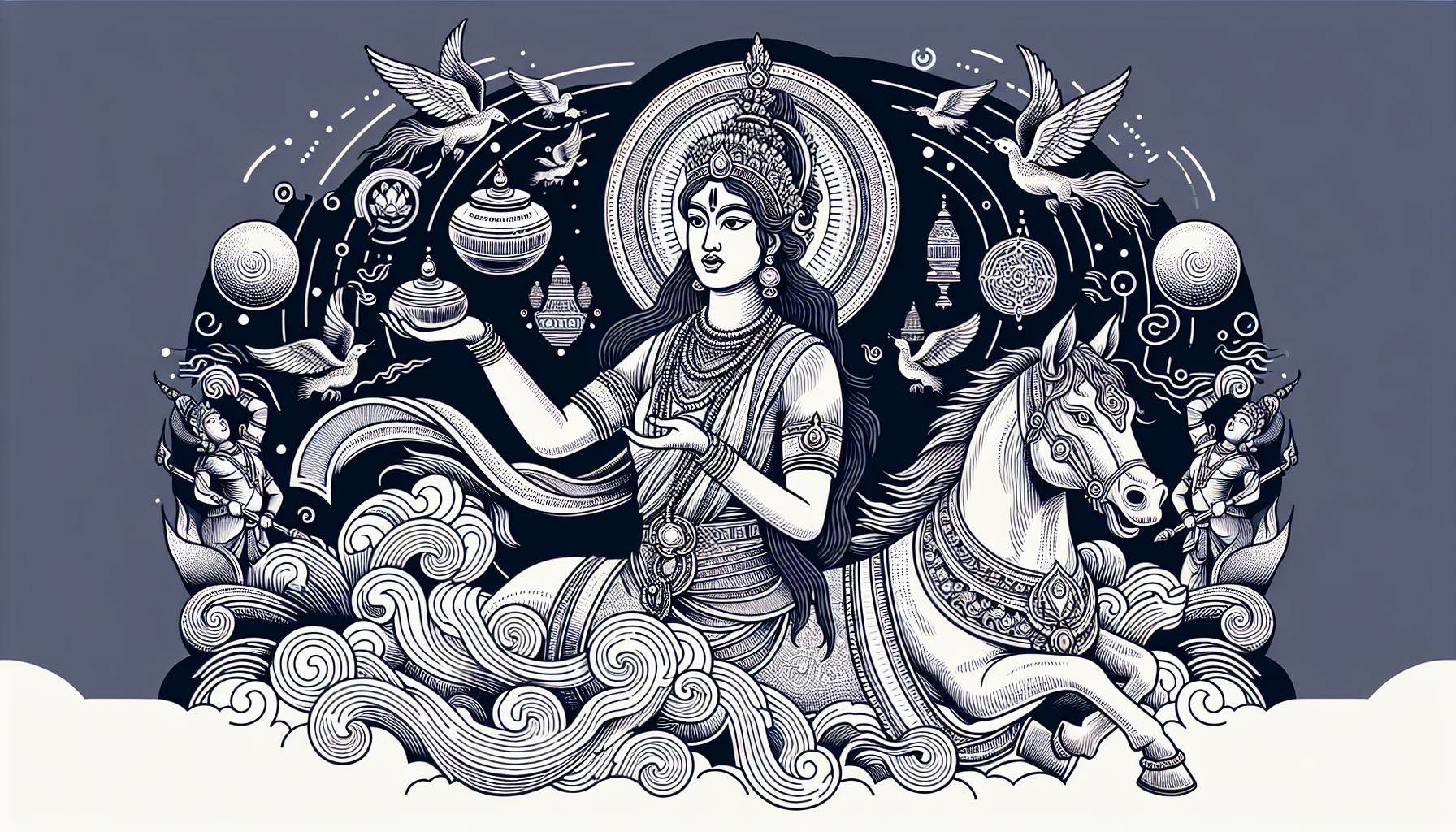
Several other avatars of Vishnu hold significant places in Hindu mythology. They each convey unique themes and morals. Here are two such fascinating avatars:
Mohini: The Enchantress
Mohini stands out as the only female avatar of Vishnu, embodying entrancing beauty, seduction, and illusion. Depicted as a captivating goddess, Mohini’s role is pivotal in the Mahabharata. She appears during the Churning of the Ocean, where she distributes the amrita, the elixir of immortality, to the devas (gods). By tricking the asuras (demons) and depriving them of the elixir, Mohini ensures the devas gain immortality and subsequently, victory.
Hayagriva: The Horse-Headed One
Hayagriva is another significant avatar of Vishnu, known for his horse-headed form. This unique manifestation symbolizes knowledge and wisdom, especially the sacred Vedas. Hayagriva plays a critical role in preserving these eternal scriptures, emphasizing the divine connection between knowledge and divinity. This avatar’s actions exemplify the importance of wisdom in maintaining cosmic balance and order.
Symbolism And Themes
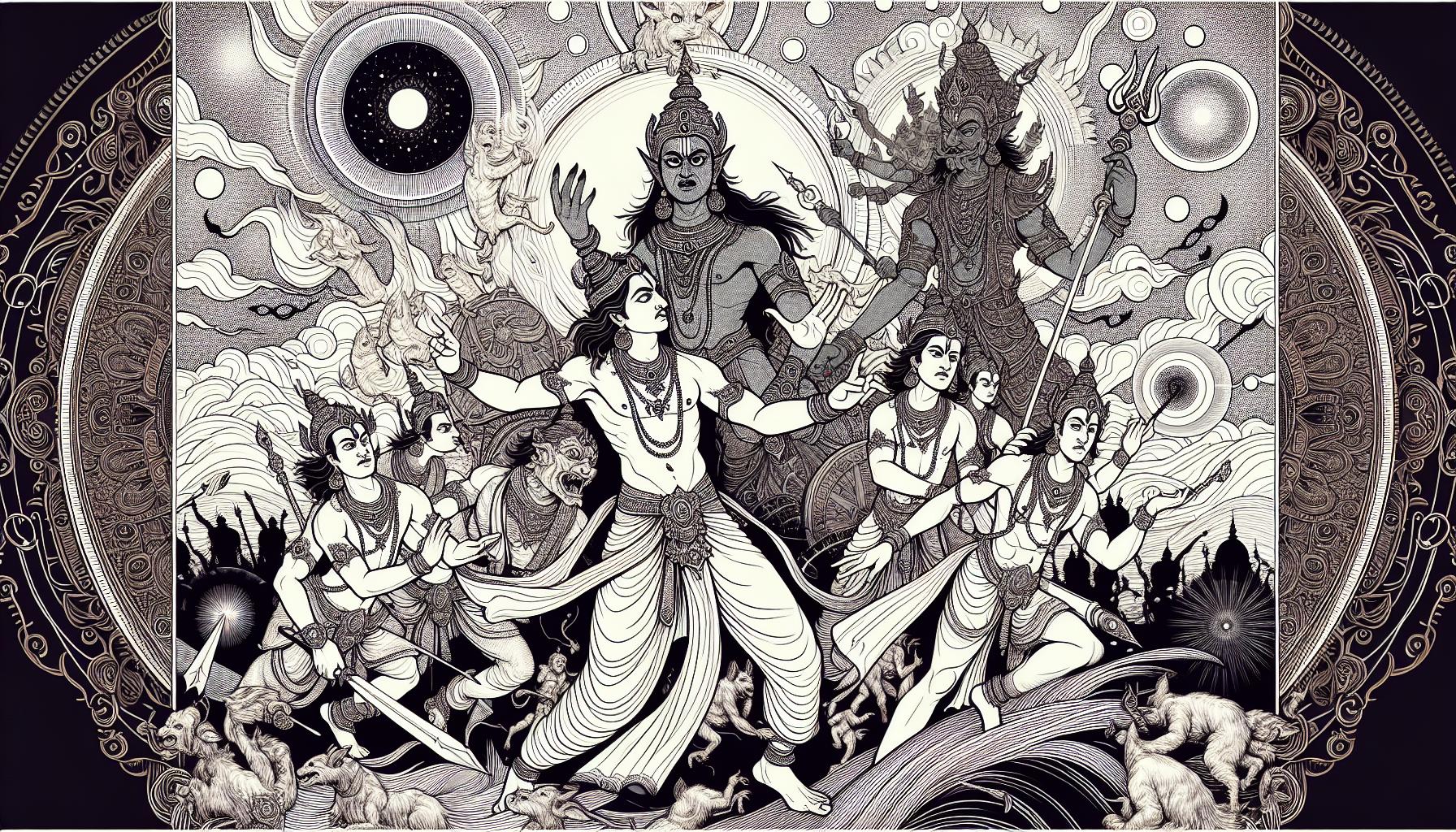
Vishnu’s avatars carry profound symbolism, embodying themes of cosmic balance and moral righteousness.
The Cycle Of Creation, Preservation, And Destruction
The universe constantly moves through cycles of creation, preservation, and destruction. Brahma creates the universe, Vishnu preserves it, and Shiva destroys it. These cycles highlight the impermanent nature of reality. Vishnu’s role emphasizes maintaining balance and order. Each avatar appears at a time of crisis, ensuring the world’s stability. For instance, in his Krishna avatar, Vishnu provides guidance in the Bhagavad Gita, promoting righteousness during the Mahabharata.
The Battle Between Good And Evil
Vishnu’s avatars symbolize the eternal struggle between good and evil. They descend to Earth to eradicate adharma (injustice) and restore dharma (righteousness). For example, the Narasimha avatar destroys the demon Hiranyakashipu, upholding divine justice and protecting his devotee Prahlad. Similarly, Rama’s battle against Ravana in the Ramayana exemplifies the triumph of virtue over vice. These narratives reinforce the moral tenet that good ultimately overcomes evil, a central theme in Hindu mythology.
Each avatar, through its unique narrative, contributes to these overarching themes, enriching the spiritual and moral framework of Hindu culture.
Cultural And Religious Significance
Vishnu’s avatars hold significant cultural and religious importance throughout Hindu mythology. These incarnations symbolize the divine intervention in human affairs, ensuring the preservation of cosmic order and righteousness.
Festivals Celebrating Vishnu’s Avatars
Numerous festivals celebrate Vishnu’s avatars, each highlighting a particular form and its associated narrative.
- Rama Navami: Celebrates the birth of Rama. Devotees recount the epic Ramayana, emphasizing Rama’s defeat of Ravana.
- Krishna Janmashtami: Marks Krishna’s birth, accompanied by reenactments of his life stories from the Mahabharata and Bhagavad Gita.
- Narasimha Jayanti: Commemorates the half-man, half-lion avatar’s victory over the demon Hiranyakashipu.
- Matsya Jayanti: Observes Matsya’s role in saving the Vedas during the great deluge.
These festivals foster unity, perpetuate traditional stories, and reinforce moral values.
Influence On Art And Literature
Vishnu’s avatars influence Hindu art and literature, depicting various forms and exploits.
- Art: Temples feature intricate carvings of avatars like Kurma and Varaha. Traditional paintings like Tanjore art often illustrate avatars’ stories.
- Literature: Epics like the Ramayana and Mahabharata narrate the deeds of Rama and Krishna, respectively. Puranic texts recount all ten primary avatars.
These artistic and literary works immortalize Vishnu’s avatars, embedding their tales into the cultural consciousness and spiritual teachings of Hindu society.
Conclusion
Vishnu’s avatars offer profound insights into the principles of cosmic order and moral righteousness. Each incarnation serves as a beacon of hope and virtue, guiding humanity through times of crisis. The tales of these avatars are not just mythological stories; they are rich sources of philosophical and ethical teachings.
Their influence extends beyond religious texts, permeating Hindu festivals, art, and literature. These avatars continue to inspire and shape the cultural and spiritual landscape of Hindu society. By understanding Vishnu’s avatars, we gain a deeper appreciation for the timeless values they embody and the enduring legacy they leave behind.
Sources & further reading
These themes are explored in greater depth across the following authoritative resources:
- Encyclopaedia Britannica, Hindu Mythology
- Internet Sacred Text Archive, Hinduism
- Mythopedia, Hindu Mythology
- Harvard Pluralism Project, Hindu Tradition
- Wendy Doniger, The Hindus: An Alternative History (Penguin, 2009), ISBN 978-0143116691
External resources for further reading. Apam Napat is not affiliated with these publishers; citation does not imply endorsement.
Based on the classical texts of Hindu mythology, see our sources.