
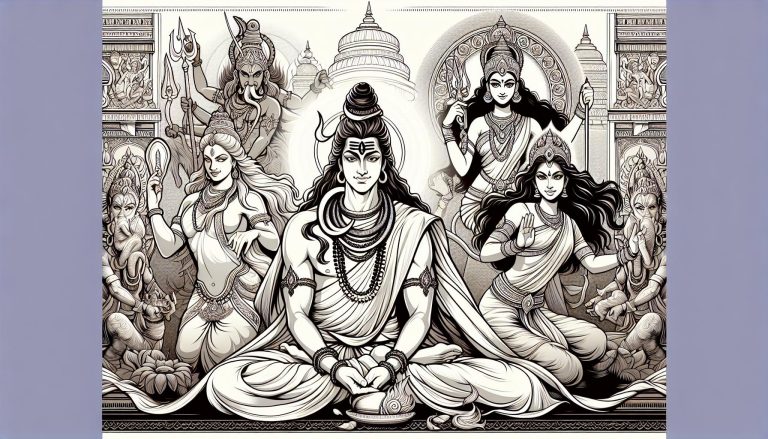
Exploring the stories and significance of Shiva’s consorts—Parvati – The Consort of Shiva, Durga, and Kali—offers a deeper understanding of their influence on devotees and their symbolic meanings. Each consort represents different facets of life and spirituality, from nurturing and protection to transformation and destruction. By understanding these relationships, we gain a richer perspective on the holistic nature of divinity in Hindu worship.
Historical Context of Shiva’s Consorts
Shiva’s consorts have been deeply embedded in Hindu mythology and worship practices for centuries. Records indicate their presence dating back to the Vedic period, showcasing their enduring significance.
Mythological Origins
Shiva’s consorts, including Parvati, Durga, Kali, and Shakti, represent various manifestations of the divine feminine energy. Parvati, often portrayed as Shiva’s gentle and nurturing wife, plays a crucial role in many myths. Durga, recognized for her power and warrior spirit, represents strength and protection. Kali, symbolizing destruction and transformation, contrasts sharply with Parvati’s gentleness. Shakti, embodying primal cosmic energy, underpins all these deities’ actions and attributes.
Cultural Significance
Shiva’s consorts hold immense cultural significance in Hindu rituals and celebrations. Devotees worship these goddesses during major festivals, such as Navaratri honoring Durga, and Kali Puja dedicated to Kali. Their stories and attributes influence various art forms, including classical Indian dance and temple architecture. The regional variations in their worship further illustrate the diverse interpretations and integration of these powerful feminine figures across India and Southeast Asia.
This section follows the article’s existing context by exploring the historical background, mythological origins, and cultural significance of Shiva’s consorts.
Parvati: The Gentle Goddess
Parvati, the consort of Lord Shiva, embodies love, fertility, and devotion in Hindu mythology. Viewed as the mother goddess of the universe, her nurturing and maternal qualities represent Shakti’s essence.
Symbols and Attributes
Parvati’s association with various symbols emphasizes her multifaceted nature:
- Lotus Flowers: Symbolize beauty, fertility, and spiritual growth.
- Tigers: Represent strength, courage, and protection.
- Elephants: Connect to fertility, wisdom, and good fortune.
- Tridents: Link to Shiva’s power and signify her connection to him.
- Pomegranates: Symbolize fertility and the womb.
Parvati in Modern Worship
In contemporary Hindu worship, Parvati is venerated as the goddess of marriage, family, and fertility. Devotees often pray to her for a harmonious marital life, the well-being of their families, and blessings of fertility.
Kali: The Fierce Protector
Kali, another of Shiva’s consorts, embodies the fiercer aspects of the divine feminine. Devotees revere her for her protective and transformative powers.
Characteristics of Kali
Kali is often depicted as a powerful, formidable figure. She has a dark complexion, wild hair, and a necklace made of skulls. Her tongue protrudes, symbolizing her bloodlust and ferocity. Though fearsome, she represents the destruction of evil and the end of delusion. Kali’s multiple arms wield various weapons, further emphasizing her role as a warrior goddess.
Worship Practices of Kali
Worship practices dedicated to Kali are intense and profound. Devotees offer flowers, incense, and food, particularly red items, symbolizing blood. Rituals frequently occur at night, underlining her association with darkness and the unknown. Devotees often visit cremation grounds to connect with the goddess, seeking her blessings for protection and transformation. Tantric rituals, involving mantra chanting and meditative practices, are also common in Kali’s worship, aiming to seek her divine power and guidance.
Durga: The Warrior Goddess
Durga, a principal form of the Goddess, known as Devi and Shakti, holds immense significance in Hindu worship. She was created to defeat the buffalo demon Mahishasura – Buffalo Demon by the combined energies of Brahma – The Creator, Vishnu – The Protector, Shiva, and other gods.
Stories and Legends
Durga features prominently in various stories and legends. One well-known tale describes her riding a lion and wielding weapons in her many arms. Each weapon was gifted by different gods to aid her in vanquishing Mahishasura, the buffalo demon. Durga’s fearsome appearance strikes terror into the hearts of enemies, while she embodies protection, motherhood, and strength for devotees.
Festivals and Celebrations
Durga is celebrated with great fervor during Durga Puja, one of northeastern India’s grand festivals. The festival honors her valor and divine power and includes vibrant ceremonies, artistic displays, and fervent prayers. It strengthens the bonds of community and devotion, highlighting her significant role in Hindu culture.
The Duality of Shiva’s Consorts
Shiva’s consorts embody dual aspects of the divine, reflecting both contrast and harmony. Their complementary roles are significant in understanding the balance of energies within Hindu mythology.
Complementary Aspects
Shiva’s consorts represent opposing yet complementary aspects. Parvati, symbolizing feminine energy, balances Shiva’s masculine force. This duality manifests in the form of Ardhanarishvara, where Shiva and Parvati merge into a single entity. Ardhanarishvara underscores the unity of male and female principles, illustrating their interdependence.
Shakti, another significant consort, also epitomizes this balance. Reborn as Parvati after her previous incarnation as Sati, she continues to complement Shiva’s energy. Their dynamic interactions highlight the importance of equilibrium within the cosmos.
Representations in Art and Literature
Art and literature frequently depict Shiva’s consorts, illustrating their diverse divine aspects. The Ardhanarishvara form is a celebrated representation, symbolizing the union of Shiva and Parvati. Many statues and paintings show Ardhanarishvara, reflecting the seamless integration of masculine and feminine traits.
Literary works, such as the Puranas, delve into the stories of Shiva and his consorts. These narratives often emphasize the power and significance of the divine feminine. From sculptures to scriptures, the portrayal of Shiva’s consorts continues to inspire devotion and reverence among followers.
Conclusion
Understanding Shiva’s consorts enriches our appreciation of Hindu mythology and spiritual practices. These goddesses embody the divine feminine in its many forms, offering a profound balance to Shiva’s masculine energy. Their stories and representations inspire devotion and highlight the intricate harmony within the divine. As we continue to explore these relationships, we gain deeper insights into the spiritual and cultural significance they hold.
Sources & further reading
These themes are explored in greater depth across the following authoritative resources:
- Encyclopaedia Britannica, Hindu Mythology
- Internet Sacred Text Archive, Hinduism
- Mythopedia, Hindu Mythology
- Harvard Pluralism Project, Hindu Tradition
- Wendy Doniger, The Hindus: An Alternative History (Penguin, 2009), ISBN 978-0143116691
External resources for further reading. Apam Napat is not affiliated with these publishers; citation does not imply endorsement.
Based on the classical texts of Hindu mythology, see our sources.