
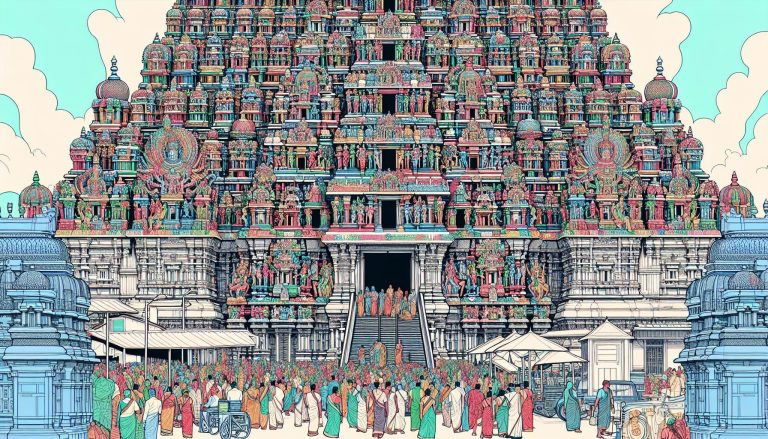
Each deity in a Hindu temple holds profound significance, embodying various aspects of the divine. From the fierce protector Kali to the benevolent Vishnu – The Protector, these gods and goddesses aren’t just idols; they’re living embodiments of faith and tradition. Understanding their roles and stories offers a deeper appreciation of the spiritual tapestry that defines Hinduism.
Significance Of Deities In Hindu Temples
Deities in Hindu temples embody core aspects of Hindu worship and spirituality. These deities represent various facets of life and the universe, reflecting the theology and cosmology of Hinduism. Each deity has unique attributes and stories, contributing to the rich tapestry of Hindu philosophy.
The temple’s design also carries symbolic meaning. Temples often symbolize the universe, with central structures embodying key cosmic principles. The inner sanctum, a small private space, facilitates personal worship and underscores the intimate nature of spiritual practices in Hinduism.
Puja, the ritual worship of deities, is integral to Hindu practice. During puja, devotees recite chants, make offerings, and perform ceremonies. These rituals, whether conducted at home or in a temple, serve to deepen the connection between the devotee and the divine, enhancing spiritual experience and devotion.
Major Hindu Deities
In Hindu temples, various deities feature prominently, each representing distinct aspects of the divine and playing a pivotal role in spiritual practices. Let’s explore some of the major deities revered in Hindu temples.
Vishnu
Vishnu, one of the principal deities of Hinduism, symbolizes preservation and the protector of the universe. Devotees often find temples dedicated to various avatars of Vishnu. Examples include Rama and Krishna – An Incarnation of Vishnu. Vishnu’s temples, such as the famous Tirupati Balaji, are among the most significant pilgrimage sites.
Shiva – The Destroyer
Shiva represents destruction and transformation in Hinduism, embodying the cycle of creation and dissolution. Temples dedicated to Shiva showcase his various forms, notably the Shiva Lingam. Renowned temples like Kashi Vishwanath and Kedarnath attract millions of devotees annually.
Devi
Devi, or the Divine Mother, embodies the feminine aspect of the divine and represents creation, sustenance, and destruction. Temples dedicated to Devi, like Vaishno Devi and Kamakshi Amman, are integral to Hindu worship. Devotees often seek her blessings for protection and prosperity.
Ganesha
Ganesha, the remover of obstacles and the deity of beginnings, is one of the most worshipped deities in Hinduism. His temples, such as the Siddhivinayak Temple in Mumbai, see large numbers of devotees. Ganesha is often worshipped at the start of new ventures to ensure success.
Hanuman
Hanuman, the monkey god and devotee of Rama, symbolizes strength, devotion, and perseverance. Temples dedicated to Hanuman, like the Hanuman Garhi in Ayodhya, play a crucial role in Hindu devotional practices. Devotees seek his blessings for courage and protection.
Regional Variations Of Deities
Hindu temples showcase a rich diversity in the deities worshipped across different regions. Local customs and traditions influence these variations.
North India
In North India, temples often focus on deities like Vishnu, Shiva, and Devi. Temples dedicated to Durga, like the Vaishno Devi Temple in Jammu and Kashmir, attract millions of pilgrims year-round. Vishnu worship sees prominence through temples such as the Badrinath Temple in Uttarakhand.
South India
South Indian temples emphasize elaborate architecture and iconography, focusing on deities like Murugan, Vishnu, and Shiva. The Meenakshi Amman Temple in Tamil Nadu celebrates Devi, while the Venkateswara Temple in Andhra Pradesh honors Vishnu. Murugan, revered especially in Tamil Nadu, has significant temples like the Palani Murugan Temple.
East India
In East India, Durga and Kali dominate the religious landscape. The Dakshineswar Kali Temple in West Bengal venerates Kali. Devotees throng Odisha’s Jagannath Temple, dedicated to a form of Vishnu, during the Rath Yatra festival. Assam celebrates Kamakhya, an aspect of Devi, at the Kamakhya Temple.
West India
West Indian temples predominantly worship deities like Shiva, Ganesha, and Devi. The Somnath Temple in Gujarat, a major Shiva shrine, attracts many devotees. Maharashtra’s Shree Siddhivinayak Temple honors Ganesha and is a significant pilgrimage site. Rajasthan’s Tanot Mata Temple, near the Indo-Pak border, celebrates Devi in her warrior form.
Rituals And Worship Practices
Rituals and worship practices are central to Hinduism, offering devotees a structured way to honor their deities. Temples provide a sacred space for these rituals, facilitating a connection with the divine.
Daily Rituals
Daily rituals in Hindu temples include various devotional acts centered around the deity. The most common form of worship is Puja, where devotees offer prayers, flowers, and other offerings. Typically conducted by a priest, puja can also be performed at home. Another critical ritual is Aarti, a ceremonial light offering that involves moving a lighted lamp in a circular motion before the deity’s idol. Temples often conduct Abhishekam, an anointing ceremony where the deity’s idol is bathed in various substances like milk, yogurt, and honey. These rituals are designed to honor the deity, purify the space, and bring peace and blessings to the devotees.
Special Festivals
Special festivals mark important dates on the Hindu calendar and involve elaborate rituals. Diwali, the Festival of Lights, celebrates the victory of light over darkness with significant temple events and large gatherings. Navaratri honors the goddess Durga with nine nights of music, dance, and prayers. During Shivaratri, devotees fast and conduct special prayers all night to honor Lord Shiva. These festivals often include intricate Alankarams, where the deity is adorned with elaborate decorations, symbolizing divine beauty and auspiciousness. Temples also organize Rath Yatras, processions where deities are paraded on chariots, allowing a broader community participation.
Devotee Participation
Devotee participation in rituals is crucial for establishing a personal connection with the deity. During temple visits, devotees often engage in Darshan, the act of seeing and being seen by the deity, which is believed to convey spiritual benefits. Many partake in Prasadam, consecrated food offered to the deity and then distributed to devotees. Bhajans and Kirtans, devotional songs and chants, create an atmosphere of collective worship and enhance the spiritual experience. Temples also organize Seva, volunteer opportunities for devotees to serve the temple, such as cleaning, cooking, or assisting in rituals. These activities foster community spirit and deepen the devotees’ spiritual engagement.
Impact On Cultural Heritage
Deities in Hindu temples serve as a vital link to the cultural heritage of Hinduism. They’re depicted in various forms and poses, each telling a specific story or conveying a particular meaning. For example, Devi seated on a lion advancing against a buffalo demon represents the universe’s affirmative forces and the triumph of divine power over wickedness. The embrace of male and female figures signifies the union of opposites and the eternal process of generation.
Hindu temple architecture reflects the cosmic structure, with the sanctum sanctorum symbolizing the Supreme Principle or Universal at the center. The exterior walls feature sculptures and carvings, including depictions of deities, mythological events, and auspicious motifs like foliage, water jars, and loving couples (mithunas). These carvings adorn the temple and serve as storytelling mediums that convey Hinduism’s principles.
Temples also act as cultural repositories by preserving ancient rituals and practices. Daily rituals like Puja, Aarti, and Abhishekam connect devotees with the divine and maintain traditions passed down through generations. Special festivals like Diwali and Navaratri involve elaborate rituals, including Alankarams and Rath Yatras, further enriching cultural heritage.
In various regions, temples honor different deities, reflecting local customs and landscapes. For instance, North Indian temples prominently feature Vishnu, Shiva, and Devi, while South Indian temples focus on Murugan, Vishnu, and Shiva. East India emphasizes Durga, Kali, and Vishnu, and West India worships Shiva, Ganesha, and Devi. This regional variation enhances cultural diversity within Hinduism.
Devotee participation through rituals like Darshan, Prasadam, Bhajans, and Seva fosters a personal connection with the divine and strengthens community spirit. Iconic temples like Vaishno Devi Temple and Meenakshi Amman Temple are not just religious sanctuaries but also cultural hubs where history, art, and spirituality intersect, preserving Hindu culture for future generations.
Modern Relevance Of Deities In Temples
Hindu temples continue to play a significant role in today’s society, maintaining their importance through the connection between devotees and deities. These sacred spaces act as cultural and spiritual hubs, where rituals and prayers unfold daily. Modern relevance extends beyond religious practices, integrating social, educational, and charitable activities within temple premises.
Preserving Cultural Identity
Devotional practices in temples help preserve cultural heritage. Festivals like Diwali and Navaratri, celebrated with grandeur in temples, keep traditions alive. Temples serve as educational centers for youth to learn about their heritage, language, and moral values through activities like religious classes and cultural programs.
Community Building
Deities in temples foster a sense of community among devotees. Congregational activities like Bhajans and Kirtans bring people together, promoting social cohesion. Community services, often organized by temple authorities, include health camps, food distribution, and educational support, reinforcing the temple’s role as a pivotal community center.
Spiritual Guidance
Temples provide spiritual guidance through teachings and discourses based on scriptures. Priests and spiritual leaders offer counsel, helping devotees navigate life challenges. The presence of deities, represented in form and essence, anchors individuals in faith, providing solace and inspiration.
Societal Contributions
Temples contribute to societal welfare through various initiatives. By organizing blood donation drives, cleanliness campaigns, and disaster relief efforts, temples embody the principle of service to humanity. These activities reflect the temple’s role in fostering altruism among devotees, extending divine principles into everyday life.
Economic Impact
The economic impact of temples is notable through tourism and local commerce. Iconic temples like Tirupati and Jagannath Puri attract millions of pilgrims annually, boosting local economies. Small businesses around temple areas thrive, supported by the influx of visitors seeking religious and cultural experiences.
In integrating these aspects, Hindu temples and their revered deities continue to hold a vital place in contemporary society, preserving ancient traditions while embracing modern-day relevance.
Conclusion
Hindu temples and their deities remain integral to both the spiritual and cultural fabric of society. They seamlessly blend ancient traditions with modern-day relevance, offering spaces for worship, community building, and cultural preservation. By participating in rituals and festivals, we not only honor our heritage but also find spiritual solace and communal support. These temples are more than just places of worship; they’re vibrant centers of learning, charity, and economic activity, enriching our lives in countless ways.
Sources & further reading
These themes are explored in greater depth across the following authoritative resources:
- Britannica, Hindu Temple Architecture
- Met Museum, Hinduism in the Arts
- Britannica, Iconography
- Stella Kramrisch, The Hindu Temple (Motilal Banarsidass, 1946)
- Heinrich Zimmer, Myths and Symbols in Indian Art and Civilization (Princeton University Press, 1946)
External resources for further reading. Apam Napat is not affiliated with these publishers; citation does not imply endorsement.
Based on the classical texts of Hindu mythology, see our sources.