
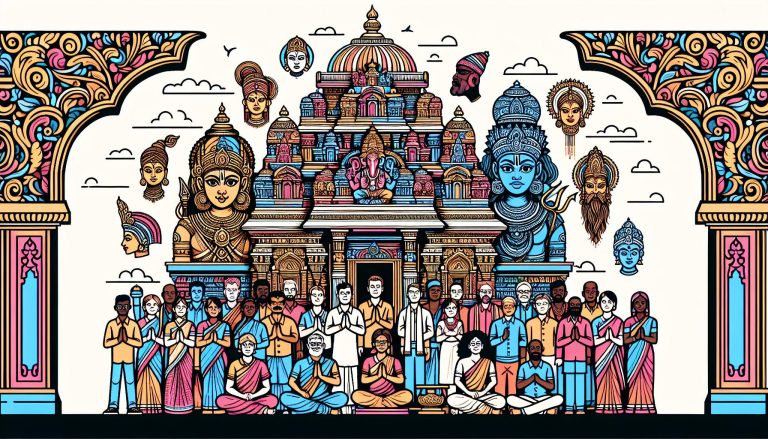
I’ve always been fascinated by the rich tapestry of stories surrounding Vishnu’s avatars. Each tale is not just a story but a profound lesson in morality, duty, and the eternal struggle between good and evil. Whether you’re a devout follower or a curious learner, understanding these avatars offers a glimpse into the spiritual and cultural essence of Hinduism.
Overview Of Vishnu’s Avatars
Vishnu’s avatars play a pivotal role in Hindu mythology, especially within Vaishnavism. These divine incarnations descend to Earth to restore Dharma and alleviate suffering by empowering the righteous and vanquishing evil. There are ten avatars in total, known as the Dashavatara, with nine already incarnated and one prophesied to appear in the future.
Purpose
The primary purpose of Vishnu’s avatars is to restore cosmic order and balance. Each avatar embodies specific traits and missions designed to establish righteousness and eliminate malevolence. By incarnating in various forms, Vishnu directly intervenes in mortal realms to guide humanity and protect creation.
Major Avatars
Krishna
Krishna, often depicted as a child or an intellectual adult, holds significant importance in Hindu texts like the Mahabharata – The Great Epic. Esteemed for his gentle nature and wisdom, Krishna is seen as the transcendental source of all existence. His actions and teachings continue to inspire devotion and philosophical discourse within Hinduism.
Rama
Rama, known for his valor and righteousness, is a central figure in the Ramayana – Epic of Hinduism. He exemplifies the ideal hero, defeating the demon king Ravana to rescue his wife, Sita. Rama’s story underscores themes of duty, honor, and moral integrity, offering profound lessons on leadership and justice.
Buddha
Buddha, widely recognized as the founder of Buddhism, is also considered an avatar of Vishnu. Revered for his profound wisdom and transformative teachings, Buddha’s incarnation emphasizes the importance of intellect and enlightenment in achieving spiritual growth. His legacy bridges Hinduism and Buddhism, highlighting the interconnectedness of these spiritual traditions.
The Ten Principal Avatars
Vishnu’s avatars, known as the Dashavatara, play a central role in Hindu mythology. Let’s explore the ten principal avatars and their significance.
Matsya: The Fish Avatar
Matsya is Vishnu’s first avatar, depicted as a giant fish or with Vishnu’s torso connected to a fish’s rear half. Matsya rescued Manu, the first man, from a great deluge and saved the Vedas from the demon Hayagriva (Hindu myth).
Kurma: The Tortoise Avatar
Kurma is Vishnu’s second avatar, depicted as a tortoise. He served as the pivot for the churning rod in the story of the churning of the ocean of milk, aiding the gods in obtaining the nectar of immortality.
Varaha: The Boar Avatar
Varaha, the third avatar, appears as a boar. He rescued the earth from the demon Hiranyaksha, lifting it from the cosmic ocean and restoring it to stability.
Narasimha: The Lion-Man Avatar
Narasimha, depicted as half-lion and half-man, is the fourth avatar of Vishnu. He emerged to protect his devotee Prahlad and vanquish the demon king Hiranyakashipu, symbolizing the triumph of devotion and righteousness.
Vamana: The Dwarf Avatar
Vamana, Vishnu’s fifth avatar, is presented as a dwarf Brahmin. He subdued the demon king Bali by taking three giant strides, reclaiming the heavens and Earth, and demonstrating the power of divine will.
Parashurama – Rama of the Axe: The Warrior With An Axe
Parashurama, Vishnu’s sixth avatar, known for wielding an axe, is a warrior sage. He eradicated corrupt Kshatriya warriors, highlighting the preservation of dharma (order and duty) and justice.
Rama: The Prince Of Ayodhya
Rama, the seventh avatar, is the prince of Ayodhya. Revered for his valor and adherence to dharma, he defeated the demon king Ravana, embodying ideal kingship and moral integrity.
Krishna: The Divine Statesman
Krishna, the eighth avatar, is a divine statesman and charioteer. Known for his wisdom in the Bhagavad Gita, he guided Arjuna during the Mahabharata war and symbolized the path of devotion and righteousness.
Buddha: The Enlightened One
Buddha, recognized as Vishnu’s ninth avatar, is the enlightened one. His teachings emphasize intellect, spiritual enlightenment, and compassion, bridging Hinduism and Buddhism.
Kalki: The Future Warrior Avatar
Kalki, the tenth and future avatar, is envisioned as a warrior. He is prophesied to end the current age of darkness (Kali Yuga) and restore cosmic order, bringing an era of righteousness and truth.
Symbolism In Vishnu’s Avatars
Vishnu’s avatars represent essential aspects of Hindu belief, each embodying a particular power or lesson significant to maintaining cosmic order and moral integrity.
Protection and Preservation
Vishnu’s avatars often emphasize protection and preservation principles. For instance, Matsya the Fish saves life by protecting the sacred scriptures from the deluge, ensuring knowledge endures. Kurma the Tortoise, with his support during the churning of the ocean, underscores the sustenance of the universe, providing stability while cosmic forces are balanced. Varaha the Boar rescues Earth from the depths of cosmic waters, protecting it from destruction and restoring land for all creatures. Narasimha the Half-Man, Half-Lion avatar, obliterates evil by defeating Hiranyakashipu, demonstrating the divine power to protect the righteous in their direst moments.
Moral And Ethical Lessons
Each avatar of Vishnu carries profound moral and ethical teachings. Vamana the Dwarf restores cosmic balance, illustrating humility and the importance of dharma by subduing the demon king Bali. This act teaches that righteousness transcends physical stature and power. By focusing on specific deeds, these avatars showcase virtues like selflessness, courage, humility, and justice, guiding humanity in leading a life aligned with ethical principles.
Influence On Hindu Culture
Vishnu’s avatars hold a significant influence on Hindu culture, permeating various aspects of daily life, spiritual practices, and social rituals.
Temples and Sacred Sites
Temples dedicated to Vishnu and his avatars dot the Indian landscape. In South India, the Sri Ranganathaswamy Temple in Tamil Nadu honors Vishnu himself, drawing millions of pilgrims each year. The Jagannath Temple in Puri, Odisha, venerates Krishna, an avatar known for his teachings in the Bhagavad Gita. Vishnu’s various forms are celebrated through sculptures, paintings, and other artistic expressions within these sacred spaces. Devotees gather at these temples to participate in rituals and seek blessings.
Festivals and Rituals
Festivals and rituals dedicated to Vishnu’s avatars are pivotal in Hindu culture. Janmashtami celebrates the birth of Krishna, characterized by fasting, singing, and reenactments of his divine pastimes. Ramanavami marks the birth of Rama, where devotees read the Ramayana and enact scenes from his life. Vishnu’s avatars also inspire regional festivals; for example, Onam in Kerala honors Vamana. These festivals help inculcate values such as devotion, humility, and morality through community participation and storytelling.
Conclusion
Understanding Vishnu’s avatars offers profound insights into the spiritual and cultural fabric of Hinduism. These divine incarnations serve as timeless guides for moral integrity and wisdom, influencing both personal and communal practices. The rich tapestry of festivals and rituals dedicated to Vishnu’s avatars not only celebrates their legacy but also reinforces essential values within the community. By exploring these avatars, we gain a deeper appreciation of their role in maintaining cosmic balance and guiding humanity toward a virtuous life.
Sources & further reading
These themes are explored in greater depth across the following authoritative resources:
- Encyclopaedia Britannica, Hindu Mythology
- Internet Sacred Text Archive, Hinduism
- Mythopedia, Hindu Mythology
- Harvard Pluralism Project, Hindu Tradition
- Wendy Doniger, The Hindus: An Alternative History (Penguin, 2009), ISBN 978-0143116691
External resources for further reading. Apam Napat is not affiliated with these publishers; citation does not imply endorsement.
Based on the classical texts of Hindu mythology, see our sources.