
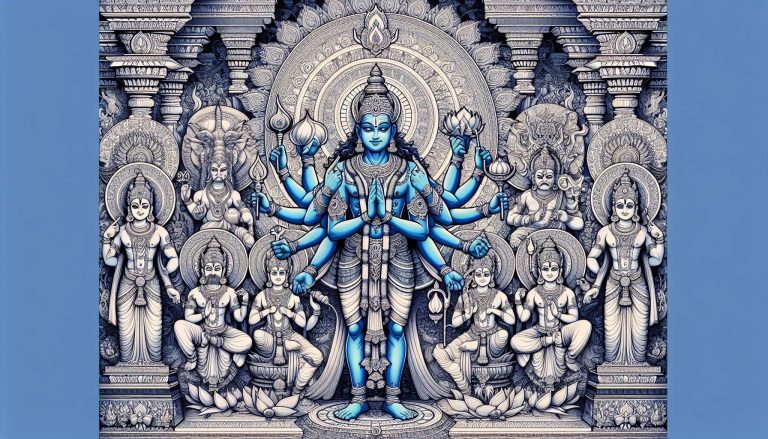
I find the concept of Vishnu’s avatars incredibly intriguing because they offer a window into the values and philosophies that have shaped Hindu culture for millennia. Each avatar not only solves a particular crisis but also teaches profound moral and ethical lessons. Whether you’re a mythology enthusiast or someone curious about spiritual narratives, exploring these avatars can provide a deeper understanding of both ancient texts and contemporary beliefs.
Overview Of Vishnu’s Avatars
Vishnu’s avatars, known as “Dashavatara,” play a crucial role in Hindu mythology. Each avatar (incarnation) addresses specific cosmic challenges and restores balance in the universe. Vishnu manifests in different forms, from animals to divine beings, to defeat demons and evil forces. Here, I’ll delve into the ten principal avatars that mark significant epochs in Hindu lore.
Matsya (Fish)
The Matsya avatar saved the sacred Vedas from demon Hayagriva’s grasp and ensured their preservation. This incarnation underscores the importance of knowledge and order in the cosmos.
Kurma (Tortoise)
Kurma helped gods and demons churn the ocean of milk to obtain Amrita (the nectar of immortality). By providing the stable base needed for the churning process, Kurma symbolizes support and perseverance.
Varaha (Boar)
In the Varaha avatar, Vishnu rescued the Earth (personified as the goddess Bhudevi) from the demon Hiranyaksha. Varaha’s victory reinstated the Earth’s balance, emphasizing the restoration of good over evil.
Narasimha (Man-Lion)
Narasimha, half-man and half-lion, appeared to save the devout Prahlad and annihilate the tyrannical Hiranyakashipu. This form showcases the triumph of devotion and piety over tyranny.
Vamana (Dwarf)
Vamana, the dwarf Brahmin, curbed the power of the demon king Bali with his cleverness. By asking for three paces of land and then expanding to cover the universe, Vamana restored celestial order.
Parashurama – Rama of the Axe (Rama with the Axe)
A warrior with an axe, Parashurama protected the Brahmins by decimating the Kshatriya class. His actions highlight adherence to dharma and the eradication of adharma (unrighteousness).
Rama (Ideal Hero)
King Rama, the central figure of the Ramayana, exemplified ideal virtues. He defeated the demon king Ravana, epitomizing the principles of duty and righteousness.
Krishna (Divine Prince)
Krishna, a pivotal character in the Mahabharata and the Bhagavad Gita, taught the essence of duty and devotion. His counsel to Arjuna during the Kurukshetra war remains integral to Hindu philosophy.
These depictions of Vishnu’s avatars not only illustrate the god’s versatility but also reflect timeless values that continue to resonate within Hindu beliefs today.
The Dasavatara: The Ten Principal Avatars
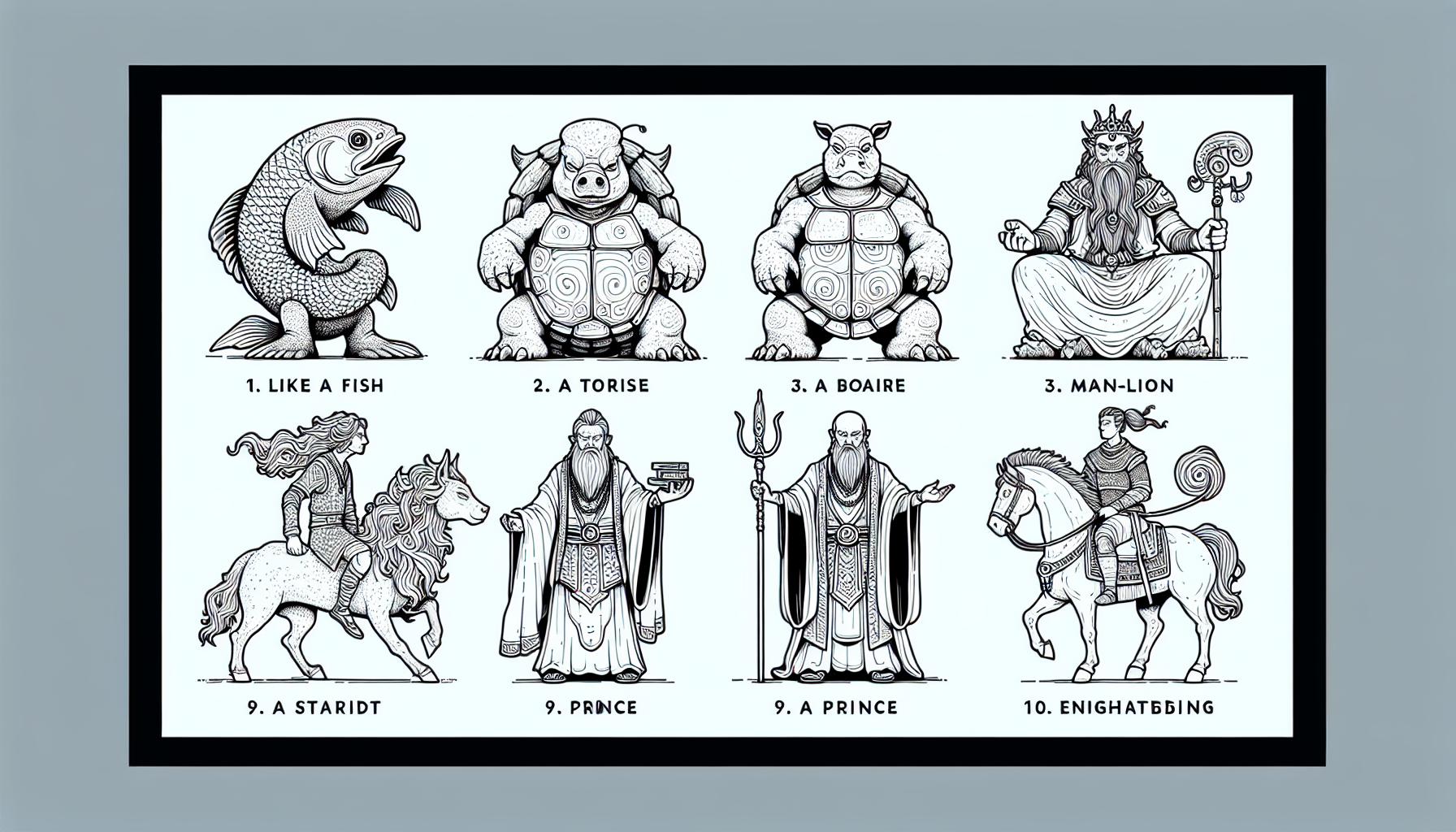
The Dasavatara, or the ten principal avatars of Vishnu, play a crucial role in Hindu mythology. These avatars manifest to restore cosmic balance and promote righteousness in the universe.
Matsya: The Fish
Matsya, Vishnu’s first avatar, is depicted as a giant fish or with the torso of Vishnu connected to the rear half of a fish. Matsya rescued Manu, the first man, from a great deluge and saved the Vedas from the demon Hayagriva.
Kurma: The Tortoise
Kurma, the second avatar, appears as a tortoise or turtle. In the story of Samudra Manthana, Kurma supported the mountain Mandara on his back to help the gods and demons churn the Ocean of Milk, obtaining the nectar of immortality.
Varaha: The Boar
Varaha, the third avatar, is depicted as a boar. This avatar rescued the Earth, personified as the goddess Bhudevi, from the demon Hiranyaksha who had submerged her in the cosmic ocean.
Narasimha: The Man-Lion
Narasimha, the fourth avatar, combines human and lion features. Narasimha emerged to protect his devotee Prahlada and to destroy the tyrant demon king Hiranyakashipu, who could not be killed by man or beast, day or night, inside or outside.
Vamana: The Dwarf
Vamana, the fifth avatar, appeared as a dwarf Brahmin. He subdued the demon king Bali by asking for enough land to cover three steps and then expanding his form to cover the entire universe in three strides.
Parashurama: The Warrior Priest
Parashurama, the sixth avatar, is a Brahmin warrior carrying an axe. He annihilated the ruling Kshatriya warriors 21 times to restore the balance between the classes and to punish the kings who had become tyrannical.
Rama: The Prince
Rama, the seventh avatar, is a prince and the protagonist of the epic Ramayana. He exemplifies dharma (duty), honor, and virtuous leadership, defeating the demon king Ravana to rescue his wife Sita.
Krishna: The Divine Statesman
Krishna, the eighth avatar, is depicted as a statesman, charioteer, and divine lover. He played a significant role in the Mahabharata, offering counsel to Arjuna on the battlefield of Kurukshetra, which became the Bhagavad Gita.
Buddha: The Enlightened One
Buddha, the ninth avatar, is often considered an incarnation of Vishnu. He renounced worldly pleasures to attain enlightenment and taught the principles of compassion and non-violence.
Kalki: The Future Savior
Kalki, the tenth and future avatar, is prophesied to appear at the end of the current age, Kaliyuga. He’ll arrive on a white horse, wielding a sword, to eradicate adharma (unrighteousness) and restore dharma, initiating a new era of truth and virtue.
Lesser-Known Avatars Of Vishnu

Hayagriva Avatar
Hayagriva Avatar showcases Vishnu defeating the demon Hayagriva, who had stolen the Vedas from Lord Brahma. Vishnu took the form of a horse-necked human to restore the Vedas to their rightful place, reinstating divine knowledge. This avatar emphasizes the importance of wisdom and knowledge.
Mahahansa Avatar (Golden Swan Avatar)
Mahahansa Avatar, the golden swan form of Vishnu, played a significant role during the churning of the ocean of milk. Vishnu assisted the gods in retrieving the divine elixir from the demons. This avatar highlights cooperation and unity, essential during challenging cosmic upheavals.
Mohini Avatar
Mohini Avatar, the only female form of Vishnu, is notable for her role in the distribution of the divine elixir obtained from the ocean of milk. As Mohini, Vishnu used charm and wit to ensure the gods received the elixir, preventing the demons from becoming immortal. This avatar underlines the importance of strategy and intellect in overcoming adversaries.
Cultural Significance Of Vishnu’s Avatars
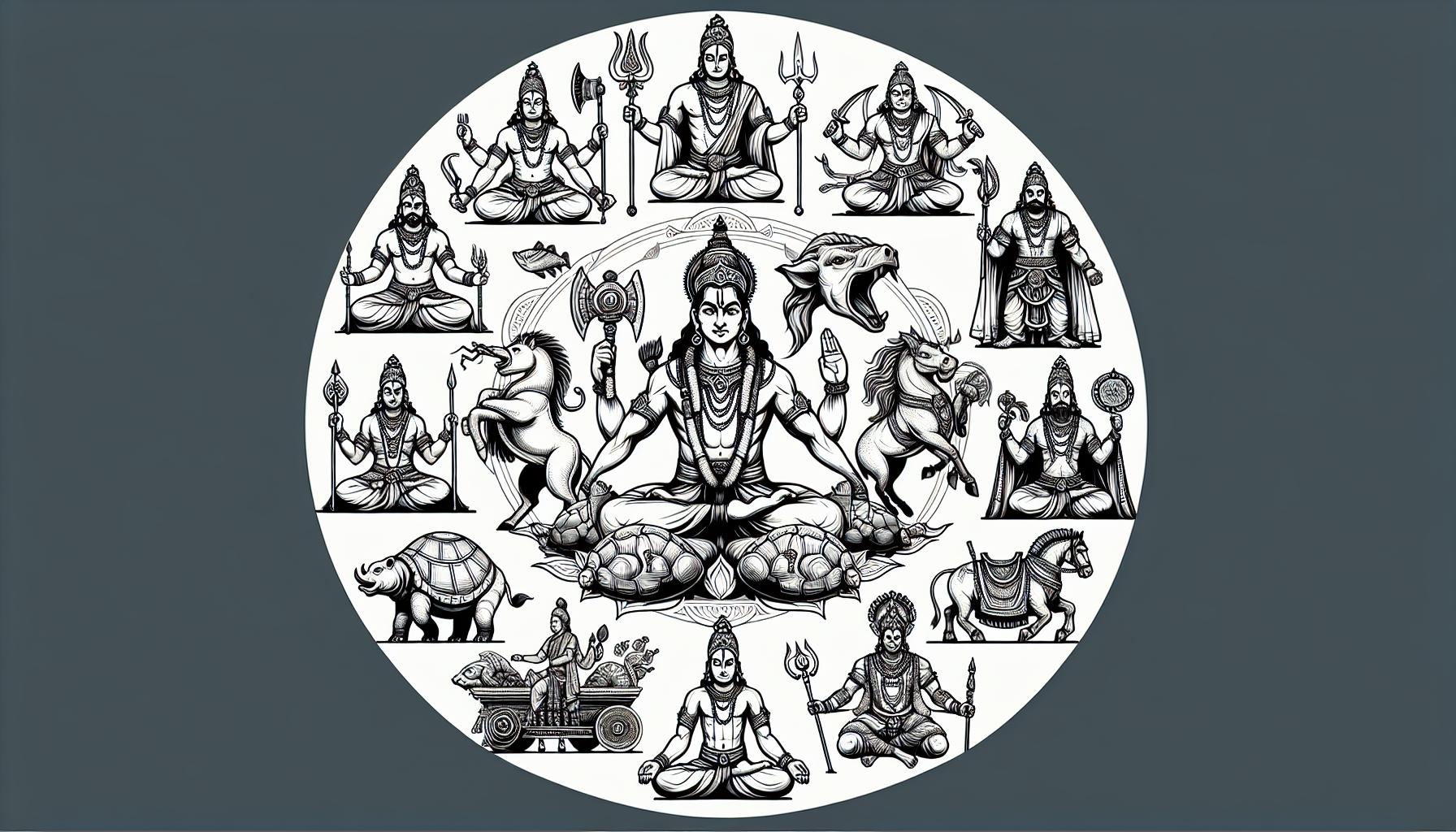
Vishnu’s avatars hold immense cultural importance in Hinduism, especially within the Vaishnavism tradition. Each avatar embodies essential virtues and moral lessons, reflecting the timeless values integral to Hindu beliefs.
Matsya (Fish)
In the Matsya avatar, Vishnu saves the Vedas from a great flood, emphasizing the preservation of knowledge. Ancient texts recount how Matsya rescued Manu, the progenitor of humanity, symbolizing the sustenance of life through wisdom.
Kurma (Tortoise)
Kurma depicts Vishnu supporting Mount Mandara on his back during the churning of the ocean of milk. This avatar signifies stability and fortitude. The Kurma legend highlights cooperation among gods and demons, reinforcing unity and a collective effort.
Varaha (Boar)
Varaha’s tale features Vishnu lifting the Earth from the cosmic ocean to restore its position. This act underscores the importance of rescue and renewal. Varaha’s story teaches the triumph of good over evil, as he defeats the demon Hiranyaksha.
Narasimha (Man-Lion)
Narasimha exhibits the duality of ferocity and protection by killing the demon Hiranyakashipu to save Prahlada. This incarnation demonstrates that divine intervention defends devotion and righteousness, no matter the circumstances.
Vamana (Dwarf)
Vamana’s story involves Vishnu taking the form of a dwarf to reclaim the universe from the demon king Bali. This avatar highlights humility and strategic thinking, demonstrating that intelligence can overcome might.
Parasurama (Rama With The Axe)
Parasurama, the warrior-sage, eradicates corrupt Kshatriyas to maintain societal order. His role enforces justice and discipline, showing that actions must reflect dharma (righteousness).
Rama (Hero Of The Ramayana)
Rama’s life, detailed in the Ramayana, epitomizes the ideal king and upholder of dharma. Stories about Rama stress duty, honor, and compassion, serving as a moral compass for Hindu culture.
Krishna (Hero Of The Mahabharata)
Krishna’s multi-faceted character in the Mahabharata and Bhagavad Gita encompasses love, diplomacy, and wisdom. His teachings on karma (action) and bhakti (devotion) influence Hindu philosophy profoundly.
Buddha (Founder Of Buddhism)
The Buddha avatar signifies a phase where Vishnu promotes non-violence, compassion, and enlightenment. This incarnation bridges Hinduism and Buddhism, emphasizing peaceful co-existence and internal growth.
Kalki (The Future Messianic Figure)
Kalki, the prophesied future avatar, is expected to end the current age of darkness and corruption, restoring dharma once again. Kalki serves as a beacon of hope for a future defined by virtue.
Each avatar of Vishnu serves as a conduit for teaching lessons, preserving dharma, and nurturing cultural practices within Hinduism.
Depictions In Art And Literature
Artistic Depictions
Iconography: Vishnu is depicted with dark blue, blue-grey, or black skin and four arms, each holding a symbolic item. These items include a conch shell, a war discus, a club or mace, and a lotus flower. The conch shell represents interconnected cyclic existence, and the discus symbolizes the restoration of dharma.
Variations: There are twenty-four combinations of iconography, each representing a special form of Vishnu. These forms are detailed in texts like the Agni Purana and the Padma Purana.
Pose and Mount: Vishnu is often shown standing, seated in a yoga pose, or reclining. These various depictions are significant in different cultural and religious contexts.
Literary Depictions
Texts and Scriptures: The avatars of Vishnu are extensively described in Hindu scriptures such as the Bhagavata Purana, Vishnu Purana, and the Mahabharata. These texts provide detailed stories and moral lessons associated with each avatar.
Narrative Roles: Each avatar takes on roles that address different cosmic challenges. For instance, Matsya saves the Vedas, while Kalki is prophesied to appear in the future to restore dharma.
Cultural Impact: Stories of Vishnu’s avatars have shaped various cultural practices and festivals. For example, the tale of Krishna’s life is central to celebrations like Janmashtami.
Visual Arts
Sculptures and Paintings: Temples across India feature intricate sculptures and paintings of Vishnu’s avatars. Notable examples include the carvings at Ellora Caves and the frescoes in the Chola temples.
Regional Styles: Different regions depict Vishnu uniquely, reflecting local artistic traditions. South Indian bronzes often show Vishnu with elaborate ornaments, while North Indian paintings might emphasize vibrant colors and detailed backgrounds.
Performance Arts
Dance and Drama: Vishnu’s avatars are popular themes in traditional Indian dance forms like Bharatanatyam and Kathak. These performances use gestures and expressions to narrate the divine tales.
Theater and Festivals: Annual festivals like Ramlila and Krishna Leela dramatize the stories of Rama and Krishna, drawing large audiences and preserving these narratives in public memory.
The art and literature on Vishnu’s avatars enrich Hinduism’s cultural heritage, providing visual and narrative depth to these divine incarnations.
Conclusion
Exploring Vishnu’s avatars offers a profound understanding of Hinduism’s core values and cultural richness. Each avatar not only imparts significant moral lessons but also showcases the depth of Hindu mythology and its influence on art and culture. By understanding these avatars, we gain insight into the timeless principles that continue to shape and inspire Hindu traditions. The stories and depictions of Vishnu’s avatars serve as a powerful reminder of the enduring wisdom and virtues that guide us in our daily lives.
Sources & further reading
These themes are explored in greater depth across the following authoritative resources:
- Encyclopaedia Britannica, Hindu Mythology
- Internet Sacred Text Archive, Hinduism
- Mythopedia, Hindu Mythology
- Harvard Pluralism Project, Hindu Tradition
- Wendy Doniger, The Hindus: An Alternative History (Penguin, 2009), ISBN 978-0143116691
External resources for further reading. Apam Napat is not affiliated with these publishers; citation does not imply endorsement.
Frequently asked questions
What are Vishnu's avatars?
Why does Vishnu take avatars?
How many avatars does Vishnu have?
Why are Vishnu's avatars intriguing in Hindu mythology?
Based on the classical texts of Hindu mythology, see our sources.