
Each scripture offers unique insights into life’s deepest questions, from the nature of existence to the path of righteousness. Whether you’re seeking spiritual growth or simply curious about one of the world’s oldest religions, understanding Hindu scriptures can provide profound clarity and inspiration.
Overview Of Hindu Religious Scriptures
Hindu religious scriptures are a diverse collection of texts foundational to Hinduism. These sacred writings, held in high reverence by Hindus globally, vary in content and purpose. Here’s an overview of the major Hindu religious scriptures:
The Vedas
The Vedas stand as the oldest and most authoritative texts in Hinduism.
- Rigveda: The Rigveda, composed of 1,028 suktas (hymns) and 10,552 mantras, is the oldest and most sacred among the Vedas. It contains hymns dedicated to various deities.
- Yajurveda: The Yajurveda includes rituals and mantras necessary for performing ceremonies and sacrifices. It serves as a guide for conducting religious rites.
- Samaveda: The Samaveda focuses on melodies and chants used in rituals. It provides the musical framework for Vedic ceremonies.
- Atharvaveda: The Atharvaveda deals with magic, spells, and incantations. It includes hymns for everyday life, containing practical knowledge and folklore.
The Upanishads
The Upanishads are philosophical texts exploring the nature of the ultimate reality, Brahman, and the self, Atman.
- 108 Upanishads: Collectively known as Vedanta, meaning “the end of the Vedas,” these texts discuss metaphysical concepts and the soul’s connection to the universe.
- Major Upanishads: Some of the most prominent Upanishads include the Isha, Kena, Katha, Prashna, Mundaka, Mandukya, Taittiriya, Aitareya, and Chandogya Upanishads. Each delves into profound spiritual questions and philosophical discussions.
The Vedas
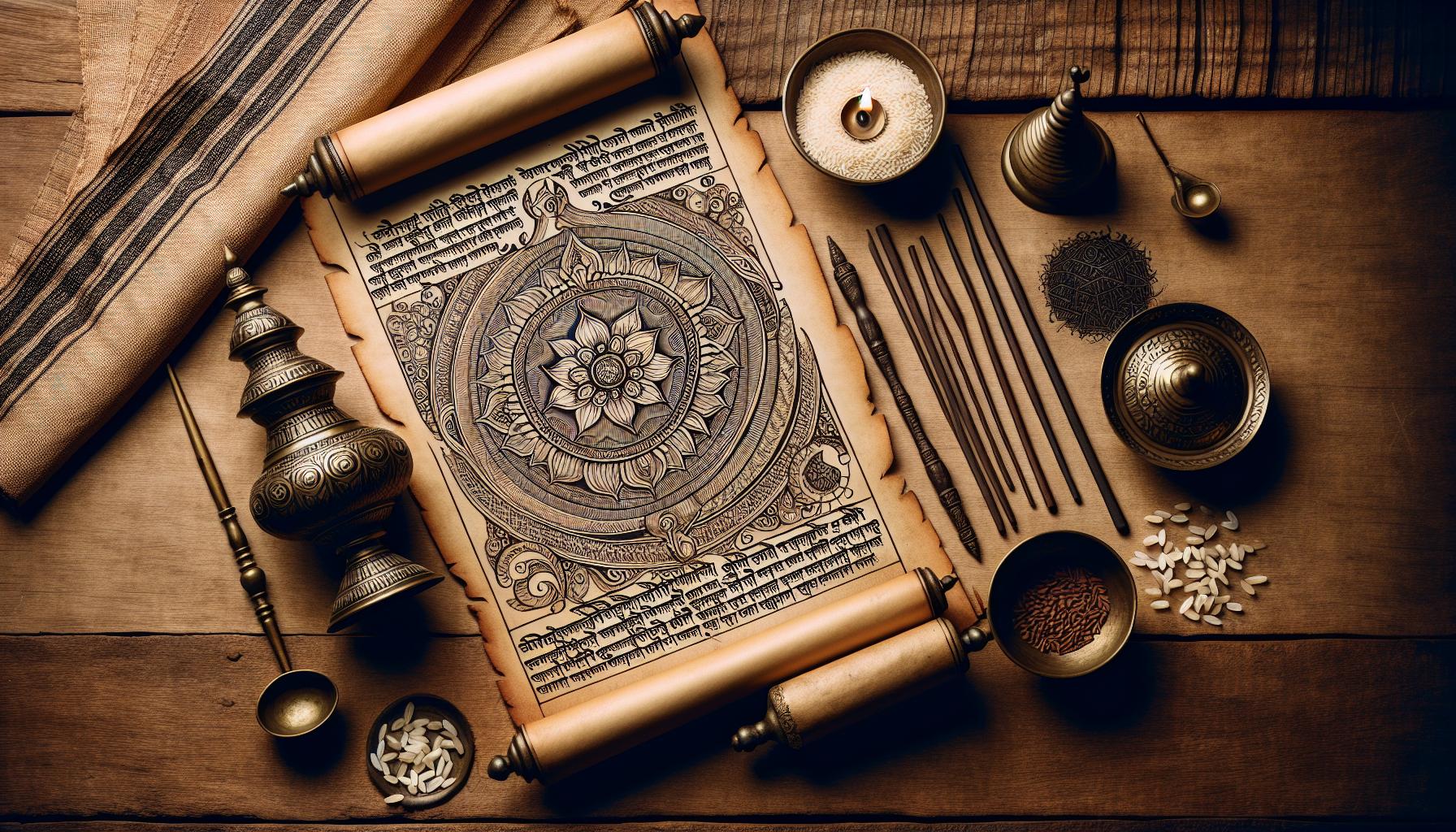
The Vedas form the cornerstone of Hinduism, comprising four sacred texts: Rigveda, Samaveda, Yajurveda, and Atharvaveda. They represent divine revelations in archaic Sanskrit and serve as the foundation of the Vedic religion.
Rigveda
Rigveda, the oldest of the four Vedas, contains 1,028 hymns dedicated to various deities. Composed in Vedic Sanskrit between 1500 and 1200 BCE, the hymns praise gods like Indra, Agni, and Soma. These hymns are crucial for understanding early Vedic traditions and rituals.
Samaveda
Samaveda focuses on melodies and chants used during rituals. It features about 1,875 verses, primarily derived from Rigveda. Priests recite these melodies, aligning them with specific rituals. The musical and rhythmic elements of Samaveda play a vital role in Vedic ceremonies.
Yajurveda
Yajurveda deals with the procedural aspects of rituals. Containing prose mantras and verses, Yajurveda guides priests in performing sacrificial rites. It has two major forms: Shukla (White) Yajurveda and Krishna (Black) Yajurveda, differing mainly in content arrangement.
Atharvaveda
Atharvaveda includes hymns, spells, and incantations for daily life. Unlike the other Vedas, it addresses more practical issues like healing and protection. Composed between 1200 and 1000 BCE, Atharvaveda provides insights into the everyday life and concerns of early Vedic society.
The Upanishads
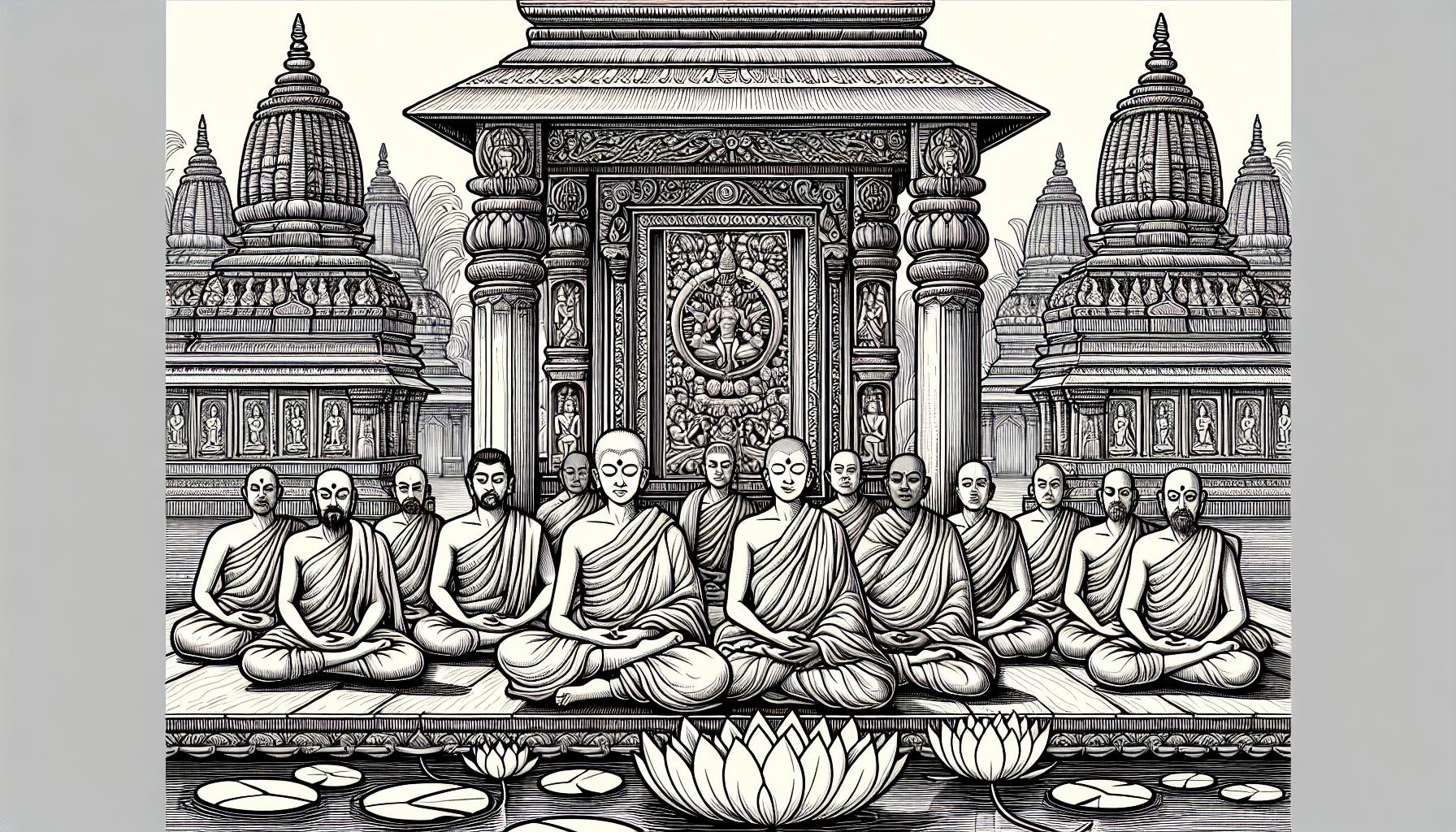
The Upanishads, ancient Hindu texts, form the core of Hindu philosophical and religious thought. They are part of the Vedas and represent their concluding segments, hence the term “Vedanta.”
Principal Upanishads
Among the 200+ Upanishads, several stand out for their age and influence:
- Brihadaranyaka Upanishad: One of the oldest Upanishads, it explores profound philosophical ideas, such as the Self (Atman) and the nature of reality.
- Chandogya Upanishad: This early Upanishad discusses topics like ethics, notably the concept of Ahimsa (non-violence).
- Katha Upanishad: Known for its dualistic approach, it tells the story of Nachiketa and Yama, the king of death, to investigate into the nature of the Self and the universe.
Philosophical Implications
The Upanishads have rich philosophical implications, profoundly influencing Hindu thought. Concepts such as Atman (self), Brahman (universal reality), and Moksha (liberation) are central. They address questions about existence, consciousness, and the ultimate truth, shaping the beliefs and practices of millions.
The Mahabharata
The Mahabharata, one of Hinduism’s most important and revered texts, is an epic narrative that covers a vast array of human experiences and moral dilemmas. Spanning over 100,000 verses, it contains numerous stories and teachings that continue to influence Hindu culture and spirituality.
Bhagavad Gita
The Bhagavad Gita, a crucial part of the Mahabharata, is a 700-verse scripture that forms a conversation between Prince Arjuna and Lord Krishna. With themes like duty, righteousness, and the nature of reality, it provides profound philosophical insights. Krishna elucidates complex spiritual concepts to guide Arjuna through his moral crisis, offering a comprehensive understanding of life, duty, and spirituality.
- Dharma and Karma: The Mahabharata emphasizes the significance of dharma (duty) and karma (actions). It demonstrates that adhering to one’s duty, regardless of personal loss, ensures cosmic order. Examples include Yudhishthira’s unwavering commitment to righteousness and Arjuna’s struggle with his duty as a warrior.
- Self-Realization and Enlightenment: This theme is prominent throughout the Mahabharata, especially in the Bhagavad Gita. Characters grapple with their identities, purpose, and reality. Krishna’s teachings encourage recognizing the Atman (self) and understanding Brahman (ultimate reality).
- Yoga and Meditation: The Mahabharata promotes these practices as paths to wisdom and self-control. Various characters, including sages like Vyasa and warriors like Arjuna, employ yoga and meditation to achieve mental clarity and spiritual growth.
The Ramayana
The Ramayana, an essential Hindu epic alongside the Mahabharata, offers profound narratives and spiritual insights rooted in ancient Indian culture.
Story And Characters
The Ramayana narrates the royal birth of Rama in Ayodhya, his training under sage Vishvamitra, and his triumph in the bridegroom tournament by bending Shiva’s bow. Rama wins Sita, daughter of King Janaka, as his wife. Palace intrigue leads to Rama’s exile for 14 years, during which he retreats to the forest with Sita and his half-brother Lakshmana. Ravana, the demon-king of Lanka, abducts Sita, setting the stage for her rescue by Rama and Lakshmana.
Key Characters:
- Rama: Seventh avatar of Vishnu; the hero of the epic.
- Sita: Rama’s devoted wife, known for her purity and strength.
- Lakshmana: Rama’s loyal half-brother; accompanies him in exile.
- Ravana: Demon-king of Lanka; abducts Sita.
- Hanuman: Devout monkey god aiding Rama in rescuing Sita.
Moral Lessons
The Ramayana imparts several key moral lessons that shape Hindu beliefs and values. Rama exemplifies dharma (duty) and ideal kingship. Sita symbolizes virtue and marital loyalty, reflecting steadfastness even though adversity. Lakshmana’s unwavering devotion underscores the importance of familial bonds. Ravana’s downfall highlights the perils of arrogance and desire. Overall, the epic teaches virtues like duty, loyalty, righteousness, and the triumph of good over evil, guiding readers in ethical and spiritual growth.
The Puranas
The Puranas form a comprehensive part of Hindu religious scriptures, offering a wealth of knowledge on theology, mythology, and cultural history.
Major Puranas
The Puranas consist of 18 major texts, known as Maha Puranas. These are among the most recognized and influential in Hindu tradition. Notable texts include:
- Agni Purana
- Bhagavata Purana
- Brahma Purana
- Brahmanda Purana
- Brahmavaivarta Purana
- Garuda Purana
- Kurma Purana
- Linga Purana
- Markandeya Purana
- Matsya Purana
- Narada Purana
- Padma Purana
- Shiva Purana
- Skanda Purana
- Vamana Purana
- Varaha Purana
- Vayu Purana
- Vishnu Purana
These texts vary in content and length, encompassing narratives about gods and goddesses, historical events, and philosophical discourses.
Key Narratives
The Puranas contain rich narratives that offer profound insights into Hindu mythology and ethics. For example:
- Bhagavata Purana: Describes the ten avatars of Vishnu, with a prominent focus on Krishna’s life and teachings.
- Shiva Purana: Focuses on stories related to Lord Shiva, exploring his attributes, incarnations, and interactions with other deities.
- Markandeya Purana: Includes the well-known Devi Mahatmya, which narrates the story of Goddess Durga’s battle against the buffalo demon Mahishasura.
- Vishnu Purana: Chronicles Vishnu’s many avatars and provides genealogies of important dynasties.
Each Purana contributes uniquely to Hindu lore, embedding moral and spiritual lessons within their tales.
Conclusion
Exploring Hindu religious scriptures reveals a vast ocean of spiritual wisdom and moral teachings. The Vedas and Upanishads lay foundational spiritual principles, while the Bhagavad Gita offers profound philosophical insights. The Ramayana’s characters embody timeless moral lessons that resonate deeply.
Delving into the Puranas, I found a treasure trove of narratives that enrich Hindu lore. The Maha Puranas, with their rich stories and philosophical discourses, provide a unique perspective on ethical and spiritual growth. Each text, from the Bhagavata Purana to the Vishnu Purana, contributes to a deeper understanding of Hindu beliefs.
The enduring relevance of these scriptures lies in their ability to guide individuals on a path of righteousness and spiritual enlightenment. Their teachings continue to inspire and shape the lives of millions, offering timeless wisdom for exploring the complexities of modern life.
Sources & further reading
These themes are explored in greater depth across the following authoritative resources:
- Stanford Encyclopedia of Philosophy, Hindu Philosophy
- Mythopedia, Hindu Mythology
- Britannica, Hindu Mythology
- Sheldon Pollock, The Language of the Gods in the World of Men (University of California Press, 2006)
- A. K. Ramanujan, The Collected Essays (Oxford University Press, 1999)
External resources for further reading. Apam Napat is not affiliated with these publishers; citation does not imply endorsement.
Frequently asked questions
What are the main Hindu religious scriptures?
What does the Rigveda contain?
What does the Atharvaveda focus on?
How many Upanishads are there?
What are the two main forms of the Yajurveda?
Based on the classical texts of Hindu mythology, see our sources.