
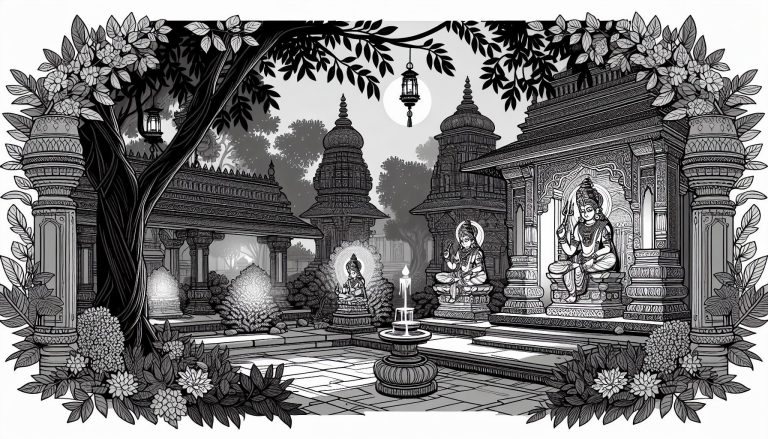
Each book serves a unique purpose, whether it’s guiding daily rituals, exploring ethical dilemmas, or narrating the adventures of gods and heroes. As I explored these sacred texts, I discovered a rich world of stories and teachings that not only shaped Hindu culture but also offered universal lessons for anyone seeking a deeper understanding of life’s mysteries.
Overview Of Hindu Religious Books
Hindu religious books are essential to understanding Hindu culture and spirituality. They divide into two primary categories: Shruti and Smriti.
Shruti
Shruti, meaning “that which is heard,” includes the Vedas. Ancient sages (rishis) received these revelations. The four Vedas are:
- Rigveda: Contains mantras and benedictions.
- Samaveda: Focuses on rituals, ceremonies, and sacrifices.
- Yajurveda: Includes commentaries on rituals, ceremonies, and sacrifices.
- Atharvaveda: Discusses meditation, philosophy, and spiritual knowledge.
Each Veda subdivides into four sections:
- Samhitas: Mantras and benedictions.
- Aranyakas: Text on rituals, ceremonies, sacrifices, and symbolic-sacrifices.
- Brahmanas: Commentaries on rituals, ceremonies, and sacrifices.
- Upanishads: Texts discussing meditation, philosophy, and spiritual knowledge.
Smriti
Smriti, meaning “that which is remembered,” encompasses various other texts. Unlike Shruti, the Smriti texts are not considered divine revelations but human compositions. Key texts in this category include:
- Mahabharata: An epic narrative of the Kurukshetra War and the fates of the Kaurava and the Pandava princes.
- Ramayana: The story of Prince Rama, his wife Sita, and his loyal companion Hanuman.
- Puranas: Collections of myths, legends, and genealogies of gods, heroes, and ancient sages.
- Dharma Shastras: Texts outlining laws, ethics, and social duties.
These texts form the cornerstone of Hindu thought, offering a comprehensive guide to ritual practices, ethical norms, and philosophical inquiries.
The Vedas
The Vedas are the cornerstone of Hindu religious texts and consist of four main books: Rigveda, Samaveda, Yajurveda, and Atharvaveda. Each Veda offers unique insights into spiritual and philosophical wisdom.
Rigveda
As the oldest and most significant Veda, Rigveda dates back to 1800-1100 BCE. It contains 1,028 hymns (suktas) divided into 10 books (mandalas) with a total of 10,600 verses. The Rigveda addresses cosmology, deities, and philosophical questions, and it includes hymns dedicated to gods like Agni and Indra. Various sages (rishis) are attributed to its composition.
Samaveda
Known as the Veda of melodies, Samaveda dates back to 1200-800 BCE. It’s recognized for its melodic chants used in public worship. The Samaveda primarily consists of hymns borrowed from the Rigveda, arranged for chanting purposes, making it essential in ritualistic contexts.
Yajurveda
The Yajurveda focuses on liturgy and rituals. Dating back to approximately 1200-800 BCE, it contains prose mantras and is used during Vedic sacrifices. The Yajurveda provides detailed instructions for performing religious ceremonies and rituals, emphasizing the correct execution of sacrifices.
Atharvaveda
The Atharvaveda, dating from 1200-900 BCE, stands apart due to its content. It includes hymns, spells, and incantations aimed at practical needs like healing illnesses and securing prosperity. The Atharvaveda encompasses a more diverse range of topics, addressing everyday life and spiritual practices.
The Upanishads
The Upanishads, a collection of ancient Hindu texts, investigate into deep philosophical teachings and spiritual wisdom. They significantly influence Hindu thought by connecting the individual self (Atman) with the ultimate reality (Brahman).
Principal Upanishads
The Upanishads include approximately 108 texts, with the earliest dozen holding the most significance. I find these principal Upanishads particularly crucial:
- Isha Upanishad: Explores the concept of the inner self and the pursuit of spiritual knowledge.
- Kena Upanishad: Delves into the knowledge that transcends the mind and senses.
- Katha Upanishad: Discusses the dialogue between Nachiketa and Yama on the nature of the soul and the afterlife.
- Prashna Upanishad: Involves a series of questions and answers about philosophy and life force.
- Mundaka Upanishad: Differentiates between higher and lower knowledge, focusing on spiritual wisdom.
- Mandukya Upanishad: Analyzes the states of consciousness and the concept of OM.
- Taittiriya Upanishad: Explores the nature of reality through symbolic layers of human existence.
- Aitareya Upanishad: Deals with the origin of the universe and human life.
- Chandogya Upanishad: Emphasizes meditation and the significance of rituals and cosmic entities.
- Brihadaranyaka Upanishad: Offers extensive discussions on varied philosophical topics like the nature of reality and the self.
Philosophy And Teachings
The Upanishads are known for their profound philosophical and mystical teachings. They cover a wide range of topics:
- Meditation: Techniques and practices to attain spiritual awareness and inner peace.
- Philosophy: Exploration of fundamental questions about existence, consciousness, and ultimate truth.
- Consciousness: Analysis of different states of awareness and their relationship with the self.
- Ontological Knowledge: In-depth discussions on the nature of being and the connection between the macrocosm and the microcosm.
The Upanishads emphasize the unity of Atman and Brahman, suggesting that realizing this oneness leads to spiritual enlightenment. Written in Sanskrit, these texts bridge ritualistic practices and cosmic realities, making them central to understanding Hindu philosophy.
The Mahabharata And The Ramayana
These two epic poems, central to Hindu literature, deliver stories filled with divine insight and moral guidance.
The Mahabharata
The Mahabharata stands as a monumental Sanskrit epic. A crucial text for Hindus, it offers deep perspectives on dharma and history (itihasa). Between 400 BCE and 200 CE, it shaped the development of Hinduism.
Story
The Mahabharata narrates the epic struggle for sovereignty between the Kauravas and the Pandavas, two groups of cousins. It spans almost 100,000 couplets, organized into 18 parvans (sections) plus a supplement called Harivamsha, which details the genealogy of Vishnu.
The Ramayana
The Ramayana, another seminal Hindu epic, also written in Sanskrit, chronicles the life and adventures of Prince Rama. Authored by the sage Valmiki, it represents an ideal of devotion, duty, and righteousness.
Story
The Ramayana follows Rama’s journey, from his exile and the abduction of his wife Sita by the demon king Ravana to her rescue and his eventual return to Ayodhya. Its primary divisions are kanda sections, with notable segments like Ayodhya Kanda and Sundara Kanda, which highlight key events in the narrative.
The Puranas
The Puranas are essential Hindu religious texts that complement the Vedas and Upanishads, providing a vast array of knowledge on various aspects of life, the universe, and Hindu culture. These texts include both the Mahapuranas and the Upapuranas.
Major Puranas
The 18 major Puranas, known as Mahapuranas, offer extensive narratives and teachings. Here are some prominent examples:
- Bhagavata Purana: Renowned for its devotion to Krishna, this text is highly celebrated and influential.
- Skanda Purana: The longest Purana, it focuses on Shiva’s worship.
- Brahmanda Purana: Written between 350 and 750 CE, it is among the earliest Puranas.
- Markandeya Purana: Features stories about the goddess Durga and the universe’s creation.
- Vishnu Purana: Centers on Vishnu and includes his various incarnations.
- Creation: Detail cosmology and the origin of the universe.
- Mythology: Narrate divine exploits of gods and goddesses.
- Genealogy: Trace the lineages of royal dynasties and sages.
- Dharma: Discuss moral laws and duties.
The Bhagavad Gita
The Bhagavad Gita is a key text within Hindu literature. It forms part of the Mahabharata, containing 700 verses in a dialogue between Arjuna and Krishna.
Core Teachings
Krishna’s teachings to Arjuna focus on three main principles:
- Duty and Action: Krishna stresses the idea of performing one’s duties without attachment to outcomes. This concept, known as “nishkama karma,” is selfless action.
- Reincarnation and Liberation: The Gita explains that the soul is immortal, transitioning into a new body after death. Spiritual understanding and devotion lead to liberation from this cycle of rebirth.
- Dualism and the Nature of the Soul: Incorporating ideas from the Upanishads and Samkhya Yoga, the Gita highlights the duality between the soul and body. The soul is everlasting, while the body is temporary.
- Philosophical Influence: Integral to Hindu philosophy, it influences various schools like Vedanta and Yoga. Scholars and spiritual leaders often reference its teachings.
- Cultural Legacy: The text shapes Indian culture, influencing art, literature, and daily life. Teachings permeate rituals, traditions, and ethical norms.
- Global Reach: Beyond India, the Gita garners respect and study worldwide. It’s translated into numerous languages and referenced in global philosophical discussions.
Conclusion
Hindu religious books offer a wealth of spiritual and philosophical wisdom that continues to influence millions around the world. From the ancient Vedas and Upanishads to the narrative-rich Puranas and the profound teachings of the Bhagavad Gita, these texts guide us through life’s complexities and mysteries. They’ve shaped not only Indian culture but also global philosophical thought.
The timeless teachings on duty, devotion, and the nature of the soul resonate deeply with anyone seeking a deeper understanding of existence. Exploring these texts has enriched my perspective and provided invaluable insights into the human experience. I encourage anyone interested in spirituality and philosophy to investigate into these extraordinary works.
Sources & further reading
These themes are explored in greater depth across the following authoritative resources:
- Stanford Encyclopedia of Philosophy, Hindu Philosophy
- Mythopedia, Hindu Mythology
- Britannica, Hindu Mythology
- Sheldon Pollock, The Language of the Gods in the World of Men (University of California Press, 2006)
- A. K. Ramanujan, The Collected Essays (Oxford University Press, 1999)
External resources for further reading. Apam Napat is not affiliated with these publishers; citation does not imply endorsement.
Frequently asked questions
What are the two main categories of Hindu religious books?
What does Shruti mean in Hinduism?
What are the four Vedas?
What are the four sections of each Veda?
Based on the classical texts of Hindu mythology, see our sources.