
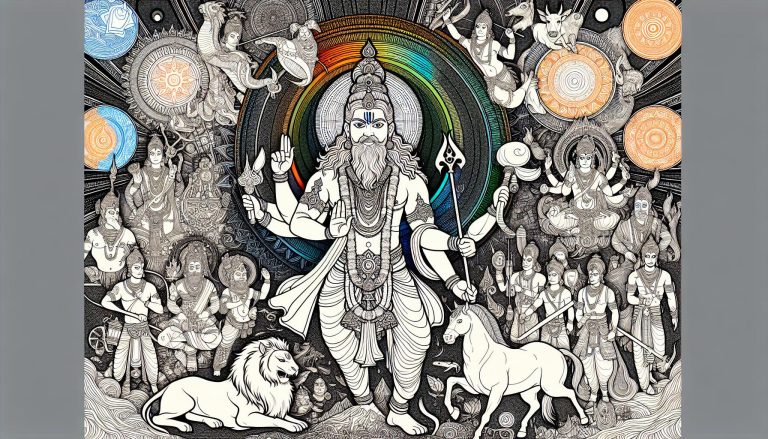
As I delve into the mythological interpretations of Vishnu’s avatars, it becomes clear that each story isn’t just a tale but a reflection of deeper philosophical and spiritual truths. Whether you’re familiar with these legends or just beginning your exploration, understanding the symbolism behind each avatar can provide valuable insights into Hindu cosmology and the timeless battle between good and evil.
Overview Of Vishnu’s Avatars
Vishnu, central to Hinduism, is revered for his ten avatars, collectively known as the Dashavatara. Each avatar manifests to tackle chaos and uphold cosmic balance. These mythological narratives feature deep philosophical meanings and reveal Hindu cosmology’s dimensions.
- Matsya (Fish): Matsya rescued the sacred Vedas from demons, ensuring the preservation of divine knowledge. During a great flood, Matsya protected the world and maintained dharma.
- Kurma (Tortoise): Kurma supported Mount Mandara, pivotal during the churning of the ocean of milk. This avatar underscores the theme of stability and support in the pursuit of immortality and prosperity.
- Varaha (Boar): Varaha defeated the demon Hiranyaksha and retrieved the Earth from the cosmic ocean. This act emphasizes the triumph of good over evil and cosmic salvation.
- Narasimha (Half-Man, Half-Lion): Narasimha emerged to annihilate Hiranyakashipu and save his devotee, Prahlad. This avatar highlights divine intervention and the protection of the faithful.
- Vamana (Dwarf): Vamana outwitted the demon king Bali, restoring celestial authority. This story symbolizes humility and the divine’s role in rectifying imbalance.
- Parashurama – Rama of the Axe (Rama with the Axe): Parashurama liberated the priestly class (Brahmins) from warrior domination (Kshatriyas). It reflects themes of retribution and the restoration of social order.
- Rama (Hero): Rama, central to the epic Ramayana, defeated Ravana and reinstated dharma. His narrative embodies duty, righteousness, and the ideal king’s attributes.
These avatars vividly illustrate Vishnu’s role in maintaining cosmic harmony and addressing varying forms of moral decay. Each story provides insight into the eternal battle between good and evil.
The Dashavatara: Vishnu’s Ten Principal Avatars
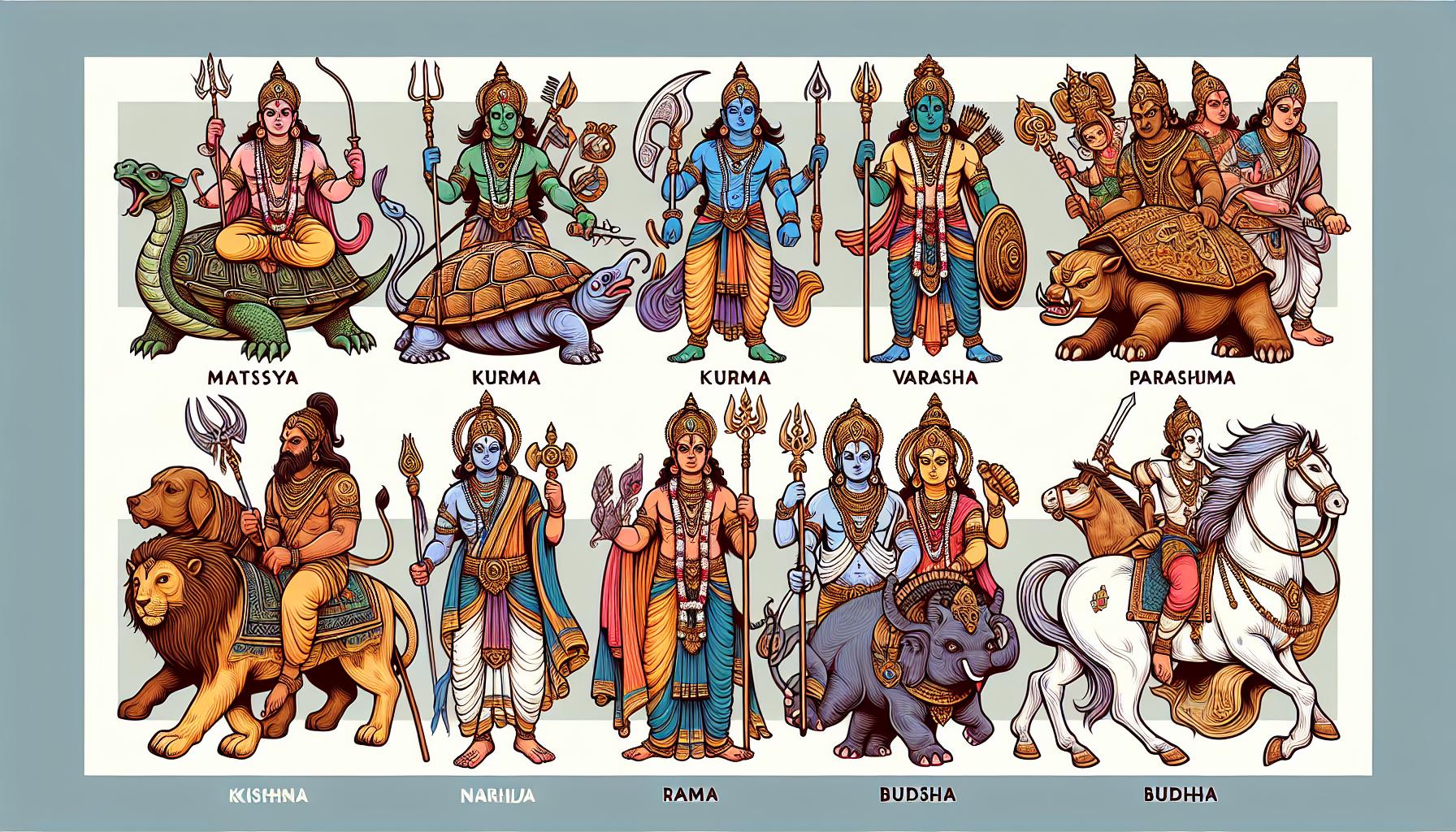
The Dashavatara represents Vishnu’s ten principal avatars, each descending to Earth for restoring cosmic order. These avatars vary from animal forms to human forms, embodying profound philosophical and moral teachings.
Matsya: The Fish Avatar
Matsya, the first avatar, is depicted anthropomorphically with the torso of Vishnu and the tail of a fish. According to legend, Matsya saved Manu from a great flood, preserving all knowledge and living beings by guiding a boat carrying them to safety.
Kurma: The Tortoise Avatar
Kurma, the second avatar, takes the form of a tortoise. During the churning of the Ocean of Milk, Kurma supported Mount Mandara on his back, allowing the devas and asuras to churn for amrita, the nectar of immortality.
Varaha: The Boar Avatar
Varaha, the third avatar, is depicted as a giant boar. In this avatar, Vishnu rescued Earth from the demon Hiranyaksha by lifting it out of the cosmic ocean with his tusks, symbolizing the restoration of the planet’s stability and order.
Narasimha: The Man-Lion Avatar
Narasimha, the fourth avatar, combines human and lion features. Vishnu assumed this form to protect his devotee Prahlada and to defeat the demon Hiranyakashipu, who was immune to standard techniques of killing. Narasimha’s uniqueness lay in destroying the demon at twilight, neither inside nor outside, satisfying all conditions of Hiranyakashipu’s boon.
Vamana: The Dwarf Avatar
Vamana, the fifth avatar, is depicted as a dwarf Brahmin. During the reign of the demon king Bali, Vamana requested three paces of land and expanded to cover the earth, sky, and netherworld in three steps. This act symbolized restoring celestial order and humility.
Parashurama: The Warrior With An Axe
Parashurama, the sixth avatar, is depicted as a Brahmin warrior holding an axe. He is known for ridding the world of corrupt kshatriyas twenty-one times, symbolizing the re-establishment of dharma (righteousness) and the protection of Brahminical values.
Rama: The Prince Of Ayodhya
Rama, the seventh avatar, is depicted as a prince. He is the protagonist of the Ramayana, where he defeated the demon king Ravana to rescue his wife, Sita. Rama symbolizes the ideal king and upholder of dharma, embodying the virtues of truth, morality, and duty.
Krishna: The Divine Statesman
Krishna, the eighth avatar, is depicted as a divine statesman and cowherd. He played a critical role in the Mahabharata – The Great Epic and delivered the Bhagavad Gita’s teachings to Arjuna. Krishna represents the aspects of divine love, wisdom, and diplomacy.
Buddha: The Enlightened One
Buddha, the ninth avatar, is depicted as an enlightened sage. Contrary to his original teachings, Buddha in Hindu tradition represents a reformative phase in religious consciousness. He promoted non-violence and ethical living, counteracting the rigidity of the prevailing ritualistic practices.
Kalki: The Future Warrior
Kalki, the tenth avatar, is depicted as a warrior on a white horse. According to prophecy, Kalki is yet to appear and will end the Kali Yuga (the age of darkness and corruption), restoring dharma and starting a new Satya Yuga (age of truth). Vishnu’s final avatar will bring ultimate transformation and renewal.
Symbolism And Significance
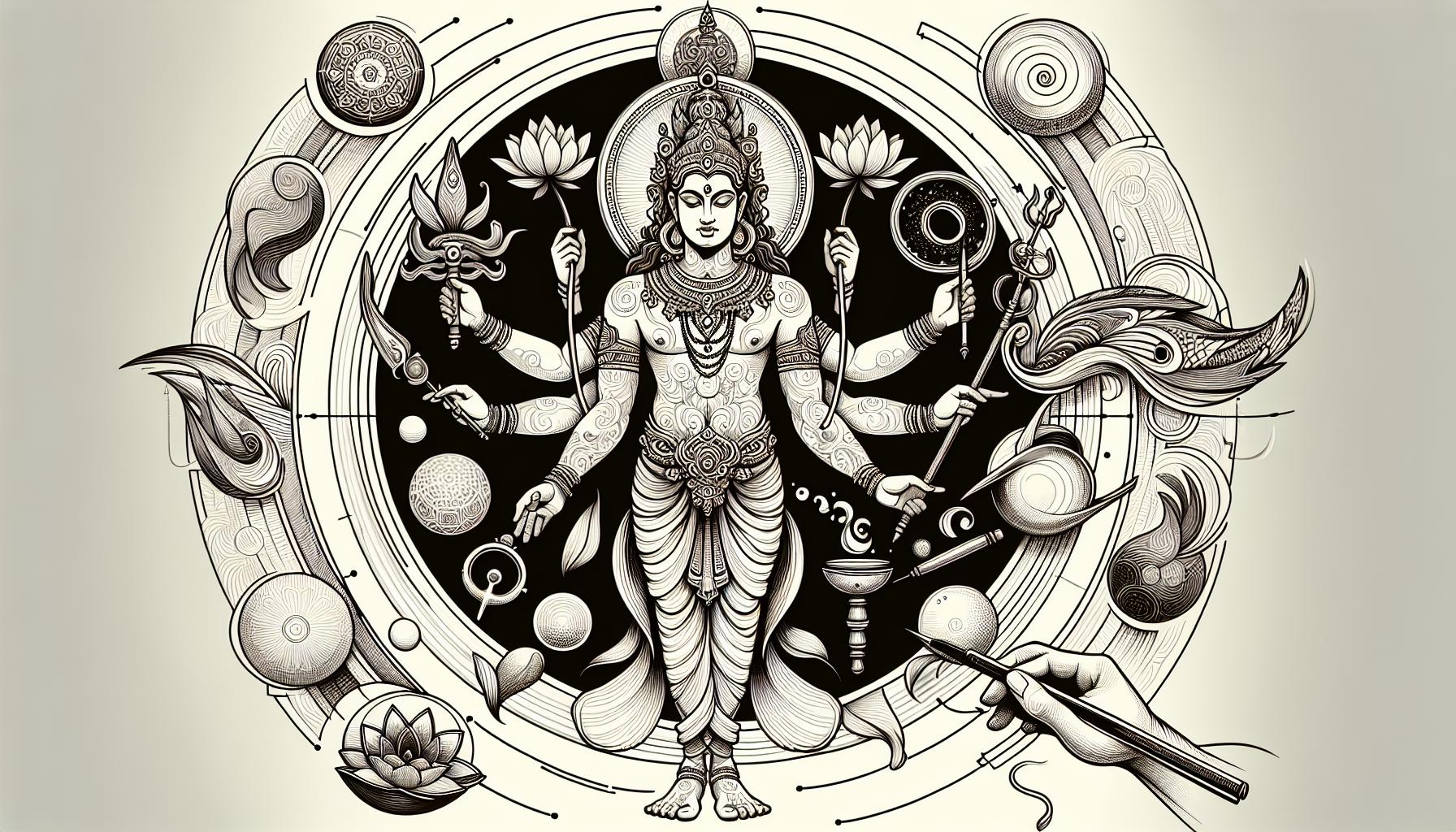
Vishnu’s avatars hold profound meanings, blending mythology with spiritual and ethical teachings.
Chakra/Discus
The Chakra, or discus, signifies the mind and spirit. It embodies the eternal struggle between good and evil within oneself. By spinning, it represents the cycles of time and cosmic order, cutting through ignorance and enforcing Dharma.
Conch Shell
The Conch Shell, or Shankha, symbolizes mental clarity in adversity. Sounding the conch awakens spiritual energy and represents the primordial sound ‘Om,’ signifying the universe’s creation and the divine communication.
Lotus Flower
The Lotus Flower illustrates purity and the beauty of creation. Emerging unsullied from murky waters, it signifies freedom from material attachment and the potential of spiritual elevation amidst worldly challenges.
Mace
The Mace, or Gada, represents strength, both physical and mental. It stands for the power to discipline and protect Dharma, emphasizing inner strength necessary to overcome evil and preserve righteousness.
Representation Of Good Vs. Evil
Vishnu’s avatars showcase the eternal battle between good and evil. Each descent aims to empower good, destroy malevolence, and reestablish cosmic order. The Bhagavad Gita highlights this role, asserting that Vishnu appears whenever Dharma declines, protecting the virtuous and annihilating detractors.
Dharma (Righteousness) And Its Restoration
Restoring Dharma is a central theme in Vishnu’s interventions. Through avatars, Vishnu reinstates moral and spiritual order. Whether slaying demons or guiding humanity, each avatar’s mission focuses on restoring balance and ensuring the adherence to righteousness within the cosmic law.
Cultural And Historical Context
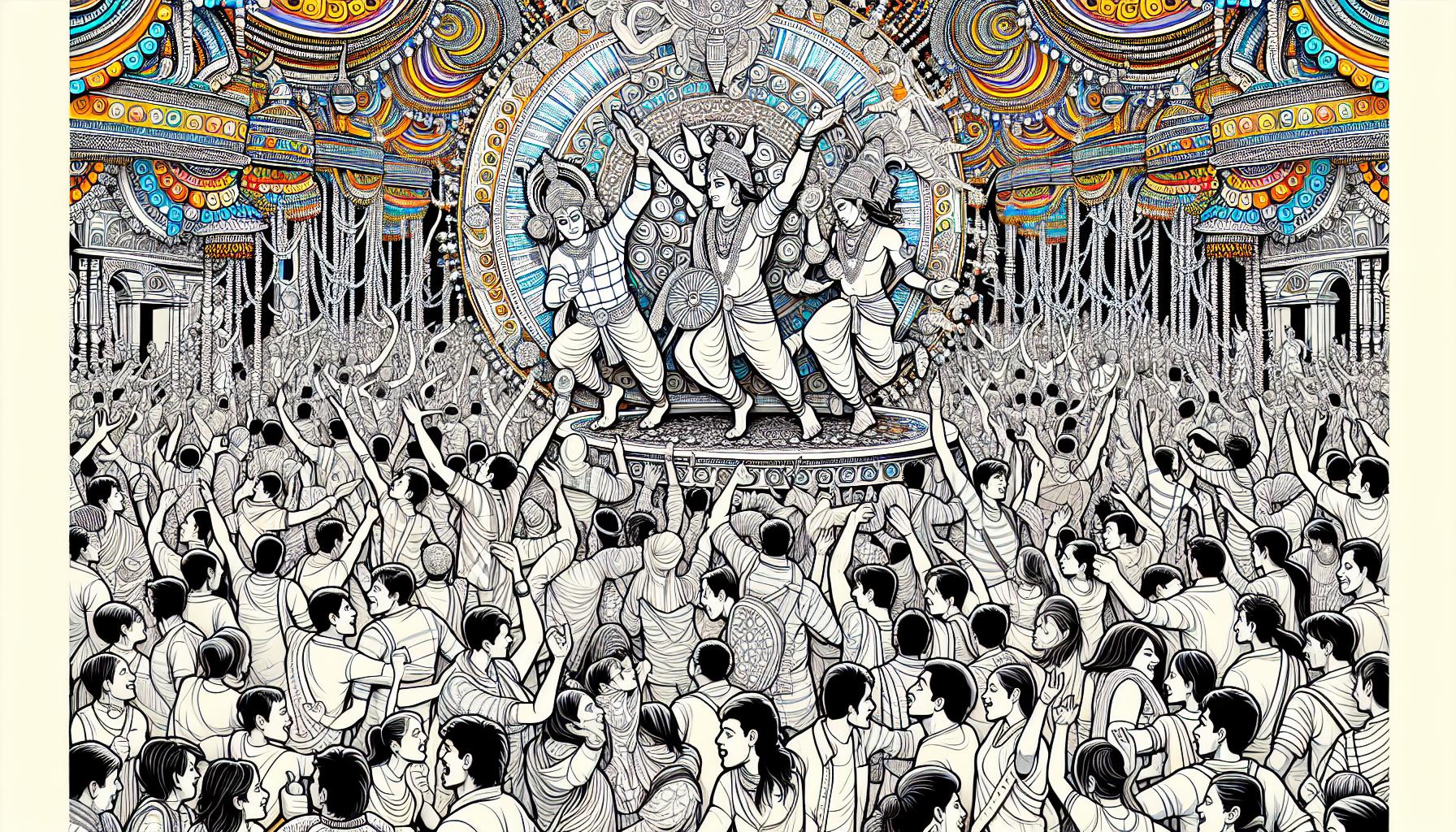
Vishnu’s avatars have left an indelible mark on Hindu culture and history. These mythological figures influence various cultural practices and historical developments.
Influence On Hindu Festivals And Rituals
Vishnu’s avatars play a crucial role in many Hindu festivals and rituals. The festival of Rama Navami, celebrating Lord Rama’s birth, attracts millions annually. Similarly, Janmashtami is dedicated to Krishna’s birth and involves fasting, singing, and dancing. Vishnu’s avatars are also invoked during rituals like Satyanarayana Puja to seek blessings and protection.
Depictions In Art And Literature
Artists and writers have depicted Vishnu’s avatars across various forms. The ancient temples of India house intricate carvings showing these avatars in action. For instance, the Elephanta Caves feature sculptures of several avatars. Classical Indian literature, like the Puranas, extensively narrates the exploits of these divine figures. Additionally, modern literature and art continue to draw inspiration, ensuring their stories remain alive in contemporary times.
Comparative Mythology
Comparative mythology highlights shared themes and characteristics across different cultures that can be applied to Vishnu’s avatars. This analysis can reveal deeper insights into the universal aspects of mythology.
Similarities With Other Mythological Figures
Vishnu’s avatars display notable similarities with figures from other mythologies. For instance:
- Matsya (The Fish Avatar): Matsya resembles the Sumerian and Babylonian fish-god Oannes, who also appeared to save humanity.
- Kurma (The Tortoise Avatar): Kurma parallels the World-Turtle found in Chinese and Native American mythologies, symbolizing the supportive nature of the cosmos.
- Narasimha (The Man-Lion Avatar): Narasimha shares traits with the Egyptian god Sekhmet, a lioness deity known for her protective and destructive qualities.
- Krishna: Krishna’s mischievous and heroic traits are similar to the Greek god Hermes, both embodying playful and guiding spirits.
These examples illustrate how Vishnu’s avatars align with other cultural deities and mythological figures, emphasizing the universality of certain mythological themes.
Contrasting Interpretations And Regional Variations
Regional variations create differing interpretations of Vishnu‘s avatars. In South India, for example, Vishnu is often worshipped as Krishna and his adventures from the Mahabharata and Bhagavata Purana are central. Contrastingly, North India places significant emphasis on Rama, focusing on the epic Ramayana.
Additionally, different sects within Hinduism highlight various avatars. The Vaishnavites, adherents of the Vaishnavism tradition, prominently celebrate all ten Dashavatara, while other sects might focus on fewer avatars.
This diversity showcases the adaptability and rich cultural tapestry within Hinduism, offering unique perspectives on Vishnu’s mythological roles across regions and communities.
Conclusion
Vishnu’s avatars offer a profound glimpse into the essence of Hindu cosmology and philosophy. Each avatar, from Matsya to Kalki, symbolizes a unique aspect of the eternal struggle between good and evil, reflecting Vishnu’s role in preserving cosmic order. The cultural and historical significance of these avatars is immense, influencing Hindu practices, traditions, and rituals across regions.
By examining comparative mythology, we see fascinating parallels between Vishnu’s avatars and figures from other mythologies, showcasing universal themes in human storytelling. The regional variations in the worship of these avatars highlight the diversity within Hinduism, enriching its cultural tapestry.
Understanding Vishnu’s avatars deepens our appreciation for their symbolic meanings and their enduring impact on Hindu culture and spirituality.
Sources & further reading
These themes are explored in greater depth across the following authoritative resources:
- Encyclopaedia Britannica, Hindu Mythology
- Internet Sacred Text Archive, Hinduism
- Mythopedia, Hindu Mythology
- Harvard Pluralism Project, Hindu Tradition
- Wendy Doniger, The Hindus: An Alternative History (Penguin, 2009), ISBN 978-0143116691
External resources for further reading. Apam Napat is not affiliated with these publishers; citation does not imply endorsement.
Based on the classical texts of Hindu mythology, see our sources.