
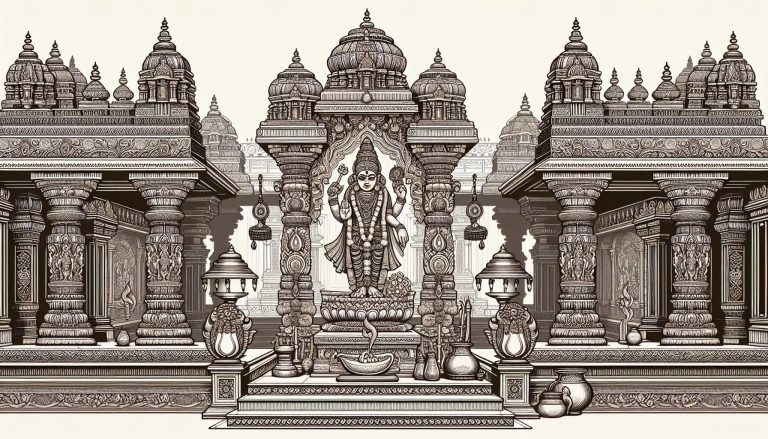
Understanding Brahman can seem daunting, but it’s a journey worth taking. By exploring its various interpretations and significance, we can gain a deeper appreciation of its role in shaping spiritual and philosophical thought. Whether you’re a seasoned scholar or just curious, unraveling the mystery of Brahman offers a fascinating glimpse into the heart of Hinduism.
Understanding Brahman
Brahman stands as a cornerstone in Hindu philosophy, embodying the ultimate reality that transcends both the physical and spiritual realms. It’s derived from the Sanskrit root “bṛh,” meaning “to swell, expand, grow, or enlarge,” indicating its vast and all-encompassing nature. This concept represents the unchanging foundation of the universe amidst the transient and illusory nature of the world, known as maya.
In Hindu thought, Brahman isn’t limited to a singular deity but reflects a pantheistic view where all existence is seen as a manifestation of this ultimate reality. It provides a canvas for the entire cosmos, presenting both the immanent and transcendent aspects of divine reality. Hindu scriptures describe Brahman as the supreme self, an essence that remains constant even though the transformations in the observable world.
Brahman, though distinct from the many deities worshipped, can be considered the highest principle, the substratum in which all phenomena appear. Unlike a personal god with attributes and forms, Brahman is formless, infinite, and eternal. It goes beyond human comprehension, making it both a profound and elusive subject of study for those seeking deeper spiritual understanding.
By grasping Brahman’s nature, one gains insight into the interconnectedness of all things and the underlying truth of existence. This try isn’t just scholarly but also deeply spiritual, offering paths to enlightenment and self-realization. In recognizing Brahman, I explore the core of Hindu belief, opening doors to a broader interpretation of life and the universe.
Historical Context

Brahmanism, or the Vedic religion, emerged from the Late Vedic Period (c. 1100-500 BCE). It took shape in the Indus Valley Civilization after the Indo-Aryan Migration (c. 2000-1500 BCE).
Vedic Roots
The Vedic Samhitas, the oldest layer of the Vedas, reference Brahman in hundreds of hymns. These hymns explore four primary themes: as the Word or verses, as Knowledge embodied in the Creator Principle, as Creation itself, and as a Corpus of traditions. The Vedas describe Brahman as the “creative principle realized in the whole world.”
Upanishadic Evolution
The Upanishads, integral parts of the Vedas, further develop the Brahman concept. They dive deeper into the spiritual and philosophical nuances, portraying Brahman as the ultimate reality that underlies and transcends the physical world. By meditating on Brahman, practitioners seek to understand the interconnectedness of all things and the fundamental truths of existence.
Philosophical Interpretations
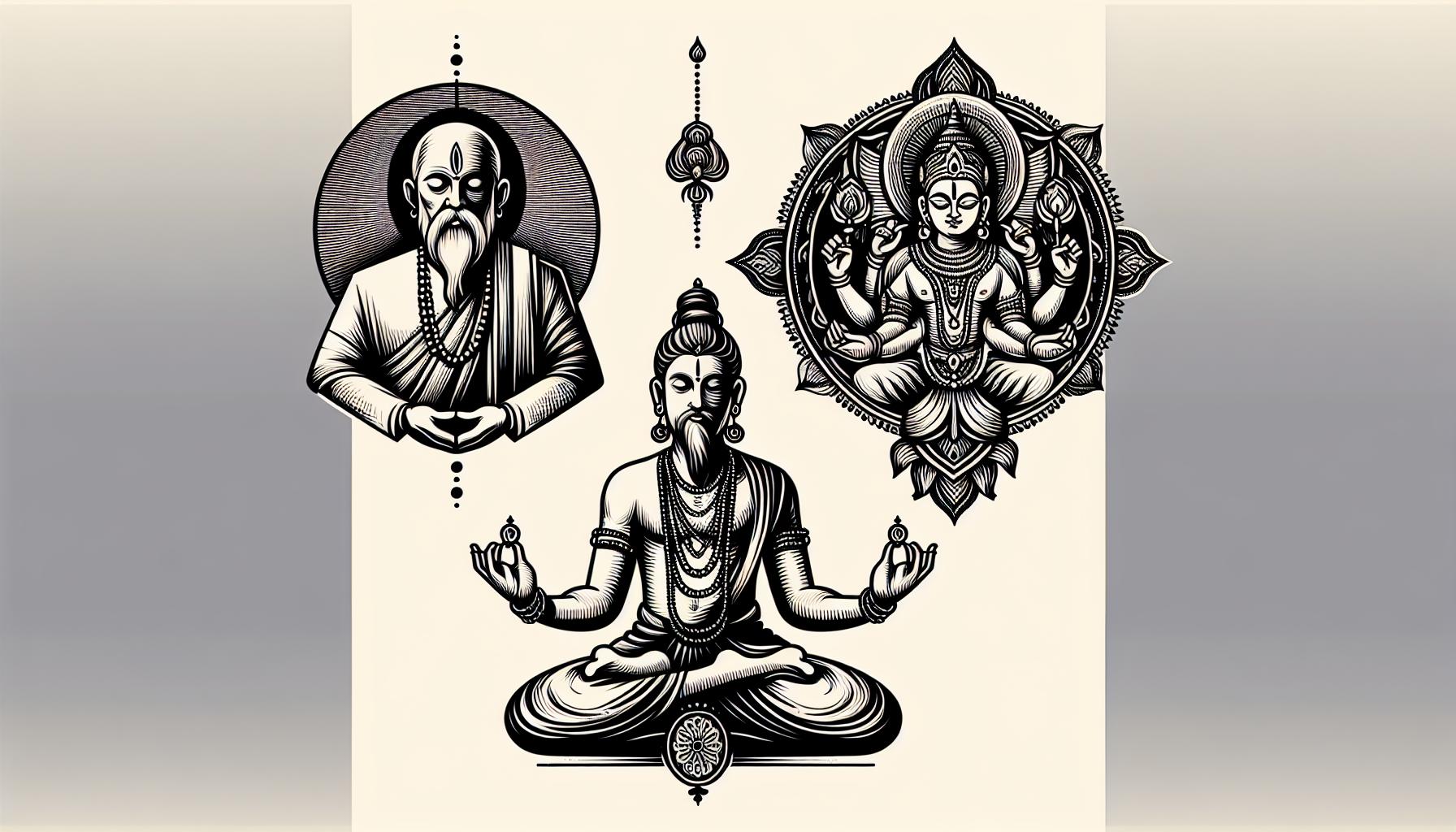
Advaita Vedanta
Advaita Vedanta portrays Brahman as the true Self, pure consciousness, and the only Reality. It emphasizes non-dualism, asserting that the individual self (jiva) and the transcendental self (Atman – The Soul) are identical with Brahman. According to this philosophy, the world lacks separate existence from Brahman, affirming unity and the illusion of duality.
Vishishtadvaita Vedanta
Vishishtadvaita Vedanta recognizes Brahman as the supreme reality but allows for a qualified non-dualism. It suggests that Brahman manifests in a personal form as Vishnu – The Protector, maintaining the world and individual souls as real, though dependent on Brahman. This interpretation emphasizes a unity that includes differentiation, asserting that the ultimate reality encompasses distinct entities within it.
Dvaita Vedanta
Dvaita Vedanta posits a dualistic view where Brahman and individual souls are distinct. It identifies Brahman as a personal, supreme deity, such as Vishnu, separate from the universe and souls. This philosophy stresses the eternal difference between Brahman and individual selves, promoting the idea of dual reality rather than unity.
Cultural Significance
Brahman holds immense cultural significance within Hinduism, shaping core philosophical, spiritual, and cultural practices. It’s depicted in numerous sacred texts and remains central to Hindu thought.
Influence on Hindu Practices
Brahman influences many Hindu rituals and practices aimed at realizing this ultimate reality. Meditation and yoga, for example, are spiritual disciplines that help individuals connect with Brahman. Temples serve as physical spaces dedicated to the worship and contemplation of this universal principle. The daily practice of chanting mantras, drawn from the Vedas, seeks to align the practitioner with the essence of Brahman.
Representation in Art and Literature
Brahman finds rich expression in Hindu art and literature. In ancient temples, intricate sculptures and carvings depict various attributes and symbols associated with Brahman. Classical Indian literature, particularly texts like the Upanishads and the Bhagavad Gita, investigate deep into discussions about Brahman’s nature and significance. The concept of Brahman also influences modern works, including contemporary Indian poetry and novels, that explore themes of spirituality and the nature of existence.
Brahman across these cultural dimensions continues to inspire and guide those seeking deeper understanding within the Hindu tradition.
Modern Perspectives
Modern interpretations of Brahman vary across different philosophical schools, each offering unique insights into its nature and significance.
Academic Views
Academics explore Brahman’s role in Hindu metaphysics, ontology, axiology, teleology, and soteriology. The Advaita Vedanta school, led by Adi Shankara, posits Brahman as the only ultimate reality, distinct from the phenomenal world. This nondualistic perspective suggests that Brahman transcends all distinctions, including those between self and universe. The Bhedabheda school, conversely, views Brahman as simultaneously identical and different from the world. This dual-aspect doctrine signifies that while Brahman is present in the world, it also remains beyond it.
In contrast, the Vishishtadvaita school associates Brahman with a personal deity, Vishnu, asserting that while Brahman is the ultimate reality, it possesses attributes and form. This perspective integrates the concept of a personal god into the understanding of Brahman. The Dvaita school further distinguishes Brahman from the world, emphasizing their ontological separateness. This dualistic approach maintains that Brahman and individual souls exist as distinct entities.
Contemporary Relevance
Brahman’s concept continues to shape modern Hindu practices and thought. Its influence pervades spiritual practices like meditation and yoga, guiding individuals towards self-realization and inner peace. Those practices aim to connect practitioners with the infinite and eternal nature of Brahman.
Temple worship across India often reflects Brahman through rituals and ceremonies venerating deities considered manifestations of the ultimate reality. Artistic and literary works, from classical texts to contemporary interpretations, frequently depict themes derived from Brahman’s philosophy. This ongoing cultural influence demonstrates Brahman’s enduring significance in Hinduism, continuously inspiring new generations seeking deeper spiritual understanding.
Conclusion
Exploring Brahman reveals its profound significance in Hindu philosophy and spirituality. From ancient texts to modern interpretations Brahman continues to shape the metaphysical world. Its influence extends beyond philosophical discourse into daily spiritual practices and cultural expressions. Understanding Brahman offers a deeper appreciation of Hinduism’s rich and diverse traditions. This journey into the concept of Brahman not only enriches our knowledge but also connects us to the timeless wisdom embedded in Hindu thought.
Sources & further reading
These themes are explored in greater depth across the following authoritative resources:
- Stanford Encyclopedia of Philosophy, Hindu Philosophy
- Britannica, Moksha
- Britannica, Brahman
- Internet Sacred Text Archive, Upanishads
- Sarvepalli Radhakrishnan, Indian Philosophy (2 vols., Oxford University Press, 1923)
External resources for further reading. Apam Napat is not affiliated with these publishers; citation does not imply endorsement.
Frequently asked questions
What is Brahman in Hindu philosophy?
Is Brahman the same as a personal god?
What is the historical origin of the concept of Brahman?
How does Advaita Vedanta describe Brahman?
What does Brahman mean in Upanishadic thought?
Based on the classical texts of Hindu mythology, see our sources.