
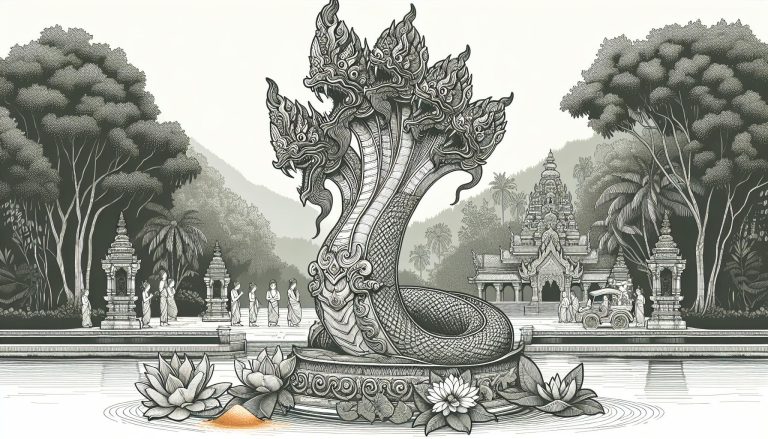
What makes naga so captivating is their dual nature—they can be both benevolent and malevolent, embodying the fine line between good and evil. In some tales, they bring rain to nourish the earth; in others, they unleash storms and floods. This duality makes them endlessly intriguing and a rich subject for exploration. So, let’s jump into the world of naga and uncover the secrets of these divine serpents.
Origins Of Naga Divine Creatures
Naga divine creatures find their roots in ancient Hindu and Buddhist texts. Originating from the Sanskrit word “naga,” which means serpent, these beings are depicted as semi-divine. In Hindu mythology, they reside in the subterranean area known as Patala, guarding treasures and sacred places.
In Buddhist traditions, nagas are seen as protectors of the Buddha and his teachings. They appear in various Jataka tales and are often depicted wrapping around deities. The blend of Hindu and Buddhist narratives shows their significance in both religions.
Historically, nagas were revered in Southeast Asian cultures, with evidence of naga worship found in Cambodia, Thailand and Indonesia. Temples and monuments often feature naga sculptures, underscoring their spiritual importance.
The mythology combines elements of protection, wisdom, and mystery, making nagas both feared and revered across different cultures and eras.
Mythological Significance

The naga divine creatures hold immense mythological significance in both Hindu and Buddhist traditions. These serpentine beings exhibit distinct roles that symbolize protection, wisdom, and mystery.
Roles In Hindu Mythology
In Hindu mythology, nagas inhabit the underground area of Patala. They serve as guardians of treasures and possess vast knowledge of the earth’s secrets. Key figures like Vasuki – The King of Serpents, depicted as the king of serpents, play pivotal roles in mythological stories. For example, Vasuki coils around Mount Mandara during the churning of the ocean (Samudra Manthan), ensuring the balance of the mountain.
Nagas also form ties with prominent deities. Shesha, another significant naga, functions as the resting couch for Lord Vishnu – The Protector. This demonstrates the nagas’ importance in sustaining cosmic order. Nagas are revered in sacred texts like the Mahabharata – The Great Epic, where their lineage intersects with human characters, adding layers to their complex narratives.
Roles In Buddhist Mythology
In Buddhist mythology, nagas act as protectors of the Buddha and his teachings. They often appear in Jataka tales, where they embody wisdom and benevolence. A notable instance is the story of Mucalinda, the naga king who shielded Buddha from a storm during his meditation, symbolizing the protection of enlightenment.
Nagas in Buddhist lore also represent the sacred connection between water and spiritual purity. They guard underwater treasures and dispel natural disasters, showcasing their role in maintaining harmony. Statues and carvings of nagas adorn Buddhist temples across Southeast Asia, emphasizing their cultural and spiritual relevance.
This interplay between Hindu and Buddhist narratives enriches the understanding of naga divine creatures, reinforcing their multifaceted mythological significance.
Iconography And Symbolism
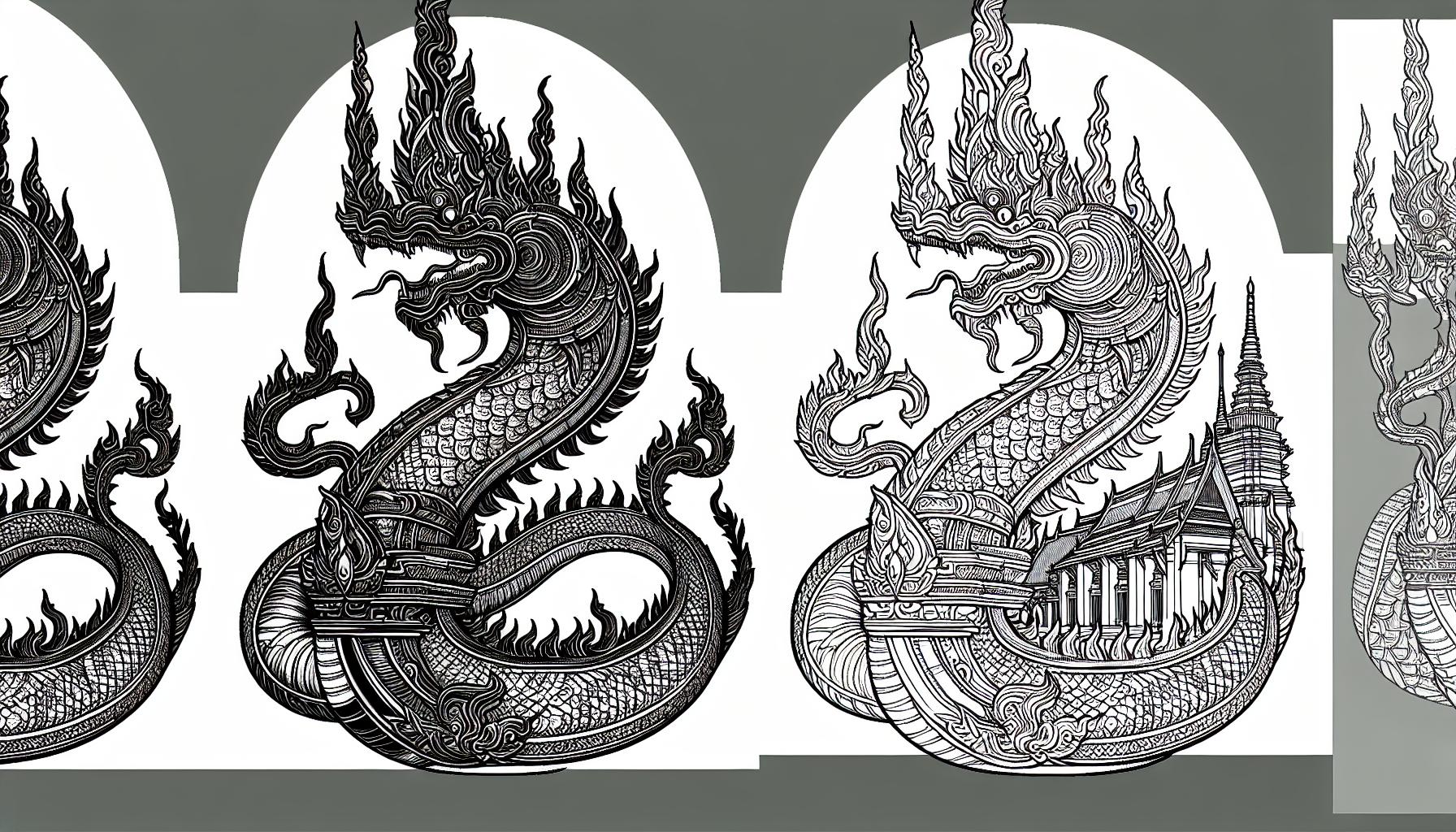
Nagas hold significant cultural and spiritual symbolism in Hindu and Buddhist traditions. Their depictions and meanings vary, reflecting their rich mythological narratives.
Physical Depictions
Nagas appear in various forms, often depicted as serpents or a combination of human and serpent. In Hindu art, nagas sometimes have human upper bodies with serpent tails. Vasuki, a prominent naga, coils around Lord Shiva’s neck as a symbol of power. Buddhist iconography includes nagas like Mucalinda, often shown with multiple hoods protecting the Buddha. Southeast Asian temples feature intricate naga sculptures, integrating scales and fangs, embodying the serpent’s fierce and protective nature.
Symbolic Meanings
Nagas symbolize protection and wisdom in Hindu and Buddhist traditions. They guard treasures and sacred places, reflecting their role as protectors. In Hinduism, nagas like Shesha support cosmic order, coiled beneath Lord Vishnu. In Buddhism, nagas are spiritual protectors, shielding sacred texts and the Buddha. Water, a crucial element associated with nagas, denotes spiritual purity and life-giving forces. These symbols combined underscore the nagas’ divine nature and their significant roles in mythological narratives.
Cultural Impact
Nagas have heavily influenced various cultural aspects, particularly in art and literature, as well as modern media representations.
Influence In Art And Literature
Nagas appear prominently in temple architecture across Southeast Asia, including Angkor Wat and the Grand Palace in Bangkok. Examples include intricately carved stone guardians and sprawling frescoes. Artists often depict them with human torsos and serpent tails, emphasizing their semi-divine nature.
In literature, texts like the Mahabharata and the Puranas explore naga lore extensively. In the Ramayana – Epic of Hinduism, for instance, Vasuki and Shesha play critical roles. Buddhist Jataka tales also feature nagas in moral and spiritual contexts, illustrating their multifaceted influence.
Naga Within Modern Media
Modern media continue to portray nagas, embedding them into contemporary narratives. Video games like “Final Fantasy” and “Dungeons & Dragons” incorporate naga characters, showing their combat prowess and ancient wisdom.
Also, films and series such as “Harry Potter” and “The Serpent’s Shadow” introduce Western audiences to these mythical beings, blending traditional aspects with modern storytelling techniques. This cross-cultural adaptation highlights nagas’ enduring appeal and versatility.
Notable Legends And Stories
Nagas feature prominently in various myths and legends across different cultures. Many stories depict their wisdom, power, and influential roles.
Popular Tales In South Asia
In South Asia, nagas appear in numerous traditional stories. One notable tale is that of Vasuki, the king of serpents, who helped churn the ocean of milk to obtain the nectar of immortality (Amrita) in Hindu mythology. Another significant story is the legend of Shesha, also known as Ananta, who is a massive serpent that forms the bed on which the deity Vishnu rests during cosmic slumber. In the Buddhist tradition, Mucalinda protected the Buddha from the elements by sheltering him under his hood during meditation. These stories emphasize their roles in divine activities and their revered status.
Cross-Cultural Comparisons
Nagas appear in myths beyond South Asia, notable for their adaptation into local lore. In Southeast Asia, particularly Thailand and Cambodia, the naga’s presence blends with local traditions, often symbolizing protection and fertility. For example, the story of the Naga Princess in Khmer folklore speaks of a prince marrying a naga, leading to the founding of the Cambodian people. In Chinese mythology, dragons bear striking similarities to nagas, seen in their serpentine bodies and water associations. These cross-cultural narratives underscore the adaptability and universal appeal of naga lore.
Combining their mythological, cultural, and symbolic roles across various regions, nagas continue to captivate and inspire storytelling around the world.
Worship And Rituals
Naga divine creatures frequently receive reverence and adoration in both Hindu and Buddhist contexts. These practices range from ancient traditions to contemporary rituals.
Traditional Practices
Naga worship has deep roots in traditional Hindu and Buddhist ceremonies. In Hinduism, priests and devotees often conduct pujas (ritual prayers) to honor nagas, especially during Nag Panchami, observed on the fifth day of the bright half of the lunar month of Shravan. This festival sees temples and homes adorned with images and idols of nagas. Devotees offer milk, flowers, and turmeric powder, believing these offerings appease the nagas and garner their protection.
In Buddhist traditions, particularly in regions like Tibet, Thailand, and Cambodia, nagas are seen as guardians of water bodies and temples. Monks and followers create intricate offerings of flowers and rice, often accompanied by chants and prayers that invoke the blessings of these divine serpents. Statues and carvings of nagas frequently adorn temple entrances, symbolizing their role as protectors against evil spirits.
Modern Observances
In contemporary times, naga worship has adapted to suit modern sensibilities while retaining its spiritual essence. Today, digital representations and online rituals augment traditional practices, allowing a global audience to participate. Virtual temples and online puja services provide devotees an accessible way to engage with naga worship from anywhere in the world.
Public ceremonies, parades, and cultural festivals celebrating nagas have become common, particularly in regions with significant Hindu and Buddhist populations. In Thailand, the Naga Fireball Festival along the Mekong River draws thousands of spectators annually, who gather to witness mysterious glowing orbs believed to be manifestations of naga power.
Through these evolving practices, the veneration of naga divine creatures continues, blending ancient rituals with modern advancements.
Conclusion
Nagas continue to captivate and inspire across cultures and eras. Their rich mythology and symbolism remind us of the deep connections between nature spirituality and human culture. From ancient rituals to modern celebrations nagas remain a powerful symbol of protection wisdom and cosmic balance. Whether through traditional pujas or digital offerings their legacy endures showcasing the timeless allure of these divine creatures.
Sources & further reading
These themes are explored in greater depth across the following authoritative resources:
- Britannica, Asura
- Britannica, Naga
- Mythopedia, Hindu Mythology
- Internet Sacred Text Archive, Mahabharata
- Wendy Doniger, Hindu Myths (Penguin Classics, 1975)
External resources for further reading. Apam Napat is not affiliated with these publishers; citation does not imply endorsement.
Frequently asked questions
What does the word naga mean?
Where do nagas live in Hindu mythology?
How are nagas seen in Buddhism?
Are nagas good or evil?
Where are nagas worshipped?
Based on the classical texts of Hindu mythology, see our sources.