
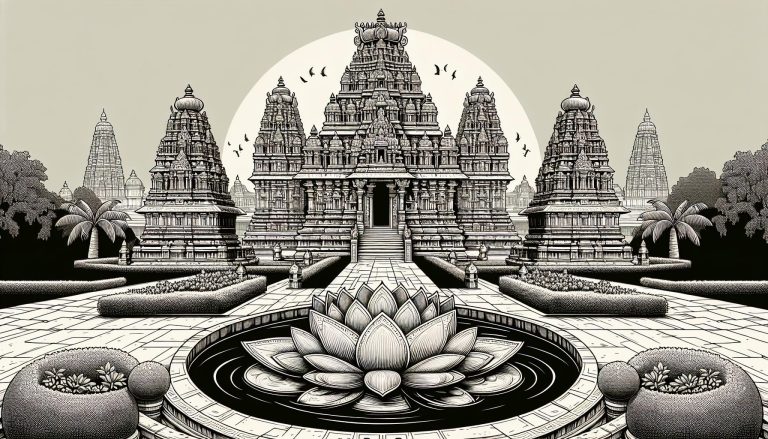
As I delved deeper, I discovered that Indian temple architecture isn’t monolithic. It encompasses a variety of styles influenced by regional, historical, and religious factors. The Dravidian, Nagara, and Vesara styles, among others, each have distinct characteristics that reflect the unique cultural and artistic traditions of their regions. Join me as we explore the intriguing area of Indian temple architecture, where every stone has a story to tell.
Historical Background
Indian temple architecture dates back to at least the 3rd century BCE, with roots deeply embedded in Indian history. Early temple architecture reflects the confluence of different cultural and religious practices. Evidence from archaeological excavations, like the remains at Sanchi and Bharhut, showcases primitive forms of temple design linked to Buddhism and Jainism before evolving to accommodate Hindu traditions.
As the centuries progressed, the Gupta period (4th-6th centuries CE) saw significant advancements in temple construction. The temples from this era, such as the Dashavatara Temple in Deogarh, exemplify early stone temple architecture, characterized by square sanctums and flat-roofed mandapas (halls). Gupta temples laid the foundation for subsequent temple styles, influencing architectural practices across India.
The subsequent phases, from the 7th to the 12th centuries, marked the zenith of Indian temple architecture. Regional kingdoms, including the Cholas, Hoysalas, and Chalukyas in the South, and the Chandellas and Solankis in the North, developed distinct architectural identities. Southern temples like the Brihadeeswarar Temple in Thanjavur and Northern structures like the Khajuraho Group of Monuments showcase elaborate designs, intricate carvings, and towering spires.
Medieval India (13th-18th centuries) witnessed a diversification of styles due to the influence of Islamic architecture, especially in regions like the Deccan and Gujarat. This period experienced the fusion of Hindu temple design with Persian and Central Asian elements, leading to unique architectural hybrids such as the Indo-Islamic architecture seen in the Qutb Shahi and Bahmani Sultanates.
Throughout these epochs, Indian temple architecture evolved in response to religious, political, and cultural shifts, integrating local materials, techniques, and aesthetics. This dynamic history has resulted in a rich and diverse legacy, making Indian temples not just places of worship but also repositories of artistic and historical heritage.
Key Styles of Indian Temple Architecture
Indian temple architecture showcases three primary styles: Nagara, Dravidian, and Vesara. Each reflects unique characteristics shaped by regional influences, historical periods, and cultural contexts.
Nagara Style
The Nagara style, predominant in Northern India, features a distinct curvilinear tower called a “shikhara”. These temples often have multiple projections in the plan and a square sanctum. Examples include the Kandariya Mahadeva Temple in Khajuraho and the Sun Temple in Konark. Ornamentation is elaborate, with intricate carvings depicting deities, mythological scenes, and celestial beings.
Dravidian Style
The Dravidian style, prominent in Southern India, is known for its pyramidal towers called “vimanas”. These temples have an expansive, rectangular compound adorned with high boundary walls. The Brihadeeswarar Temple in Thanjavur and the Meenakshi Temple in Madurai exemplify this style. Sculptures, reliefs, and frescoes of gods, goddesses, and legends embellish these monumental structures.
Vesara Style
The Vesara style, a hybrid of Nagara and Dravidian influences, arose in Central India. Vesara temples typically feature a curvilinear or stepped tower that blends both architectural elements. Renowned examples are the Hoysaleswara Temple in Halebidu and the Chennakesava Temple in Belur. These temples combine the intricate North Indian shikhara with the grand platforms and enclosed courtyards of South India.
Architectural Features
Indian temple architecture showcases distinct and remarkable features. Each element serves a purpose and adds to the grandeur of the temples.
Sanctum (Garbhagriha)
The sanctum, or Garbhagriha, forms the innermost chamber where the main deity resides. It’s often a small, secluded space meant for worshipers to experience a divine presence. The design ensures minimal distractions, focusing on spiritual introspection. Common in both Nagara and Dravidian styles, Garbhagrihas often have ornate doors and are dimly lit to create a mystical atmosphere.
Tower (Shikhara/Vimana)
The Shikhara in Northern India and Vimana in Southern India form the towering structures above the Garbhagriha. Shikharas are often curvilinear with intricate carvings, while Vimanas are pyramidal with tiered levels. These towers symbolize the connection between earth and the divine. The height and grandeur of these structures reflect the temple’s prominence and the devotion of its patrons.
Mandapa
Mandapas are pillared halls or pavilions used for public rituals and gatherings. These halls vary in number and purpose, ranging from one to several, depending on the temple’s layout. They often feature elaborate carvings depicting scenes from mythology and daily life. The spacious design facilitates congregation and offers a place for various ceremonies and performances.
Gopuram
Gopurams are monumental entrance towers common in Dravidian temples. They are adorned with intricate sculptures and serve as gateways to the temple complex. Typically, a temple may have multiple Gopurams, each providing access from different directions. These structures not only indicate the grandeur of the temple but also serve as landmarks visible from afar.
These architectural features together create an awe-inspiring experience, reflecting India’s rich cultural and spiritual heritage.
Examples of Iconic Temples
Indian temple architecture is best appreciated through its most iconic examples, which showcase distinctive styles and intricate designs.
Khajuraho Temples
Located in Madhya Pradesh, the Khajuraho Temples (built between 950 and 1050 CE) are a UNESCO World Heritage Site. They exemplify Nagara-style architecture with their intricately carved exteriors featuring erotic sculptures and deities. Of the original 85 temples, only 20 remain, demonstrating a rich blend of Hindu and Jain traditions. The Kandariya Mahadeva Temple stands out with its grand spire rising dramatically to 30.5 meters.
Brihadeeswarar Temple
The Brihadeeswarar Temple, located in Thanjavur, Tamil Nadu, showcases Dravidian architecture. Built in 1010 CE by Raja Raja Chola I, it’s part of the “Great Living Chola Temples.” The temple’s Vimana (tower) rises to 66 meters, topped by a single granite block weighing roughly 80 tons. The temple’s murals and sculptures depict various deities, battles, and daily life, reflecting the artistic prowess of the Chola dynasty.
Sun Temple, Konark
The Sun Temple in Konark, Odisha, known as the “Black Pagoda,” illustrates Kalinga architecture. Built in the 13th century by King Narasimhadeva I, the temple resembles a colossal chariot with intricately carved wheels, walls, and pillars. The main sanctum, dedicated to the Sun God Surya – The Sun, originally stood 70 meters tall. The temple’s exquisite carvings narrate mythological stories, royal processions, and everyday life, offering insights into the region’s cultural heritage.
Influence on Modern Architecture
Indian temple architecture has made a lasting impact on contemporary design. Architects often draw inspiration from its intricate carvings, symbolic iconography, and perfected use of symmetry. Structures like the Lotus Temple in Delhi incorporate traditional elements such as the lotus flower motif, reflecting ancient design principles in a modern context.
Designers world over have adopted these features. For example, the use of mandala-like layouts can be seen in notable public spaces. Also, the employment of decorative columns, detailed facades, and open courtyards highlights the fusion of historic techniques with modern needs.
The emphasis on verticality and tiered structures from Indian temples has influenced the construction of skyscrapers and tall buildings. The Petronas Towers in Kuala Lumpur borrow architectural elements echoing the towering Gopurams found in South Indian temples.
Eco-friendly design principles from ancient times are also evident today. Passive cooling techniques utilized in temples, where thick stone walls and strategic layouts mitigate heat, can be seen in contemporary green architecture. This practice demonstrates the sustainability aspect embedded in Indian temple architecture, still relevant and functional in today’s environmental concerns.
Modern educational institutions and museums have also integrated Indian temple design. Venues like the Vikram Sarabhai Library at IIM Ahmedabad showcase how traditional craftsmanship can coexist with state-of-the-art facilities. This blending often creates spaces that are both functional and spiritually engaging.
Summarizing, the enduring elements of Indian temple architecture, such as symbolic designs, structural innovations, and sustainable practices, continue to shape contemporary architectural endeavors.
Conclusion
Indian temple architecture stands as a testament to the country’s rich cultural and spiritual heritage. From the intricacies of ancient designs to the innovative applications in modern structures, its influence is undeniable. Contemporary architects continue to draw from these timeless techniques blending them seamlessly into today’s architectural world. This ongoing fusion not only preserves traditional craftsmanship but also promotes sustainable and eco-friendly practices. By integrating symbolic and spiritual elements into modern design Indian temple architecture remains a vibrant and relevant force in the world of architecture.
Sources & further reading
These themes are explored in greater depth across the following authoritative resources:
- Britannica, Hindu Temple Architecture
- Met Museum, Hinduism in the Arts
- Britannica, Iconography
- Stella Kramrisch, The Hindu Temple (Motilal Banarsidass, 1946)
- Heinrich Zimmer, Myths and Symbols in Indian Art and Civilization (Princeton University Press, 1946)
External resources for further reading. Apam Napat is not affiliated with these publishers; citation does not imply endorsement.
Frequently asked questions
How old is Indian temple architecture?
What are the main styles of Indian temple architecture?
When did Indian temple architecture flourish?
Where are the oldest Indian temples found?
Based on the classical texts of Hindu mythology, see our sources.