
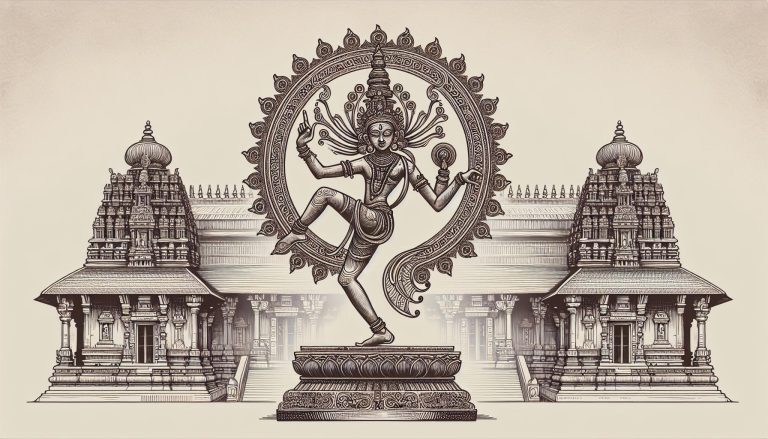
I’ve always been captivated by how these divine images aren’t just art—they’re a visual language that communicates deep spiritual truths. By understanding the iconography, we can gain insight into the values, myths, and traditions that have shaped Hinduism over millennia. Let’s investigate into this rich visual tradition and explore the significance behind these sacred symbols.
Understanding Hindu Divine Iconography
Hindu divine iconography forms an essential aspect of India’s cultural and religious heritage. Each image, symbol, and deity embodies specific spiritual meanings and historical narratives. Deities in Hinduism often feature multiple arms, heads, and unique attributes—each symbolizing particular powers and virtues.
Symbols in Hindu Iconography
Symbols play a crucial role in conveying spiritual messages. The lotus flower, frequently depicted, represents purity and enlightenment. The conch shell, held by deities like Vishnu, symbolizes the sound of creation and divine truth. Maha Vishnu’s discuss signifies the mind and its capacity to conquer all evils.
Deities and Their Attributes
Hindu deities possess distinct attributes that signify their roles and domains. For example, Lord Shiva often carries a trident, representing the three fundamental forces of creation, preservation, and destruction. Goddess Lakshmi, a symbol of prosperity, holds coins and sits on a blooming lotus, indicating abundance and purity. Each deity’s iconography is carefully constructed to reflect their spiritual significance.
Intricate Designs
Intricate designs in Hindu iconography are more than decorative; they encode layers of meaning. Mandalas, often seen in temple art and religious ceremonies, represent the universe’s structure and guide meditation. Kolam patterns, created with rice flour, signify prosperity and welcome divine presence into homes.
Colors and Their Meanings
Colors in divine iconography have specific meanings. Blue, often associated with deities like Krishna – An Incarnation of Vishnu, represents divine energy and endlessness. White stands for purity and truth, while red signifies power and fertility. These colors, used thoughtfully in depictions, enhance the narrative and emotional impact of the iconography.
Ancient Wisdom Embedded
Hindu iconography integrates ancient wisdom into visually expressive forms. Scenes from epics like the Mahabharata – The Great Epic and Ramayana – Epic of Hinduism are richly depicted to convey moral lessons and spiritual ideals. This visual storytelling preserves and transmits cultural values across generations.
Integrating symbols, deities, and designs, Hindu divine iconography creates a comprehensive visual language. This detailed representation allows deeper insight into the values, myths, and traditions of Hinduism.
Historical Evolution
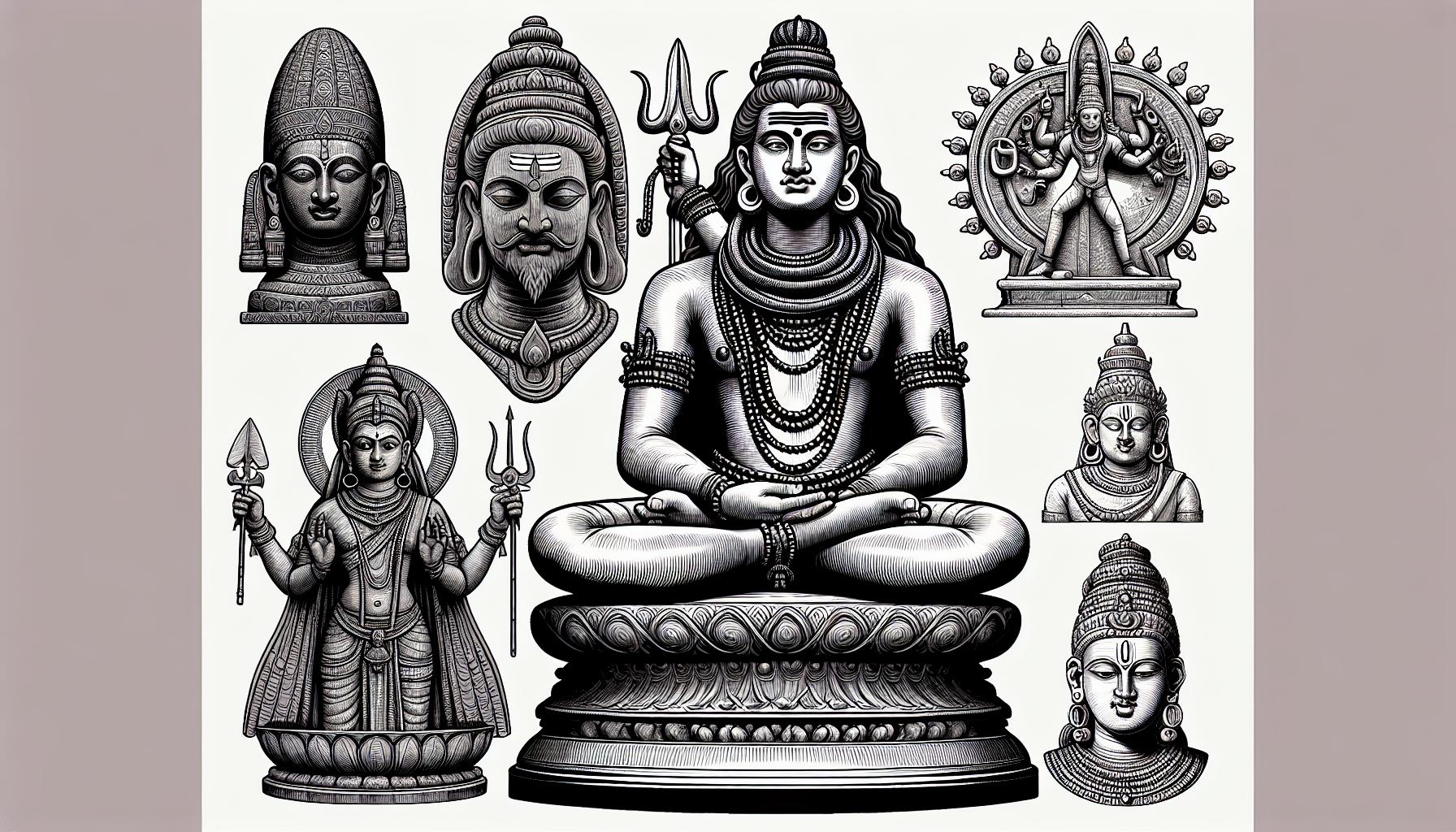
Hindu divine iconography has a rich historical evolution marked by changes in artistic styles, religious practices, and socio-political influences. These shifts have defined the portrayal and interpretation of divine symbols and deities over time.
Ancient Period
In the ancient period, Hindu iconography was deeply connected to Vedic traditions. Artifacts from the Indus Valley Civilization (2500-1500 BCE) showcase some of the earliest depictions of deities. Seals and sculptures from this era depict proto-Shiva figures and fertility goddesses, embodying themes of procreation and cosmic order. Post-Vedic artworks, like those found in the Maurya and Gupta periods, show more defined deities with clearer attributes.
For example, the Mauryan period (322-185 BCE) saw the rise of Yaksha and Yakshi statues—male and female nature spirits embodying fertility and vegetation. The Guptas (4th-6th centuries CE) advanced the portrayal of major deities like Vishnu and Shiva in highly stylized forms, emphasizing specific attributes like Vishnu’s conch and discus or Shiva’s trident and third eye.
Medieval Period
During the medieval period, regional styles flourished in Hindu iconography. The Chola dynasty, ruling Southern India from the 9th to 13th centuries, is noted for its exquisite bronze sculptures. These depict deities with intricate detail, lifelike expressions, and dynamic poses. Chola bronzes of Nataraja (Shiva as the cosmic dancer) exemplify dynamic energy and divine grace.
North India, during the same period, experienced the influence of various dynasties like the Rajputs and Pala-Senas. The Rajput style, marked by bold colors and intricate lines, is evident in their temple carvings depicting deities like Krishna in pastoral settings. The Pala-Sena period (8th-12th centuries) contributed significantly to the Buddhist and Hindu iconography in Bengal with detailed stone and bronze carvings.
Modern Interpretations
In the modern era, Hindu iconography has adapted to contemporary artistic expressions while retaining traditional elements. Artists now merge classical styles with new mediums like print and digital art to make these symbols accessible and relevant to a broader audience. Modern depictions often focus on social themes—like women’s empowerment and environmental consciousness—through the lens of divine figures.
For instance, Raja Ravi Varma (1848-1906) redefined Hindu iconography by combining Western painting techniques with traditional themes. Today’s digital artists continue this legacy using technology to create vibrant illustrations and animations, ensuring that the spiritual messages and cultural heritage of Hindu iconography continue to resonate with future generations.
Major Deities and Their Symbols
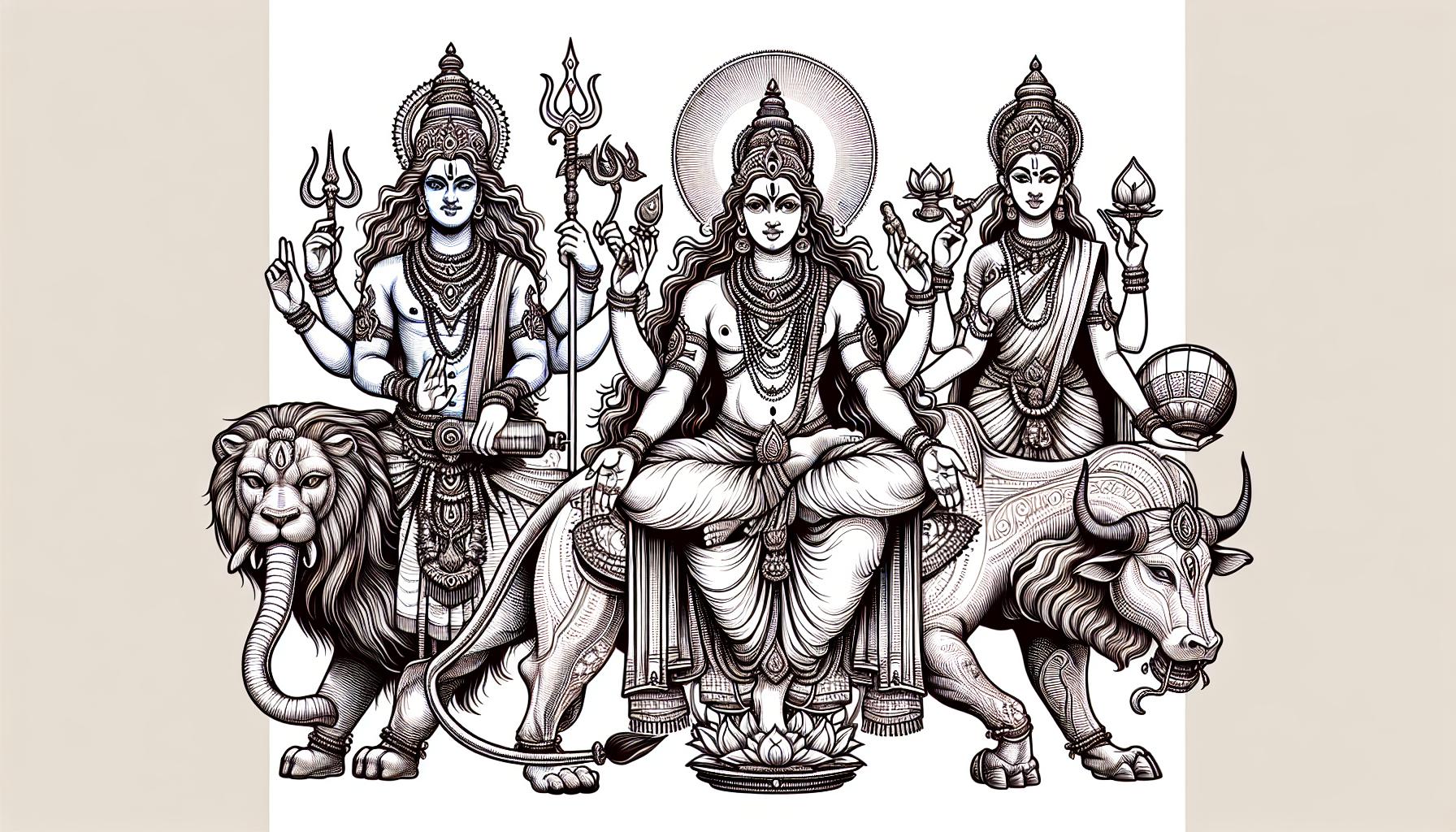
Hindu divine iconography illustrates the depictions and symbols of major deities. Among these deities, Vishnu, Shiva, and Devi stand out with unique symbols signifying their cosmic roles.
Vishnu
Vishnu is often depicted with four arms, holding a conch shell (Shankha), a discus (Chakra), a mace (Gada), and a lotus flower (Padma). The conch shell represents the sound of creation, the discus signifies time, the mace symbolizes strength and protection, and the lotus flower denotes purity and beauty. Vishnu’s blue complexion and eagle mount, Garuda, further emphasize his divine nature.
Shiva
Shiva is identifiable by his trident (Trishula), drum (Damaru), and serpent. The trident represents his control over the three aspects of existence: creation, preservation, and destruction. The drum symbolizes the cosmic sound of creation, while the serpent signifies his power over deadly forces. Shiva also has a third eye on his forehead, indicating his ability to see beyond the ordinary. His mount is the bull Nandi, symbolizing strength and virility.
Devi (Goddess)
Devi or the Goddess manifests in various forms such as Durga, Lakshmi, and Saraswati – The Goddess of Learning and Wisdom. Durga, depicted riding a lion or tiger, holds weapons given by various gods, symbolizing her strength and protection. Lakshmi, the goddess of wealth and prosperity, is shown with gold coins and lotuses, evidencing abundance and purity. Saraswati, the goddess of wisdom, is depicted with a veena (a musical instrument), a book, and a rosary, symbolizing art, knowledge, and spirituality.
This section on the major deities and their symbols provides a glimpse into the rich imagery and profound meanings embedded in Hindu divine iconography.
Common Themes and Motifs
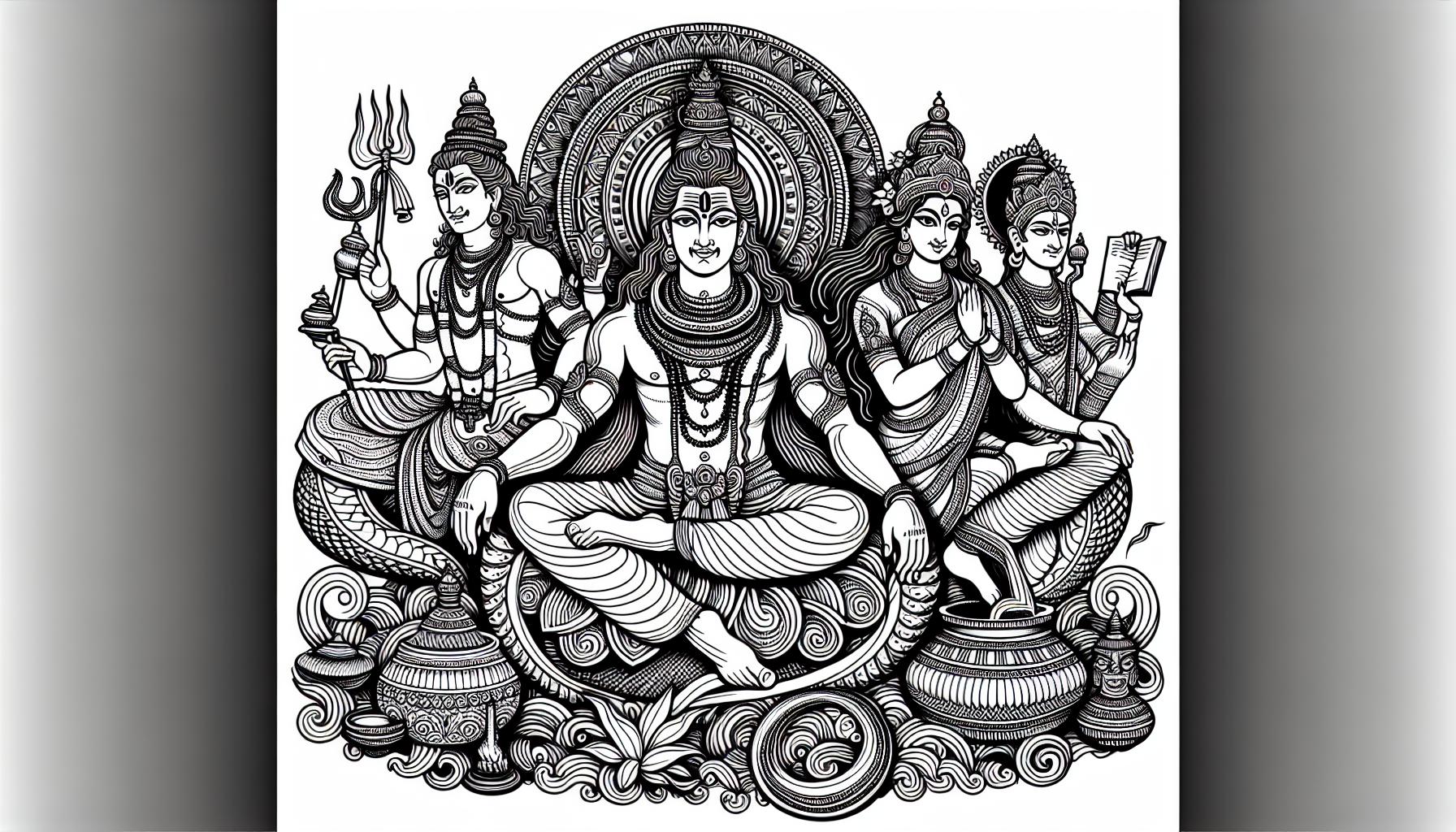
Hindu divine iconography integrates numerous common themes, revealing deeper meanings within religious art. These themes encapsulate cosmic functions, duality, and balance.
Cosmic Functions
Many Hindu deities symbolize cosmic functions, each responsible for maintaining aspects of the universe. For instance, Vishnu preserves and protects, Shiva destroys and regenerates, and Brahma – The Creator creates. Icons often depict Vishnu reclining on the cosmic serpent Shesha or standing with the conch and discus, representing his role in preserving order. Shiva’s iconography includes the dancing Nataraja, symbolizing the cycle of creation and destruction. Brahma usually appears with four faces, signifying his role as the creator overseeing the four directions.
Duality and Balance
Duality and balance play a critical role in Hindu iconography, emphasizing the union of opposites. Many deities embody these principles directly. Parvati – The Consort of Shiva and Shiva, depicted together as Ardhanarishvara, represent the synthesis of masculine and feminine energies. Lakshmi and Vishnu, often seen together, highlight prosperity and preservation. Deities frequently feature dual symbols or attributes, such as Saraswati, who represents both knowledge and the arts, holding a book and a musical instrument. This theme is evident across various forms, stressing that harmony arises from balanced forces.
Art Forms and Mediums
Hindu divine iconography uses a broad range of art forms and mediums to convey its rich spiritual messages. These forms vary from intricate sculptures to vivid paintings and murals, each contributing uniquely to the portrayal of divinity.
Sculptures
Sculptures in Hinduism portray deities with multiple limbs and heads, symbolizing their diverse powers and characteristics. The lotus flower often appears in these sculptures, indicating purity, beauty, fertility, and transcendence. Commonly seen in temples, these sculptures embody the physical manifestation of divinity, allowing devotees to engage in deeper spiritual practices. Bronze sculptures from the Chola dynasty exemplify the high level of craftsmanship achieved during this period.
Paintings and Murals
Hindu temples showcase an array of paintings and murals that depict philosophical and cosmic themes. These artworks provide visual narratives of various deities, mythological events, and celestial functions. Frescoes in South Indian temples are classic examples of mural art, illustrating stories from epics like the Ramayana and Mahabharata. Temple walls often feature detailed paintings that help worshippers understand and connect with the divine stories and principles.
Temple Architecture
Temple architecture plays a crucial role in Hindu divine iconography. Temples themselves are meticulously designed to represent the cosmos, with each element holding symbolic significance. The layout, sculptures, and murals within a temple collectively create a sacred space for worship. Various regional styles—such as the Dravidian in the South and the Nagara in the North—contribute to the rich diversity in temple architecture. Examples like the intricately carved stone temples of Khajuraho and the towering gopurams of South Indian temples demonstrate the iconic architecture found in Hinduism.
Cultural and Religious Significance
Hindu divine iconography holds profound cultural and religious value. It permeates all aspects of Hindu worship, shaping rituals, devotion, and spirituality.
Ritualistic Importance
Rituals in Hinduism often revolve around divine icons. Statues, paintings, and other representations of deities become focus points during religious ceremonies. Devotees bathe, anoint, and offer food to these icons, believing these acts honor the deities. Each ritual action, from lighting lamps to offering flowers, follows a prescribed order enhancing the worship experience.
Influence on Devotional Practices
Icons profoundly influence individual and community devotional practices. Temples house many of these sacred icons, where they serve as the heart of worship activities. During festivals like Diwali and Navratri, specific deities receive elaborate ritual attention, strengthening communal bonds. At home, personal shrines often feature smaller icons, facilitating daily prayers and meditation. Through these practices, divine iconography serves as a bridge connecting devotees with higher spiritual realms.
Conclusion
Hindu divine iconography is a rich world that weaves together history, art, and spirituality. From ancient Vedic roots to modern interpretations, it continues to evolve while maintaining its core essence. The intricate depictions of deities like Vishnu, Shiva, and Devi not only highlight their cosmic roles but also serve as focal points for devotion and ritual. Whether through sculptures, paintings, or temple architecture, these icons create sacred spaces that foster deep spiritual connections. Understanding this iconography offers profound insights into Hinduism’s cultural and religious fabric, enriching our appreciation of its timeless beauty and significance.
Sources & further reading
These themes are explored in greater depth across the following authoritative resources:
- Britannica, Hindu Temple Architecture
- Met Museum, Hinduism in the Arts
- Britannica, Iconography
- Stella Kramrisch, The Hindu Temple (Motilal Banarsidass, 1946)
- Heinrich Zimmer, Myths and Symbols in Indian Art and Civilization (Princeton University Press, 1946)
External resources for further reading. Apam Napat is not affiliated with these publishers; citation does not imply endorsement.
Based on the classical texts of Hindu mythology, see our sources.