

As I delved into the lore, I discovered that nagas aren’t just mythical creatures but spiritual beings with profound meanings. They bridge the earthly and divine realms, often depicted as guardians of treasures and sacred sites. Exploring their stories offers a rich world of cultural beliefs and spiritual insights that continue to resonate today.
Naga Serpent: An Overview
The Naga serpent holds significant importance in various spiritual traditions, especially in Hinduism, Buddhism, and Jainism. This mythical creature, depicted as a half-human, half-cobra being, embodies diverse symbolic meanings, from spiritual growth and transformation to life cycles and fertility.
Origins and Symbolism
The Naga serpent, described as a half-human, half-cobra entity, represents essential elements like water, fertility, and rebirth. In these traditions, the Naga symbolizes spiritual growth, illustrating the cycles of life, death, and rejuvenation.
Hinduism
In Hindu mythology, Nagas are serpent deities linked to Vishnu – The Protector and Shiva. They are depicted as half-human, half-cobra beings. Nagas are said to support the world on their hoods and symbolize spiritual growth and transformation.
Buddhism
In Buddhism, Nagas appear as door guardians or minor deities. The Naga king Muchalinda notably sheltered the Buddha from rain during his meditation, underscoring their role as protectors.
Historical Origins Of The Naga Serpent
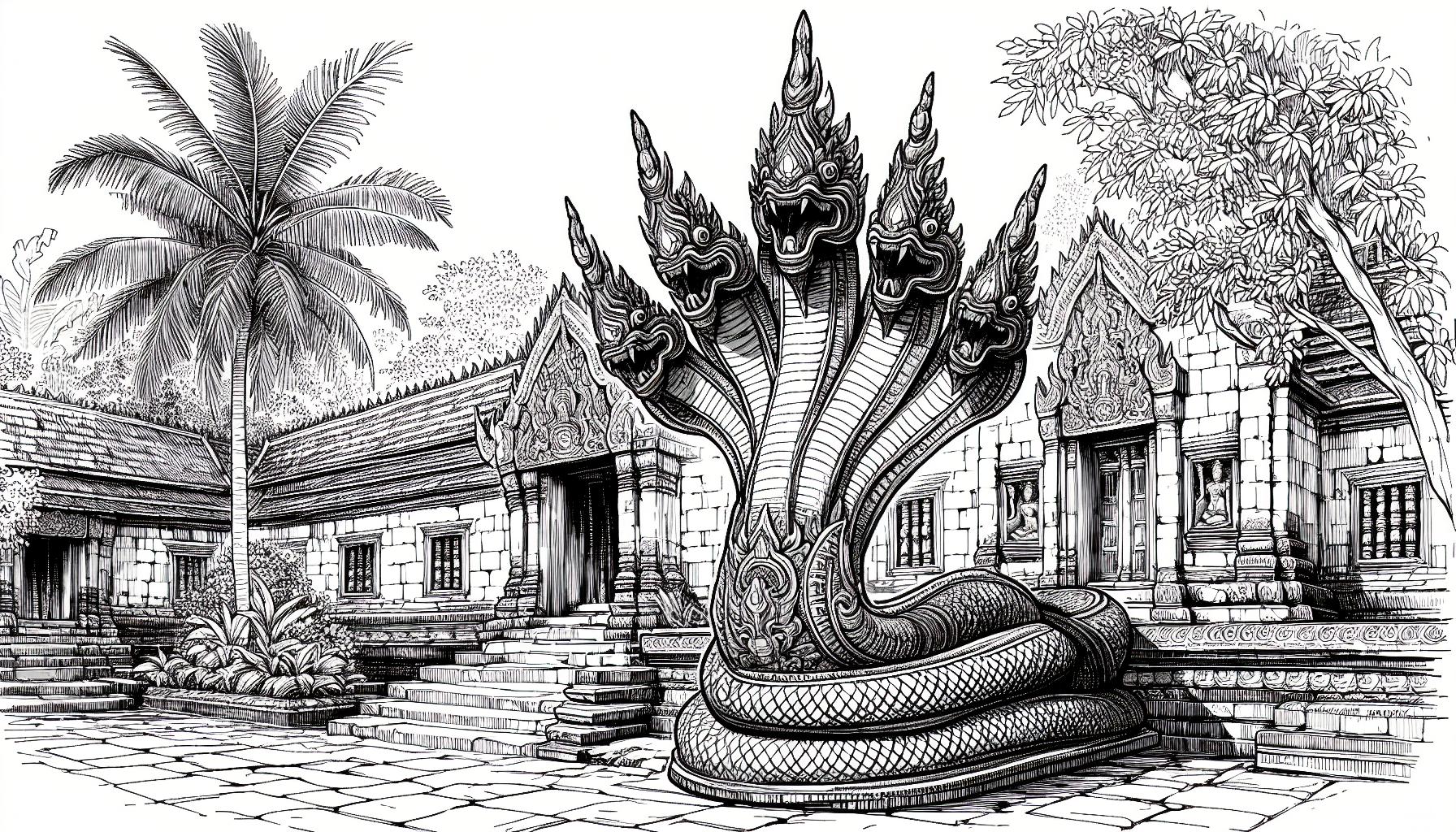
The concept of the naga serpent has deep historical roots, intertwining with various ancient cultures and mythologies. Its presence is notably significant in Hinduism, Buddhism, and Jainism, often symbolizing protection and fertility.
Ancient Texts And Mythology
Ancient texts often reference naga serpents, highlighting their importance. In the Hindu epic, Mahabharata – The Great Epic, nagas are depicted as powerful serpent beings residing in Patala (the netherworld). The Puranas, including the Vishnu Purana and the Bhagavata Purana, describe nagas like Shesha, who supports Vishnu during the cosmic rest.
In Buddhist texts, the naga king Muchalinda famously protected the Buddha from rain during meditation. Jain scriptures also mention nagas, often associating them with sacred rituals and powerful deities.
Cultural Significance
Culturally, the naga serpent represents vital life elements like water and fertility. In Southeast Asia, for example, naga images often adorn temple entrances and fountains, symbolizing guardianship and life-affirming energy. Cambodian and Laotian folklore depict nagas as river spirits controlling the rains and floods, essential for agriculture.
In Hinduism, naga panchami, a festival celebrated in honor of the serpent deities, showcases their cultural impact. Communities offer milk and prayers, seeking protection and blessings. These practices underscore the naga serpent’s enduring spiritual and cultural resonance.
Spiritual Symbolism Of The Naga Serpent
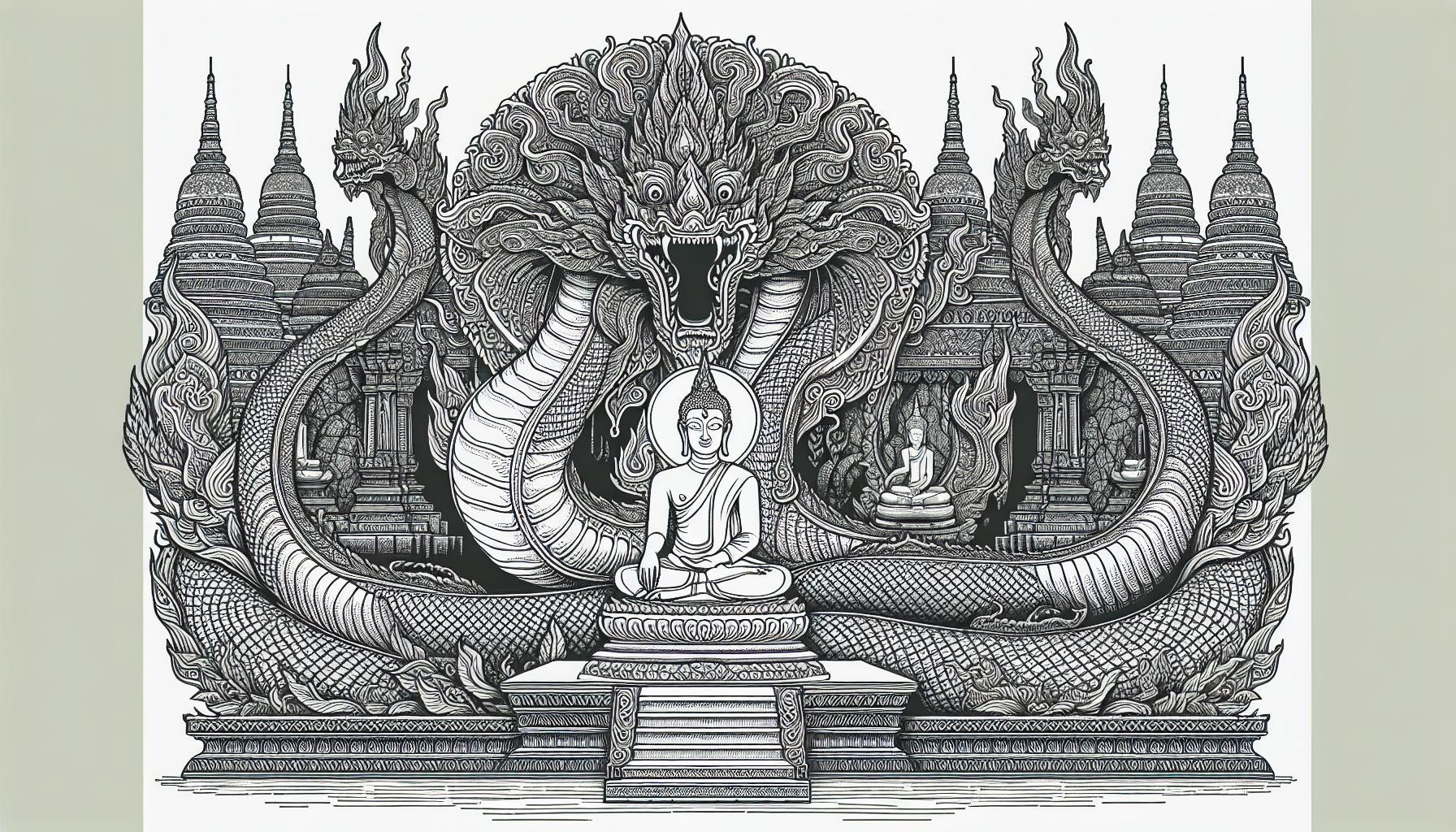
Naga serpents hold rich spiritual symbolism across various traditions. Their representations often depict aspects of guardianship and protection, as well as wisdom and knowledge.
Guardianship And Protection
Naga serpents frequently symbolize guardianship and protection. In Hindu mythology, Shesha, the king of all nagas, supports Vishnu while he rests, symbolizing eternal protection. Temples often feature nagas as protectors, safeguarding sacred spaces from evil.
In Buddhism, nagas symbolize protection against natural elements. The story of Muchalinda, the naga king who sheltered the Buddha from rain during meditation, exemplifies this spiritual guardianship.
Wisdom And Knowledge
Nagas are also revered for their association with wisdom and knowledge. According to Hindu texts, they hold secrets of the universe, connecting earthly and divine truths. Vedic literature highlights their role as possessors of profound wisdom.
In Buddhist traditions, nagas guard sacred teachings. They protect scriptures and impart esoteric knowledge to worthy individuals. This dual role as guardians and wisdom keepers enriches their spiritual significance in various cultural narratives.
Naga Serpent In Modern Spiritual Practices
The naga serpent continues to hold a vital place in modern spiritual traditions. Its influence spans meditation, rituals, healing, and transformation, reflecting its enduring spiritual significance.
Meditation And Rituals
In Buddhist rituals, Naga Kanya is invoked for her protective prowess, particularly in ceremonies linked to water and fertility. Offerings and prayers seek her blessings for bountiful harvests, safeguarding against calamities, and promoting the community’s welfare. Meditation techniques centered around Naga Kanya nurture inner wisdom, compassion, and a deeper affinity with the natural world. Practitioners may visualize her tranquil yet commanding presence, chant mantras, or partake in rituals honoring her attributes.
Healing And Transformation
The serpent symbolism surrounding Naga Kanya carries profound meaning. In healing practices, the naga serpent represents renewal and transformation. Practitioners believe connecting with naga energy fosters physical and emotional healing, facilitating personal growth. Rituals and meditations involving the naga serpent aim to release past traumas and embrace transformative change. For example, visualizing the shedding of the serpent’s skin can symbolize personal rejuvenation and new beginnings.
Incorporating naga serpent symbolism into modern spiritual practices deepens one’s connection to ancient wisdom, highlighting the enduring relevance of these mystical beings.
Regional Perspectives On The Naga Serpent
Exploring the regional perspectives on the naga serpent reveals their significance across various traditions, embodying spiritual elements like protection, fertility, and transformation.
South Asian Traditions
In Hindu mythology, the Naga is a semi-divine being, half human and half cobra. These entities, known for their strength, beauty, and potential danger to humans, reside in an underground kingdom called Naga-loka or Patala-loka, which is filled with palaces and precious gems. They influence both the physical and spiritual realms, often associated with water bodies and fertility.
In Buddhist traditions, Nagas appear as door guardians or minor deities. The Naga king Muchalinda is particularly notable, as he sheltered the Buddha from rain for seven days during a deep meditation session. This protective role underscores their significance in spiritual practice, symbolizing both protection and auspiciousness.
Jainism also reveres Nagas, particularly evident in depictions of the Tirthankara Parshvanatha, who is often shown with a canopy of Naga hoods above his head. This imagery aligns with the Naga’s protective and spiritual attributes, reinforcing their central role in the spiritual realms.
Southeast Asian Traditions
In Thailand, Nagas are intricately linked to the Mekong River and are considered powerful water spirits. They are often depicted with multiple heads, signifying their immense power and protective nature. These depictions emphasize their role as guardians of treasure and symbols of prosperity. Thai culture venerates Nagas not only as mythical beings but as integral parts of their spiritual and daily life, blending folklore and religious beliefs seamlessly.
These examples from South and Southeast Asian traditions highlight the profound spiritual significance of the Naga serpent, showcasing their enduring influence across different cultural landscapes.
Conclusion
Exploring the spiritual significance of the naga serpent reveals a rich world of cultural and religious meanings. From ancient texts to modern practices nagas continue to embody protection fertility and prosperity. Their presence in Hindu Buddhist and Jain traditions underscores their deep-rooted importance. In South Asian and Southeast Asian cultures nagas remain powerful symbols of water and prosperity. As we investigate into these traditions we uncover the timeless reverence for these mystical beings highlighting their enduring spiritual legacy.
Sources & further reading
These themes are explored in greater depth across the following authoritative resources:
- Britannica, Asura
- Britannica, Naga
- Mythopedia, Hindu Mythology
- Internet Sacred Text Archive, Mahabharata
- Wendy Doniger, Hindu Myths (Penguin Classics, 1975)
External resources for further reading. Apam Napat is not affiliated with these publishers; citation does not imply endorsement.
Based on the classical texts of Hindu mythology, see our sources.