
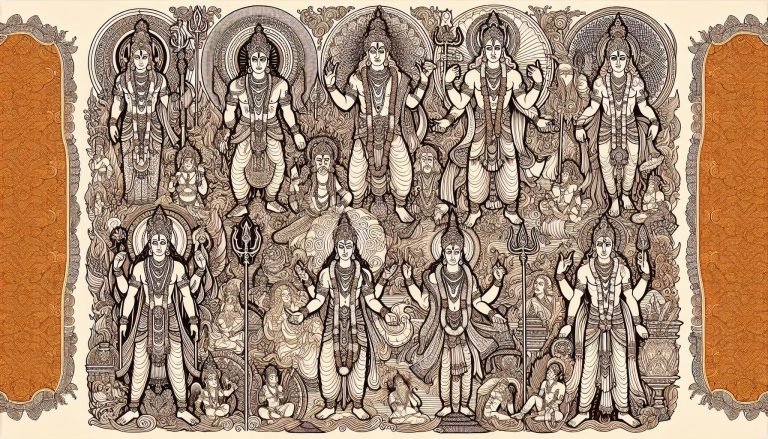
From the fish Matsya saving sacred scriptures to the warrior Parashurama – Rama of the Axe battling tyranny, Vishnu’s avatars aren’t just mythological tales—they’re rich with allegories that resonate with our lives today. Understanding these symbols offers us timeless wisdom and a fresh perspective on navigating our own struggles.
Understanding Vishnu’s Avatars
Vishnu’s avatars are crucial in Hinduism, symbolizing divine intervention to restore cosmic balance. Each avatar represents specific virtues and addresses particular challenges, offering valuable insights for dealing with life’s complexities.
Matsya (Fish)
Matsya, the fish, symbolizes protection and the preservation of life and the universe. This avatar underscores the importance of safeguarding life and the environment in maintaining cosmic order.
Kurma (Tortoise)
Kurma, the tortoise, represents transformation and adaptability. This form teaches the value of resilience and the ability to thrive in various situations by remaining grounded and unwavering.
Varaha (Boar)
Varaha, the boar, embodies strength and courage. By overcoming formidable challenges, this avatar demonstrates the power of bravery and the resolve needed to confront adversity.
Narasimha (Man-Lion)
Narasimha, the man-lion, symbolizes the annihilation of evil and the protection of the virtuous. This fierce form reassures that justice prevails and that good ultimately overcomes malevolent forces.
Vamana (Dwarf)
Vamana, the dwarf, represents humility and the ability to transcend ego. This avatar highlights the strength found in modesty and the significance of humility in achieving great feats.
Parashurama (Rama with the Axe)
Parashurama, wielding an axe, embodies the destruction of evil and restoration of balance. This form emphasizes the need for decisive action in eradicating corruption and reestablishing righteousness.
Symbolism In Dashavatara

Exploring the Dashavatara reveals deep layers of symbolic meaning within each of Vishnu’s incarnations. These avatars showcase intricate connections between mythological stories and spiritual teachings.
Matsya: The Fish
Matsya symbolizes aquatic life and the origin of all beings on earth. The boat in the Matsya story stands for Moksha, representing the transition from the earthly plane to spiritual planes. The Himalayas, where the boat finds refuge, embody the boundary between the earthly and spiritual realms.
Kurma: The Tortoise
Kurma represents the support and bearing of weight essential for world stability. During the churning of the Ocean of Milk, Kurma holds Mount Mandara on his back, maintaining equilibrium. This act demonstrates the necessity of a strong foundation for achieving cosmic balance.
Varaha: The Boar
Varaha exemplifies the power to rescue and restore. His battle with Hiranyaksha symbolizes the eternal struggle between good and evil. By lifting the earth from chaos, Varaha showcases the divine intervention needed to reestablish order and harmony.
Narasimha: The Man-Lion
Narasimha combines human intellect with animal ferocity, symbolizing the triumph of righteousness over tyranny. His dramatic emergence to defeat Hiranyakashipu, who had received a boon of near invincibility, illustrates that divine justice transcends earthly constraints.
Vamana: The Dwarf
Vamana represents humility and the subjugation of pride. Despite his small stature, Vamana’s request to King Bali for three paces of land expands to universal dimensions, exemplifying how humility and devotion can overcome even the mightiest of egos.
Parashurama: The Warrior Priest
Parashurama embodies the destruction of corruption and the warrior’s duty to uphold dharma (righteousness). His role as a warrior priest highlights the synthesis of spiritual wisdom and martial power, used to cleanse the world of immoral rulers.
Rama: The Perfect Man
Rama serves as the exemplar of ideal behavior, embodying virtue, duty, and honor. His life in the Ramayana – Epic of Hinduism, including loyalty to his wife Sita and adherence to dharma in the face of immense adversity, provides a moral guide for righteous living.
Krishna: The Divine Statesman
Krishna symbolizes divine diplomacy and profound wisdom. His counsel to Arjuna in the Bhagavad Gita addresses moral dilemmas, emphasizing devotion, duty, and the importance of righteous action. Krishna’s life illustrates the balance of duty and joy.
Buddha: The Enlightened One
Buddha, as an avatar of Vishnu, represents the quest for enlightenment and the transcendence of suffering. His teachings on the Four Noble Truths and the Eightfold Path guide individuals toward spiritual awakening and inner peace.
Kalki: The Future Savior
Kalki is the prophesied future avatar who will appear to eradicate adharma (unrighteousness) and restore dharma. His role as the future savior underscores the cyclical nature of cosmic time and the ongoing battle between good and evil.
Themes And Interpretations
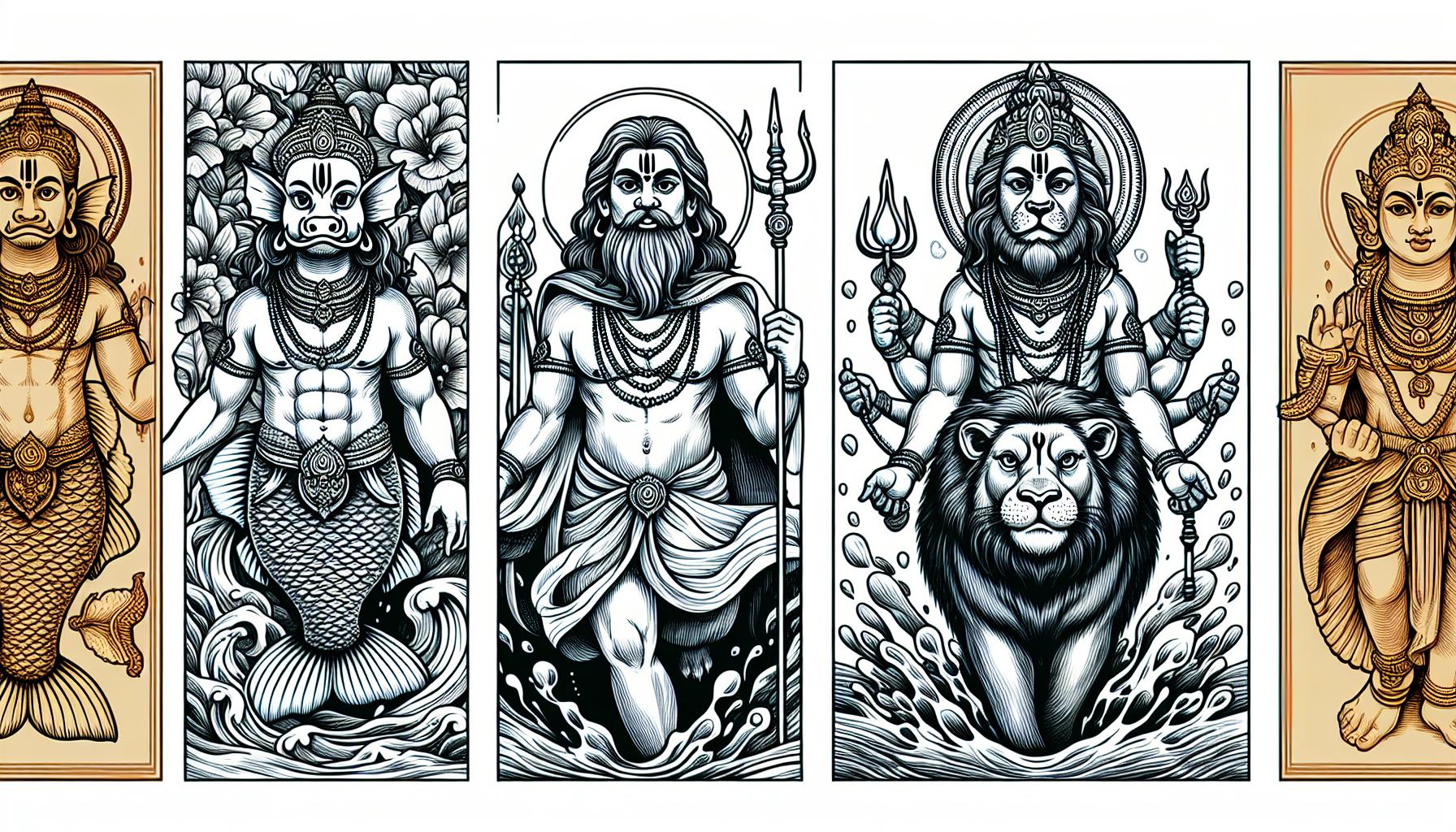
Vishnu’s avatars embody profound themes and rich interpretations that extend beyond their mythological narratives. Each avatar contributes to the intricate tapestry of Hindu cosmology.
Protection And Preservation
The avatars emphasize the importance of safeguarding creation and maintaining cosmic balance. Matsya, the fish avatar, rescues Manu from a devastating flood, symbolizing the protection of life and the continuity of creation. Varaha, the boar avatar, lifts the earth from the depths of the ocean, restoring it from the demon Hiranyaksha, highlighting the safeguarding of the earth. Narasimha, the man-lion avatar, protects his devotee Prahlada from the demon Hiranyakashipu, reinforcing the theme of divine protection for devotees and the upholding of righteousness.
Moral And Ethical Lessons
Each avatar also imparts moral and ethical teachings. They serve as illustrations of virtues and vices, guiding individuals on a righteous path. Matsya underscores the importance of dharma (duty) and the preservation of sacred knowledge. Varaha stands as a symbol of courage and perseverance against overwhelming darkness. Narasimha teaches the lesson that true devotion and faith can overcome even the greatest evil, emphasizing adherence to righteous conduct and the protection of the virtuous.
Evolutionary Concepts
Vishnu’s avatars reflect ideas of evolution and transformation, mirroring both spiritual and physical progressions. The transition from Matsya (fish) to Kurma (turtle), then to Varaha (boar), and finally to more complex life forms, suggests a symbolic representation of evolution. These avatars depict the gradual development from aquatic to terrestrial life, resonating with the concept of life’s progression. Moreover, each successive avatar incorporates increased complexity, aligning with the narrative of human spiritual evolution and enlightenment.
Cultural And Historical Context
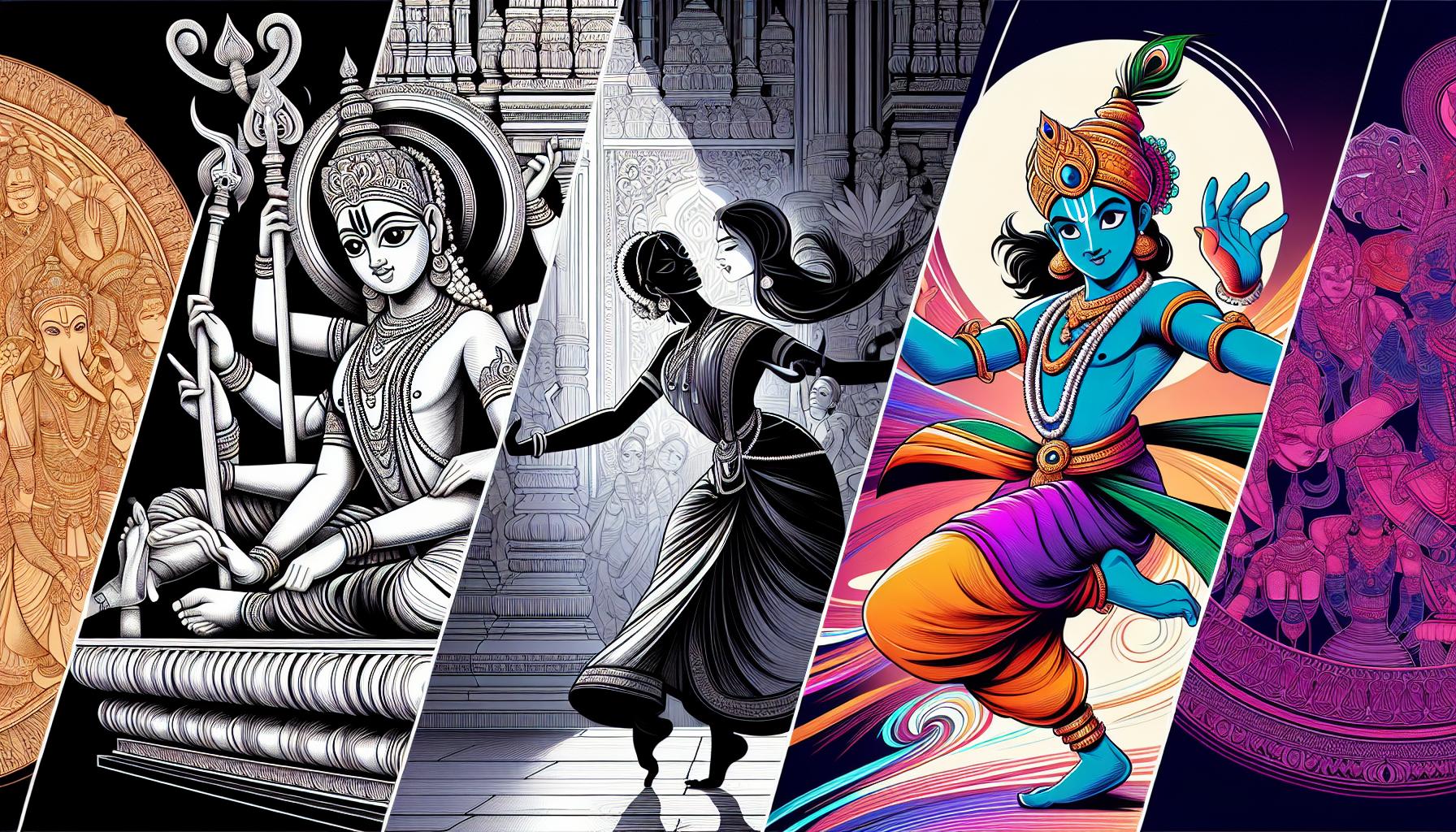
Vishnu’s avatars are integral to Hindu cultural and historical narrative, representing different eras and societal changes.
Influence On Art And Literature
Vishnu’s avatars have had a profound influence on art and literature across centuries. Temples and sculptures from ancient India depict these forms with detailed iconography. The Mahabharata – The Great Epic and the Ramayana, epic texts, recount the tales of Krishna and Rama respectively, demonstrating their devotional and moral significance.
In classical Indian dance and theater, performances like Kathakali and Bharatanatyam often draw themes from the Dashavatara, illustrating divine interventions in human affairs. The Puranas, ancient scriptures, narrate the exploits of these avatars, embedding them deeply in religious and cultural expressions.
Representation In Modern Media
Modern media continues to celebrate Vishnu’s avatars through movies, television, and digital platforms. Films like “Baahubali” incorporate elements of Vishnu’s legends, especially focusing on heroic themes embodied by avatars like Narasimha and Rama.
Television series such as “Vishnu Puran” and animated shows like “Little Krishna” introduce these divine stories to younger audiences, ensuring the continuity of these narratives. Social media and streaming services amplify the reach of these tales, making Vishnu’s avatars accessible to a global audience.
Conclusion
Exploring Vishnu’s avatars offers a profound understanding of Hinduism’s rich tapestry. Each avatar not only serves as a beacon of hope and guidance but also embodies timeless virtues and challenges. Their stories continue to inspire, teaching us valuable moral and ethical lessons.
The cultural and historical significance of these avatars extends beyond religious texts. Their influence on art, literature, and modern media ensures that these divine narratives remain relevant and accessible to a global audience. By appreciating the symbolism and themes of Vishnu’s avatars, we gain deeper insights into the spiritual and cultural evolution within Hindu mythology.
Engaging with these stories allows us to reflect on our own journeys, encouraging personal growth and a deeper connection to the universal principles they represent.
Sources & further reading
These themes are explored in greater depth across the following authoritative resources:
- Encyclopaedia Britannica, Hindu Mythology
- Internet Sacred Text Archive, Hinduism
- Mythopedia, Hindu Mythology
- Harvard Pluralism Project, Hindu Tradition
- Wendy Doniger, The Hindus: An Alternative History (Penguin, 2009), ISBN 978-0143116691
External resources for further reading. Apam Napat is not affiliated with these publishers; citation does not imply endorsement.
Based on the classical texts of Hindu mythology, see our sources.