I find it fascinating how these motifs transcend mere aesthetics, becoming a bridge between the physical and the divine. Whether it’s in temple architecture, traditional art, or everyday objects, Hindu motifs serve as a constant reminder of the spiritual truths that guide millions of people. Join me as we uncover the layers of meaning behind some of the most iconic Hindu religious motifs.
Understanding Hindu Religious Motifs
Hindu religious motifs often encapsulate profound philosophical and spiritual insights. The lotus flower, for example, symbolizes purity and divine beauty. Lotus bloom even though muddy waters, signifying the potential to rise above worldly attachments.
The Om symbol, regarded as the primordial sound of the universe, holds a central place in Hinduism. It represents the essence of ultimate reality and consciousness. Chanting Om during meditation helps connect individuals to this universal vibration.
Deities in Hinduism frequently embody specific motifs that convey their attributes. Vishnu – The Protector is often depicted with a conch shell, symbolizing the primordial sound, and a discus, representing divine order. Shiva – The Destroyer’s trident signifies the three fundamental aspects of existence: creation, preservation, and destruction.
Traditional art forms, from temple carvings to paintings, frequently feature these motifs. The Nataraja statue portrays Shiva in a cosmic dance, symbolizing the cyclical nature of creation and destruction. Intricate rangoli designs created during festivals blend motifs of flowers, animals, and geometric patterns, highlighting cultural and spiritual traditions.
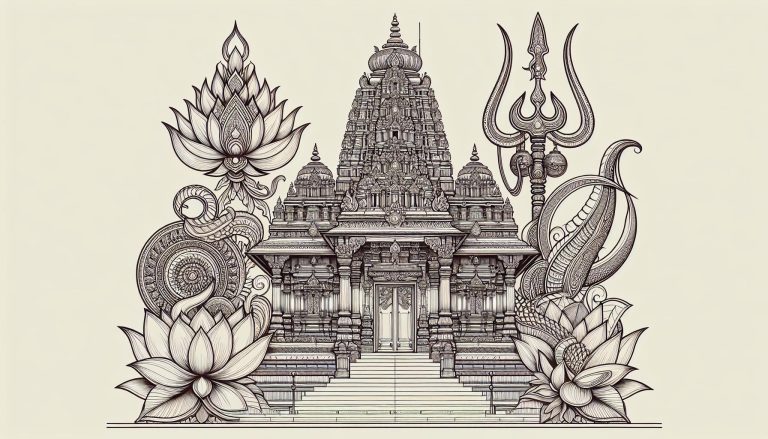
Hindu temples are rich repositories of religious motifs. Temple architecture often includes yantras, geometric designs believed to concentrate spiritual energy. The kalasha, a ritualistic pot often seen atop temple towers, signifies abundance and fertility.
Understanding these motifs allows deeper appreciation of their spiritual dimensions. Observing them in everyday objects, such as jewelry or household decor, reveals the profound ways in which spirituality intertwines with daily life.
Historical Background

Hindu religious motifs hold deep historical roots, evolving over thousands of years. They offer valuable cultural and spiritual insights into ancient Indian civilization.
Origins and Evolution
Hindu motifs trace their origins to the Indus Valley Civilization, around 2500-1500 BCE. Early artifacts like seals depict various symbols linked to proto-Hindu practices. With the Vedic period (1500-500 BCE), motifs became integral to rituals and texts. As Hinduism evolved, motifs such as the swastika and the Om symbol emerged prominently in religious contexts. Dynastic rule influenced these symbols, with each era introducing unique variations reflecting contemporary beliefs. These motifs continued to evolve, absorbing influences from Buddhism, Jainism, and later, Islamic art.
Cultural Significance
Hindu religious motifs embody profound cultural significance. The lotus flower, for instance, symbolizes purity and spiritual awakening, frequently appearing in traditional art and temple carvings (e.g., the Ajanta and Ellora caves). The Om symbol, fundamental in Hindu rituals, represents the universe’s primordial sound. Deities themselves are rich in symbolic motifs; Vishnu’s conch shell signifies divine sound, while Shiva’s trident represents creation, maintenance, and destruction. Each motif serves to enhance the ritual experience and offer a visual and spiritual connection to the divine, enriching both individual and communal worship practices.
Major Themes in Hindu Religious Motifs
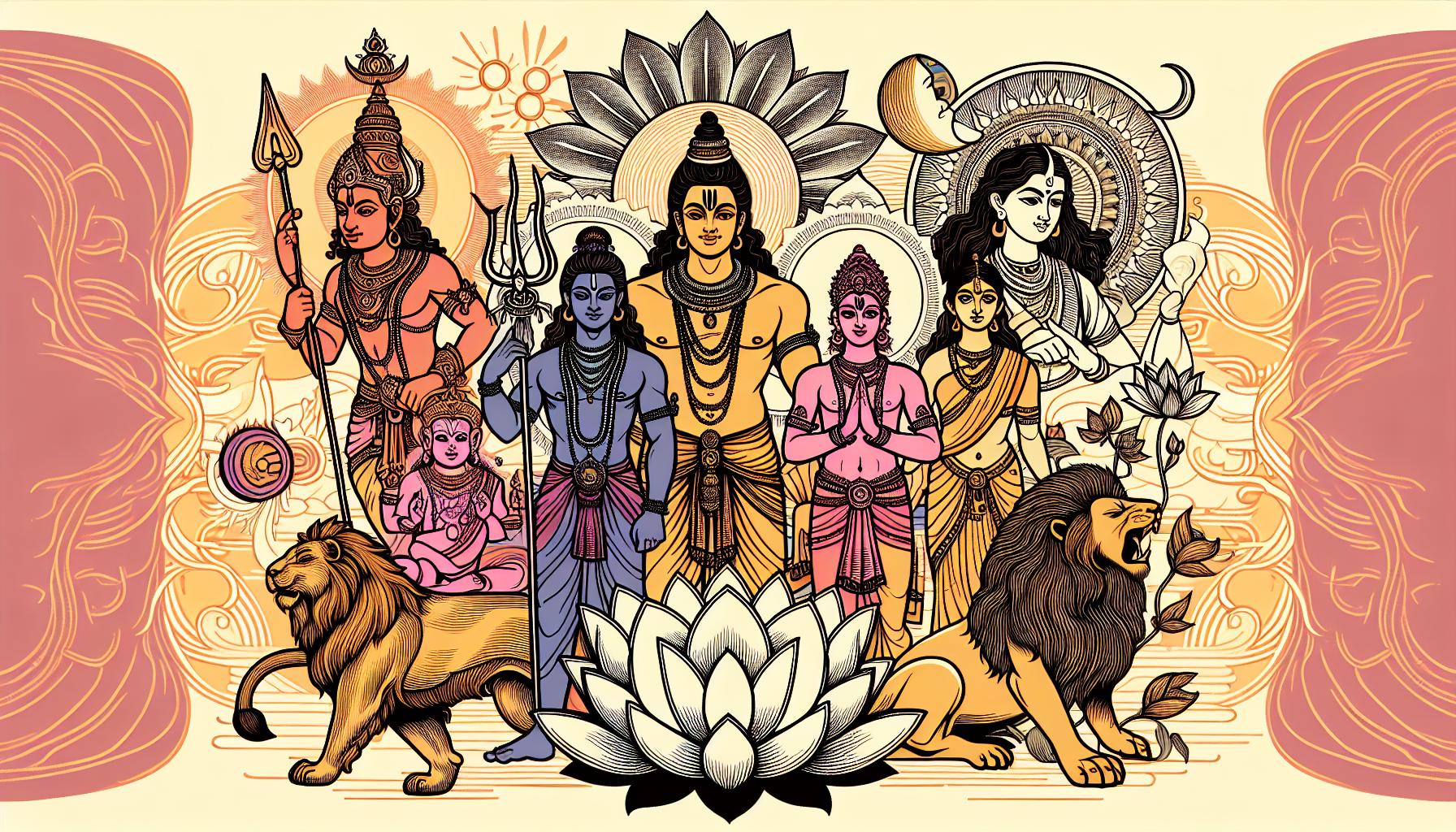
Hindu religious motifs encapsulate rich themes that convey deep spiritual and philosophical insights. Key themes include divine symbolism, nature and cosmic elements, and mythological characters.
Divine Symbolism
Divine symbolism plays a crucial role in Hindu religious motifs. Symbols like the trident and the conch shell are linked to deities, reflecting their divine attributes. For instance, Vishnu’s conch shell symbolizes the primordial sound, while Shiva’s trident signifies the destruction of evil. These symbols frequently appear in temple carvings and religious art, emphasizing the divine qualities of these gods.
Nature and Cosmic Elements
Nature and cosmic elements feature prominently in Hindu motifs. The lotus represents purity and spiritual enlightenment. The sun and moon often depict the cyclical nature of time and the universe’s balance. This connection to nature is evident in the use of animals, plants, and celestial bodies in traditional art. For example, the peacock, associated with Saraswati – The Goddess of Learning and Wisdom, signifies wisdom and beauty.
Mythological Characters
Mythological characters are central to Hindu motifs, providing narrative depth and cultural context. Deities like Krishna – An Incarnation of Vishnu, Rama, and Durga embody specific values and virtues. Krishna, often shown playing a flute, represents divine love and joy. Rama, depicted with a bow, signifies virtue and duty. Durga, riding a lion, embodies strength and protection. These iconic depictions are not just artistic expressions but also convey moral and spiritual lessons.
Iconography in Hindu Motifs
Iconography in Hindu motifs reveals the profound meanings behind symbols used in religious contexts. I’ll explore common symbols and their meanings, as well as their use in architecture and temples.
Common Symbols and Their Meanings
Common symbols in Hindu motifs embody deep cultural and spiritual significance. The Om symbol represents the universe’s primordial sound, often found in sacred texts, chants, and inscriptions. The lotus flower signifies purity and divine birth, frequently pictured in the hands of deities like Lakshmi and Saraswati.
The conch shell (Shankha) exemplifies Vishnu’s cosmic call, symbolizing the spread of divine power. Shiva’s trident (Trishul) represents the Trinity – Shiva, Vishnu and Brahma of creation, preservation, and destruction. Each of these symbols aids worshipers in connecting with divine principles and cosmic truths.
Use in Architecture and Temples
Hindu motifs prominently feature in architecture and temples, reinforcing divine presence. Temples often showcase carvings of deities, encapsulating their attributes and stories through iconography. The gopuram, a towering gateway, is adorned with intricate details depicting mythological narratives, showcasing motifs of gods, celestial beings, and sacred animals.
Plus to deities, mandalas and yantras appear in temple designs, symbolizing cosmic diagrams and aiding meditative practices. The Garbhagriha, or innermost sanctum, houses the deity statue with motifs of lotus petals carved around, representing purity and spiritual enlightenment. These architectural elements guide worshipers in their spiritual journeys, fostering a deeper connection between everyday life and divine essence.
By embedding such motifs into physical structures, they not only beautify the environment but also imbue it with spiritual and cultural resonance.
Influence on Contemporary Art and Media
Hindu religious motifs have left an indelible mark on contemporary art and media. These ancient symbols continue inspiring modern creations, integrating spirituality into various mediums.
Adaptations in Modern Art
In modern art, Hindu religious motifs find new interpretations. Artists incorporate elements like the lotus flower, Om symbol, and mandalas into their works. These symbols appear in paintings, sculptures, and digital art, creating a fusion of ancient wisdom and modern aesthetics. For instance, contemporary artist Anish Kapoor frequently explores themes inspired by Hindu cosmology and spirituality.
Representation in Popular Culture
Popular culture reflects Hindu motifs through movies, television shows, and fashion. Bollywood often features deities such as Shiva and Vishnu in plotlines, costume designs, and set aesthetics. Hollywood productions like “Indiana Jones and the Temple of Doom” have also incorporated Hindu symbols to create exotic and mystical imagery. In fashion, designers use motifs such as peacocks and lotuses in prints and embroidery, integrating tradition into everyday wear.
Conclusion
Hindu religious motifs offer a rich world of spiritual and cultural significance that transcends time. Their influence is evident not just in traditional rituals and architecture but also in contemporary art and popular culture. These symbols bridge the ancient with the modern, providing a sense of continuity and connection to profound cosmic truths and divine principles. By appreciating and understanding these motifs, we gain deeper insights into a timeless tradition that continues to inspire and resonate in today’s world.
Sources & further reading
These themes are explored in greater depth across the following authoritative resources:
- Britannica, Hindu Temple Architecture
- Met Museum, Hinduism in the Arts
- Britannica, Iconography
- Stella Kramrisch, The Hindu Temple (Motilal Banarsidass, 1946)
- Heinrich Zimmer, Myths and Symbols in Indian Art and Civilization (Princeton University Press, 1946)
External resources for further reading. Apam Napat is not affiliated with these publishers; citation does not imply endorsement.
Based on the classical texts of Hindu mythology, see our sources.