
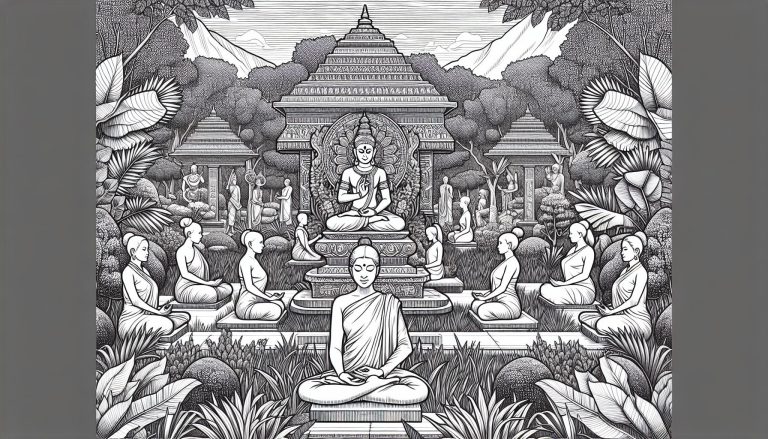
In today’s rapid world, integrating ahimsa into our decision-making processes can offer a fresh perspective. Whether we’re dealing with business choices, personal relationships, or societal issues, considering the impact of our actions on others can lead to more compassionate and ethical outcomes. Let’s explore how this age-old principle can guide us in making decisions that are not only right but also kind.
Understanding Ahimsa
Ahimsa, derived from Sanskrit, translates to “non-violence” or “non-injury,” originating in Jainism, Buddhism, and Hinduism. It is more than avoiding physical harm; it encompasses mental and emotional non-violence. This principle involves a conscious effort to harm no living being through actions, thoughts, or words.
Practicing ahimsa requires cultivating compassion, kindness, and gentleness toward others and oneself. For example, treating animals with respect or engaging in mindful communication. Ahimsa encourages introspection to ensure our choices do not perpetuate harm. This mindfulness applies to every decision, promoting an ethical framework that values all living beings.
In ethical decision making, integrating ahimsa involves reflecting on the consequences of our actions. This principle helps guide choices that foster a compassionate and harm-free environment. In practical terms, it means considering the broader impact of business practices or prioritizing empathy in personal relationships. By embedding ahimsa in daily decisions, we contribute to a more ethical, non-violent world.
The Principles of Ahimsa

Ahimsa, a key tenet in Indian religions, guides ethical decision-making by promoting non-violence, compassion, and respect for all living beings. Here are its core principles:
Non-Violence
Ahimsa means practicing non-violence in every aspect of life. This includes avoiding physical harm to any living being. Mental and emotional harm fall under this principle too. When making decisions, I consider whether my actions hurt others or myself. By fostering non-violence in my thoughts, words, and deeds, I encourage a peaceful environment.
Compassion
Ahimsa involves showing compassion to all beings. This principle inspires kindness and empathy. It encourages me to reflect on my needs and the needs of others. Self-care and self-reflection are critical in showing true compassion. For example, treating colleagues with understanding during workplace conflicts embodies ahimsa‘s compassionate aspect.
Respect for All Living Beings
Ahimsa promotes respect for all forms of life. This includes humans, animals, and plants. My decisions are influenced by this respect, ensuring I consider the well-being of all living creatures. For instance, adopting sustainable practices respects the planet and its inhabitants. Respect in this context means valuing and empathizing with all forms of life.
Ethical Decision Making

Ethical decision making connects deep-rooted values like ahimsa to everyday choices. It seeks to balance principles of non-violence, compassion, and respect in actions.
Theories of Ethics
Theories of ethics provide frameworks to evaluate moral dilemmas. Consequentialism, deontology, and virtue ethics are primary examples to consider. Consequentialism, like utilitarianism, focuses on outcomes, promoting actions that maximize overall happiness. Deontology emphasizes duties and rules, asserting that certain actions are intrinsically right or wrong regardless of consequences. Virtue ethics centers on character, advocating for decisions that reflect moral virtues like honesty and courage. Combining these theories, individuals can create a well-rounded approach to ethical decision making.
Moral Reasoning
Moral reasoning evaluates the principles behind decisions. Cognitive skills, such as critical thinking and empathy, play crucial roles. By analyzing the potential impacts on all affected entities, individuals make informed, fair choices. In the context of ahimsa, moral reasoning involves considering the least harmful options, fostering gentleness, and promoting respect for life. Ethical frameworks assist in exploring complex situations, ensuring decisions align with non-violent and compassionate values.
Integrating Ahimsa in Ethical Decisions
Ahimsa, an ancient principle rooted in Indian religions, guides ethical decision-making by emphasizing nonviolence. This principle impacts both personal choices and professional conduct.
Personal Choices
In personal choices, ahimsa influences decisions by promoting actions that minimize harm to others. This principle encourages empathy and compassion, fostering a thoughtful and considerate approach to daily decisions. In vegetarianism, for example, ahimsa drives individuals to avoid harming animals, leading to more ethical and eco-friendly lifestyles.
Professional Conduct
In professional conduct, integrating ahimsa into ethical frameworks creates a more humane workplace. This principle encourages transparency, fairness, and respect, impacting policies and interactions. For instance, in business ethics, companies adopting ahimsa principles may prioritize employee welfare and environmentally sustainable practices.
Case Studies
Case studies provide insight into how the principle of ahimsa guides ethical decision making both historically and in modern times.
Historical Examples
Ancient Vedic Texts: Ahimsa evolved in Vedic texts, where it was indirectly mentioned. The concept refined over time, becoming a vital virtue by the late Vedic era (1000-600 BCE). References in the Rig Veda and the Yajur Veda highlight its importance in ritual practices and moral conduct.
Mahavira and Jainism: Mahavira, Jainism’s 24th Tirthankara, strengthened the concept of ahimsa in the 6th century BCE. His teachings emphasized nonviolence, not only in physical actions but also in words and thoughts. Mahavira’s influence led Jainism to adopt stringent nonviolent practices, guiding followers in ethical decision making.
Modern Applications
Gandhi’s Nonviolent Movement: Mohandas Karamchand Gandhi applied ahimsa during India’s struggle for independence. His nonviolent approach inspired political and social changes without physical conflict. Gandhi’s philosophy influenced global leaders and demonstrated how nonviolence can drive ethical decisions on a large scale.
Ethical Business Practices: Companies incorporating ahimsa principles emphasize employee welfare, sustainability, and humane policies. For instance, businesses adopting fair trade practices ensure that their operations do not exploit workers. Such ethical decisions reflect ahimsa’s impact on modern professional environments.
Vegan and Vegetarian Lifestyles: Many individuals choose vegan or vegetarian diets based on the principle of ahimsa, aiming to cause the least harm to animals. This lifestyle change represents a conscious effort to integrate nonviolence into personal decision making, promoting compassion and empathy towards all living beings.
The incorporation of ahimsa in these historical and modern contexts showcases its enduring relevance in guiding ethical decisions across various spheres of life.
Challenges and Criticisms
Even though its noble intentions, ahimsa faces numerous challenges and criticisms in both theory and practice.
Practical Limitations
Implementing ahimsa in daily life often presents practical limitations. Modern lifestyles involve complexities where absolute non-violence is difficult to achieve. For instance, adhering to ahimsa by avoiding harm to all living beings can conflict with economic activities such as farming, which may inadvertently harm smaller organisms.
In professional settings, enforcing ahimsa-based ethical standards consistently can be challenging. Businesses striving to uphold non-violence and compassion might face competitive disadvantages. For example, prioritizing employee welfare over cost-cutting measures can affect profitability.
Philosophical Debates
Ahimsa also stimulates significant philosophical debates. Some argue that strict adherence to non-violence can lead to passivity, hindering decisive actions in critical situations. For example, in cases of self-defense or protecting others from harm, absolute non-violence might seem impractical.
Others debate the relative nature of non-violence and its application. Can non-violence coexist with certain forms of necessary harm? This question often arises in discussions about military defense and law enforcement, where the use of force is sometimes deemed essential for greater good.
Conclusion
Embracing ahimsa in ethical decision-making isn’t just an ancient concept; it’s a powerful tool for fostering empathy and compassion in our daily lives. By integrating its principles into both personal and professional choices, we can create more humane and sustainable environments. While the path of non-violence presents practical challenges, it’s essential to strive for balance and recognize the nuances of modern contexts. Eventually, ahimsa encourages us to be more mindful of our actions and their impact on all living beings, guiding us towards a more ethical and compassionate world.
Sources & further reading
These themes are explored in greater depth across the following authoritative resources:
- Stanford Encyclopedia of Philosophy, Hindu Philosophy
- Britannica, Dharma
- Britannica, Karma
- Internet Sacred Text Archive, Bhagavad Gita
- A. K. Ramanujan, Speaking of Siva (Penguin Classics, 1973)
External resources for further reading. Apam Napat is not affiliated with these publishers; citation does not imply endorsement.
Based on the classical texts of Hindu mythology, see our sources.