

Ahimsa, rooted in Indian traditions, encourages us to live in a way that minimizes harm to others, whether through our actions, words, or thoughts. By embracing ahimsa, we can foster a more compassionate and peaceful world, addressing global challenges with empathy and understanding. As we navigate the complexities of modern life, integrating ahimsa into our daily practices can help us become true global citizens, committed to creating a better future for all.
Understanding Ahimsa
Ahimsa, an age-old principle, weaves through the world of global citizenship by advocating non-violence and compassion for all living beings.
Definition and Origin
Ahimsa comes from the Sanskrit root “hiṃs,” meaning “to injure,” with the prefix “a-” negating it, resulting in “ahiṃsā,” which stands for “non-violence.” Deeply entrenched in Hinduism, Buddhism, and Jainism, ahimsa serves as a universal doctrine for causing no harm. Hindu texts, like the Mahabharata – The Great Epic, exalt it as the highest moral duty.
- Non-Injury: Ahimsa entails refraining from causing harm to any living creature, encompassing both physical and mental dimensions.
The Concept of Global Citizenship

The idea of global citizenship extends beyond national boundaries. It encourages individuals to recognize their role in the broader world community.
What Does It Mean to Be a Global Citizen?
A global citizen is someone aware of the wider world and their place. They understand how actions in one region can affect people elsewhere. They embody interconnectedness, valuing diversity and challenging injustice. They take meaningful actions to create positive changes. Exploring connections between local and global issues, they address social justice and consider multiple perspectives.
Historical Development
The concept of global citizenship has evolved over centuries. Ancient philosophers like Socrates spoke about being a “citizen of the world.” During the Enlightenment, thinkers like Immanuel Kant emphasized cosmopolitanism, urging people to consider their actions’ global impact. Modern global citizenship gained momentum in the 20th century, paralleling the rise of international organizations like the United Nations, which promotes peace, security, and cooperation among nations. The advent of the internet in the late 20th century further accelerated awareness, connecting people across the globe in unprecedented ways. This historical trajectory shows the progression towards a more interconnected and responsible global community.
The Interconnection Between Ahimsa and Global Citizenship
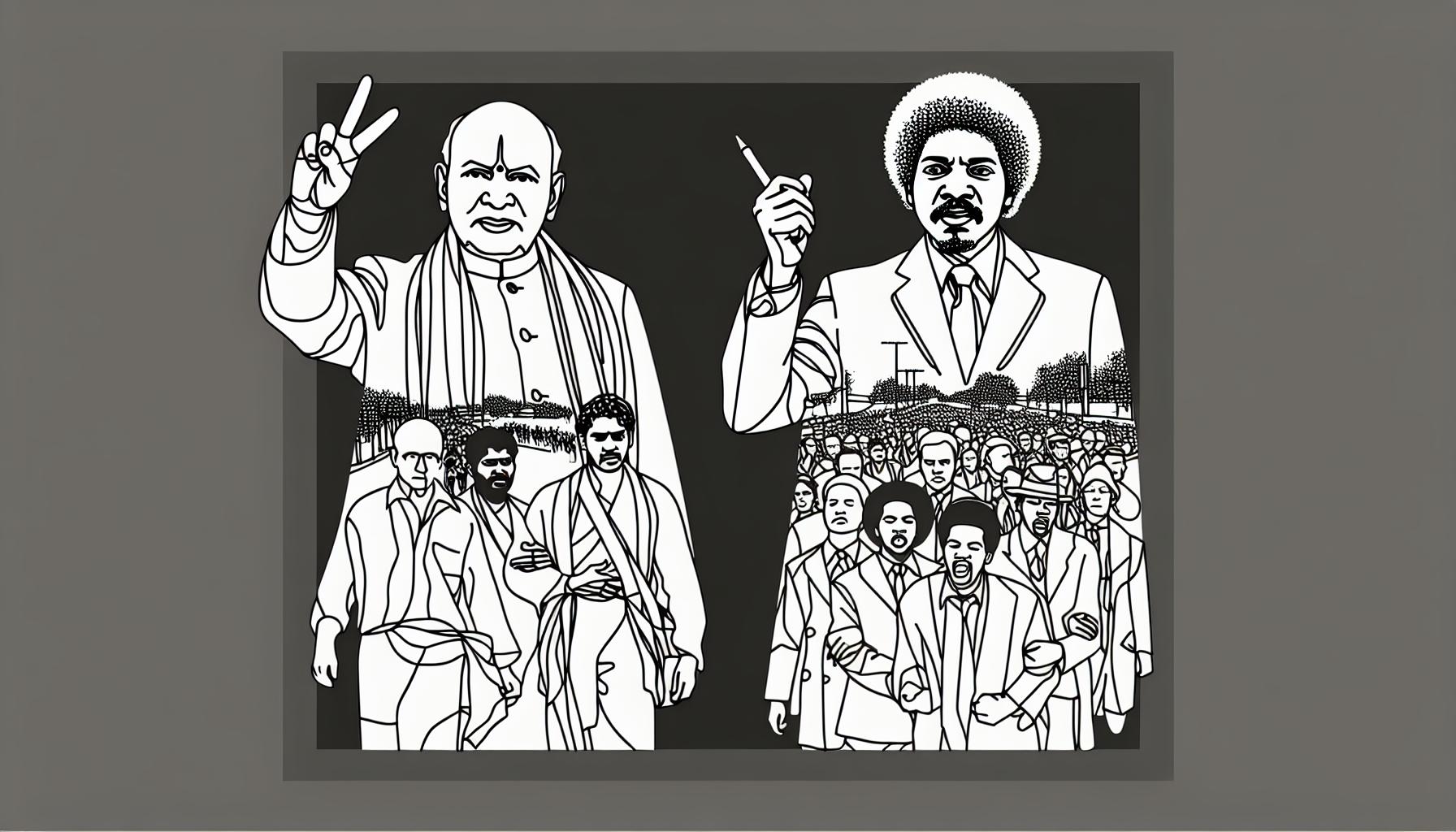
Ahimsa and global citizenship share foundational values and principles that foster respect and harmony among all beings. These shared values create a bedrock for peaceful coexistence and mutual respect.
Shared Values and Principles
Non-Violence and Compassion
Ahimsa champions non-violence, emphasizing that no harm should come to any living being. This mirrors the ideals of global citizenship, which promote peaceful interactions and respect for individuals and cultures worldwide. For instance, Mahatma Gandhi’s non-violent resistance against colonial rule demonstrated how ahimsa could mobilize massive societal change. Similarly, global citizens work towards reducing conflict and advocating for human rights.
Respect for Diversity
Both ahimsa and global citizenship advocate for appreciating and understanding diverse cultures, traditions, and identities. They support a unified sense of shared humanity, encouraging people to move beyond prejudices and embrace inclusivity. The teachings of the Dalai Lama on compassion for all beings illustrate how understanding and respect can bridge cultural divides, fostering global unity.
Prominent Examples in History
Mahatma Gandhi’s application of ahimsa in India’s struggle for independence stands as a significant historical example. His philosophy of non-violence left a lasting impact, influencing global movements for civil rights and freedom. Similarly, Martin Luther King Jr., inspired by Gandhi, used non-violent protest to challenge racial segregation and injustice in the US.
These examples illustrate how the principles of ahimsa, when put into practice, profoundly align with the tenets of global citizenship, emphasizing non-violence and respect for all living beings.
Ahimsa in Action: Global Initiatives
Ahimsa, or non-violence, plays a critical role in global initiatives that emphasize peace, tolerance, and human rights. Several programs and plans showcase how ahimsa is integrated into efforts to promote global citizenship.
Case Studies
Various case studies highlight the successful implementation of ahimsa in global initiatives. For example:
- Global Citizenship Education (GCED): Directed by UNESCO, GCED aims to instill a sense of global community and respect for human rights, social justice, and environmental sustainability. This program empowers youth to engage in civic structures and inclusive political processes while discouraging violent extremism.
- United Nations Plan of Action to Prevent Violent Extremism: Launched in 2015, this plan emphasizes quality education to address the root causes of violent extremism. It promotes a culture of peace, tolerance, and intercultural dialogue, aligning with the principles of ahimsa.
Impact on Communities
Ahimsa-driven initiatives significantly impact communities by fostering environments of peace and mutual respect. Examples include:
- Educational Outreach: By implementing GCED programs, communities witness increased youth participation in constructive civic activities, reducing tendencies toward violence and extremism.
- Cultural Integration Efforts: UN’s Plan of Action facilitates intercultural dialogue in communities, promoting mutual understanding and tolerance among diverse cultural groups.
Challenges and Criticisms
Ahimsa as a principle holds significant value, but it faces notable challenges and criticisms when applied to global citizenship. These challenges revolve around cultural and practical limitations.
Practical Limitations
Ahimsa can be hard to carry out in real-world scenarios. Many situations demand quick, decisive action, where non-violence might seem impractical. For instance, addressing violent extremism or oppressive regimes often requires force, making non-violence seem inadequate. Economic pressures and geopolitical conflicts also pose significant challenges to consistent application of ahimsa. During economic crises, countries might prioritize self-interest over global citizenship values, causing conflicts and undermining non-violence ideals. These real-world complexities highlight the difficulty in maintaining ahimsa as a guiding principle on a global scale.
Counterarguments
Critics argue that ahimsa might not resonate universally due to its deep roots in Eastern philosophies. Western societies, for example, may prioritize individualism and assertiveness, finding non-violence less relevant. Also, global citizenship initiatives based on ahimsa may struggle to gain traction in regions with different cultural contexts. Some societies view conflict as a means to justice or change, making the non-violence approach seem unrealistic. Also, the principle of ahimsa can appear passive to those advocating for proactive measures in combating injustice and inequality. Even though these counterarguments, proponents of ahimsa argue that it offers a moral high ground, fostering long-term peace and understanding.
By addressing these challenges and criticisms directly, it becomes evident how complex applying ahimsa to global citizenship initiatives can be.
The Future of Ahimsa and Global Citizenship
The integration of ahimsa into global citizenship initiatives shows immense promise for a more peaceful world. Let’s explore emerging trends and potential for global change in this domain.
Emerging Trends
Ahimsa and global citizenship are witnessing innovative developments, particularly in education and empowerment.
- Global Citizenship Education (GCED) aims to instill ahimsa by fostering critical thinking, problem-solving, and communication skills. Through GCED, individuals tackle global issues like human rights violations, conflicts, and intolerance.
- Community Service and Advocacy within GCED encourage active participation in social and environmental causes. By engaging in these activities, individuals become responsible global citizens who uphold non-violent principles.
- Technological Initiatives are also facilitating ahimsa. Digital platforms promote intercultural dialogues, breaking geographical barriers and enabling real-time communication between diverse communities.
Examples: Online forums, virtual exchange programs, and social media campaigns.
These trends highlight the growing emphasis on incorporating ahimsa into global citizenship frameworks, equipping individuals with the skills and mindset to address challenges peacefully.
Potential for Global Change
Ahimsa’s integration into global citizenship has the potential to catalyze significant changes worldwide.
- Conflict Resolution sees improvement through non-violent approaches. Ahimsa-driven dialogue and negotiation methods contribute to peaceful settlements.
- Intercultural Understanding flourishes when ahimsa underpins global citizenship. Emphasizing shared values and mutual respect, it bridges cultural divides and fosters global unity.
- Sustainable Development Goals (SDGs) align with ahimsa’s principles. Non-violence supports goals like quality education, gender equality, and reduced inequalities by promoting peaceful societies.
By leveraging ahimsa in global citizenship strategies, we can foster a more harmonious global community. This synergy between non-violence and global initiatives paves the way for long-term peace and collaborative progress.
Conclusion
Embracing ahimsa within global citizenship frameworks isn’t just an idealistic vision; it’s a practical pathway to fostering a more harmonious world. By integrating non-violence into education, community service, and technology, we can address conflicts more effectively and nurture intercultural understanding. This approach aligns seamlessly with the Sustainable Development Goals, making it a powerful tool for long-term peace and collaborative progress. As we continue to innovate and adapt, the principles of ahimsa can guide us toward a future where global citizenship truly embodies peace, tolerance, and human rights for all.
Sources & further reading
These themes are explored in greater depth across the following authoritative resources:
- Stanford Encyclopedia of Philosophy, Hindu Philosophy
- Britannica, Dharma
- Britannica, Karma
- Internet Sacred Text Archive, Bhagavad Gita
- A. K. Ramanujan, Speaking of Siva (Penguin Classics, 1973)
External resources for further reading. Apam Napat is not affiliated with these publishers; citation does not imply endorsement.
Frequently asked questions
What does ahimsa mean?
What is global citizenship?
How does ahimsa support global citizenship?
How is ahimsa described in Hindu texts?
Who shaped the modern concept of global citizenship?
Based on the classical texts of Hindu mythology, see our sources.