

When I first delved into the concept, I was struck by its profound simplicity and far-reaching implications. Ahimsa encourages us to live harmoniously with all living beings, fostering compassion and empathy. It’s a guiding light that challenges us to rise above anger, hatred, and cruelty, promoting peace and understanding in our daily lives.
Understanding Ahimsa
Ahimsa, central to Hinduism, signifies non-violence towards all beings. It requires abstaining from harm not just physically but also mentally and verbally. This comprehensive approach ensures that thoughts, words, and actions align with non-violence.
In Hinduism, ahimsa goes beyond avoiding injury. It promotes active compassion and empathy. Practitioners strive to understand and alleviate suffering. This aspect connects with karma, which posits that all actions have future consequences. Positive actions can lead to better future states, while harmful actions can result in negative outcomes.
Ahimsa’s roots trace back to the Vedic texts. Initially, indirect references highlighted its importance. By the late Vedic era (1000-600 BCE), it emerged as a paramount virtue. The Chāndogya Upaniṣad (800-600 BCE) notably documents one of the earliest mentions of ahimsa. Here, the concept continues to develop, emphasizing peace and non-violence as foundational principles.
Eventually, ahimsa encompasses a broad spectrum of non-violent practices. From protecting plant life to showing kindness to animals, it challenges individuals to uphold this principle in all interactions. By integrating ahimsa into daily life, one fosters a harmonious existence with all living beings.
Historical Background
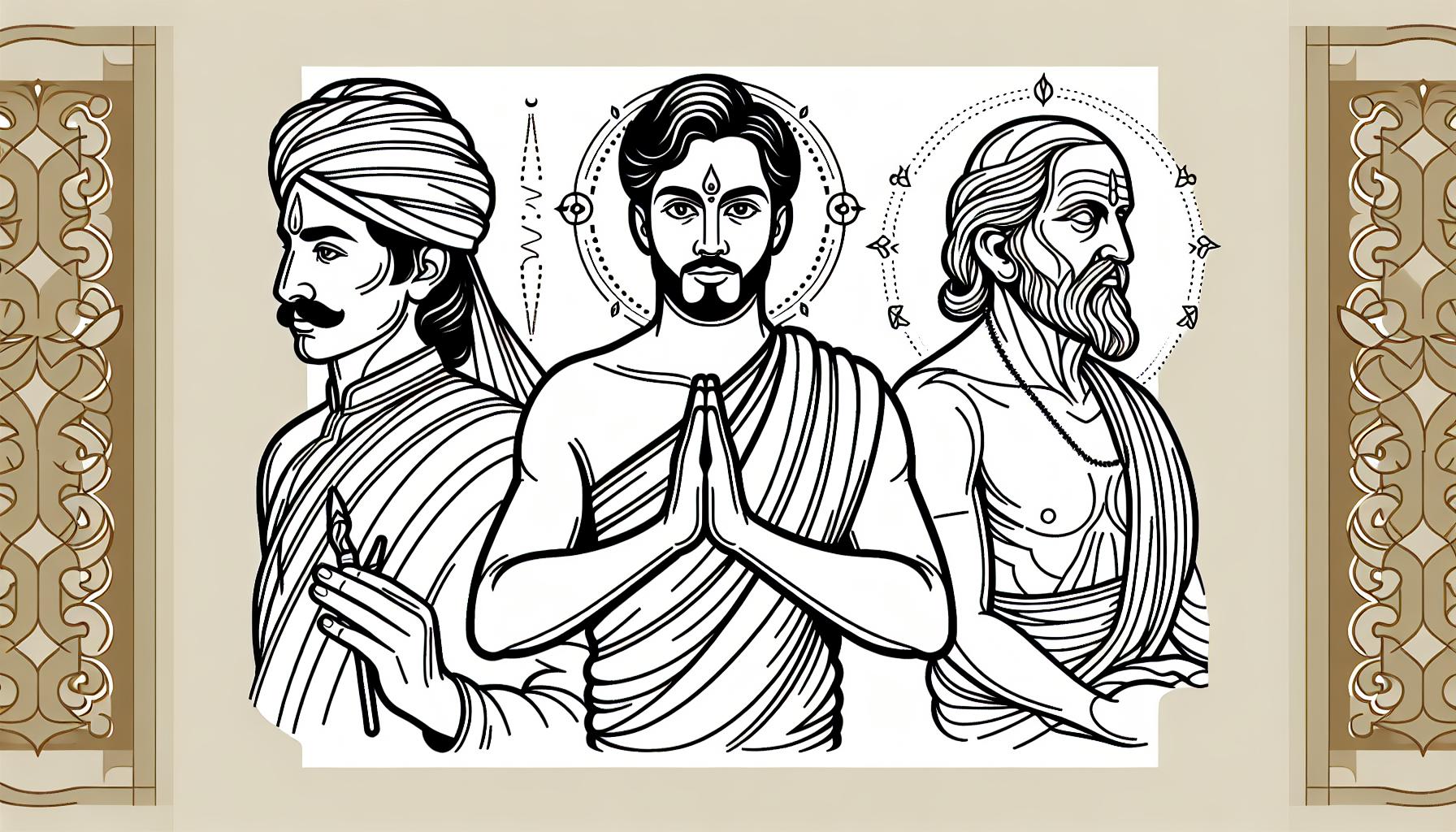
Ahimsa has deep roots in Hinduism, with its principles evident across historical texts and influential figures shaping its practice. The evolution of Ahimsa reveals its significance in promoting a non-violent lifestyle integral to Hindu philosophy.
Ancient Texts
Several ancient texts in Hinduism discuss Ahimsa extensively.
- Vedas – The Rig Veda, one of the oldest texts, emphasizes non-violence toward living beings.
- Upanishads – The Chāndogya Upaniṣad provides early mentions of Ahimsa, linking it to the purity of mind and actions.
- Mahabharata – The Great Epic – The epic references Ahimsa as a supreme virtue, with emotional and moral dimensions.
- Manusmriti – This ancient legal text outlines the ethical and legal importance of Ahimsa in daily life.
Influence of Key Figures
Prominent figures in Hinduism have significantly shaped the practice and understanding of Ahimsa.
- Mahatma Gandhi – Advocated for Ahimsa as a method for social and political change, integrating it with Satyagraha.
- Swami Vivekananda – Emphasized Ahimsa in the context of spiritual development and human unity.
- Lord Mahavira – Although primarily associated with Jainism, his teachings on Ahimsa influenced Hindu thought, stressing non-violence in the strictest sense.
- Adi Shankaracharya – Interpreted Ahimsa within the Advaita Vedanta framework, promoting it as essential to attaining inner peace.
Ahimsa’s historical context shows its timeless relevance and adaptation across epochs, maintaining its position as a core tenet of Hindu ethics.
Ahimsa in Practice
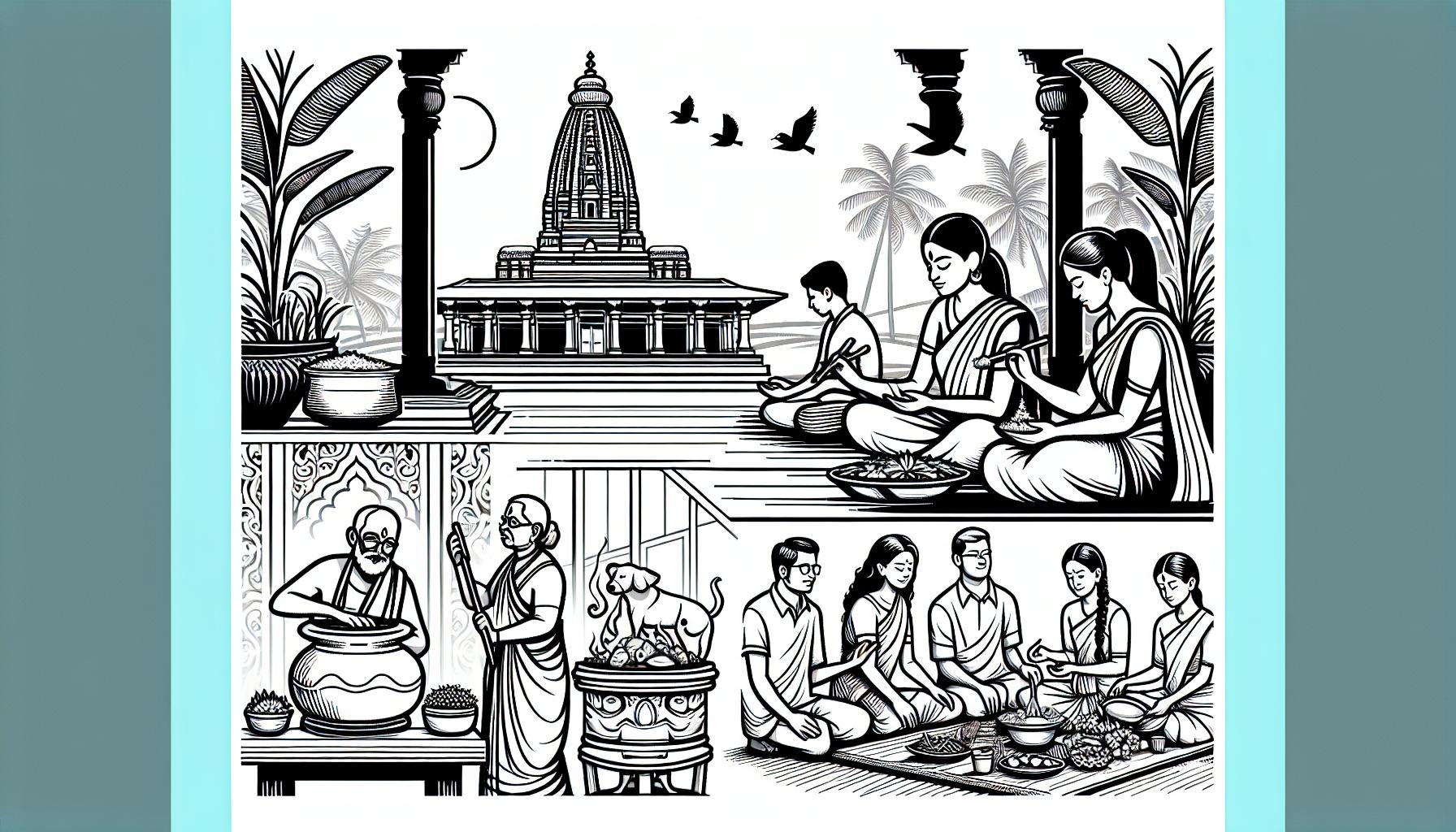
Practicing Ahimsa involves integrating non-violence into everyday actions and thoughts. It’s not limited to sacred texts but extends to daily life, shaping ethical living and social interactions.
Rituals and Daily Life
Hindus incorporate Ahimsa into daily rituals and routines. Chanting mantra (sacred hymns), performing puja (worship), and offering prayers foster a mindset of compassion. Even domestic activities, like cooking, reflect Ahimsa when food is prepared and shared with mindfulness.
Vegetarianism and Animal Rights
Vegetarianism is a prominent expression of Ahimsa. By avoiding meat consumption, Hindus reduce harm to animals, aligning dietary habits with non-violent principles. Hindu festivals often feature vegetarian feasts, underscoring respect for life. Besides, advocating for animal rights demonstrates Ahimsa in social activism, challenging practices like animal testing and promoting humane treatment.
Ahimsa in Modern Times

Ahimsa remains a vital principle in contemporary society, influencing various aspects of life. It not only shapes individual behavior but also impacts global movements and ethics.
Gandhi’s Interpretation
Mahatma Gandhi’s interpretation of Ahimsa profoundly shaped modern perceptions. He championed non-violence as a powerful tool for social and political change. Through his leadership in India’s independence movement, Gandhi demonstrated that peaceful resistance could dismantle oppression. He stressed that true Ahimsa transcends physical non-violence, requiring purity of thought and word. In his writings, Gandhi highlighted the importance of acting with compassion and empathy, fostering a society rooted in respect for all beings.
Current Relevance
Ahimsa continues influencing various modern contexts, from personal choices to global activism. In daily life, many embrace vegetarianism and sustainable living as expressions of non-violence toward animals and the environment. Movements advocating animal rights, environmental protection, and human rights frequently draw on Ahimsa’s principles. In business and leadership, Ahimsa inspires ethical practices and corporate social responsibility. By encouraging empathy and minimizing harm, Ahimsa helps create a more compassionate and just world.
Challenges and Criticisms
Ahimsa in Hinduism faces various criticisms and challenges, both in interpretation and practical application. These issues often stem from misunderstandings and real-world constraints.
Misinterpretations
Many misinterpret Ahimsa as complete passivity. This misunderstanding suggests that practitioners must avoid all conflict, even when self-defense or justice is necessary. For example, some view it as impractical in scenarios involving severe moral dilemmas, where decisive action may be needed to prevent greater harm. Misinterpretations dilute the principle’s true meaning and intention, leading to confusion and misapplication.
Practical Difficulties
Applying Ahimsa consistently in daily life proves challenging. In urban environments, for instance, adhering to non-violence is tough due to constant interactions and conflicting interests. Animal agriculture is another area where practicing Ahimsa is difficult, given the widespread consumption of animal products and the economic implications for many communities. Balancing ideals with practicalities often puts practitioners in morally complex situations, highlighting the tension between philosophical principles and real-world applications.
Conclusion
Ahimsa’s profound impact on Hinduism and beyond underscores its timeless relevance. Its principles guide us towards a more compassionate and empathetic existence, influencing personal behavior and global movements alike. The teachings of influential figures like Mahatma Gandhi remind us that Ahimsa is not just about avoiding physical harm but also about fostering purity in thoughts and words.
Even though the challenges and criticisms it faces, Ahimsa remains a powerful tool for ethical living and social change. By embracing non-violence in all its forms, we can contribute to a more just and harmonious world.
Frequently asked questions
What is ahimsa in Hinduism?
Where does ahimsa first appear in Hindu texts?
Who are key Hindu figures who championed ahimsa?
How is ahimsa expressed in daily Hindu practice?
Sources & further reading
These themes are explored in greater depth across the following authoritative resources:
- Stanford Encyclopedia of Philosophy, Hindu Philosophy
- Britannica, Dharma
- Britannica, Karma
- Internet Sacred Text Archive, Bhagavad Gita
- A. K. Ramanujan, Speaking of Siva (Penguin Classics, 1973)
External resources for further reading. Apam Napat is not affiliated with these publishers; citation does not imply endorsement.
Based on the classical texts of Hindu mythology, see our sources.