

I’ve seen firsthand how communities thrive when they embrace dharma. It’s not just a set of rules but a way of living that promotes harmony, compassion, and mutual support. By understanding and practicing dharma, we can create environments where everyone feels valued and cared for, leading to a more cohesive and prosperous society.
Understanding Dharma
Dharma, a multifaceted concept in Hinduism, Buddhism, and Jainism, stands as a pillar of individual and societal well-being. It encompasses ideas of cosmic law, moral order, and personal duty.
Historical Context
The idea of dharma has a rich historical lineage that has evolved over millennials. Ancient texts like the Vedas, Upanishads, and Epics (Ramayana – Epic of Hinduism and Mahabharata – The Great Epic) serve as key sources for understanding its development. The Dharmashastra, an ancient compilation of Hindu guidelines, outlines comprehensive rules for living a virtuous life, covering areas such as education, rites of passage, customs, and laws.
- Cosmic Order: Dharma ensures the natural order of the universe, maintaining harmony and balance.
- Moral Virtues: It includes essential virtues like truthfulness, non-injury, generosity, and self-restraint, which contribute to both personal and societal well-being.
By grasping these historical underpinnings and core principles, the concept of dharma can be better integrated into efforts aimed at community welfare.
Dharma and Community Welfare
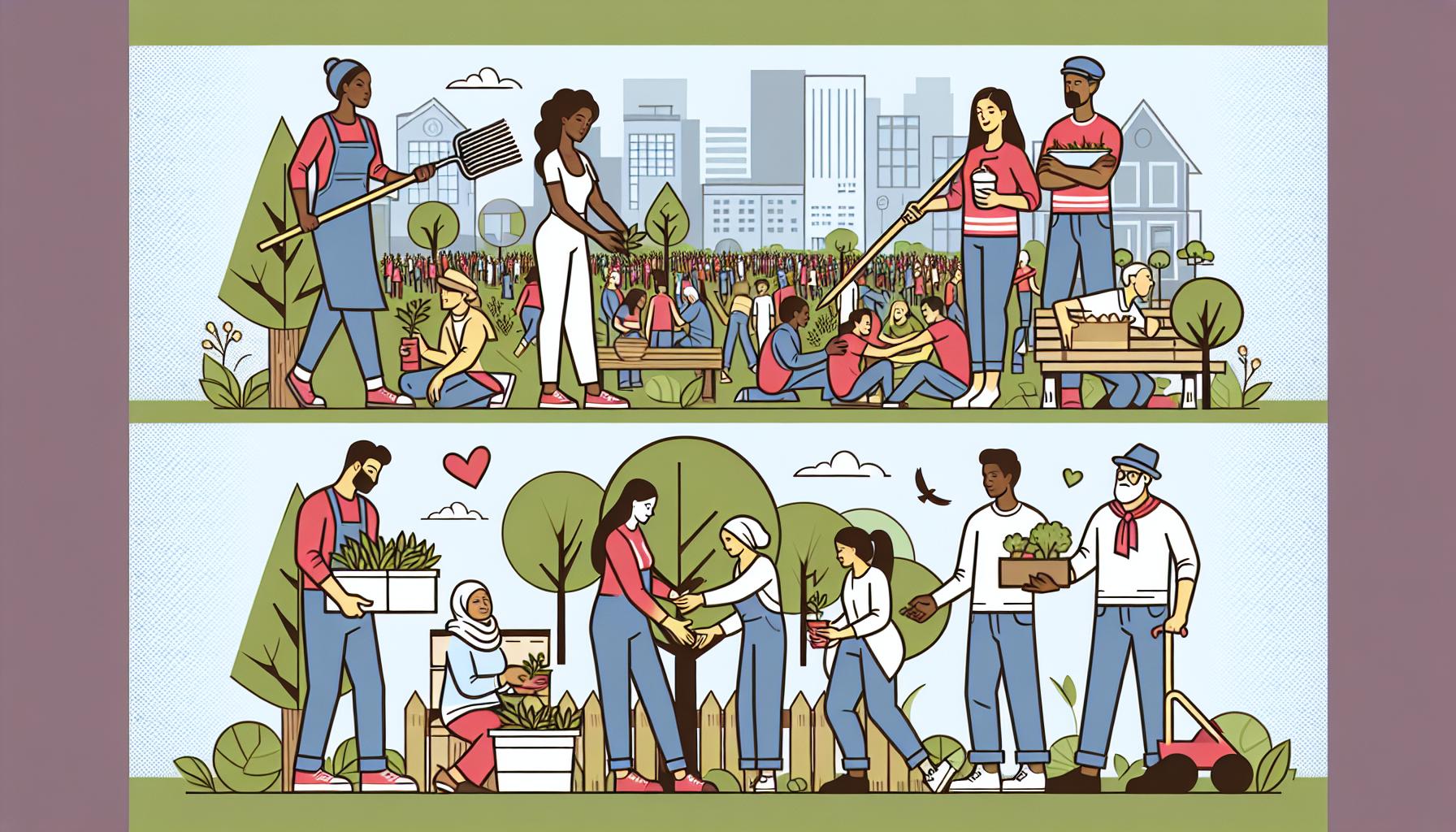
Dharma plays a crucial role in fostering community welfare, intertwining ethical principles with social harmony. It ensures the well-being of individuals and society.
Ethical Foundations
Dharma acts as a moral obligation, guiding behavior for societal betterment. It includes duties toward oneself, family, community, and the environment. Adherence to dharma helps maintain social harmony by promoting cooperation and mutual respect. Historical texts like the Vedas and the Dharmashastra outline these duties, emphasizing virtues such as truthfulness and generosity. These ethical principles form the bedrock of a well-functioning society and enhance community welfare.
Social Responsibility
Social responsibility is inherent in dharma, encouraging individuals to contribute to societal well-being. Dharma emphasizes actions that improve community life, from supporting the needy to protecting the environment. By fulfilling these responsibilities, individuals not only aid in poverty alleviation but also foster prosperity. The interconnectedness of dharma and community welfare underscores the importance of each person’s role in sustaining social harmony and improving quality of life for all members.
Case Studies

Let’s dive deeper into specific instances that illustrate how dharma influences community welfare.
Ancient Practices
- Hinduism
In ancient Hindu society, dharma guided every aspect of life, from individual responsibilities to community duties. The Apastamba Dharmasutra, an essential text, highlighted the necessity for a balance between personal duties and societal obligations. Communities thrived when individuals adhered to their dharma. For example, the role of a teacher (guru) was to impart knowledge selflessly, ensuring the intellectual and moral growth of the community. Similarly, merchants (vaishyas) were expected to engage in fair trade, fostering economic stability and social welfare.
- Buddhism
Buddhist communities historically emphasized compassion and mindfulness as key components of dharma. Buddhist monasteries served not only as centers of spiritual learning but also as hubs of social welfare. For instance, during times of famine or disease, these institutions provided food, shelter, and medical aid to those in need. The practice of dharma prompted monks to support the community, fostering resilience and harmony. Meditation practices aimed at achieving inner peace also extended to cultivating a peaceful society.
- Hinduism
In contemporary Hindu communities, dharma continues to play a pivotal role in community welfare. Organizations like the Art of Living Foundation, founded by Sri Sri Ravi Shankar, exemplify modern applications of dharma. They engage in various humanitarian activities such as disaster relief, rural development, and education programs. These initiatives reflect the timeless principle of service (seva) integral to dharma, improving societal well-being and fostering communal harmony.
- Buddhism
Modern Buddhist communities, inspired by dharma, engage in various social initiatives. The Tzu Chi Foundation, established by Dharma Master Cheng Yen in Taiwan, is a prime example. This organization spearheads environmental conservation, medical missions, and educational projects worldwide. By adhering to dharma’s principles, Tzu Chi’s efforts contribute significantly to community welfare, embodying compassion in action. Meditation retreats offered by various Buddhist centers also emphasize not just personal growth but collective well-being.
These case studies illustrate how the timeless principles of dharma continue to shape and enhance community welfare across different eras and practices.
Benefits of Dharma to Communities
Dharma significantly benefits communities by fostering social harmony and promoting ethical behavior, core aspects deeply rooted in Hinduism and Buddhism.
Enhancing Social Harmony
Dharma enhances social harmony in several ways:
- Promoting Unity and Cooperation: Dharma emphasizes unity and cooperation within communities. It encourages individuals to work together for the greater good, fostering a sense of belonging and shared responsibility. This collective effort strengthens communal bonds and results in cohesive societies.
- Resolving Conflicts: Dharma provides clear guidelines for conflict resolution. By advocating peaceful conflict resolution and promoting understanding and tolerance, it diminishes friction among community members and cultivates a peaceful environment.
- Encouraging Mutual Respect: Dharma places great importance on respecting others, fostering an environment of mutual respect and empathy. This creates harmonious communities where individuals value each other’s dignity and perspectives.
Promoting Ethical Behavior
Dharma cultivates ethical behavior through:
- Upholding Moral Values: Dharma stresses adherence to moral values such as truthfulness, generosity, and integrity. These values form the ethical foundation of community interactions, guiding behavior towards fairness and justice.
- Fostering Responsibility: Dharma emphasizes the importance of fulfilling one’s duties towards oneself, family, community, and the environment. This sense of responsibility ensures individuals contribute positively to society, promoting social welfare and environmental sustainability.
- Inspiring Compassion and Kindness: Dharma encourages acts of compassion and kindness. By practicing these virtues, community members enhance overall well-being and create a supportive and caring environment.
Through these mechanisms, dharma serves as a powerful force in promoting community welfare, directly influencing social harmony and ethical behavior.
Challenges and Criticisms
Integrating Dharma into community welfare efforts isn’t without its hurdles. Various challenges arise from cultural contexts, misinterpretations, and practical difficulties.
Cultural and Religious Contexts
Adapting Dharma to modern society often conflicts with cultural and religious contexts. The core values and practices might get diluted or misrepresented. Cultural integrity can suffer when principles of Dharma are shifted across different societal settings.
Misinterpretations
Misunderstandings around Buddhist practice affect its effectiveness in community welfare. For example, some focus on rituals devoid of self-reflection. This lack of deeper engagement can render Dharma practices superficial, missing the transformative aspects crucial for community welfare.
Sustainability
The rise of multiple Dharma centers and organizations can scatter resources, causing financial strains. New students might feel overwhelmed by the various teachings and practices available, which makes sustaining interest and commitment difficult.
Practical Difficulties
Modern settings pose logistical challenges for implementing Dharma practices like mindfulness. In educational institutions, corporations, or correctional facilities, integrating these practices needs careful consideration of existing structures. Constraints such as time, resources, and support from stakeholders can hinder effective implementation.
Conclusion
Dharma’s profound impact on community welfare can’t be overstated. By integrating ethical values and social harmony, it serves as a guiding principle for fostering unity and cooperation. While challenges exist in implementing dharma in modern contexts, its potential for promoting social welfare and environmental sustainability is immense. Embracing dharma can lead to a more balanced and compassionate society, where the well-being of individuals and communities is prioritized. Let’s strive to incorporate these timeless principles into our daily lives and collective efforts for a better future.
Sources & further reading
These themes are explored in greater depth across the following authoritative resources:
- Stanford Encyclopedia of Philosophy, Hindu Philosophy
- Britannica, Dharma
- Britannica, Karma
- Internet Sacred Text Archive, Bhagavad Gita
- A. K. Ramanujan, Speaking of Siva (Penguin Classics, 1973)
External resources for further reading. Apam Napat is not affiliated with these publishers; citation does not imply endorsement.
Based on the classical texts of Hindu mythology, see our sources.