Throughout history, rituals have provided a sense of structure and meaning, helping us navigate life’s complexities. They offer a way to honor traditions, create a sense of belonging, and foster personal growth. By understanding the spiritual significance of rituals, we can unlock a deeper sense of purpose and connection in our daily lives.
Understanding Rituals
Rituals hold profound significance in human cultures, blending spirituality and tradition. These practices offer more than routine; they create connections, structure, and meaning.
Definition and Types of Rituals
Rituals are specific, observable behaviors performed by societies, driven by tradition or sacerdotal decree. I categorize them into three main types:
- Rites of Passage: These mark an individual’s transition, such as birth, coming of age, marriage, or death.
- Communal Rites: Actions performed by communities during occasions or celebrations, reinforcing social bonds and identity.
- Personal Rites: Individual practices, often daily, that hold personal or spiritual significance.
Historical Context and Evolution
Rituals have evolved from ancient societies to modern times. Archaeological evidence shows early humans practiced burial rituals over 100,000 years ago. These acts evolved as societies developed complex belief systems and social structures. In ancient Egypt, elaborate burial rites were integral to their culture. The Middle Ages saw rituals tied to religious and communal life, like harvest festivals and religious ceremonies.
Modern rituals continue to evolve, blending tradition with contemporary practices. They remain essential, offering continuity and a link to the past while adapting to new contexts and needs.
The Spiritual Significance of Rituals

Rituals hold deep spiritual significance, intertwining faith, personal evolution, and communal harmony. They foster connections, aiding personal and collective journeys.
Connection to the Divine
Rituals create a bridge to the Divine. They give a structured path to express faith and communicate with higher powers. For instance, in Christian rituals like communion and baptism, participants engage in symbolic acts that reinforce their bond with God. Similarly, other traditions use rituals like prayer, meditation, and offerings to connect with the Divine and seek guidance or solace.
Personal Growth and Transformation
Rituals guide personal growth. They offer a framework to reflect on values and beliefs. This reflection deepens understanding of oneself and one’s place in the world. For example, regular meditation can lead to significant self-awareness and spiritual development over time, while acts like fasting might provoke insights into personal discipline and spirituality.
Community and Belonging
Rituals strengthen community bonds. They create a sense of belonging and shared purpose. Communal rites like festivals and public prayers bring people together, fostering unity and cooperation. This collective participation reinforces social cohesion and mutual support, anchoring individuals within their community.
Common Spiritual Rituals Across Cultures
Rituals around the world offer unique windows into the spiritual lives of diverse cultures. Below, I’ll explore some of these practices focusing on meditation and prayer, pilgrimages and sacred journeys, and festivals and celebrations.
Meditation and Prayer
Meditation and prayer stand as universal rituals that span cultures and traditions. Through these practices, people seek connection with the divine and introspection. Meditation encourages mindfulness and compassionate observation of thoughts, fostering inner peace and self-awareness. In many traditions, prayer involves addressing a higher power, asking for guidance, strength, or blessings. Both rituals serve as powerful tools for spiritual growth and emotional health.
Pilgrimages and Sacred Journeys
Pilgrimages and sacred journeys represent more than physical travel; they embody spiritual quests and personal transformation. Faithful followers traverse long distances to reach revered sites, experiencing collective devotion and introspective reflection. Examples include the pilgrimage to Mecca, known as Hajj, integral to Islam, and the journey to Santiago de Compostela in Spain, significant in Christianity. These travels reaffirm faith and provide a profound sense of purpose.
Festivals and Celebrations
Festivals and celebrations mark significant spiritual events and transitions, reinforcing cultural identity and community bonds. They often commemorate sacred stories, deities, or seasonal changes. Diwali, the festival of lights in Hinduism, celebrates the victory of light over darkness. The Christian celebration of Easter commemorates the resurrection of Jesus. Participating in these festivals strengthens communal ties and deepens individual faith through shared experiences.
Modern Perspectives on Spiritual Rituals
Modern spiritual rituals have evolved, blending tradition with contemporary elements to remain pertinent in today’s world. This section explores how these rituals adapt to modern society and their scientific and psychological benefits.
Adaptation in Contemporary Society
Rituals now evolve to incorporate elements like technology and modern practices. Many religious communities, for example, stream services online, allowing greater access to spiritual events. This integration of digital platforms preserves tradition while meeting the needs of a tech-savvy generation.
Other adaptations include the environmental movement’s rise, which has influenced rituals to be more eco-conscious. Rituals around seasonal events, like solstices, now often include eco-friendly practices. Such adaptations ensure rituals remain meaningful and relevant.
Scientific Insights and Psychological Benefits
Research highlights rituals’ profound impact on mental health. They reduce anxiety and stress by providing predictability and structure. For instance, meditation rituals can lower cortisol levels, a stress hormone, promoting calm.
Rituals also enhance confidence. Repeating actions in a set sequence can create a sense of mastery and control. This can be especially beneficial during uncertain times, offering emotional stability.
Also, rituals create social connectedness. Community-based rituals strengthen bonds through shared experiences. Participation in rituals, such as communal meals or festivals, fosters unity and a sense of belonging.
| Benefit | Description |
|---|---|
| Reduced Anxiety | Predictability and structure lower stress levels. |
| Enhanced Confidence | Rituals create a sense of mastery and control. |
| Social Connectedness | Shared experiences in rituals strengthen community bonds. |
Understanding these benefits offers valuable insights into why rituals remain a vital aspect of modern life.
How to Incorporate Rituals into Daily Life
Rituals can enrich daily life by instilling a sense of purpose and mindfulness. By incorporating simple yet meaningful practices, you can create personal and communal routines that nurture your well-being and spiritual growth.
Creating Personal Rituals
I focus on intention and attention when integrating rituals into my day. Setting a clear intention allows me to infuse daily habits with meaning. For example, I might start my morning with a few moments of meditation, centering myself for the day ahead. Repetition of these acts makes them more profound over time.
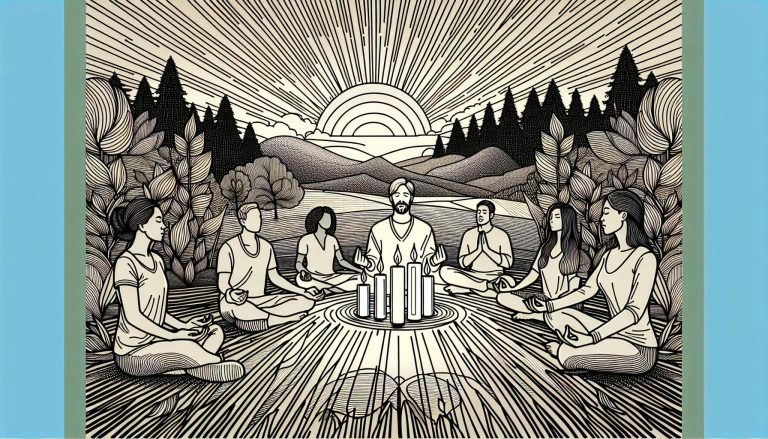
Simple practices can be easily integrated into daily routines. Lighting a candle before dinner brings a moment of calm and reflection. Taking a daily walk in nature, even for 10 minutes, helps me reconnect with the world around me. Practicing a short yoga sequence in the morning sets a positive tone for my day.
Integrating Rituals into Family and Community
Rituals take on a special significance when shared with family and community. I find joy in creating shared moments that strengthen our bonds. Family traditions, like sharing a meal together, can be turned into rituals by adding elements like expressing gratitude before eating.
Community involvement amplifies the power of rituals. Participating in community events or gatherings brings a sense of belonging. Simple acts, such as organizing a monthly neighborhood potluck, foster connections and a sense of unity.
By weaving these elements into everyday life, rituals can provide a deeper sense of connection, whether personal or communal, enhancing overall spiritual well-being.
Conclusion
Rituals, whether ancient or modern, hold profound spiritual significance. They connect us to our heritage, provide a sense of continuity, and foster personal and communal transformation. By incorporating rituals into our daily lives, we can experience enhanced mindfulness, reduced anxiety, and stronger social bonds.
I’ve found that even simple practices like morning meditation or lighting candles can have a lasting impact on my well-being. Embracing these traditions, both old and new, enriches our lives and deepens our spiritual connections.
Sources & further reading
These themes are explored in greater depth across the following authoritative resources:
- Britannica, Yoga in Hinduism
- Britannica, Puja
- Harvard Pluralism Project, Hindu Practice
- Internet Sacred Text Archive, Yoga Sutras of Patanjali
- Diana L. Eck, Banaras: City of Light (Princeton University Press, 1982)
External resources for further reading. Apam Napat is not affiliated with these publishers; citation does not imply endorsement.
Frequently asked questions
What is the spiritual significance of rituals?
Why are rituals more than repetitive actions?
How have rituals shaped human history?
Why do people across cultures perform rituals?
Based on the classical texts of Hindu mythology, see our sources.