
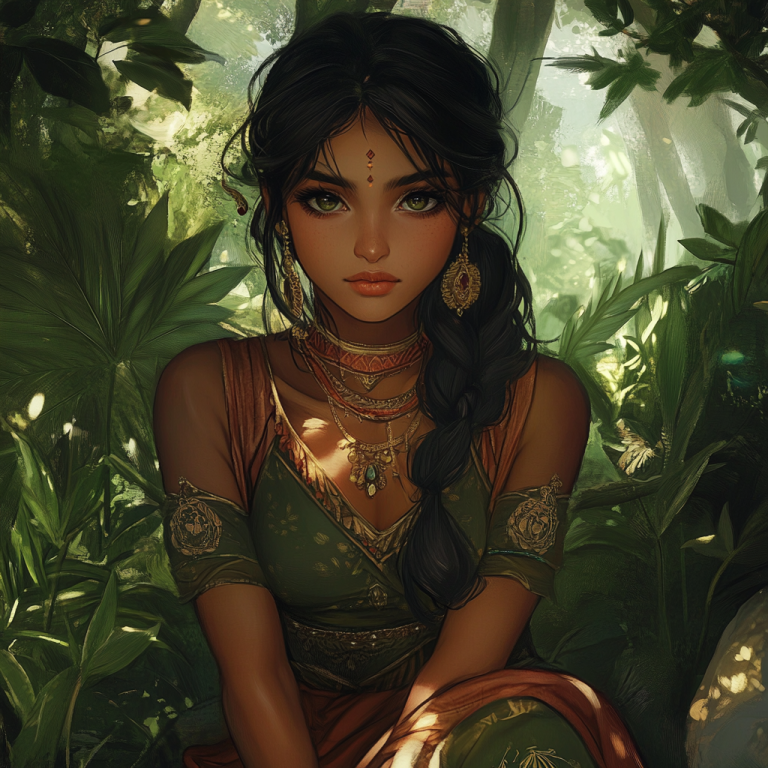
Trishanku: The King Caught Between Heaven and Earth
Trishanku, originally named Satyavrata, was a King of the Solar dynasty and the son of Prithu, the legendary king credited with making the earth fertile and establishing agriculture for humanity. His son was Dhundumara, who continued the lineage of the Solar dynasty.
The Three Sins of Satyavrata
Satyavrata, later known as Trishanku, earned his new name due to committing three major sins: killing the sacred milch cow of his teacher, the great sage Vasishta – Perceptor of the Ishvahu Clan, a rival of Vishwamitra whose destiny would later intertwine with Trishanku’s ambition:
- Misconduct in the Kingdom: As a prince, he engaged in actions deemed inappropriate, leading to his temporary exile from the kingdom.
- Killing a Perceptor’s Cow: He killed the sacred milch cow of his teacher, the great sage Vasishta, a grave sin in the Vedic tradition.
- Consuming Unsanctified Meat: He ate meat from a hunt that had not been sanctified, further violating dharma.
Due to these actions, Satyavrata was ostracized and earned the name Trishanku, meaning “one who is stuck between three states or sins.”
The Unnatural Desire to Ascend to Heaven
Despite his misdeeds, Trishanku harbored an ambitious and unnatural wish: to ascend to heaven in his mortal body. Such an act was considered a violation of the natural order. He approached his guru, Vasishta, and requested the necessary rites. However, Vasishta refused, declaring that it was against the divine laws. Undeterred, Trishanku turned to Vasishta’s sons, but they were enraged that he dared approach them after their father’s refusal. In their anger, they cursed him with a debilitating disease, forcing him to leave his kingdom and live as an outcast.
The Role of Vishwamitra – The King Who Became a Great Sage
While wandering in exile, Trishanku encountered the powerful sage Vishwamitra, famed not only for his rivalry with Vasishta but also for his later involvement in shaping the destiny of kings like Rama – An Incarnation of Vishnu. Vishwamitra began a grand yajna (sacrificial ritual) to elevate Trishanku to heaven in his mortal form.
Through the sheer power of his penance, Vishwamitra succeeded. Trishanku began ascending to heaven, causing alarm among the Devas (gods). Indra, the king of the Devas, intervened, declaring that mortals could not enter heaven in their physical bodies. Indra caused Trishanku to fall back to earth.
The Creation of Trishanku’s Heaven
As Trishanku fell, he cried out for help to Vishwamitra. In his anger and defiance, the sage used his immense ascetic power to stop Trishanku’s fall, suspending him mid-air. Determined to fulfill the king’s wish, Vishwamitra created an entirely new heaven in the void, complete with stars and celestial features, for Trishanku to reside in eternally.
The compromise was reached when the Devas agreed that Trishanku could remain in this specially created heaven but upside-down, symbolizing his transgression of the natural order. This unusual state gave rise to the term “Trishanku’s Heaven,” which has since been used metaphorically to describe being stuck in an uncomfortable or in-between state, neither here nor there.
Philosophical and Mythological Significance
The story of Trishanku highlights several key themes in Hindu mythology:
- Ambition and its Consequences: Trishanku’s desire to ascend to heaven in his mortal body represents the human tendency to defy natural limits. His predicament serves as a cautionary tale about overstepping one’s bounds.
- Conflict of Dharma: The clash between Vasishta, representing adherence to natural law, and Vishwamitra, symbolizing human will and determination, reflects the complex interplay between dharma (cosmic law) and ambition.
- The Power of Penitence and Penance: Vishwamitra’s immense spiritual power is a testament to the transformative and creative potential of penance, even when misdirected.
- The Role of the Devas: Indra and the Devas’ opposition to Trishanku’s ascent underscores their role as guardians of cosmic order, ensuring that mortals respect divine laws.
Connections to Other Stories
- Vasishta and Vishwamitra Rivalry: The story of Trishanku is one of many episodes illustrating the long-standing rivalry between Vasishta and Vishwamitra, both of whom were among the greatest sages in Hindu mythology.
- Creation and Cosmic Order: Vishwamitra’s creation of a new heaven parallels other instances in Hindu mythology where sages or deities create or alter the cosmos, just as Parashurama – Rama of the Axe reshaped the earth in the legends of reclaiming land from the sea, or in the divine episodes recorded in the Ramayana’s tales of cosmic interventions.
- Indra’s Interventions: Similar to other tales, such as those of Karna or Meghnad (Indrajit – Valorous Son of Ravana), Indra intervenes in matters where he perceives a threat to the natural or divine order.
Legacy of Trishanku
Trishanku’s tale continues to resonate as a symbolic narrative about ambition, defiance, and compromise. His “heaven” stands as a metaphorical reminder of the consequences of challenging cosmic order and the limits of human will, even when backed by divine power. In cultural discourse, “Trishanku’s Heaven” has become a phrase that vividly captures the essence of being caught between conflicting states, reflecting his enduring legacy in Indian mythology and philosophy.
Sources & further reading
These themes are explored in greater depth across the following authoritative resources:
- Stanford Encyclopedia of Philosophy, Hindu Philosophy
- Britannica, Dharma
- Britannica, Karma
- Internet Sacred Text Archive, Bhagavad Gita
- A. K. Ramanujan, Speaking of Siva (Penguin Classics, 1973)
External resources for further reading. Apam Napat is not affiliated with these publishers; citation does not imply endorsement.
Based on the classical texts of Hindu mythology, see our sources.