
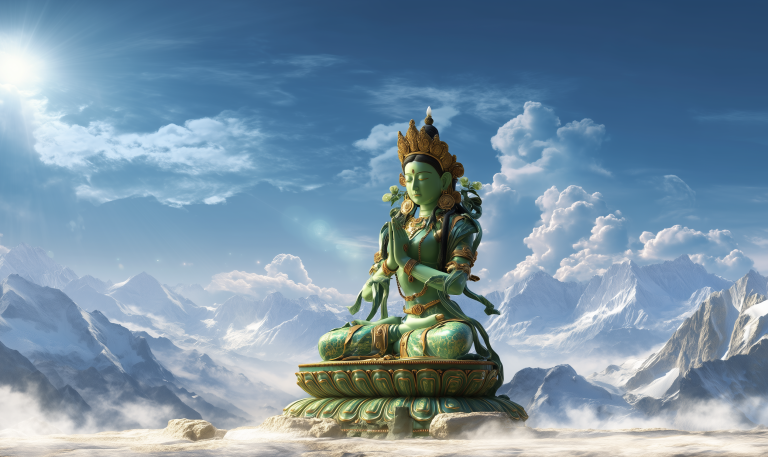
The Story of Dhruva and His Devotion
The Lineage of Swayambhuva Manu
Swayambhuva Manu, the progenitor of humankind, was created from a portion of Lord Vishnu’s divine form. He is revered as the first Manu of the current Manvantara cycle. (Explore more about Vishnu’s cosmic role in the Dasavatara traditions.)
- Uttanapada
- Priyavrata
From this lineage, Uttanapada inherited his father’s vast kingdom.
| Manu’s Family Tree | Significance |
|---|---|
| Swayambhuva Manu | First Manu; partial expansion of Vishnu |
| Satarupa | Wife of Manu; symbol of ideal womanhood |
| Uttanapada | Father of Dhruva |
| Priyavrata | Brother of Uttanapada; a great ruler |
The Family of Uttanapada
Uttanapada had two wives:
- Suruchi, his favored queen, bore him a son named Uttama.
- Suniti, his neglected wife, gave birth to Dhruva.
Uttanapada’s excessive affection for Suruchi caused him to ignore both Dhruva and Suniti, sowing seeds of resentment and sadness in the young prince’s heart.
Dhruva’s Humiliation and Determination
One day, the young Uttama was playing joyfully on the lap of his father. Dhruva, witnessing this, was filled with a desire to join his step-brother. As Dhruva approached to sit on his father’s lap, his stepmother Suruchi rebuked him with cruel words:
“Fie on you! You are not worthy of this honor. Although you are the King’s son, you are not mine. Know that only my children can hope for honor in this kingdom. You may not sit on the King’s lap, nor on the throne. If you desire honor, the only way open to you is asceticism. Go and perform penance and give up this futile attempt!”
These words pierced the innocent heart of Dhruva. To make matters worse, his father Uttanapada, though witnessing this injustice, remained silent, bound by his infatuation with Suruchi. Humiliated and tearful, Dhruva rushed to his mother Suniti, who was his only source of solace.
Suniti gently consoled Dhruva and said:
“Son, though her words were harsh, they carry a profound truth. No son of mine can aspire to joy or honor in this kingdom, for your father is controlled by her will. But despair not! If you desire a position greater than this earthly throne, seek refuge in Lord Vishnu, the Supreme Being. He alone can grant you a place of unparalleled glory.”
Encouraged by his mother’s advice, Dhruva resolved to perform penance. That very night, with a heart full of resolve, the young prince silently left the palace and set out for the forest.
Dhruva’s Quest for Lord Vishnu
As Dhruva wandered into the forest, the sages-the divine sons of Brahma-took notice of his earnest determination. Among the sages who guided Dhruva were the illustrious Sapta Rishis-the seven great seers who hold eternal positions in the cosmos and play vital roles across the yugas.
Each sage offered him words of wisdom, guiding him toward Lord Vishnu, the ultimate refuge of all creation.
| Sage | Words of Counsel |
|---|---|
| Marichi | “None can attain a supreme position without the worship of Lord Vishnu, the Supreme Being.” |
| Atri | “He is intangible, omniscient, and omnipresent; meditate upon Him alone.” |
| Angirasa – Father of Brihaspati | “Worship Govinda-He who contains the universe within Himself.” |
| Pulaha | “By Vishnu’s grace, even Indra attained the kingship of the Devas.” |
| Kratu | “Pray to Janardhana, the Lord of Yagnas, for He alone can fulfill your desires.” |
| Vasishta – Perceptor of the Ishvahu Clan | “Chant the eternal Mantra, ‘Om Namo Bhagavate Vasudevaya’, as your grandfather Manu once did.” |
Dhruva’s Penance in Madhuvan
Following their instructions, Dhruva journeyed to the Madhuvan forest, a sacred place on the banks of the Yamuna River. In later ages, this forest would be known as the site of the demon Madhu, and his son Lavana, who would later be slain by Shatrughna – Twin of Laxmana, the brother of Rama.
His asceticism became a turning point in the lives of seekers, immortalized in the Vishnu-Dhruva narrative that continues to inspire devotion and spiritual resolve today.
In the serene Madhuvan, Dhruva began his tapas (penance), chanting continuously:
“Om Namo Bhagavate Vasudevaya!”
The severity of Dhruva’s penance sent ripples across the universe. The heavens trembled, the earth quaked, and even the Devas were disturbed. Indra, the King of the Devas, fearing that Dhruva might supplant him, attempted to disrupt the penance. He sent illusions and armies of demons to frighten the young boy, but Dhruva remained unmoved, his mind firmly fixed on Lord Vishnu.
Lord Vishnu Appears
Pleased with Dhruva’s unshakeable devotion, Lord Vishnu Himself appeared before him in all His resplendent glory. Overwhelmed by the divine vision, Dhruva fell at the feet of the Lord. The profound appearance of Vishnu and His divine blessings reiterate themes echoed throughout the Dasavatara stories, especially about the Lord’s descent to uplift His devotees.
Vishnu lovingly said:
“O Prince! Arise! Your devotion has pleased Me greatly. Ask of Me any boon, and it shall be yours.”
Dhruva, humble and tearful, replied:
“O Lord, I desired nothing but to see You. I have seen You now, and that alone is my reward.”
The Lord smiled and said:
“I know of your heart’s desire, O Dhruva. Your stepmother’s cruel words have wounded you, but I shall elevate you to a position far above all earthly thrones.”
Dhruva Becomes the Pole Star
Vishnu blessed Dhruva with immortality and granted him a place as Dhruva Nakshatra-the Pole Star-a position above all the celestial bodies.
| Blessing | Significance |
|---|---|
| Elevated above the Sapta Rishis | Dhruva became the guiding star for all travelers and seekers. |
| Suniti’s Immortal Presence | His mother Suniti joined him as a star, a symbol of maternal devotion. |
| Eternal Recognition | Dhruva became a symbol of determination, devotion, and unwavering faith. |
Thus, Dhruva, through his devotion, humility, and penance, earned a position greater than his father’s lap-a place of eternal honor in the heavens.
Moral and Legacy
The story of Dhruva is one of unwavering faith, determination, and the triumph of devotion over adversity. Dhruva’s penance teaches that:
- True honor comes from spiritual elevation, not earthly power.
- Devotion to Lord Vishnu transcends all limitations of birth and circumstance.
- Even the Devas and celestial forces cannot resist the power of pure, determined devotion.
Today, Dhruva Nakshatra-the Pole Star-stands as a beacon of guidance, reminding humanity of the infinite grace of the Supreme Being and the rewards of steadfast devotion.
Sources & further reading
These themes are explored in greater depth across the following authoritative resources:
- Internet Sacred Text Archive, Rig Veda (Griffith translation)
- Internet Sacred Text Archive, Upanishads
- Britannica, Veda
- Britannica, Upanishad
- Patrick Olivelle, The Early Upanishads (Oxford University Press, 1998)
External resources for further reading. Apam Napat is not affiliated with these publishers; citation does not imply endorsement.
Based on the classical texts of Hindu mythology, see our sources.