
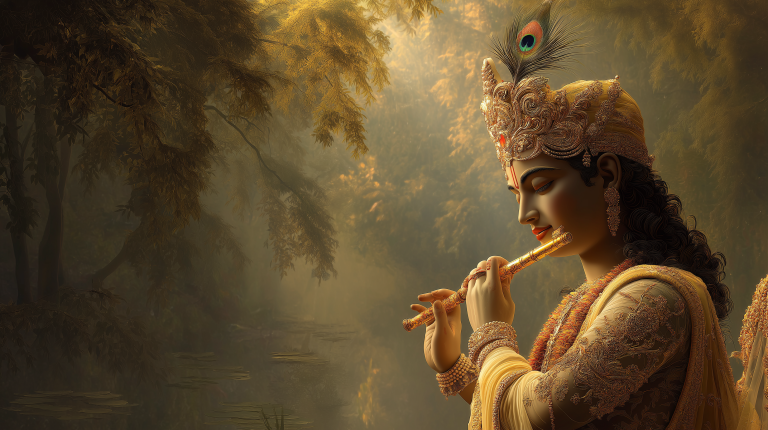
This pivotal episode is a tale of dharma, divine intervention, and the assertion of Krishna’s supremacy. It underscores the interplay of fate, free will, and cosmic justice, connecting it deeply to other narratives in Hindu mythology.
The Rajasuya Yagna Begins
Yudhishthira, having established his sovereignty through the campaigns of his brothers, commenced the grand Rajasuya Yagna (imperial sacrifice). Monarchs, sages, and warriors from all corners of Bharatavarsha gathered to witness the ceremony. Among the attendees was Shishupala – The King of Chedi, the King of Chedi, known for his animosity towards Krishna.
The Offering of Arghya to Krishna
As was customary, the most honored guest of the Yagna was to be offered the Arghya (a ceremonial offering of respect). Bhishma proposed that the honor be given to Krishna, declaring:
This moment is not just about reverence but underscores Bhishma’s consistent alignment with dharma over bloodline or bias, a conviction that made him both respected and controversial. (Read about Bhishma’s philosophy of duty)
“Krishna is not just a great warrior but the embodiment of dharma. He has saved the world from tyrants like Kamsa and Narakasura – The Asura Who Gave Us Diwali, and his wisdom sustains the Pandavas. No one here is more deserving of this honor.”
The assembly, including revered monarchs, unanimously approved. However, Shishupala stood in opposition.
Shishupala’s Opposition and Insults
Shishupala, burning with envy, mocked the gathering:
“How can this cowherd, born in a low clan, be considered superior to these illustrious kings? Krishna, who abandoned his city to Jarasandha – King of Magadha’s flames, is no hero. Even his slaying of Kamsa was an act of treachery, killing his maternal uncle in a wrestling match. Are we to honor this betrayer?”
His taunts targeted not only Krishna but also Bhishma, whom he accused of senility and hypocrisy, citing Bhishma’s abduction of Amba. Shishupala’s vitriol escalated to a crescendo, casting aspersions on Krishna’s lineage, birth, and character.
The Assembly Reacts
Shishupala’s words enraged the assembly. Sahadeva, one of the Pandavas, rose and challenged:
“If anyone here doubts Krishna’s worthiness, let him face me in battle.”
His outburst reflected not just familial loyalty but the astute moral clarity of Sahadeva, known for his wisdom and foresight in the epic’s most pivotal decisions (learn more about Sahadeva’s role).
Bhishma, ever composed, attempted to calm the assembly. Turning to Yudhishthira, he said:
“Fear not, my child. Shishupala’s fate is sealed. Krishna has promised to pardon him for a hundred sins, but that limit is near. Watch as the divine will unfolds.”
Shishupala’s Origins and Curse
Bhishma revealed Shishupala’s divine origins:
“Shishupala was born with three eyes and four arms. A celestial voice declared that his slayer would cause these extra limbs to fall off. When Krishna held the infant, the excess limbs disappeared. His mother, Krishna’s aunt, begged Krishna to spare her son. Krishna promised to forgive him a hundred offenses but vowed to end his life after that.”
His story, marred by envy and cosmic curse, reveals the deeper layers of Shishupala’s complex mythological identity (explore more about Shishupala here).
Shishupala’s story is intertwined with the curse of Jaya and Vijaya, the gatekeepers of Vaikuntha. Cursed to be born as mortals for denying entry to sages, they chose to be Vishnu’s adversaries in three lifetimes-Hiranyakashipu and Hiranyaksha, Ravana and Kumbhakarna – Brother of Ravana, and finally Shishupala and Dantavakra-each time destined to be slain by Vishnu.
The Divine Wrath of Krishna
As Shishupala’s tirade continued, Krishna finally spoke:
“Shishupala, your transgressions have reached their limit. Despite being my kin, you have insulted dharma and tormented the innocent. Your sins against the Vrishni clan and humanity cannot go unpunished.”
Krishna invoked his divine weapon, the Sudarsana Chakra. With a single motion, the discus flew across the hall and severed Shishupala’s head. From the lifeless body, a radiant light ascended and merged into Krishna, signifying Shishupala’s return to his divine origin as a part of Vishnu.
Connections to Other Myths
| Theme | Connection in Hindu Mythology |
|---|---|
| Cursed Adversaries | Jaya and Vijaya’s three mortal lives as Vishnu’s enemies, also seen in Ravana and Hiranyakashipu. |
| Divine Reincarnation | Shishupala’s soul merging with Krishna mirrors Ravana’s liberation by Rama in the Ramayana. |
| Forgiveness and Justice | Krishna’s patience with Shishupala parallels his tolerance of Duryodhana before the Kurukshetra war. |
Aftermath of Shishupala’s Death
Yudhishthira, despite the turmoil, ensured Shishupala’s proper funeral rites. The throne of Chedi was passed to Shishupala’s son, restoring order. The Rajasuya Yagna resumed, and the assembled kings marveled at Krishna’s divine justice and power.
Krishna, too, returned to Dwaraka, his role as both mortal and divine firmly etched in the hearts of those present.
Key Lessons
| Lesson | Explanation |
|---|---|
| Supremacy of Dharma | Krishna’s actions illustrate that righteousness and justice outweigh personal connections. |
| Divine Patience | Krishna’s hundred pardons demonstrate his infinite patience before enacting justice. |
| Inevitability of Karma | Shishupala’s fate reflects the inescapable consequences of actions, a central theme in the Mahabharata – The Great Epic. |
Broader Significance
The tale highlights Krishna’s multifaceted role as a protector, destroyer, and upholder of dharma. It showcases his ability to balance compassion with justice, reinforcing his status as an avatar of Vishnu. Shishupala’s end serves as a reminder that even divine forgiveness has limits when dharma is threatened.
This episode not only sets the stage for the Kurukshetra war by emphasizing Krishna’s centrality but also reflects the enduring struggle between arrogance and humility, ego and devotion, chaos and cosmic order. For a more detailed dive into how this scene foreshadows the coming storm of the Mahabharata, you can read this in-depth analysis of the Rajasuya Yagna and its implications for cosmic justice (read the Mahabharata article).
Sources & further reading
These themes are explored in greater depth across the following authoritative resources:
- Stanford Encyclopedia of Philosophy, Hindu Philosophy
- Britannica, Dharma
- Britannica, Karma
- Internet Sacred Text Archive, Bhagavad Gita
- A. K. Ramanujan, Speaking of Siva (Penguin Classics, 1973)
External resources for further reading. Apam Napat is not affiliated with these publishers; citation does not imply endorsement.
Based on the classical texts of Hindu mythology, see our sources.