
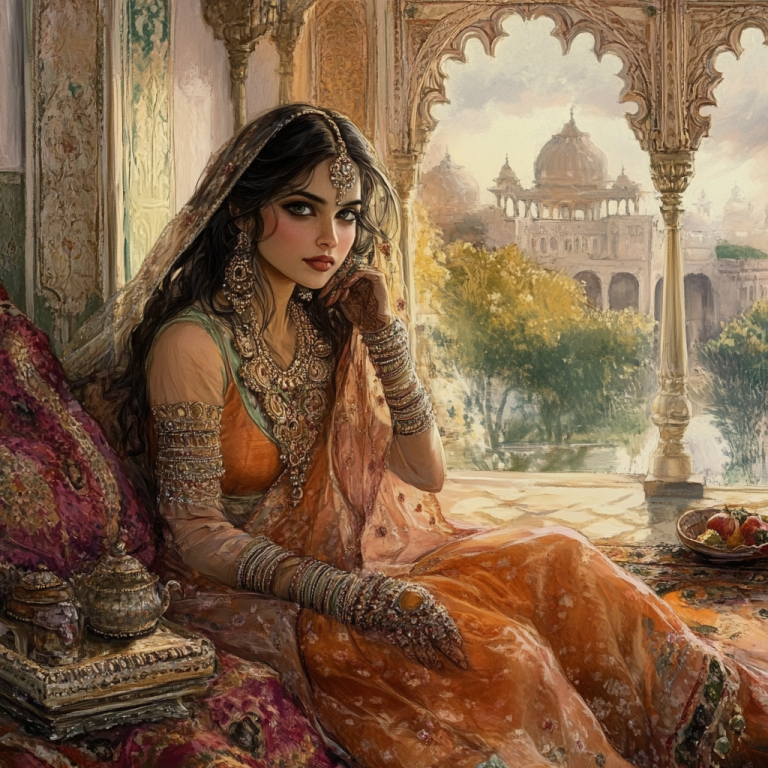
The Rajasuya Yagna and Shishupala – The King of Chedi’s Outrage
Preparations for the Rajasuya Yagna
With all the kings either allied with him or acknowledging his supremacy through tribute, Yudhishthira had established himself as an emperor, making him eligible to perform the Rajasuya Yagna-a sacrifice that symbolized imperial sovereignty. His treasury overflowed with the wealth brought by his brothers’ conquests and the tributes offered by subordinate rulers. Seeing this opportune time, his ministers approached him and said, “O King, the time is ripe for you to perform the Rajasuya Yagna. Let there be no delay. Appoint Ritwiks (priests) and begin the preparations. Invite your friends and allies to witness this momentous occasion.”
While these discussions were underway, Krishna arrived at Indraprastha, bringing untold wealth from the Vrishni kingdom as gifts for his beloved cousins. Yudhishthira received Krishna warmly and, after exchanging pleasantries, sought his counsel.
“O Krishna,” Yudhishthira said, “by your grace, I have achieved such great fortune. My heart desires to perform the Rajasuya Yagna and distribute my wealth among Brahmanas and those deserving of charity. Please grant me your permission and assist me in this noble endeavor.”
Krishna replied with a smile, “O King, you deserve all the honor and dignity that comes with such a sacrifice. Proceed with your preparations, and I shall assist you wholeheartedly. Assign me any task, and I shall perform it with diligence.”
With Krishna’s blessings, Yudhishthira set about making arrangements for the grand sacrifice. He entrusted Sahadeva with the task of collecting all the materials deemed necessary by the Brahmanas and priests for the ceremony. Sage Vyasa was consulted to appoint the Ritwiks, and he himself took on the role of the Brahma Priest. Other learned Brahmanas, including Susaman, Yagnavalkya, and Paila, were appointed to various roles in the rituals.
Invitations and Logistics
Yudhishthira dispatched emissaries to invite kings, sages, merchants, and virtuous citizens from all corners of the world. Among them was Bhagadatta, the elephant-warrior king of Pragjyotisha, whose presence added prestige and regional power to the gathering.
Despite the scale, Yudhishthira’s humility shone through. He said to the Kuru elders, “O revered ones, all that I possess is yours. Spend as you see fit to ensure the success of this sacrifice, for its glory belongs as much to our clan as to me.”
He appointed responsibilities to each prominent figure. Dushasana was tasked with overseeing food arrangements, Ashwatthama – Son of Drona attended to the Brahmanas, and Bhishma and Drona supervised the entire event. Duryodhana collected tributes from the attendees, while Kripa distributed gifts to the Brahmanas. Krishna himself took charge of worshiping the Brahmanas.
The Grand Ceremony
The Rajasuya Yagna commenced with great pomp. Six sacrificial fires were lit, and oblations of clarified butter and other offerings were poured into them amidst the chanting of Vedic hymns. For days, the sacrificial rituals continued, pleasing the gods and bringing prosperity to the land.
On the final day, as the culminating ceremony approached, the central sacrificial hall was filled with kings, sages, and dignitaries, including the divine sage Narada. Yudhishthira, following protocol, sought Bhishma’s guidance on offering Arghya-a ceremonial gesture of respect.
“O Grandsire,” Yudhishthira asked, “to whom should the first Arghya be offered?”
Bhishma, the venerable elder, replied without hesitation, “O King, among all present, Krishna is the most deserving. As Surya (the sun) is foremost among luminous objects, Krishna is supreme among those assembled here. Honor him first.”
Shishupala’s Outrage
As Yudhishthira followed Bhishma’s advice and offered the first Arghya to Krishna, the assembly erupted in applause. Krishna accepted the honor with a smile. However, not everyone was pleased.
Shishupala, the King of Chedi, stood up in fury. His long-standing animosity toward Krishna boiled over as he addressed the assembly.
“O Yudhishthira,” Shishupala began, “your judgment is flawed. Among this august gathering of kings and sages, you have chosen to honor this cowherd from the Vrishni race! Have you forgotten that your elders Bhishma, Drona, and Kripa are present? What of Karna, Ashwatthama, or even Duryodhana? How can you overlook warriors like Salya and Ekalavya, or sages like Vyasa, to offer this worship to Krishna?”
His tirade continued, growing more venomous. “This Krishna is neither a king nor a true warrior,” Shishupala sneered, ignoring Krishna’s many heroic deeds and divine status that would ultimately culminate in his return to Vaikunta – The Abode of Vishnu, the celestial abode of Vishnu, whose avatar he embodied.
The assembly fell silent, stunned by Shishupala’s audacity. Krishna, however, remained calm-a moment that resonates with many such divine confrontations in the Mahabharata – The Great Epic, where cosmic dharma is reaffirmed through difficult moral trials.
The Ominous End
Shishupala’s allies, swayed by his speech, left the assembly in solidarity. However, most of the attendees remained, silently disapproving of Shishupala’s conduct. Krishna, who had vowed to forgive Shishupala’s first hundred offenses, kept his silence. But the tension in the air hinted at the storm that would follow.
Shishupala’s actions set the stage for a confrontation that would culminate in his downfall, further entrenching Krishna’s divine authority and reinforcing the Pandavas’ rightful claim to their empire.
Legacy of the Rajasuya Yagna
The Rajasuya Yagna solidified Yudhishthira’s position as emperor and became a pivotal milestone in the Pandavas’ rise, yet, as explored in later episodes of the Mahabharata, this very glory planted the seeds of envy that would grow into Duryodhana’s bitter scheming.
Sources & further reading
These themes are explored in greater depth across the following authoritative resources:
- Britannica, Yoga in Hinduism
- Britannica, Puja
- Harvard Pluralism Project, Hindu Practice
- Internet Sacred Text Archive, Yoga Sutras of Patanjali
- Diana L. Eck, Banaras: City of Light (Princeton University Press, 1982)
External resources for further reading. Apam Napat is not affiliated with these publishers; citation does not imply endorsement.
Based on the classical texts of Hindu mythology, see our sources.