
The Death of Parikshit – Son of Abhimanyu and the Curse of Takshaka
Parikshit: The Just and Illustrious King
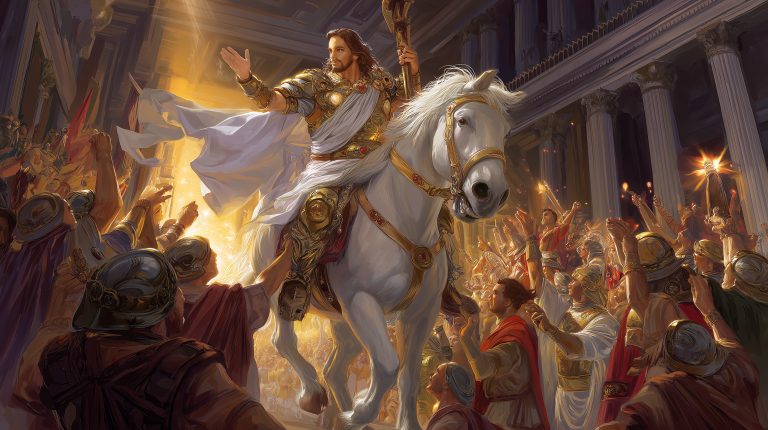
King Parikshit, son of Abhimanyu – The Brave Young Warrior and grandson of Arjuna, inherited the Kuru throne after the Pandavas retired to the Himalayas. His reign is remembered as a golden age of justice and prosperity. Parikshit’s rule marks a critical chapter in the continuity of the Kuru dynasty. To explore his broader significance, see the detailed profile of King Parikshit, including his dharmic rulership and spiritual legacy.
Parikshit’s rule connects to the greater Mahabharata – The Great Epic narrative, emphasizing the continuity of the Kuru dynasty after the devastating Kurukshetra War. As the sole surviving heir of the Pandavas, Parikshit’s life was destined to bridge the transition from the age of heroes to the age of ordinary rulers.
The Incident in the Forest
One day, while hunting in the forest, Parikshit was separated from his entourage. Lost, thirsty, and hungry, he stumbled upon the hermitage of a great Rishi, Shamika, who was in deep meditation. Parikshit humbly requested food and water, but the Rishi, observing a vow of silence, did not respond.
Enraged by what he perceived as disrespect, Parikshit noticed a dead snake nearby. In a fit of anger, he lifted the snake with the tip of his bow and garlanded the meditating sage with it. Despite the insult, Shamika remained unmoved, continuing his penance.
Sringin’s Curse
The sage’s son, Sringin, born of a mystical union with a cow, learned of the incident from a friend who taunted him about his father’s insult. Such curses in Hindu mythology often channel cosmic retribution, similar to others involving sages, gods, and serpents like Takshaka – The King of Serpents, whose role is deeply intertwined with karmic justice. Consumed by anger, Sringin cursed Parikshit:
“Since King Parikshit has insulted my father with a dead snake, let him be bitten by Takshaka, the king of serpents, and die within seven days.”
When Shamika learned of his son’s rash actions, he was deeply grieved. He rebuked Sringin, explaining that Parikshit was a just king whose momentary lapse should have been forgiven. He sent his disciple, Gurumukha, to warn Parikshit of the curse and urge him to take precautions.
This moment echoes other instances of curses in Hindu mythology where anger leads to devastating consequences:
- Durvasa’s curse on Shakuntala – Mother of Bharata, leading to estrangement from her husband Dushyanta.
- Daksha’s curse on Shiva, triggering the destruction of his Yagna.
Parikshit’s Preparation for Death
Upon learning of the curse, Parikshit felt deep remorse for his actions but accepted his fate with dignity. To protect himself, he ordered the construction of a single-pillared palace, surrounded by a moat, where he lived guarded by warriors, Brahmanas, and serpent-repelling experts. The king spent his remaining days listening to the Vedas and Puranas, seeking spiritual solace.
This act of preparing for death resonates with the concept of vanaprastha in Hindu Dharma, where kings and householders withdraw from worldly life to focus on liberation (moksha).
Takshaka’s Encounter with Kashyapa
Meanwhile, Takshaka, the king of serpents, set out to fulfill the curse. On his way, he encountered the Brahmana Kashyapa (possibly the progenitor of the Nagas), who claimed he could neutralize Takshaka’s venom and save Parikshit. Takshaka’s cunning methods and divine origin reflect the duality of serpent deities in Hindu cosmology. Discover more about his role and mythological roots on the Takshaka entity page. To test him, Takshaka bit a mighty banyan tree, reducing it to ashes. Kashyapa used his yogic powers and mantras to restore the tree to life.
| Entity/Story | Connection to Kashyapa and Takshaka |
|---|---|
| Samudra Manthan (Churning of the Ocean) | Takshaka is one of the prominent Nagas, tied to the cosmic events that produced Vishnu’s serpent mount, Ananta. |
| Vasuki as Churning Rope | The Nagas, as serpents, have dual roles: destructive (as in Takshaka’s venom) and supportive (as in Vasuki). |
| Shiva and Snake Symbolism | Serpents are often associated with divine energy, as seen in the snake adorning Shiva’s neck. |
Takshaka, realizing Kashyapa’s power, persuaded him to accept wealth and abandon his mission. Kashyapa, recognizing Parikshit’s death as destined, agreed and returned home.
Parikshit’s Death
Takshaka devised a cunning plan. He transformed into an insect and hid inside a fruit, which was carried to Parikshit by disguised Nagas. As fate would have it, Parikshit chose this very fruit. When the insect emerged, Parikshit mockingly placed it on his neck, saying:
“If this tiny insect is Takshaka, let him fulfill the curse!”
Takshaka resumed his true form, coiled around Parikshit, and bit him. The venom was so potent that it burned the king to ashes. Thus, the curse of Sringin was fulfilled.
Janamejaya – Son of Parikshit’s Revenge: The Snake Sacrifice
Parikshit’s death left the throne to his young son, Janamejaya. Upon reaching adulthood, Janamejaya vowed revenge against Takshaka and the Nagas. He performed the Sarpasatra (Snake Sacrifice), a grand Yagna intended to destroy all serpents.
During the ritual, thousands of Nagas were consumed by fire. Takshaka, fearing for his life, sought refuge with Indra, who protected him. However, Janamejaya’s priests began chanting mantras to summon Takshaka along with Indra’s throne.
The event also sheds light on the ambivalent role of serpent beings. For a broader understanding, explore the spiritual and mythological significance of Naga and snake deities in Hinduism, who embody both protective and destructive powers.
The intervention of the wise sage Astika, born of a Naga mother, ended the sacrifice. He persuaded Janamejaya to forgive Takshaka, emphasizing the importance of mercy and the cyclical nature of karma.
| Event/Entity | Connection to Snake Sacrifice |
|---|---|
| Samudra Manthan | The Nagas’ origin from Vasuki during the churning of the ocean ties them to cosmic events. |
| Astika’s Role | Astika, like Krishna, highlights the role of diplomacy and wisdom in resolving conflicts. |
| Cycle of Karma | The repeated conflicts between Nagas and humans underline the inevitability of karma in Hindu lore. |
Cosmic Themes and Symbolism
| Theme | Lesson/Connection |
|---|---|
| Karma and Destiny | Parikshit’s death fulfills the curse, emphasizing the inescapable nature of karma. |
| The Power of Curses | Curses in Hindu mythology often serve as instruments of cosmic balance, as seen with Gandhari’s curse on Krishna. |
| Nagas as Dual Symbols | Nagas embody dual roles of protectors and destroyers, symbolizing the ambivalence of nature. |
| Acceptance of Fate | Parikshit’s dignified acceptance of his death mirrors the resignation of Bhishma on the battlefield. |
Connections to Other Myths
| Story/Entity | Connection to Parikshit’s Tale |
|---|---|
| Bhishma’s Death | Both Parikshit and Bhishma accept their deaths as inevitable, demonstrating adherence to Dharma. |
| Krishna and Gandhari’s Curse | Gandhari’s curse on Krishna mirrors Sringin’s curse, both triggering catastrophic events. |
| Samudra Manthan | Takshaka and Vasuki, both Nagas, represent the cosmic interplay between creation and destruction. |
Conclusion
The story of Parikshit’s death and the curse of Takshaka is a profound narrative of arrogance, repentance, and cosmic justice. It highlights the inevitability of karma, the power of curses, and the delicate balance between human actions and divine will. The subsequent Sarpasatra performed by Janamejaya adds another layer of complexity, symbolizing the cycle of revenge and reconciliation that pervades Hindu mythology. Through its connections to the Nagas, sages, and celestial beings, this tale reinforces the interwoven nature of all life in the cosmic order.
Sources & further reading
These themes are explored in greater depth across the following authoritative resources:
- Britannica, Asura
- Britannica, Naga
- Mythopedia, Hindu Mythology
- Internet Sacred Text Archive, Mahabharata
- Wendy Doniger, Hindu Myths (Penguin Classics, 1975)
External resources for further reading. Apam Napat is not affiliated with these publishers; citation does not imply endorsement.
Based on the classical texts of Hindu mythology, see our sources.