
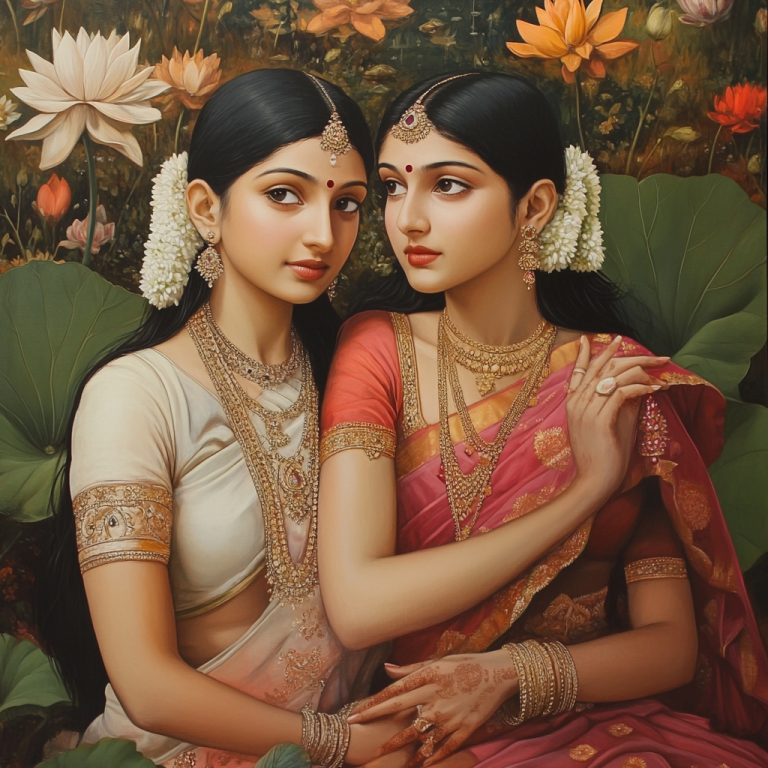
The Tale of Chyavana – Sage Who Helped the Ashwinis and Sukanya – The Wife of Chyavana
Based on [Maha:10.18]
Once upon a time, in the age of the ancient Rishis, there was a great sage named Chyavana. Known for his immense yogic power and wisdom, Chyavana resolved to undertake a penance so profound that it would last centuries. With unwavering determination, he abstained from food and water, meditating motionlessly under the open sky. As the centuries passed, his body became one with nature, his form encased in an anthill, which became a monument to his asceticism. Over time, people forgot his location, and his penance became a legend whispered in the forests.
Sukanya’s Innocent Mistake
One day, Sukanya, the lively and curious teenage daughter of a local king, accompanied her father and his retinue to the forest. Restless under the midday sun, she wandered away from the group, her youthful curiosity leading her to Chyavana’s hermitage. The once-thriving Ashram was now a ruin, the sage’s presence obscured by the anthill.
As Sukanya explored the mysterious site, she noticed two glowing orbs within the anthill. Intrigued, she picked up a stick and poked them. To her horror, the glowing lights vanished, followed by a low moan of pain emanating from the mound. Unaware that she had blinded the meditating sage, Sukanya fled back to her father’s side, trembling with fear.
The King’s Discovery
The harm inflicted on Chyavana reverberated through nature and the king’s retinue. Illness, unease, and misfortune spread rapidly among them. Disturbed by these events, the king consulted his astrologers, who revealed the cause: a great sage had been harmed and was in distress. Realizing that this must be the legendary Chyavana, the king gathered his court and followed Sukanya to the hermitage.
When they arrived, the anthill had crumbled, and Chyavana sat in meditation, blood streaming from his blinded eyes. The king and his retinue prostrated themselves before the sage, humbly begging his forgiveness. Sukanya tearfully confessed her mistake, pleading for his pardon.
Sukanya’s Atonement
The sage, though blind, perceived Sukanya’s remorse. He said, “O King, your daughter’s act was one of curiosity, not malice, yet I have been grievously harmed. My penance, vision, and independence are now lost. How can I continue my path of asceticism?”
Overcome with guilt, Sukanya declared, “O great sage, allow me to atone for my mistake. I will dedicate my life to your service as your wife. I will care for you, aid your penance, and ensure you are never alone in your struggles.”
The king was horrified. “Child,” he exclaimed, “you are a princess, accustomed to luxury. A hermit’s life is harsh, filled with toil and privation. You are too young to bind yourself to such a life.”
Chyavana, too, sought to dissuade her. “You are under no obligation to make such a sacrifice. I am old and blind; you are young and have your whole life ahead of you. Seek a future more fitting for your station.”
But Sukanya’s resolve was unshaken. With her father’s reluctant consent, she married the sage, dedicating herself to his service. Despite the challenges of her new life, she found contentment in her husband’s wisdom and inner peace.
The Ashwinis’ Temptation
Years passed, and Sukanya’s devotion to Chyavana became renowned. One day, the Ashwini Kumaras, the divine twin physicians of the gods, saw Sukanya fetching water from the river. Struck by her beauty, they approached her and said, “Why waste your youth caring for an old, blind sage? We are young, handsome, and divine. Abandon him and choose one of us as your husband.”
Outraged, Sukanya rebuked them. “Shame on you! My husband’s virtues surpass your divine allure. He is my lord, and I am his devoted wife. Leave, or I will invoke his wrath upon you!”
Chastened, the Ashwinis retreated. Yet, unable to forget her, they devised a plan to win her favor. The next day, they approached her again, offering to restore Chyavana’s youth and sight as atonement for their earlier conduct. Although tempted by the thought of her husband regaining his vitality, Sukanya refused to act without his consent.
Chyavana’s Transformation
When Sukanya recounted the Ashwinis’ offer, Chyavana smiled. “Would you prefer me as a young and sighted man?” he asked gently.
Sukanya replied, “I love you as you are, but I bear the guilt of your blindness. If you can regain your sight and youth, it would ease my heart.”
Chyavana agreed, and together they met the Ashwinis at the river. The twins instructed Chyavana to hold their hands and immerse himself in the water. When the three emerged, Chyavana was transformed-his youth and sight restored, his visage as radiant as the Ashwinis themselves.
However, Sukanya was dismayed. The sage now looked identical to the divine twins, and she feared she might fail to recognize her husband. She prayed fervently to Lord Shiva – The Destroyer, seeking guidance. Examining the three men closely, she observed their eyes. The Ashwinis’ gazes were filled with vanity, while Chyavana’s held the serene love and wisdom she knew so well. Without hesitation, she chose him, her faith unwavering.
Humbled by Sukanya’s devotion and discernment, the Ashwinis sought Chyavana’s forgiveness.
The Ashwinis’ Reward
Chyavana said, “Your gift of youth and sight is invaluable. In return, I will teach you forgotten Vedic hymns. With these, you may claim your rightful share of the sacrificial offerings (Havis), which have long been denied to you by Indra – The King of Heaven.”
Grateful, the Ashwinis learned the sacred verses and used them to secure their place among the gods, earning the right to partake in sacrifices. From that day, they were regarded as equals to the Devas.
Legacy
Chyavana and Sukanya lived happily, their union a testament to love, devotion, and the transformative power of faith. The Chyavanprash, a rejuvenating herbal tonic named after the sage, commemorates his regained youth and vitality. When their earthly lives ended, they ascended together to the celestial realms, their story immortalized as an example of true dedication and the triumph of virtue over temptation.
Sources & further reading
These themes are explored in greater depth across the following authoritative resources:
- Internet Sacred Text Archive, Mahabharata (Ganguli translation)
- Internet Sacred Text Archive, Ramayana of Valmiki
- Britannica, Mahabharata
- Britannica, Ramayana
- Bibek Debroy, The Mahabharata (10 vols., Penguin, 2010 to 2014)
External resources for further reading. Apam Napat is not affiliated with these publishers; citation does not imply endorsement.
Based on the classical texts of Hindu mythology, see our sources.