
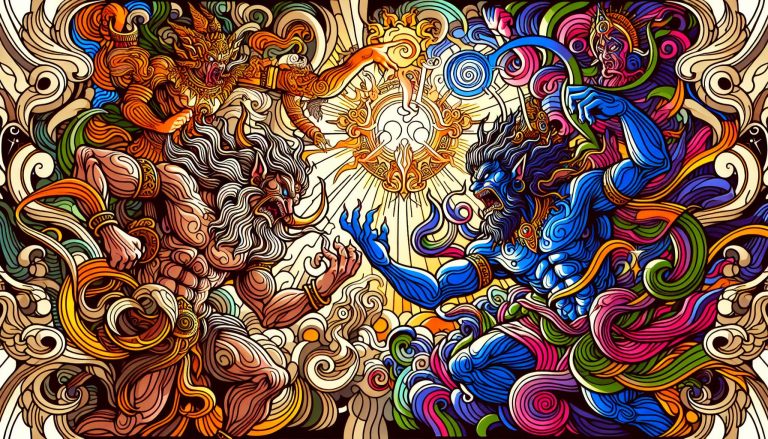
I’ve always been intrigued by how different cultures depict Asuras, from fierce warriors to wise beings. Their representations vary significantly across texts and artistic expressions, reflecting diverse cultural values and beliefs. In this text, we’ll explore the multifaceted portrayals of Asuras, shedding light on their roles and symbolism in ancient and modern contexts.
Origins Of Asura Representations
Asuras first appeared in ancient Hindu texts, specifically the Vedas. In these texts, they were powerful deities often opposed to the devas (gods). The dichotomy between Asuras and devas represents the cosmic struggle between good and evil. This concept continued into later texts like the Mahabharata – The Great Epic and the Puranas, where Asuras took on more complex characteristics.
In Buddhism, Asuras evolved into different beings. They were depicted as less divine, embodying human flaws such as jealousy and aggression. The Buddhist Asura area became one of the six realms of rebirth, representing a state of conflict and strife.
Early representations in art and literature showed Asuras as fearsome warriors. Temples across India, for example, feature sculptures and carvings of Asuras engaged in battles. These artistic depictions aimed to symbolize the eternal struggle and the need for righteous conduct.
Asura representations extend beyond India. In Southeast Asian cultures, they appear in various forms in myth and art. In Cambodia, the Asuras are prominently featured in the bas-reliefs of Angkor Wat, illustrating the famous Churning of the Ocean of Milk. This broad geographic spread highlights the cultural exchange and the adaptation of Asura imagery over time.
Asura Depictions In Hindu Mythology
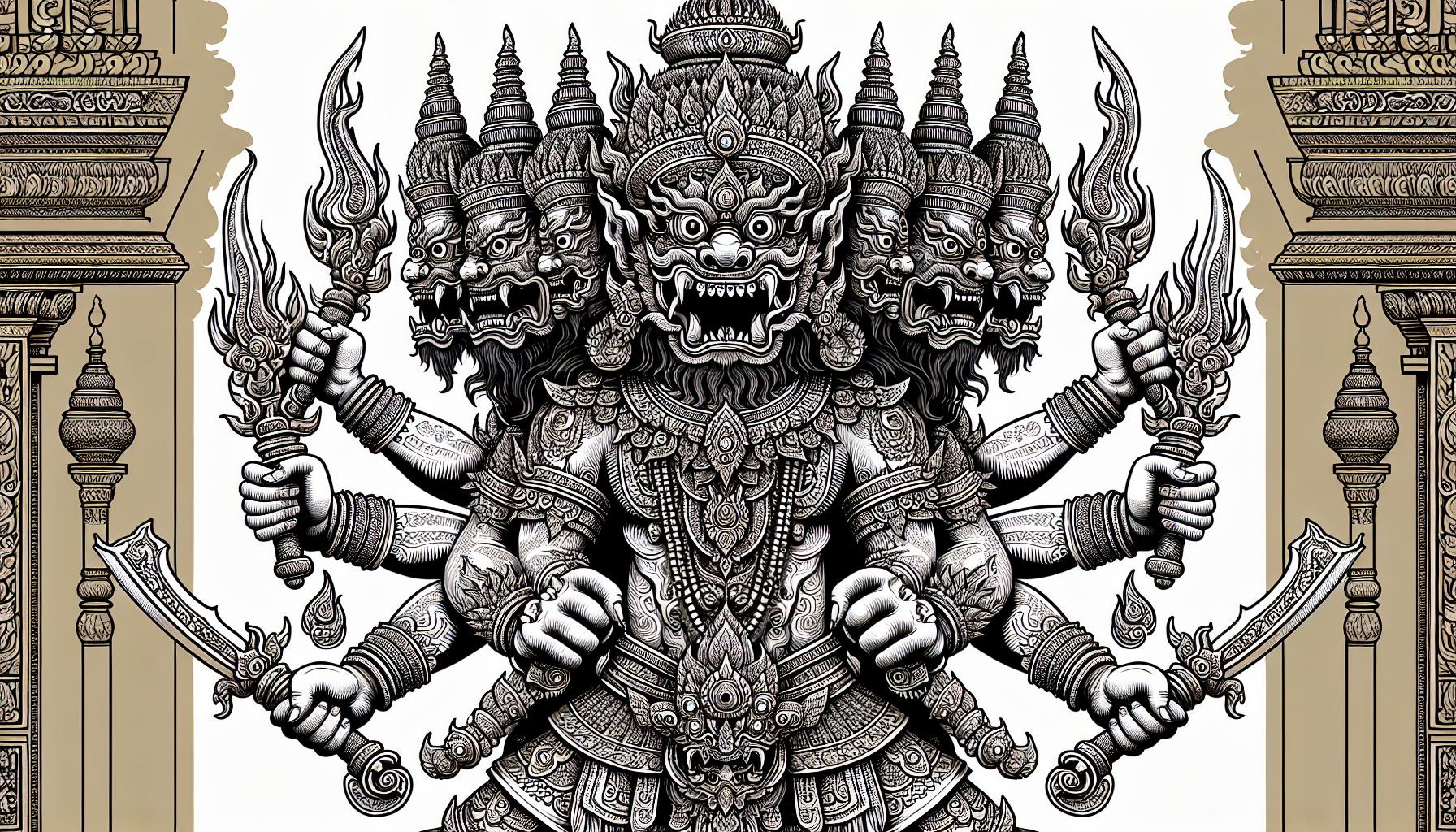
In Hindu mythology, Asuras occupy a significant place, often depicted as formidable adversaries of the Devas. These representations evolved through texts and art, reflecting their complex nature.
Iconography And Symbolism
Asuras in Hindu mythology convey rich symbolism. Early Vedic texts describe them with human-like qualities but with immense power and ambition, symbolizing cosmic strife. Artistic depictions often show them with multiple heads and arms, reflecting their might and prowess in battle. Intricate details like fiery eyes, sharp teeth, and fearsome weapons emphasize their fierce nature. Temples and ancient sculptures portray these aspects, illustrating the eternal struggle between good and evil through visual art.
Key Asura Figures And Their Stories
Key Asura figures dominate Hindu mythology. Mahishasura – Buffalo Demon, a buffalo demon, challenged the gods until Goddess Durga vanquished him. His story epitomizes the triumph of good over evil. Ravana, the ten-headed demon king from the Ramayana – Epic of Hinduism, abducted Sita, compelling Lord Rama to begin on a quest for justice. Hiranyakashipu, who was granted a boon making him nearly invincible, faced defeat at the hands of Lord Vishnu’s Narasimha avatar. These stories highlight the Asura’s intelligence and strength but eventually underscore their downfall due to moral failings, reinforcing the ethical lessons within Hindu mythology.
Asura Representations In Buddhist Tradition
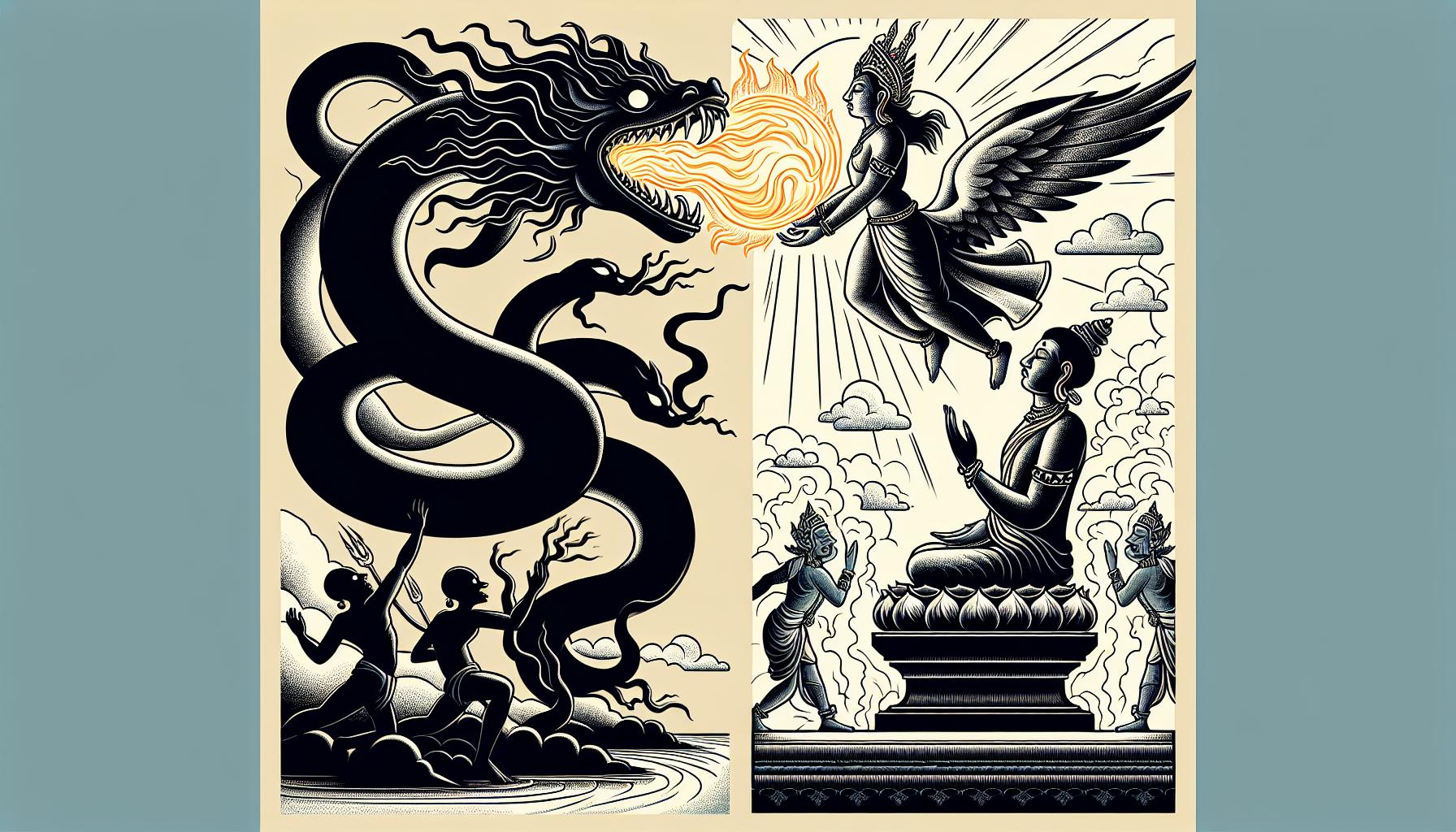
Asuras in Buddhist tradition hold significant parallels and distinctions when compared to their Hindu counterparts. They embody human flaws and serve as important symbolic figures.
Differences And Similarities With Hindu Asuras
Asuras in Buddhism, unlike Hindu mythology, are not seen as powerful semi-divine beings. In Buddhism, Asuras represent negative human traits like envy and pride. Both traditions depict Asuras as combative and confrontational. But, while Hindu Asuras often possess demi-godly strength and intelligence, Buddhist Asuras are seen more as tragic figures caught in cycles of conflict due to their own flaws.
Prominent Asuras In Buddhist Texts
Notable Asuras in Buddhist texts like the “Mahavastu” and “Divyavadana” include Rahu and Mara. Rahu is an Asura who attempts to swallow the sun and moon, causing eclipses, symbolizing ignorance. Mara, the personification of death and desire, tries to obstruct Buddha’s path to enlightenment, embodying the internal and external struggles on the spiritual journey. These figures highlight moral and ethical teachings in Buddhist narratives, emphasizing the importance of overcoming inner demons.
Asura In Modern Popular Culture
Asuras continue to influence modern popular culture, appearing in various media forms. Their complex nature and rich symbolism make them compelling characters for storytelling.
Films And Television
Films and television shows often draw on the mythological aspects of Asuras for their narratives. In Bollywood, movies like “Tumbbad” portray a fictional Asura character inspired by ancient mythology. Hollywood also reflects Asura-like beings; Marvel’s “The Eternals” introduces Deviants, similar to Asuras, embodying chaotic forces. Television series such as “Supernatural” feature Asura-inspired demons, integrating mythological origins to enrich storylines.
Literature And Comics
In literature and comics, Asuras serve as rich sources for character development and plot. Rick Riordan’s “Percy Jackson” series introduces elements resembling Asuras, offering modern retellings of mythological conflicts. Comics like “Amar Chitra Katha” focus directly on Asura tales from Hindu mythology, bringing ancient stories to contemporary audiences. Graphic novels such as “Grant Morrison’s 18 Days” reinterpret the Mahabharata, featuring Asuras as key antagonists, adding depth to the narrative through their traditional mythological roles.
Conclusion
Asuras have journeyed from ancient religious texts to contemporary media, evolving yet retaining their core symbolism. Their presence in Hindu and Buddhist traditions highlights the timeless struggle between good and evil, human virtues and flaws. Today, Asuras captivate audiences through diverse storytelling mediums, bridging ancient mythologies with modern narratives. This enduring fascination with Asuras underscores their significance in cultural and moral discourse. Whether in ancient temples or on the big screen, Asuras continue to challenge and inspire, proving their relevance across generations.
Sources & further reading
These themes are explored in greater depth across the following authoritative resources:
- Britannica, Asura
- Britannica, Naga
- Mythopedia, Hindu Mythology
- Internet Sacred Text Archive, Mahabharata
- Wendy Doniger, Hindu Myths (Penguin Classics, 1975)
External resources for further reading. Apam Napat is not affiliated with these publishers; citation does not imply endorsement.
Based on the classical texts of Hindu mythology, see our sources.