

In the Gita, Lord Krishna – An Incarnation of Vishnu imparts profound philosophical insights to the warrior Arjuna – The Peerless Archer, who faces a moral dilemma on the battlefield. These teachings cover everything from duty and righteousness to the nature of reality and self-realization. Whether you’re seeking spiritual growth or practical life guidance, the Bhagavad Gita offers invaluable lessons that resonate across cultures and eras.
Historical Context of the Bhagavad Gita
The Bhagavad Gita is believed to have been composed in the 1st or 2nd century CE. This influential text is part of the epic Mahabharata, specifically occupying chapters 23 to 40 of Book VI. It is set on the battlefield of Kurukshetra, where two factions of a royal family, the Pandavas and the Kauravas, prepare for a monumental clash.
As the two sides brace for combat, Prince Arjuna experiences a moral and ethical crisis. He hesitates to fight, filled with doubt and despair about the futility of war. At this pivotal moment, Krishna, an avatar of the Hindu god Vishnu – The Protector, steps in to counsel Arjuna. Their profound dialogue addresses key philosophical and spiritual questions, providing guidance on how to navigate complex dilemmas.
The text’s backdrop is not just a war but a representation of life’s battlefield. The Bhagavad Gita explores profound themes such as duty, righteousness, and the nature of reality. It encourages individuals to perform their duties selflessly and strive for spiritual growth amidst life’s challenges. As one of the most important yogic texts, it holds significant relevance even today, offering timeless wisdom on living a meaningful life.
Core Themes in Bhagavad Gita Teachings

The Bhagavad Gita delves into profound themes that offer guidance on living a meaningful life. Below are the core themes explored in its teachings.
Dharma and Duty
Duty and righteousness are emphasized throughout the Gita. Dharma refers to the moral and ethical obligations one must fulfill. The Gita advises performing one’s duties with integrity and moral clarity, without attachment to the outcomes. This detachment from results is crucial for maintaining focus on righteous actions rather than personal gain. Upholding righteousness, even in challenging times, fosters moral and spiritual growth.
Yoga and Meditation
The Gita advocates for various forms of yoga, emphasizing their importance. Karma Yoga, the path of selfless action, is a central concept. It involves performing duties without attachment to outcomes, focusing on the action itself rather than the results. This method strengthens discipline and encourages a selfless approach to life. Meditation practices described in the Gita help in achieving mental clarity and spiritual insight, so contributing to a balanced life.
Knowledge and Wisdom
The Gita highlights the significance of knowledge and wisdom in attaining self-realization. It underscores the distinction between temporary material knowledge and everlasting spiritual wisdom. Pursuing true knowledge leads to a deeper understanding of the self and the universe, fostering a sense of inner peace and enlightenment. This pursuit demands dedication and a commitment to personal growth and understanding.
Key Characters and Their Roles
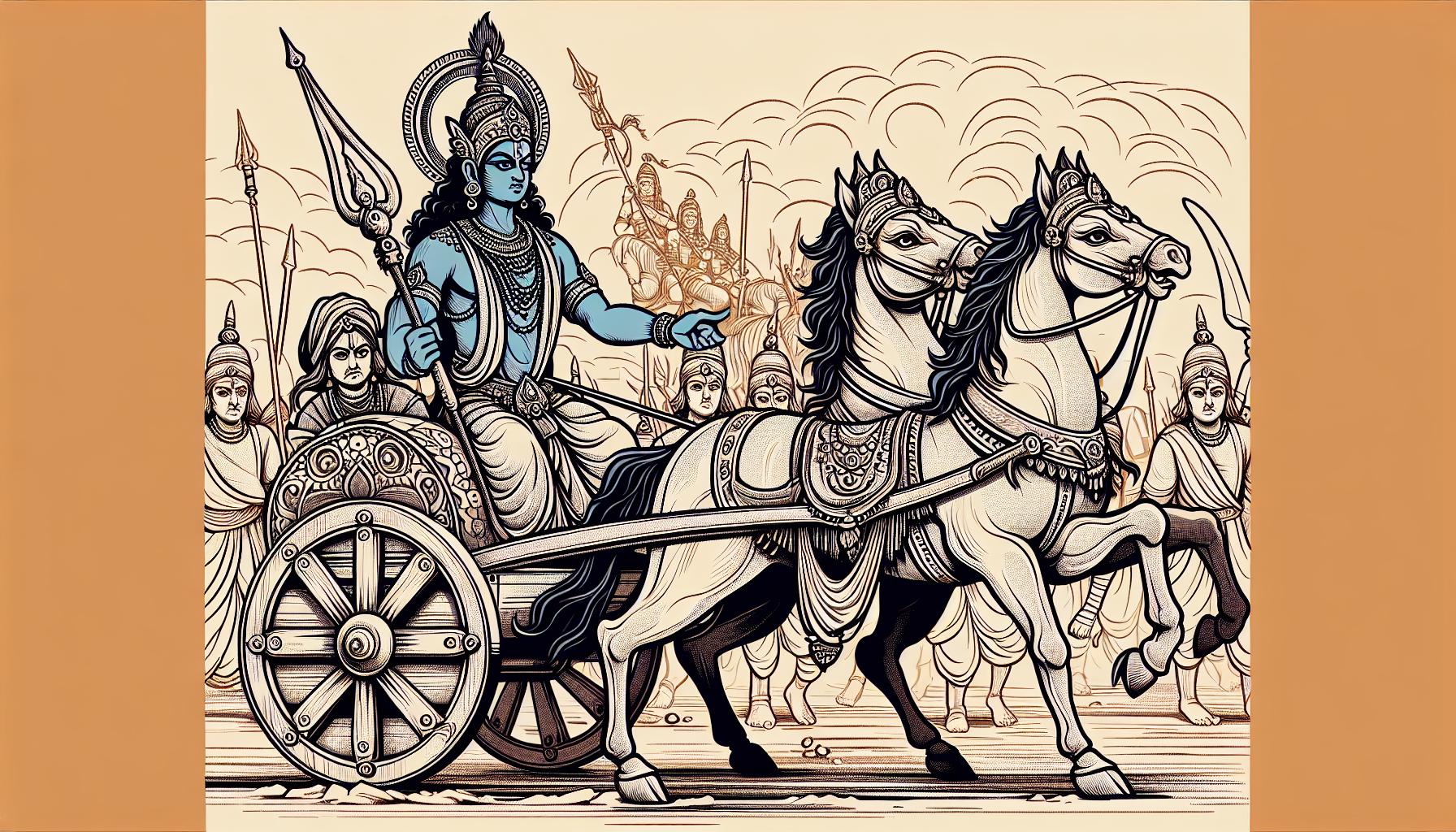
In the Bhagavad Gita, the interactions between Krishna and Arjuna illustrate profound spiritual teachings. Each character plays a pivotal role in conveying the scripture’s messages.
Krishna as a Divine Guide
Krishna, an avatar of Vishnu, serves as Arjuna’s charioteer and spiritual mentor. He offers guidance and insights, assisting Arjuna in exploring complex moral and philosophical dilemmas. Krishna emphasizes fulfilling one’s duty, known as dharma, and encourages Arjuna to embrace his role as a warrior in the Kurukshetra War.
Arjuna as a Seeker
Arjuna, a prince and warrior, wrestles with the moral complexities of fighting his own kin. Seeking clarity, he turns to Krishna for counsel. As a seeker, Arjuna represents the human quest for understanding and righteousness, embodying the tension between duty and personal moral conflict.
Practical Applications of Bhagavad Gita Teachings

The Bhagavad Gita offers wisdom that can transform various aspects of our lives. Here are some practical applications based on its teachings:
Personal Growth and Ethics
Self-Discipline
The Bhagavad Gita emphasizes self-discipline, particularly in controlling the mind. This discipline helps individuals overcome internal conflicts and achieve personal excellence. For instance, maintaining a consistent meditation practice can enhance focus and reduce stress.
Integrity
The text stresses the need for integrity by encouraging individuals to perform their duties without attachment to success or failure. When I focus on the process rather than the outcome, I find more satisfaction and less anxiety.
Compassion and Empathy
The Bhagavad Gita teaches the importance of seeing the equality of all beings and treating everyone with compassion and empathy. Practicing empathy can improve relationships and foster a more inclusive community.
Leadership and Responsibility
Leading by Example
The Bhagavad Gita advises leaders to set standards by their exemplary actions, inspiring others to follow. When I lead by example, I not only meet my responsibilities but also motivate others to strive for excellence.
Inner Peace and Mental Resilience
Emotional Control
The text provides strategies for managing emotions and maintaining inner peace. Techniques such as mindfulness and breathing exercises can significantly improve mental resilience, helping me stay calm in challenging situations.
Understanding these principles allows us to apply them in daily life, enhancing personal growth, leadership skills, and mental resilience. The Bhagavad Gita’s teachings remain relevant, providing timeless wisdom for various aspects of modern life.
Comparative Analysis with Other Philosophical Texts
Moral Philosophy
The Bhagavad Gita offers a nuanced take on moral philosophy. It aligns with Western concepts like Virtue Ethics, Consequentialism, and Deontology. Kṛṣṇa’s advice to Arjuna about performing his duty and devotion can be viewed as Rule Consequentialism. This approach aims for long-term good outcomes through adherence to specific rules.
But, the Gita also introduces a distinct perspective with its Bhakti/Yoga theory. This moral framework emphasizes devotion and self-realization. It’s unique compared to Western theories, focusing more on spiritual growth and moral decisions based on devotion.
Wisdom
The Bhagavad Gita presents a profound concept of wisdom that can be compared to both ancient Indian and modern Western ideas. The Gita’s wisdom encourages self-awareness and understanding one’s true nature. This stands in contrast to Western philosophies that often emphasize empirical knowledge and logical reasoning for wisdom.
Practical Application
The Gita’s teachings on duty and moral actions present a more holistic approach compared to Western theories. Its focus on inner peace, mental resilience, and leadership through example offers timeless guidance for personal and professional life. For instance, leaders who act with integrity and compassion can inspire greater loyalty and effectiveness in their teams.
Conclusion
The Bhagavad Gita’s teachings offer a timeless guide to exploring life’s complexities with wisdom and grace. By embracing its principles of duty, righteousness, and self-realization, we can cultivate inner peace and resilience. The Gita’s insights into leadership, ethical conduct, and mental clarity are invaluable for personal and professional growth. Applying these teachings in our daily lives can lead to a more balanced and fulfilling existence. The Bhagavad Gita remains a profound source of inspiration, encouraging us to live with integrity, compassion, and a deeper understanding of our true nature.
Sources & further reading
These themes are explored in greater depth across the following authoritative resources:
- Internet Sacred Text Archive, Rig Veda (Griffith translation)
- Internet Sacred Text Archive, Upanishads
- Britannica, Veda
- Britannica, Upanishad
- Patrick Olivelle, The Early Upanishads (Oxford University Press, 1998)
External resources for further reading. Apam Napat is not affiliated with these publishers; citation does not imply endorsement.
Based on the classical texts of Hindu mythology, see our sources.