
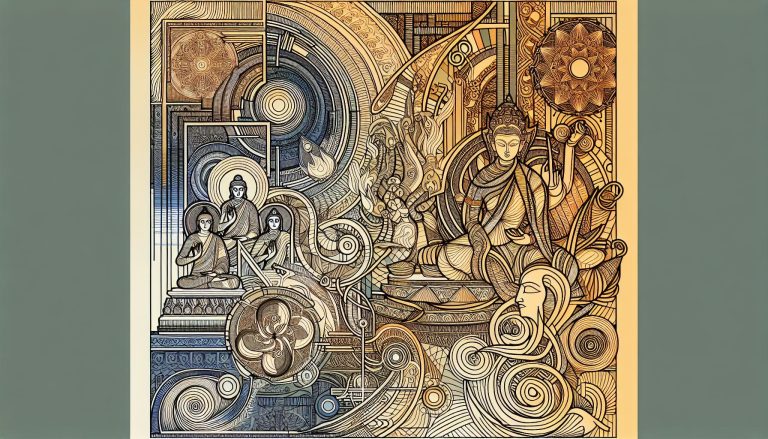
What fascinates me most is how each piece of devotional art tells a story, rich with symbolism and meaning. From the intricate details of a Byzantine icon to the serene beauty of a Renaissance Madonna, these works invite us to explore the spiritual narratives they embody. As we investigate into the world of devotional art, we’ll uncover the layers of history, culture, and belief that make these creations so compelling and timeless.
Historical Background of Devotional Art
Devotional art and iconography originated in ancient civilizations. Art was used to express religious beliefs and spiritual practices. In Paleolithic times, art was an integral part of daily life, often used for rituals. The Venus of Willendorf, dating back to about 25,000 BCE, is an early example symbolizing fertility.
In the medieval period, devotional art and iconography significantly impacted Christian, Islamic, and Byzantine art. Artists focused on religious themes, creating works reflecting their time’s dominant beliefs. Iconography conveyed spiritual messages, depicting biblical scenes, saints, and other religious figures.
Key Themes in Devotional Art
Devotional art and iconography encompass a wide range of themes that convey spiritual messages and help religious experiences. The central themes include the representation of divine figures and the use of symbolism and allegory.
Representation of Divine Figures
Devotional art frequently features portraits of divine figures. These artworks aim to capture the essence and characteristics of gods, goddesses, prophets, or saints, making their attributes and significance accessible to believers. A notable example is the portrayal of Jesus Christ, often shown with a cross, emphasizing his sacrifice and divinity. Similarly, the Buddha is typically depicted with the dharmachakra (wheel of the law), symbolizing his teachings and the path to enlightenment. Through these representations, artists aim to convey the power, wisdom, and benevolence of divine figures.
Symbolism and Allegory
Symbolism and allegory play pivotal roles in devotional art. Artists use specific symbols and allegories to communicate complex spiritual concepts and messages. For example, in Christian art, the lamb often symbolizes Jesus Christ’s role as the sacrificial lamb, while the fish represents early Christians and their faith. In Hindu iconography, deities like Vishnu – The Protector and Shiva – The Destroyer are depicted with multiple arms, each holding specific items that signify their powers and responsibilities. Allegorical elements help viewers interpret the deeper meanings behind the visual representations, enhancing their religious experience and understanding.
Iconography in Different Cultures
Iconography holds a crucial role in various religious traditions, serving as a visual language that conveys spiritual concepts and beliefs. This section explores the significance of iconography in Christian, Hindu, and Buddhist cultures.
Christian Iconography
Christian iconography has a rich history rooted in the development of Christianity. Symbols and artistic forms convey spiritual messages and values distinctly:
- Symbolism: Christian symbols like the cross convey multiple layers of meaning. The fish often symbolizes Christ, while the lamb represents sacrifice and purity.
- Artistic Forms: Christian art includes diverse mediums such as paintings, sculptures, and mosaics, depicting biblical scenes, saints, and religious figures. The Sistine Chapel ceiling by Michelangelo exemplifies the grandeur of Christian iconic art.
Hindu Iconography
Hindu iconography is rich in symbolism and elaborates complex spiritual ideas through various forms and symbols:
- Symbolism: Hindu symbols often encapsulate profound spiritual teachings. The lotus flower represents purity and divine birth, while the trident signifies the triad of creation, maintenance, and destruction.
- Artistic Forms: Hindu art spans sculptures, paintings, and temples adorned with deities. Statues of gods like Shiva with his multiple arms depict multifaceted divine powers, emphasizing attributes related to different cosmic functions.
Buddhist Iconography
Buddhist iconography features distinct symbols and artistic expressions that illustrate Buddhist teachings and deities:
- Symbolism: Buddhist symbols convey teachings succinctly. The lotus signifies enlightenment and purity, while the wheel of Dharma (Dharmachakra) symbolizes Buddha’s teachings and the path to enlightenment.
- Artistic Forms: Buddhist art uses statues, paintings, and intricate mandalas. The iconic statue of the Buddha in meditation represents peace and inner tranquility. Tibetan thangkas, detailed cloth paintings, portray various Buddhas and bodhisattvas to aid meditation.
Iconography across these three religions serves as more than mere art. It’s a powerful tool to communicate, preserve, and teach spiritual beliefs and practices, visually capturing the essence of faith.
Techniques and Materials Used
Devotional art uses diverse techniques and materials to express religious faith. Each method and material adds unique elements to the overall impact of the art.
Painting and Frescoes
Frescoes: I find frescoes fascinating for their durability and beauty. Using wet lime-based plaster called Arriccio, artists apply watercolors to the surface, creating art integral to church walls and ceilings. This technique ensures the artwork remains vivid and enduring, famously seen in Renaissance churches.
Painting: Early Christian paintings often feature religious scenes with gold leaf on wood. These paintings, typically seen above or behind altars, include subjects like The Virgin Mary with the infant Jesus, the Last Supper, and the Annunciation. Artists focused on two-dimensional styles and flat perspectives rather than realism, emphasizing spiritual symbolism over lifelike representation.
Sculpture and Carvings
Sculpture and carvings play a significant role in devotional art. Artists use materials like marble, wood, and stone to create statues and reliefs. These artworks often depict saints, deities, and historical religious events. For example, Gothic cathedrals frequently showcase intricate stone carvings portraying biblical stories. The tactile nature of sculpture allows worshippers to engage physically with their faith.
Illuminated Manuscripts
Creating illuminated manuscripts, I see how they blend art and text seamlessly. These manuscripts feature religious texts adorned with elaborate decorations and illustrations. Artists use materials like vellum, gold leaf, and rich pigments to craft detailed borders, initials, and miniature scenes. Medieval monasteries were the primary producers, with monks dedicating years to creating these masterpieces, enhancing the spiritual experience of reading sacred texts.
Influence of Devotional Art on Modern Art
Even though assumptions that modern art rejects religious influences, many artists have integrated elements of devotional art into their work. Andy Warhol, known for his pop art, drew inspiration from Christian iconography. His “Gold Marilyn Monroe” (1962) mirrors the traditional use of gold leaf in Byzantine icons, elevating Monroe to a saint-like status.
Joseph Cornell, another key figure, utilized devotional themes in his shadow boxes. His works often contain Christian symbols, repurposed to evoke a sense of personal spirituality. For instance, his “Medici Slot Machine” incorporates Renaissance religious imagery, blending it with modern objects to create a unique visual narrative.
In the 15th century, Northern European devotional art focused on detailed religious narratives. This attention to detail and symbolic complexity can be seen mirrored in modern pieces. The Annunciation scene from this period often depicted intricate elements like lilies and books—symbols representing purity and scripture. Modern artists have adapted these complex symbols to convey new meanings, maintaining the depth and nuance of the original devotional works.
In sum, the interplay between devotional art and modern art is evident in the works of significant artists, revealing a continuous thread of spiritual and symbolic exploration from the past into contemporary practices.
Conclusion
Devotional art and iconography continue to bridge the gap between ancient traditions and modern expressions. By examining historical techniques and symbols, we gain a deeper appreciation for the spiritual narratives that have shaped cultures worldwide. Modern artists like Andy Warhol and Joseph Cornell remind us that the exploration of faith and spirituality is an ongoing journey. Their works, much like those from Northern European traditions, weave intricate stories that resonate with contemporary audiences. This enduring legacy of devotional art underscores its timeless relevance and profound impact on both individual and collective spiritual journeys.
Sources & further reading
These themes are explored in greater depth across the following authoritative resources:
- Stanford Encyclopedia of Philosophy, Hindu Philosophy
- Britannica, Moksha
- Britannica, Brahman
- Internet Sacred Text Archive, Upanishads
- Sarvepalli Radhakrishnan, Indian Philosophy (2 vols., Oxford University Press, 1923)
External resources for further reading. Apam Napat is not affiliated with these publishers; citation does not imply endorsement.
Frequently asked questions
What is devotional art?
How old is devotional art?
How did devotional art evolve in the medieval period?
How are divine figures represented in devotional art?
Based on the classical texts of Hindu mythology, see our sources.