

When I think about social responsibility, I see it as an extension of dharma. It’s about understanding that our actions impact others and recognizing our duty to foster a just and compassionate community. By aligning our personal values with societal needs, we can create a harmonious balance that benefits everyone.
Understanding Dharma
Dharma, a foundational element of Indian philosophy, encompasses duty, morality, and righteousness. Rooted in ancient texts, it forms the bedrock of ethical living.
Definition and Origins
Dharma means “that which upholds.” It signifies duty, law, and moral order in Sanskrit. Emerging from Vedic texts, it outlines guidelines for ethical conduct. The concept evolved through Hinduism, Buddhism, and Jainism, ending up as a cornerstone of Indian ethical thought. Manusmriti and the Bhagavad Gita are key sources discussing the multifaceted nature of dharma.
Core Principles
Key principles shape dharma. First, righteousness refers to actions aligning with ethical norms (e.g., honesty, non-violence). Second, duty binds individuals to perform their societal roles (e.g., a teacher imparts knowledge). Third, truth underpins interactions and commitments (e.g., keeping promises). Finally, compassion emphasizes empathy and service to others (e.g., helping those in need). These principles motivate individuals to uphold societal balance while fostering personal integrity.
Social Responsibility

Dharma, when linked with social responsibility, fosters a profound sense of duty to community welfare. It forms a crucial part of maintaining moral and ethical balance in society.
Historical Context
In ancient Indian texts, dharma has consistently tied itself to social roles and responsibilities. Manusmriti, one of the oldest legal texts, emphasizes the need for individuals to fulfill their prescribed duties. Kings and rulers bore the primary responsibility of ensuring justice and protecting their subjects. Householders supported economic stability by maintaining their families and contributing to the community’s welfare.
Modern Interpretations
Today, the concept of social responsibility has expanded beyond traditional roles. In the corporate world, Corporate Social Responsibility (CSR) initiatives reflect dharma’s principles by prioritizing ethical practices and community development. Companies engage in sustainable practices, charitable activities, and initiatives that support social well-being. On an individual level, modern interpretations of dharma manifest through volunteer work, advocacy for social justice, and efforts to promote environmental sustainability.
Intersection of Dharma and Social Responsibility
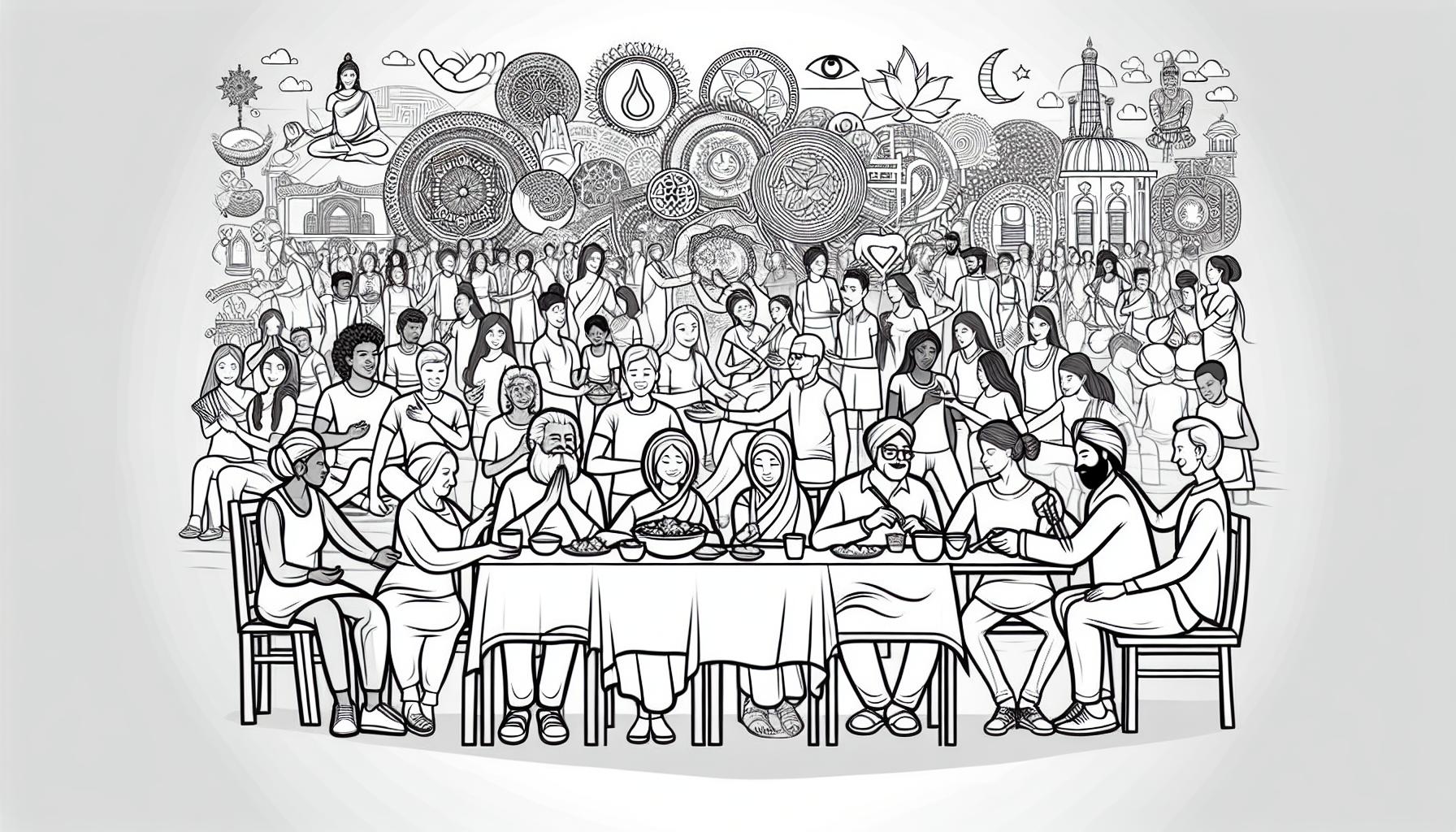
The intersection of dharma and social responsibility integrates ethical frameworks from dharma with actionable societal duties, forming a cohesive guide for individual and collective conduct.
Cultural Perspectives
Different cultures interpret dharma uniquely, but the essence of social responsibility consistently emerges. In ancient India, dharma guided rulers, warriors, and householders in maintaining societal harmony and ethical integrity. For instance, the King’s dharma (Rajadharma) included protecting citizens and upholding justice, while householders supported community welfare. Modern societies see dharma influencing legal systems, promoting human rights, and fostering global citizenship.
Examples:
- Rajadharma: Ensuring justice, citizen protection
- Householders: Community welfare support
Religious Teachings
Dharma’s essence permeates Hinduism, Buddhism, and Jainism, shaping social responsibility through religious teachings. In Hinduism, the Bhagavad Gita teaches adherence to one’s duty for societal balance. Buddhism’s Noble Eightfold Path emphasizes right action and livelihood, contributing to communal well-being. Jainism advocates Ahimsa (non-violence) and Satya (truth) as tenets for ethical living and social harmony.
- Bhagavad Gita (Hinduism): Duty adherence for societal balance
- Noble Eightfold Path (Buddhism): Right action, livelihood
- Ahimsa, Satya (Jainism): Ethical living, social harmony
Case Studies

Looking at historical and contemporary examples helps illustrate how dharma shapes social responsibility. These case studies reveal the practical application of dharma in various contexts.
Examples from History
Ancient leaders often embodied dharma in their governance. Emperor Ashoka of the Maurya dynasty, for example, integrated Buddhist principles into his reign around 268-232 BCE. After converting to Buddhism following the Kalinga War, he installed edicts emphasizing non-violence, ethical conduct, and welfare for all beings. These actions connected his personal transformation with social responsibility, fostering societal harmony.
Another example is Mahatma Gandhi. He aligned his life with dharma, advocating for non-violence and truth (ahimsa and satyagraha) during India’s struggle for independence. His principles impacted social structures, inspiring civil rights movements worldwide. Gandhi’s commitment to dharma transcended personal duty, addressing broader societal issues of colonialism and inequality.
Contemporary Applications
Modern leaders also apply dharma to inform their social responsibilities. Nelson Mandela exemplified dharma through his fight against apartheid in South Africa. His emphasis on forgiveness, reconciliation, and justice highlighted ethical leadership. Mandela’s actions fostered national unity and demonstrated the influence of dharma on modern governance.
In the corporate world, companies integrate dharma into their corporate social responsibility (CSR) initiatives. Patagonia, an outdoor apparel brand, emphasizes environmental sustainability and ethical labor practices. By aligning business operations with dharma principles like stewardship and fairness, Patagonia contributes positively to society and promotes global citizenship.
Through these examples, dharma’s principles can be seen to guide actions and policies, ensuring ethical and harmonious conduct across different eras and sectors.
Challenges and Criticisms
While dharma provides a strong ethical foundation, applying it to social responsibility is not without challenges. Conflicts and dilemmas arise, and misconceptions often obscure its true essence.
Conflicts and Dilemmas
Individuals experience conflicts when personal duties (svadharma) clash with social duties (sadharana dharma). For instance, a judge might face a dilemma when the law requires a judgment that’s at odds with personal morality. These conflicts necessitate careful balance and often result in nuanced ethical decisions.
Addressing Misconceptions
Misconceptions around dharma include it being viewed as rigid or only religious. Dharma adapts to context, retaining relevance in secular environments. Another misconception is that dharma’s focus on duty implies passivity. Instead, it emphasizes active engagement in ethical actions that benefit both individuals and society.
In addressing these aspects, understanding the complexities and correcting misunderstandings can help apply dharma effectively to modern social responsibilities.
Conclusion
Understanding dharma’s multifaceted nature enriches our approach to social responsibility. By integrating these timeless principles into our daily lives we can foster a more ethical and compassionate society. While challenges and misconceptions exist they shouldn’t deter us from striving for a balanced application of dharma in modern contexts. Embracing dharma’s core values can guide us toward fulfilling our duties to ourselves and our communities ensuring a harmonious and just world for future generations.
Sources & further reading
These themes are explored in greater depth across the following authoritative resources:
- Stanford Encyclopedia of Philosophy, Hindu Philosophy
- Britannica, Dharma
- Britannica, Karma
- Internet Sacred Text Archive, Bhagavad Gita
- A. K. Ramanujan, Speaking of Siva (Penguin Classics, 1973)
External resources for further reading. Apam Napat is not affiliated with these publishers; citation does not imply endorsement.
Frequently asked questions
How does dharma relate to social responsibility?
What are the core principles of dharma?
How did Emperor Ashoka embody dharma in governance?
How does Corporate Social Responsibility reflect dharma?
Based on the classical texts of Hindu mythology, see our sources.