
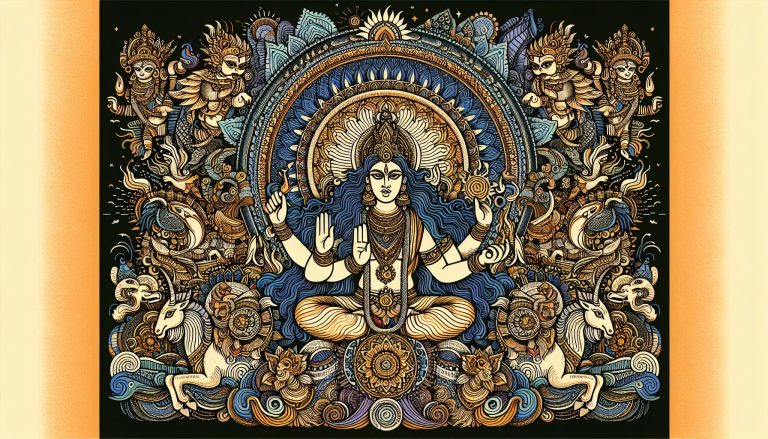
As I investigate into these mesmerizing designs, I uncover a rich world woven with history, spirituality, and artistic mastery. From the majestic mandalas to the elaborate depictions of deities, these designs offer a glimpse into a world where art and mythology intertwine seamlessly. Join me as I explore the fascinating area of Hindu mythological designs, unraveling the stories and significance behind these timeless works of art.
Historical Significance
Hindu mythological designs reflect a long historical significance tied deeply to Indian cultural and philosophical traditions. Originating from the ancient Indian subcontinent, these designs trace back to the Indus Valley Civilization (3rd-2nd millennia BCE). During the Vedic period (2nd century BCE-4th century CE), early Hindu texts and doctrines were established, marking significant advancements in Hindu art and symbolism.
These designs, found in temples, manuscripts, and sculptures, depict stories from the Vedas and Puranas, encapsulating centuries-old beliefs and rituals. For instance, intricate carvings in the Khajuraho temples illustrate stories of divine beings and cosmic events, emphasizing the spiritual underpinnings of Hindu mythology. By examining the layers and patterns, one can gain insights into the cultural and religious contexts of the time.
Key Elements Of Hindu Mythological Designs

Hindu mythological designs incorporate various key elements that echo the depth of Hindu mythology. These elements include deities and symbols, sacred animals and plants, and mythical creatures.
Deities And Symbols
Trimurti: The Trimurti consists of Brahma – The Creator, the creator, Vishnu, the preserver, and Shiva, the destroyer. Each plays a vital role in the cosmic cycle of creation, preservation, and destruction. For example, Brahma brings forth the universe, Vishnu maintains it, and Shiva eventually destroys it to make way for new creation.
Avatars: Avatars are physical manifestations of deities. Vishnu’s avatars, such as Rama and Krishna – An Incarnation of Vishnu, are well-documented in Hindu texts. These avatars descend to restore dharma (cosmic order) and guide humanity.
Ganesha: Known as the remover of obstacles, Ganesha is easily identifiable by his elephant head. He’s venerated at the beginning of rituals to ensure their success.
Mother Goddesses: Powerful feminine deities, like Durga and Kali, represent strength and fertility. Durga symbolizes protection, while Kali is associated with destruction and renewal.
Sacred Animals And Plants
Nagas: Nagas are serpent-like beings associated with water and fertility. Often depicted in temples, they are believed to protect springs, wells, and rivers, ensuring the fertility of the land.
Yakshas: Yakshas are nature spirits linked to specific locations. They can influence natural events, often depicted as guardians of treasures or protectors of forests and rivers.
Mythical Creatures
Mythical creatures also feature prominently in Hindu designs. They include the Garuda, a bird-like creature who serves as Vishnu’s mount, and the Makara, a sea creature often seen in temple architecture. These beings add a layer of mystical significance, enhancing the spiritual narratives conveyed through art and design.
Popular Art Forms
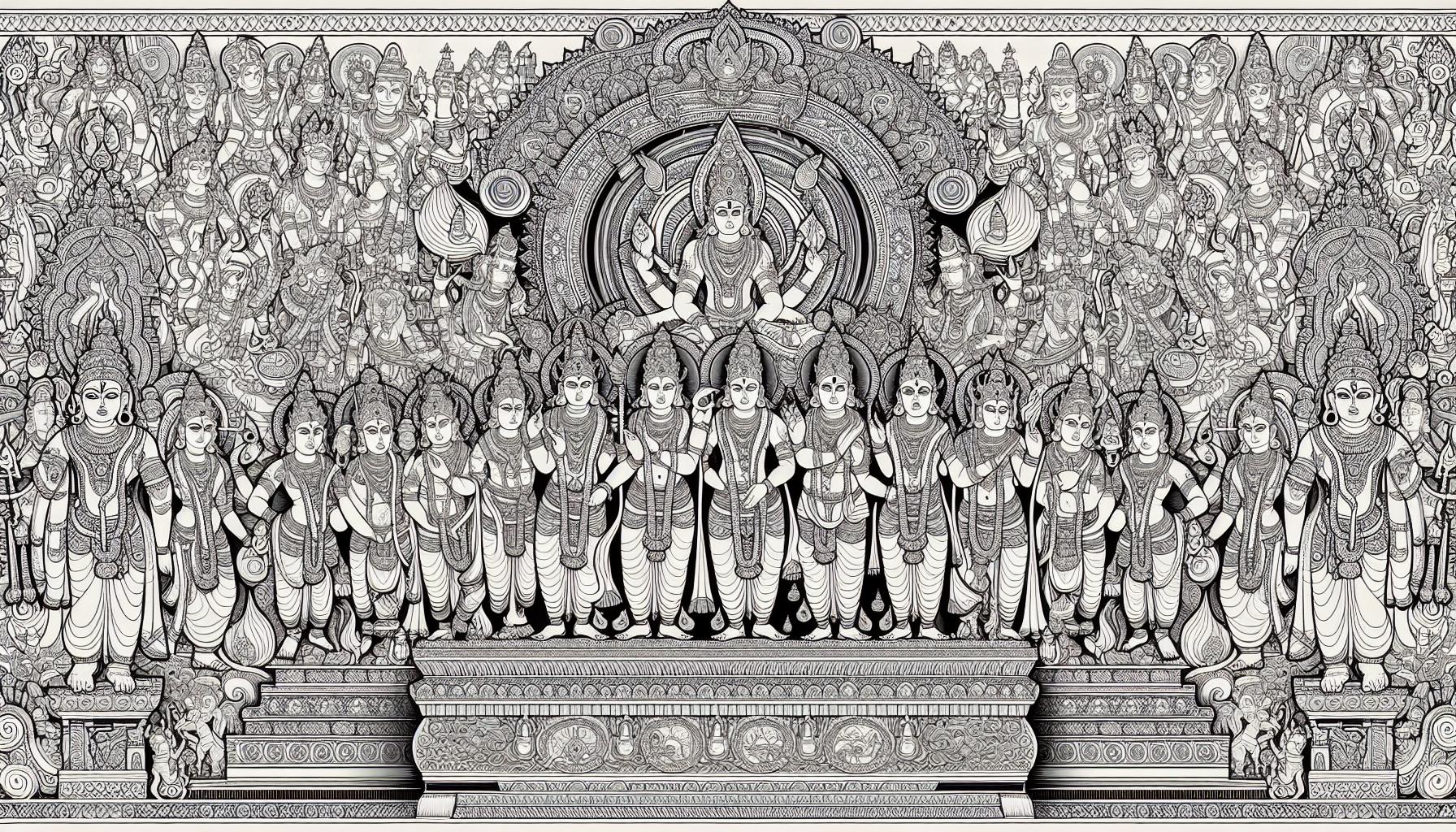
Hindu mythological designs are expressed through various art forms that showcase India’s rich heritage. These designs are seen in paintings, murals, sculptures, statues, textiles, and jewelry, each telling stories from Hindu epics and mythology.
Paintings And Murals
Miniature paintings often illustrate manuscripts by depicting scenes and characters from the Ramayana – Epic of Hinduism and Mahabharata – The Great Epic. These paintings, especially those from the Mughal period, have a rich history. Iconic works by artists like Raja Ravi Varma continue to influence Indian art. Murals, on the other hand, adorn temple and palace walls, illustrating vibrant and detailed mythological stories and deities. These large-scale artworks reflect the high level of skill and devotion of Indian artists.
Sculptures And Statues
Indian sculpture, a prominent form of religious art, has long been used to depict deities, mythical creatures, and epic tales. Temples often feature intricate statues of gods like Vishnu, Shiva, and Durga, each intricately carved to convey divine attributes and stories. Sculptures are not limited to stone; metals like bronze and copper are also used, demonstrating the versatility and craftsmanship of Indian artists.
Textiles And Jewelry
Textiles play a vital role in portraying Hindu mythology. Saris and tapestries often feature intricate patterns and scenes from mythological stories. These textiles aren’t just clothing; they carry cultural and spiritual significance. Jewelry designs frequently incorporate symbols from Hindu myths, such as the lotus flower or the peacock, and materials like gold and gemstones are used to add richness. These pieces serve both as adornment and as reminders of the mythological and cultural narratives they represent.
By understanding these popular art forms, we can appreciate how Hindu mythological designs have been preserved and celebrated through centuries, continuing to resonate with modern audiences.
Modern Interpretations And Influence
Hindu mythology remains a profound source of inspiration, influencing contemporary art, fashion, media, and pop culture. This section will explore how these ancient tales are reimagined and integrated into modern creative expressions.
Contemporary Art And Fashion
Hindu mythological designs have permeated contemporary art with remarkable depth. Artists from Jaipur exemplify this trend, merging traditional narratives with innovative techniques. These modern interpretations breathe life into ancient sagas, resulting in vivid canvases, intricate sculptures, and captivating digital art. Famous examples include dramatic depictions of deities like Shiva, intricate renditions of the Mahabharata, and dynamic representations of the Ramayana scenes.
In fashion, designers draw heavily from these mythological themes to craft unique pieces. Traditional motifs like the lotus, Trishula, and Om find their way onto textiles, enriching them with cultural significance. For instance, sarees adorned with patterns depicting stories of Krishna or jewelry sculpted in the shapes of celestial figures echo the deep-rooted heritage.
Media And Pop Culture
Media and pop culture have also embraced Hindu mythological designs, making them more accessible to a global audience. Television shows, including popular series like “Devon Ke Dev…Mahadev,” portray age-old stories with contemporary visual effects, resonating with modern viewers. Films like “Baahubali” showcase mythological grandeur, blending traditional narratives with state-of-the-art technology.
Graphic novels and comics, such as “Amar Chitra Katha,” have immortalized these myths in popular culture. Video games like “Raji: An Ancient Epic” bring Hindu mythology to interactive media, offering immersive experiences. Merchandise, from T-shirts featuring Ganesha to phone covers with Hanuman, highlight how these mythological designs have seamlessly woven into everyday life.
By examining these contemporary interpretations across various domains, one can appreciate the enduring impact of Hindu mythological designs in the modern era.
Conclusion
Hindu mythological designs are more than just artistic expressions; they’re a testament to India’s rich cultural world. Their influence spans from ancient temples to contemporary art forms, seamlessly blending tradition with modernity. Whether in fashion, media, or pop culture, these designs continue to captivate and inspire. By appreciating and understanding these intricate designs, we not only honor the past but also enrich our present creative landscapes.
Sources & further reading
These themes are explored in greater depth across the following authoritative resources:
- Britannica, Asura
- Britannica, Naga
- Mythopedia, Hindu Mythology
- Internet Sacred Text Archive, Mahabharata
- Wendy Doniger, Hindu Myths (Penguin Classics, 1975)
External resources for further reading. Apam Napat is not affiliated with these publishers; citation does not imply endorsement.
Frequently asked questions
How old are Hindu mythological designs?
Where can Hindu mythological designs be found?
What does the Trimurti represent in Hindu design?
What stories appear at the Khajuraho temples?
What elements appear in Hindu mythological designs?
Based on the classical texts of Hindu mythology, see our sources.