
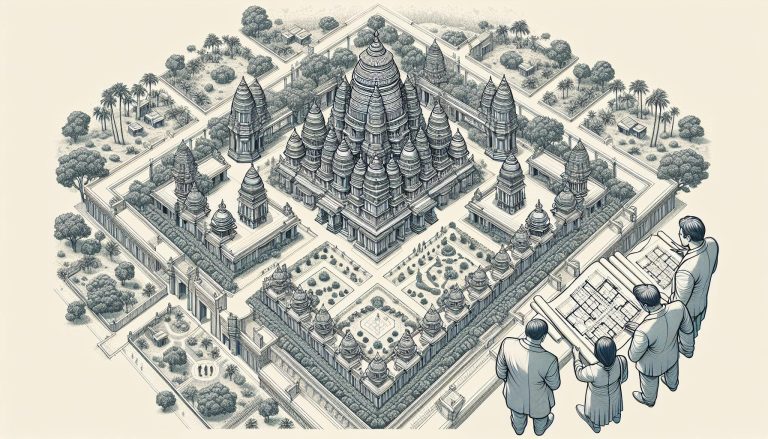
In this article, I’ll unravel the layers of symbolism embedded in temple layouts. From the entrance to the sanctum, each section serves a purpose, often reflecting cosmic principles and spiritual philosophies. Understanding these elements can enrich your experience and offer a profound appreciation for these sacred spaces.
Historical Context of Temple Layouts
The symbolism of temple layouts is deeply rooted in historical contexts, reflecting the cultural and religious beliefs of the time. They represented cosmic principles, spiritual philosophies, and societal hierarchies, providing insights into the ancient civilizations and their connection to the divine.
- First Temple: Built during the reign of King Solomon in 957 BCE, the First Temple served as an abode for the Ark of the Covenant and an assembly place for the Israelites. This temple had a three-part design: the Holy of Holies, the Holy Place, and the courtyard. The Holy of Holies symbolized the dwelling place of the Divine Presence, highlighting the connection between God and humanity.
- Second Temple: Rebuilt after the Babylonian exile in 515 BCE, the Second Temple was a more modest version of the original. Later, Herod the Great renovated and expanded it, adding a larger courtyard and a more elaborate design. This temple continued to represent the connection between God and humanity, despite the absence of the Ark of the Covenant.
Architectural Elements and Their Symbolic Meanings
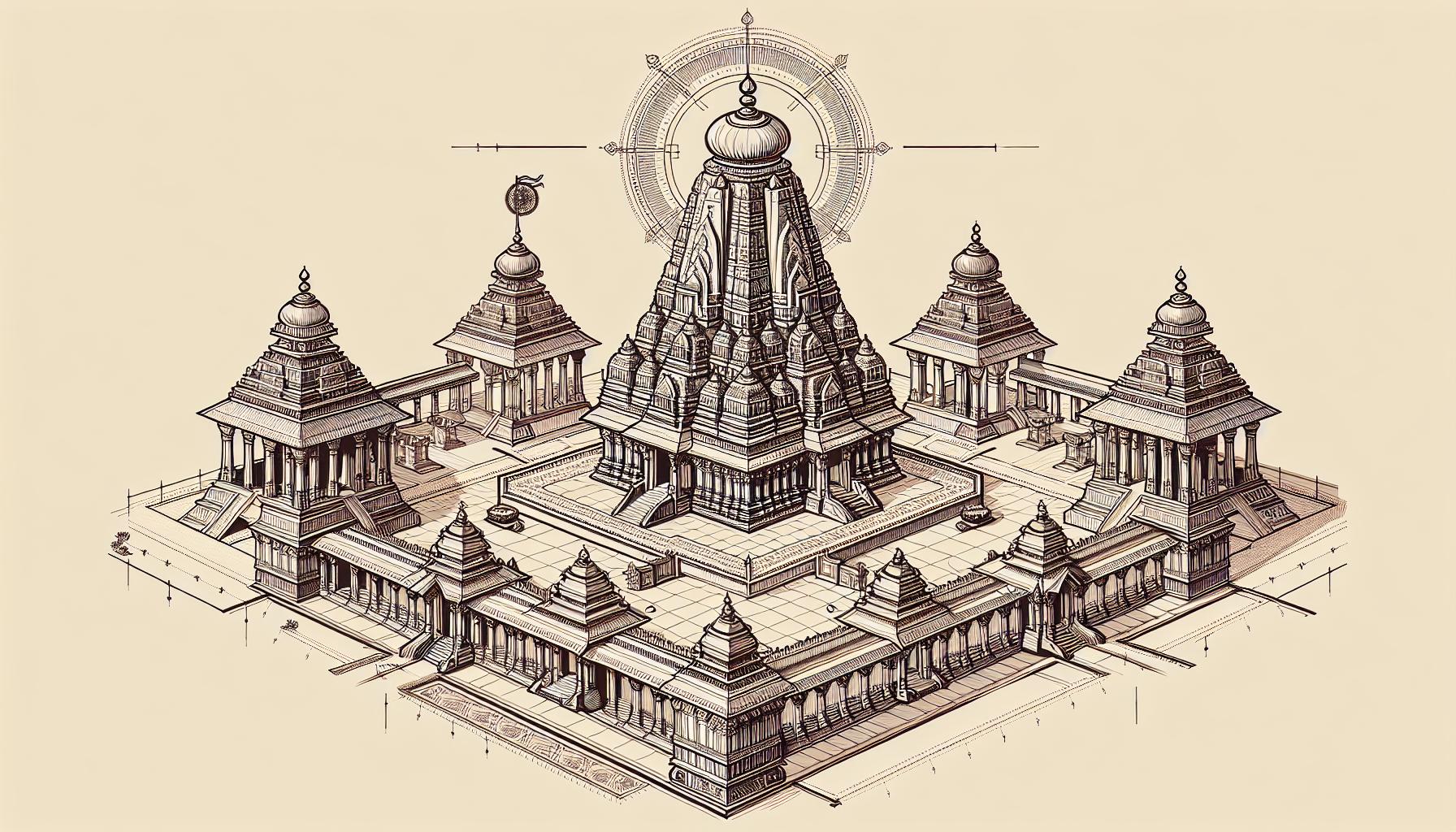
Temple architecture in Hinduism is rich with symbolism and meticulously designed to embody spiritual concepts and cosmic elements.
Sanctum Sanctorum
The sanctum sanctorum, or garbhagriha, signifies the heart of the temple, where the primary deity’s image or murti resides. This chamber, usually a bare and simple cell, epitomizes spiritual wisdom. The design of the garbhagriha typically features a perfect square, allowing devotees to circumambulate in a clockwise direction during rituals and prayers. This layout fosters a sense of tranquility and sacred connection with the divine.
Mandapa
The mandapa functions as an assembly hall within the temple premises. This hall symbolizes the communal space for devotees to congregate and perform rituals and ceremonies. Architecturally, the mandapa is designed to accommodate large gatherings, enhancing the collective experience of worship and religious discourse. The space bridges the material world and the spiritual, facilitating a communal bond with the divine.
Vimana and Shikhara
The vimana and shikhara are key architectural components of a Hindu temple. The vimana, a tower-like structure, sits directly above the sanctum sanctorum. It symbolizes the axis mundi, or the cosmic axis, connecting the earthly realm with the heavens. The shikhara, a spire that crowns the vimana, represents the spiritual ascent and aims to draw the observer’s eyes and mind upwards, towards the divine. These elements collectively elevate the temple’s spiritual ambiance, guiding worshippers towards enlightenment.
Symbolism Across Different Cultures

Temple layouts encapsulate profound symbolic meanings across various cultures, reflecting spiritual values and cosmic principles. These structures serve as sacred spaces where divine and earthly realms intersect.
Indian Temples
Indian temples symbolize cosmic and spiritual concepts through their intricate layouts and architectural elements. The Sanctum Sanctorum represents the inner sanctum, housing the primary deity, signifying spiritual wisdom and the core of human consciousness. The Mandapa, a pillared hall, acts as a communal area for worship and rituals, embodying social harmony and participation. The Vimana and Shikhara, towering over the sanctum, connect the earthly and divine realms, guiding worshippers towards enlightenment and spiritual ascent.
Egyptian Temples
Egyptian temples reflect the journey from chaos to order and the eternal struggle of life and death. Entrances traditionally align with the sun’s path, symbolizing rebirth and resurrection. Inner sanctuaries house deities, representing the divine presence on earth. Hypostyle Halls, filled with columns, evoke the primeval swamp from which creation emerged. The temple layout leads worshippers through progressively more sacred spaces, mirroring spiritual progression and deeper communion with the divine.
Ancient Greek Temples
Ancient Greek temples serve as houses for gods, emphasizing proportion, balance, and harmony. Cellas (Naos) enclose the statue of the deity, central to the temple’s function. Pronaos (porch) and Opisthodomos (back room) provide symmetry and balance. External columns support the roof and define the structure’s perimeter, symbolizing human-made order amidst nature’s chaos. These elements highlight the Greek pursuit of perfection and the divine virtues of wisdom, strength, and beauty.
Each culture’s temple architecture uniquely interprets the sacred, blending earthly elements with divine symbolism to guide worshippers on their spiritual paths.
Symbolism in Modern Temple Designs

Modern temple designs incorporate symbolism that aligns with contemporary spiritual needs while preserving ancient traditions. Using natural light serves as a common theme, symbolizing enlightenment and divine presence. Architects position windows and skylights strategically to illuminate sacred spaces during specific times, creating a dynamic interplay of light and shadow that enhances spiritual ambiance.
Sustainable materials also carry symbolic weight in modern temples. Use of reclaimed wood, locally sourced stones, and other eco-friendly materials symbolizes respect for nature and commitment to sustainability. These choices reflect the temple’s role as a guardian of both spiritual and earthly realms.
Technology integration offers another layer of symbolism. Interactive digital displays, sound systems, and advanced climate control systems are used to create an immersive worship experience. These elements symbolize the harmonious blending of tradition with modernity, showing that spiritual practices evolve with time while retaining their foundational essence.
Finally, modern architecture often emphasizes inclusivity and accessibility. Incorporating ramps, Braille signs, and adaptable seating areas signifies the universal nature of spiritual teachings, ensuring that all worshippers, regardless of physical abilities, have equal access to the sacred spaces.
Interpretation by Scholars and Experts
Scholars and experts analyze temple layouts to decode the complex symbolism embedded in their architecture. They often focus on the spatial arrangements, architectural elements, and historical contexts to understand the deeper meanings. For example, architectural historian George Michell discusses how Indian temple layouts reflect cosmic elements and spiritual pathways. He highlights the significance of symmetry and alignment in guiding devotees toward spiritual enlightenment.
Art historian Richard Wilkinson examines Egyptian temples, noting how their layout symbolizes the transition from chaos to order. He explains that the progression from the outer courtyard to the inner sanctum mirrors the creation myth, representing spiritual purification with each successive space.
Archaeologist William Bell Dinsmoor explores Greek temples, emphasizing their focus on proportion and balance. He suggests that the meticulous design reflects the Greeks’ pursuit of harmony and perfection, embodying divine virtues in physical form.
Modern experts study how contemporary temple designs incorporate traditional symbolism while addressing current spiritual needs. Architect Anupama Kundoo discusses the use of natural light to symbolize enlightenment in new temple constructions. She emphasizes how sustainable materials represent respect for nature and how technology integrates tradition with modernity.
Accessibility expert Ronald Mace’s principles are considered in contemporary designs to ensure inclusivity. These principles advocate for the creation of spaces that accommodate all worshippers, making sacred experiences accessible to everyone regardless of physical limitations.
Conclusion
Understanding the symbolism of temple layouts offers profound insights into the spiritual and cultural values of different civilizations. Each design element—from symmetry to natural light—carries deep meaning, guiding worshippers on their spiritual journeys. By studying these sacred spaces, we not only appreciate their architectural beauty but also their role in connecting the earthly with the divine. As modern architects blend tradition with innovation, they ensure that temples remain relevant and inclusive, honoring the past while embracing the future. Exploring these symbolic layouts enriches our appreciation of the intricate relationship between space, spirituality, and culture.
Sources & further reading
These themes are explored in greater depth across the following authoritative resources:
- Britannica, Hindu Temple Architecture
- Met Museum, Hinduism in the Arts
- Britannica, Iconography
- Stella Kramrisch, The Hindu Temple (Motilal Banarsidass, 1946)
- Heinrich Zimmer, Myths and Symbols in Indian Art and Civilization (Princeton University Press, 1946)
External resources for further reading. Apam Napat is not affiliated with these publishers; citation does not imply endorsement.
Based on the classical texts of Hindu mythology, see our sources.